


 By Fr Bruno FERRERO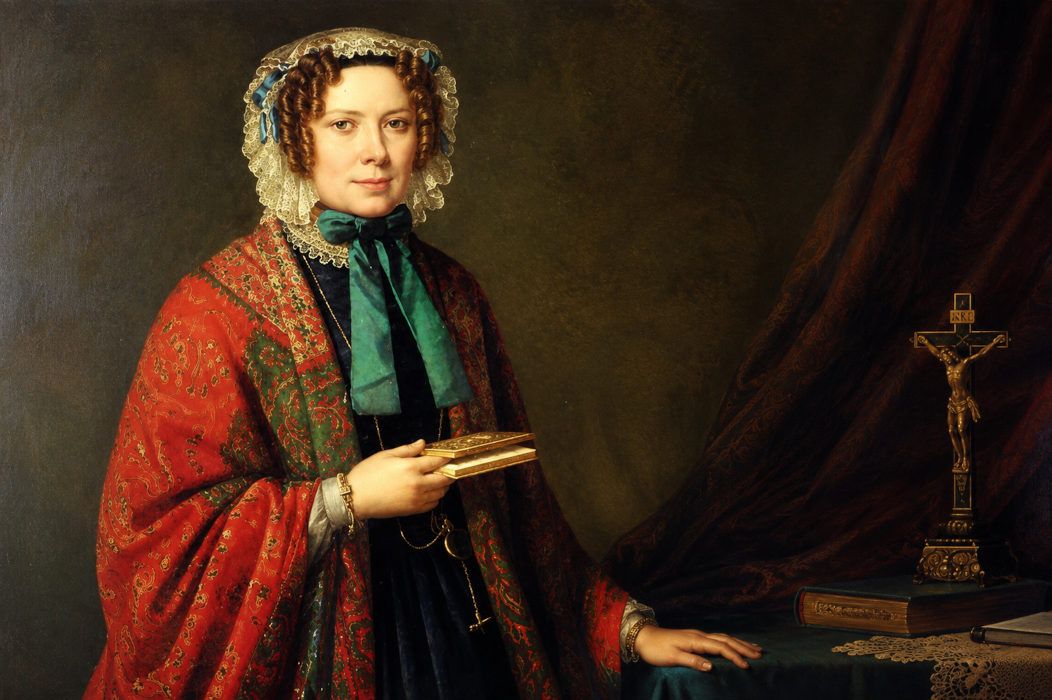
Reading time: 5 min.
Giulietta Colbert di Barolo, a French noblewoman marked by exile and by profound family trials, devoted her entire life, together with her husband Carlo Tancredi Falletti, to works of charity in Turin. After the death of the marquis, she multiplied initiatives in favour of the poor, women prisoners, girls at risk, orphans, and disabled children, founding institutions, schools, hospitals, and religious congregations, coordinated in the Opera Pia Barolo. Among the most significant works stands out the Refuge for young women. In 1844, she welcomed Don Bosco as chaplain, supporting his beginnings and intuiting his apostolic value. A woman of deep spirituality and great social influence, she left all her possessions to her foundations. She died in 1864; her cause of beatification is underway.
Because he was always sincere and consistent.
Juliette Victorienne Françoise de Colbert-Maulévrier, descendant of the finance minister of Louis XIV, was born in the Vendée on June 27, 1785. She received a careful Christian education and an excellent cultural formation. Her childhood was marked by painful losses, at the age of seven she lost her mother, then her paternal grandmother was put to death by the revolutionaries. Together with her father, brother, and sister, she had to flee into exile in Germany and Holland. She returned to Paris during the Napoleonic period and was called to the imperial court. Here she met the Marquis of Barolo, Carlo Tancredi Falletti (1782–1838), a wealthy Piedmontese gentleman. Napoleon himself favoured and organized their marriage in 1807. Until 1814, the couple lived between Paris and Turin. Then they settled permanently in the Savoyard capital, in the beautiful eighteenth-century Barolo palace. They had no children, a circumstance that led them to devote themselves completely to works of charity.
The Barolo spouses travelled a great deal. In this way they were able to observe what was being done in the field of social assistance and charitable intervention in France, especially in Paris. They tried to do the same in Turin. When in 1838, the marquis died prematurely, leaving his vast properties to his wife, she continued the works undertaken in favour of the poor and the needy, founding new ones.
It is said that one day in 1819, during Holy Week, while she was kneeling in the street as the Viaticum passed by, she heard a blasphemy coming from a window of the nearby women’s prison. She entered the prison and asked to speak with that person; thus, she realized the miserable conditions in which the women prisoners lived. From that moment, she decided to take responsibility for them. Despite the objections of friends, authorities, and even her confessor, she began to frequent the prison regularly and to teach the inmates hygiene, the rudiments of writing and reading, catechism, embroidery, and sewing. She managed to establish a classroom and a workshop, and to introduce religious ceremonies. As a result of that experience, she conceived and carried out the project of a modern women’s prison, of which she was made superintendent.
The Barolo spouses founded many other works for the poor who lived in the northern districts of the city, some of which are still active today. To give continuity and economic solidity to all those initiatives, the marchioness would establish the Opera Pia Barolo, which still exists. Thanks to her and her husband’s commitment, the popular elementary schools of Turin were entrusted to the Brothers of the Christian Schools and to the Sisters of St. Joseph.
Among all their charitable institutions, the most imposing was the Refuge (Pia Opera of Our Lady “Refugium Peccatorum”), inspired by the work of Abbé Légris Duval of Paris, begun in 1821 to offer shelter and formation to 300 young women at risk or released from prison. In 1825, with the approval of King Charles Felix, they invited the Dames du Sacré-Cœur to Turin for the education of girls of noble families. In 1829, following the example of the Parisian Madame Pastoret, they opened in their own palace the first nursery school for boys and girls of the poor classes. In 1832, they began a free school and a soup kitchen for the poor that served 250 meals a day; during the winter season each person also received a weekly supply of firewood for heating.
In the same year, they built a convent intended for the young women of the Refuge who wished to consecrate themselves to the Lord (Retreat of St. Mary Magdalene). The new congregation was approved by the ecclesiastical authorities under the title of Sisters Penitents of St. Mary Magdalene (popularly, the Magdalens). Also in 1832, next to the institute of the Magdalens, and under their care, the Barolos built a home to welcome abandoned girls under 12 years of age (called the “Little Magdalens”).
In 1834, they founded the Congregation of the Sisters of St. Anne and of Divine Providence for the education of girls of the middle classes. Next to the community of the Sisters of St. Anne, they opened a home for about thirty orphan girls (the “Juliettes”), who, once their education was completed, received 500 francs as a dowry.
After her husband’s death, the marchioness did not limit herself to supporting the previous charitable institutions, but set her hand to or collaborated in new foundations. She contributed, for example, to the construction of the convent of the Adorers of the Blessed Sacrament and took part in the Turin foundation of the Association for Perpetual Adoration. In 1844, she founded the institute of the Tertiaries of St. Mary Magdalene for those young women of the Refuge who did not feel called to religious life but wanted to commit themselves Christianly to service. Between 1844 and 1845, she built the Little Hospital of St. Philomena, to welcome 120 disabled girls between the ages of 3 and 12 entrusted to the Sisters of St. Joseph.
She also founded other innovative works, such as the Families of St. Mary, of St. Joseph, and of St. Anne, a kind of family home for small groups of apprentice girls entrusted to the care of a lay “mother.” She financed the construction of the parish church and the Oratory of St. Giulia in Borgo Vanchiglia, begun in 1862, and completed in 1866, two years after her death.
The brilliant friend
Don Bosco met the marchioness in 1844, when he was introduced to her by the theologian Borel. She immediately sensed that she was facing a man of worth and, in the autumn of that year, decided to hire him as chaplain of the Little Hospital and pastoral collaborator in her other works.
Not only did she allow him to continue the catechism classes for poor boys, but she temporarily granted him the use of the Little Hospital’s premises and supported him financially in his charitable action. When she realized his weak health, she tried to limit him in his apostolic labours, asking him to devote himself only to his duties as chaplain. As she herself explains in a letter to Borel, she was not opposed to the oratory, but very concerned about Don Bosco’s condition. In this light one must interpret the ultimatum given to the Saint; in fact, despite her energetic assertion (“He will plunge into debt; he will come to me, and I declare from now on that I will never give him a penny for his boys”), she would continue to support him financially even later, through Fr. Cafasso and Borel. It must be added that Don Bosco would continue to collaborate pastorally in the Barolo works, personally or through his Salesians. Indeed, after the death of Giulia Colbert (January 19, 1864), relations with the Sisters of St. Anne intensified, so much so that the Holy educator, when writing the constitutions of the Daughters of Mary Help of Christians (1870–1872), “enlisted” their mother general, Blessed Enrichetta Dominici. Moreover, two Sisters of St. Anne lived for some time in Mornese to help the first community of the Daughters of Mary Help of Christians.
The marchioness, in addition to being a pious, able, and extraordinary woman, enjoyed the esteem of the court and the nobility. Moreover, in her palace she held a salon in the French style, frequented by distinguished figures such as Pellico (her secretary), Cesare Balbo, the Cavour brothers, Joseph de Maistre, the poet Lamartine, Monsignor Dupanloup, and others. Although she presented herself as magnanimous and independent, she was not at all a worldly person. She was deeply spiritual and became ever more so under the guidance of spiritual masters such as the theologian Luigi Guala and Fr. Joseph Cafasso. She lived a life of intense prayer and mortification (she wore the hairshirt). She died on January 19, 1864, after arranging that her riches be devoted to the support of works of charity. The cause of beatification is underway.
Arthur J. LENTI, Don Bosco: History and Spirit, volume 1, p. 391
 BSOL Editor