


 By P. Natale CERRATO
Reading time: 3 min.
A surname can tell a story, evoke a place, and even become a source of good humour. Don Bosco’s, documented in the Chieri area since the seventeenth century, accompanied Giovanni throughout his life, lending itself to puns, nicknames, and jokes in Piedmontese. From his seminary days right through to his old age, he knew how to joke about his own name, comparing himself sometimes to worm-eaten wood, and other times to firewood capable of feeding the flames. But behind the wit emerges a deeper meaning: Don Bosco was truly a “wood of Sales”, wood consumed by toil and kindled by the love of God.
It seems that in Piedmont the earliest parish registers of births, baptisms, marriages and deaths, which are still available, date back to the early 1600s; municipal ones to 1800.
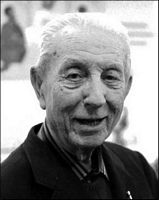
Fr Michele Molineris, through his research, has ascertained that the Bosco lineage did not originate from Castelnuovo d’Asti, but from Chieri; and Comm. Secondo Caselle succeeded in tracing their genealogy back to Bosco Giovanni from Chieri, who married Ronco Giovanna from Chieri in Chieri Cathedral on 5 February 1627.
There were those who wanted to go back further, linking the Bosco di Chieri family to Ligurian stock and from there, as far back as the Etruscans (“Il Tempio di Don Bosco” 1987, no. 7, p. 9). But at this rate one can prove anything and its opposite, because there were Boscos, Boschis and Boschettis everywhere, not only in the regions of Italy, but, with the term proper to the respective language, in many other countries in Europe and the world, even in China (Lam, Lin) and Japan (Mori).
Such surnames blossomed, at least until the Middle Ages, in different times and places for environmental reasons of life and work and personal affinities and character, even if, with the stability of surnames achieved in the approach of modern times, their transmigration from one region to another remains probable.
The lack of local documentation, then, does not in itself prove the absence of a surname in a given area nor its provenance from other regions. The fact that a Genoan register of 1186 bears the surname Bosco does not prove that this surname came to Chieri from Genoa, even if the Monferrato territory (but Chieri was never under Monferrato) had more of a relationship with the Genoans than with the Savoy territories in past centuries.
Let us therefore leave things where they are and think instead about how the surname Bosco with its local meaning (in piedm.: bòsch = wood) played in the life of our saint.
The surname in Don Bosco’s lifetime
During his seminary years in Chieri the surname of the cleric Bosco was exploited by his companions in different ways.
When the doorkeeper called aloud “Bòsch èd Castelneuv!”, a chorus was heard in French suggesting “Bois de Chateau neuf!”. Then, when the cleric, who had been appointed sacristan, went to the bursar’s to get oil for the Blessed Sacrament lamp, the usual chorus would intervene, calling him: “Bòsch dl’euli për la lampia!” (Wood of oil for the lamp). There was no shortage of good-tempered people in the seminary!
A cleric who bore the same surname, Giacomo (James) Bosco, in order to lessen the damage, proposed to John that they each choose a specific nickname. “I will be Bòsch ëd pocio” (I will be medlar wood), “and I will be Bòsch ëd sales” (and I will be willow wood). The understanding must have worked because James Bosco, then spiritual director of the Sisters of St Joseph for over thirty years, when asked for advice one day, replied: “Go to Don Bosco, the saint; I am only a bòsch èd pocio” (loquat wood) (MB I 304).
Don Bosco himself joked several times about his surname. To the barber who did not want to let an inexperienced apprentice shave him, he said: “oh, he can very well shave a man who is made of wood” (G.B. FRANCESIA, Don Bosco amico delle anime …, p. 33).
Sometimes, alluding to his own precarious health, he declared himself a bòsch camolà (a moth-eaten piece of wood) (E 1504).
To Fr Nicolao Cibrario, rector of the Vallecrosia House, who asked him for money for the new church, he replied: “Tell Monsignor Viale to light the fire, I will bring a little wood” (firewood, i.e. money) … Monsignor Viale, Vicar General in Ventimiglia had promised to help (E 1525).
Already very elderly, visited by Dr Albertotti with his son, to the latter who could not uncork a bottle, he said: “Dala unpòch si a mi ch ‘i son ëd bòsch” (give a little here to me who am made of wood), and he uncorked it instantly (C. ALBERTOTTI, Chi era don Bosco … p. 16-17).
Don Bosco never lost his usual good humour even in the most difficult moments of life. St Francis de Sales used to say that the fire of God’s love burns best in the wood of the cross. And St John Bosco was a bòsch ëd sales (BOSCO DI SALES).
 BSOL Editor
 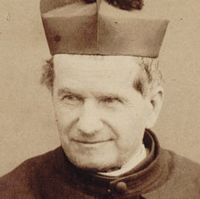 St John Bosco
  Fr Bruno FERRERO