

 By BSOL Editor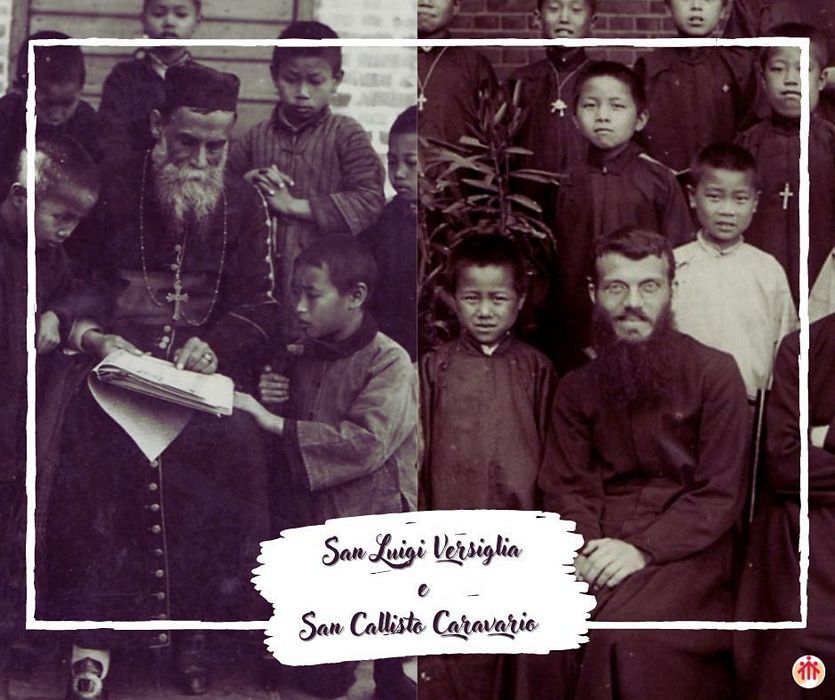
Reading time: 7 min.
Salesian spirituality, received from St John Bosco, has generated an extraordinary flowering of holiness. A vast host of men and women have radically embodied the Salesian charism: some already raised to the altars, others on the path to canonisation, very many known only to God and who will be known only in Heaven.
It is a holiness that matures in the total giving of oneself, that which the Old Testament depicted in the holocaust, an offering entirely consumed by fire for the Lord. Giving one’s life, for these saints, did not only mean consecrating time and energy to God, but handing over to Him the most intimate and precious thing we possess, including earthly existence itself when He requested it.
It is striking to discover that, among the 175 Salesian saints and blesseds canonised or in the process of canonisation, 118 are martyrs, over 67%. More than two out of three. A river of blood that flows especially through the twentieth century, forming a powerful choir of witnesses who, with their offered lives, have sealed the fruitfulness and relevance of the Salesian charism.
In a speech on the missions at the beginning of 1876, Don Bosco said: “If the Lord then in His Providence should dispose that any of us should suffer martyrdom, should we perhaps be frightened by this?”
Don Bosco perhaps did not imagine how literally his sons would answer that question. The 20th century – a season of fierce ideologies, religious persecutions, and totalitarianisms – asked the Salesian Congregation for a very high price: the blood of over a hundred confreres and many young people who grew up in Salesian oratories and schools. They were priests, brothers, past pupils, boys from the oratory. They had in common Salesian joy, love for the young, fidelity to Christ. And when it was necessary to choose between life and faith, they chose faith.
Remembering these witnesses is not an exercise in memory; it is recognising that Salesian holiness does not only have the smiling face of the educator with the boys in the courtyard, but also the transfigured face of one who has carried the logic of total gift to the very end. As the 9th Rector Major Fr. Juan Vecchi wrote, “the pastoral service of the people and the educational dedication to the young cannot be achieved without the disposition that internally constitutes martyrdom, that is, the offering of one’s life”.
Let us briefly recall these glorious Salesian martyrs.
In China: Versiglia and Caravario
The first chapter of the twentieth-century Salesian martyrology opens in China, on the banks of the Han River, in the night between 24 and 25 February 1930. Luigi Versiglia (1873–1930), Bishop of Shiu Chow, and Callisto Caravario (1903–1930), a young priest of only 26, were captured by a band of pirates while accompanying a group of young female catechists to their mission. When the bandits ordered them to hand over the girls, the two Salesians interposed themselves with their bodies. They were dragged ashore and shot.
Beatified by John Paul II on 15 May 1983, and canonised on 1 October 2000, they are the first Salesian martyrs raised to the honours of the altars. Their death is emblematic of Don Bosco’s spirit: dying not for a theological abstraction, but to protect the young, the most vulnerable. Versiglia had spent thirty years in China building schools and Christian communities; Caravario had recently arrived but burned with missionary ardour. Together they embody two generations of the same ideal.
In Poland: Kowalski and the five from Poznań
The Nazi occupation of Poland brought the Salesian Congregation one of its most substantial tributes of blood: eighty-eight confreres killed in Polish territory alone. Among them emerges the figure of Fr. Józef Kowalski (1911–1942), a Salesian priest arrested on 23 May 1941 – the eve of Mary Help of Christians – and deported to the Auschwitz extermination camp with the number 17,350. For over a year he resisted in the so-called “penal company”, clandestinely continuing his priestly ministry: he confessed the dying, distributed Communion, organised prayers at dawn, and comforted his companions.
One episode portrays him in his greatness: caught with a rosary in his hand by a Nazi officer, he refused to trample on it despite threats. That rosary became the symbol of his spiritual resistance. Before dying – drowned in the camp’s sewer in the night between 3 and 4 July 1942 – he prayed with a fellow prisoner: “Kneel down and pray with me for all those who are killing us”.
Beatified in 1999, Fr. Kowalski is accompanied to the altars by five young oratory boys from Poznań – Edward Klinik, Franciszek Kęsy, Jarogniew Wojciechowski, Czesław Jóźwiak and Edward Kaźmierski – boys between 20 and 23 years old, animators of the oratory, beheaded in Dresden on 24 August 1942, the monthly feast of Mary Help of Christians. Their last message to their families is a document of the highest spirituality: “With joy I depart for the beyond, more than I would experience the joy of a possible liberation”.
These six blesseds together reveal a profound Salesian truth: holiness grows in the oratory, in the encounter between educators and young people, and can reach – through that same friendship – even unto martyrdom.
In Hungary: Stefano Sándor
In Hungary, the communist regime dissolved the Salesian Congregation in 1952. Stefano Sándor (1914–1953), a Salesian brother, clandestinely continued to form young people in the faith. Arrested, tortured, and tried on charges of counter-revolutionary activity, he was hanged on 8 June 1953. In his testament he wrote: “I die with joy for the Hungarian youth”. Beatified in 2013, he is the first blessed from Eastern Europe in the Salesian Family. His martyrdom speaks of silent dedication, of catechesis held in secret, of a Salesian who did not renounce his mission with the young even when it became dangerous to do so.
In Slovakia: Titus Zeman
A figure of discreet heroism is that of Fr. Titus Zeman (1915–1969), a Slovak Salesian priest. After the suppression of religious communities in Czechoslovakia by the communist regime in 1950, he repeatedly risked his freedom to clandestinely smuggle young Salesian aspirants to the West, so that they could complete their novitiate and ordination. Arrested in 1951 and sentenced to 25 years in prison, he suffered torture and physical degradation for eleven years which undermined his health. Freed in 1964, he was never the same again. He died in 1969 from the consequences of the mistreatment he had suffered. Beatified in 2017 in Bratislava, Fr. Zeman is the martyr of the “underground” ministry: the one who spent his life so that the chain of the Salesian vocation would not break under the grip of totalitarianism.
In Brazil: Rodolfo Lunkenbein
Martyrdom does not always bear the colours of a totalitarian regime. In Brazil, Fr. Rodolfo Lunkenbein (1939–1976), a German Salesian missionary among the Bororo of Mato Grosso, was killed on 15 July 1976, in the midst of a clash between indigenous people and fazendeiros who claimed to appropriate their lands. Fr. Rodolfo had openly taken a stand in defence of the territory and the rights of the Bororo people. That day he interposed himself between the attackers and the indigenous community. He was hit by a bullet and died shortly after. With him also died a young indigenous Bororo, Simão Cristino Kyrireu, who tried to protect him. Their martyrdom takes the form of commitment to justice, of the mission incarnated in the cry of the poorest, of following Christ who takes up the defence of the least.
In Pakistan: Akash Bashir
Among the most recent and moving stories stands out that of Akash Bashir (1994–2015), a young Pakistani Salesian past pupil of Christian faith. On 15 March 2015, he was serving as a security volunteer outside St. John’s Church in Youhanabad, Lahore, when a suicide bomber with an explosive vest approached. Akash physically blocked him, hugging him to prevent the man from entering the church where Sunday Mass was being celebrated, attended by hundreds of the faithful. The device exploded. Akash died instantly. He was 20 years old. His gesture was an act of lucid and deliberate choice. That morning, he had told his mother: “If I die, I die for Jesus”. His cause for beatification is open in the diocese of Lahore. Akash embodies the vocation of the Salesian layperson, raised in the oratory and capable of giving everything – as he had learned to do from his educators.
Spain in 1936: a multitude of martyrs
One cannot fail to mention the ninety-five Salesian martyrs of the Spanish Civil War (1936–1939): priests, brothers, clerics, and cooperators killed in hatred of the faith in the surroundings of Madrid, Barcelona, Valencia, and Seville. Among the groups already beatified are the martyrs of Madrid led by Fr. Enrique Sáiz Aparicio, those of Valencia and Barcelona with Fr. José Calasanz Marqués, and those of Seville. Their collective death is the testimony of an entire community that did not deny its identity even before the firing squads.
In Poland: Fr. Jan Świerc and eight companions
On 6 June 2026, in the Sanctuary of St. John Paul II in Krakow, the Salesian Family experienced a new, moving day of glory. Fr. Jan Świerc (1877–1941) and eight of his confreres – Ignacy Antonowicz, Ignacy Dobiasz, Karol Golda, Franciszek Harazim, Ludwik Mroczek, Włodzimierz Szembek, Kazimierz Wojciechowski and Franciszek Miśka – were beatified by Pope Leo XIV. All Polish Salesian priests, they had been arrested by the Nazis and killed in the Auschwitz and Dachau concentration camps between 1941 and 1942. Fr. Jan Świerc had grown up in Turin at Don Bosco’s school. Until the very end, he tried to comfort his fellow prisoners, including the Jews. Fr. Karol Golda died at only 28, faithful to the seal of confession until death. The beatification took place precisely in the sanctuary dedicated to John Paul II because these nine martyrs were spiritual guides to the young Karol Wojtyła, who in 1938, attended their church in the Dębniki district of Krakow every day. With them, the Salesian martyrology has added nine new names to its luminous host of witnesses.
The daily “bloodless martyrdom”
Looking at these witnesses, we might ask ourselves: what does this have to do with us? We live in peace; we are not asked to choose between life and faith. But Don Bosco, speaking of martyrdom, did not intend to fuel a heroic wartime spirituality. He intended to remind us that every Salesian educator is called to a form of daily martyrdom: the offering of one’s own life, one’s own time, one’s own energy for the young, without calculation and without holding back. “When it happens that a Salesian succumbs while working for souls,” he wrote, “the Congregation will have achieved a great triumph.”
Versiglia, Caravario, Kowalski, the five from Poznań, Sándor, Zeman, Lunkenbein, Akash Bashir – each of them grew up in an oratory, a school, a Salesian community. Each learned from an educator that life is given, not kept. Then, when the moment required it, they did exactly what they had learned.
Preserving their memory is not mere devotionalism; it is understanding what it truly means to be Salesians. The Salesian Family today counts one hundred and seventy-five candidates for the altars. Among them, one hundred and eighteen martyrs. They are not heroes of another time. They are the fruits of the preventive system taken to its extreme consequences: loving the young to the point of giving everything, even life.
“We live the spirit of martyrdom in daily pastoral charity” – Fr. Juan Vecchi, 9th Rector Major