


 By Prof. Lodovica Maria ZANET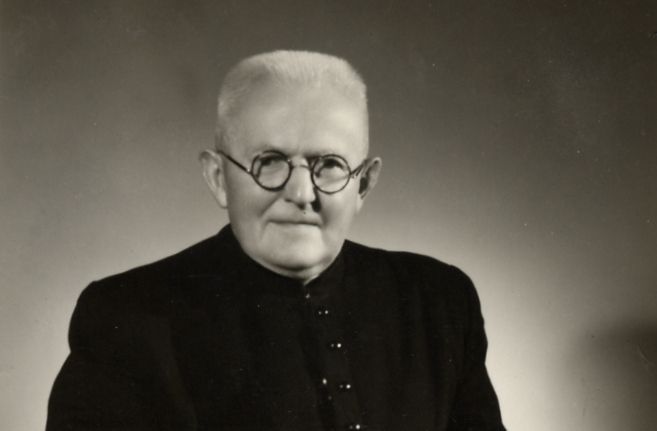
Reading time: 17 min.
The life of the Servant of God Ignazio Stuchlý (1869–1953) allows us to observe, within a complex historical context, how Salesian holiness can take shape through a stable set of virtues lived out in daily life. Born in Moravia in the Austro-Hungarian Empire, raised in the faith in a farming environment and marked by physical frailty, Stuchlý slowly came to realise his vocation, tenaciously seeking God’s will through trials, closed doors, and fresh starts. His encounter with the charism of Don Bosco and with Fr Rua definitively set the course for his journey: practical poverty, obedience, fortitude, chastity, a spirit of sacrifice, and educational fatherliness became constant features of his virtuous “habitus”. As a formator and provincial, he would later endure wars and persecution, remaining a point of reference for his confrères and for the young.
- In search of God’s will
The servant of God was born in Bolesław, Moravia, on 14 December 1869: he was a subject of the immense patchwork of languages, cultures and traditions represented at the time by the Austro-Hungarian Empire, the result, in its completed form, of the Ausgleich of 1867 between the Habsburg Empire and the Kingdom of Hungary.
The fourth of ten children, he received a simple but solid upbringing in the Catholic faith, which was easier in Moravia than in Bohemia then dominated by Protestantism and where a certain anti-Catholicism was instrumentally used to counter the influence of the Habsburgs, who were aligned in defence of the papacy.
While still a child, Ignatius helped his parents with the hard work in the fields: they owned a medium-sized farm and owned a few horses, which qualified the Stuchlýs as fairly well-off:
They also owned a couple of horses. They were not completely poor then.
It was a peasant dwelling with everything belonging to it such as the stable, the stable, the fields, etc. […]. […] the servant of God belonged to the average local population.
At the time, that region – located on the border with Silesia, a part of which it incorporated – was characterised by agriculture, poverty of the population, and an obvious leaning towards German culture. Winters were harsh. To attend morning Mass, Ignatius had to walk 8 kilometres (4 outward and 4 return). On those walks Ignatius prayed, absorbed in contemplative meditation. At times he managed to recite only one “Our Father” during the entire walk: he would pause in loving contemplation over each word, meditating on it carefully and often being moved. In doing so, without knowing it, he was already moving from vocal to mental prayer, reflecting on the One to whom he was addressing himself and learning to recognise him as Father.
He attended the German school, where this language was added to the Moravian dialect used in the family, but not Bohemian: the servant of God would learn it as an adult, without ever being able to master it perfectly. Moravian Olomouc was administratively part of Silesia, which included territories that the ups and downs of 20th century history would see pass from Germany to Poland.
At school, Ignatius never distinguished himself for any particular intellectual gifts: however, he was upright, sincere and heroically persevering. Here he met Jan Kolibaj, the teacher who would influence his growth more than any other. An artist’s soul, a passionate violinist and above all a lover of the Virgin Mary, Kolibaj taught his students Marian hymns and, singing them with them, was often moved to tears. A simple layman, he also awakened in his students a willingness to listen to the voice of the Lord who calls: he implemented a discreet but effective vocational ministry among them. Like the Venerable Jan Tyranowski with Karol Wojtyla, so Jan Kolibaj trained the Stuchlý boy’s inner ear to pick up that ‘voice of subtle silence’ in which the divine call can be expressed. One day, Kolibaj even asked him, directly, if he would like to become a priest. Ignatius, however, taken aback, replied no. Life as a farmer, together with his brothers, was then in store for him. When he had to give up inheriting his father’s farm for health reasons, and another brother was preferred, the servant of God initially thought of becoming a tailor, a profession that required little energy and seemed suited to his chronically weak condition. This project, however, vanished, for reasons impossible to reconstruct today. He then remained on the farm, a “guest” on an estate that would never be his.
However, his health suddenly improved when, at the age of 16 or 17, he visited a “folk healer” in Bohumín:
during his childhood and youth he had been ill and this illness seemed incurable. Then a folk healer advised him not to eat acidic food, to take milk and to drink a lot of fish fat. This did him much good and so he could help in the fields on his father’s farm. It was only later that he decided to go to study.4
While this folk healer healed his body, he also scrutinised his soul, and fulfilled a prophecy about him: he would be healed and become a priest. The great-grandson, Jan Michael Stuchlý, testifies:
He [was] originally supposed to remain the heir to his father’s farm but then, due to poor health and when no medicine helped, the inheritance passed to his brother Josef, my grandfather. After much searching, Ignatius finally found a popular healer in Bohumín who had predicted: ‘You will recover’ and ‘you will become a priest’. He was then about 20 years old.
This time, however, Stuchlý responded with a “yes!” His priestly vocation, moreover, now seemed unattainable: he had studied little, did not know a word of Latin, was past the age when young men enter the seminary, and his family could never support him financially. Work on the farm, meanwhile, exposed him to certain dangers, such as when he fell under a sledge, then pulled by the wild horses, whose hooves beat furiously close to his head: he thought he was going to die, but came out unharmed and continued to love cheerful horses, just as he was cheerful and liked people who were optimistic, ready and full of energy.
He also liked to go dancing (although he always returned before midnight to prepare for the Eucharist the next day). In addition, he knew how to enjoy the good things in life: a characteristic he would retain in the years to come, when he would, for example, recommend to a young woman, about to enter religion, to subscribe without false scruples to a concert season, to enjoy good music while she could. Well integrated in his group of friends, the Servant of God stood out for his exemplary chastity: his attitude, as an example to others, became reassuring for parents who – in years when boys and girls mixing together was much less free than today – allowed their daughters to join the merry company without any fear, if they knew that Ignatius was also part of it.
A young man amongst the young, he already resembled what the Lord would later ask him to be by vocation: a young person for the young, among whom he bore witness to an early endowment of spiritual fatherliness.
- The great choice: among the Salesians of Don Bosco
Then, one day, came the great turning point. He was busy working in the fields. Suddenly, he heard a hymn from the nearby cemetery: it was a priest who, at the end of the funeral, had intoned the Salve Regina: another Marian hymn like the ones Jan Kolibaj had taught him. On that day, the Servant of God was deeply moved, almost thunderstruck, he would later say, by the beauty of being a priest in order to be able to intone a hymn to Our Lady. From then on he would want, with all determination, to become a priest in order “to be able to intone that hymn too”; to be a priest, therefore, in order to sing to Mary. The Salve Regina had remained so impressed on him that it continued to resonate within him. The stages of discernment of his vocation, and then his own life – marked by fatigue and suffering – would also make Ignatius himself almost an icon of the prayer addressed to the Queen of Heaven, the Mother of mercy who comes to the aid of her children in trial, in exile, in the valley of tears.
Thus, when shortly afterwards – perhaps also noting his recovered physical condition – his father showed himself willing to give him a field and urged him to find a good young woman with whom to form a family, Ignatius rejected the proposal: he declared his vocation to his parents and they did not resist. The Servant of God, who had previously been refused what he might have been entitled to (the inheritance of the farm), now freely renounced what he had once desired and could now be granted. His vocation had therefore not been a leftover choice, almost a reorientation after having seen other paths impassable: but a true vocation, accepted by pronouncing a few “no”s and then – evangelically – renouncing all his possessions in order to acquire the “pearl of great price”.
However, he was twenty years old and no one was willing to accept him. When the parish priest learned of his idea of becoming a priest, he laughed: and advised him to forget about it, to be reasonable and go back to the farm. At the time, the Servant of God was a tall, open-faced, frank big young man with bright blue eyes and a shock of red hair. He was listened to by the assistant parish priest, who urged him not to be discouraged and to have faith. He then told him about Father Angel Lubojacký, a Dominican prior who was meditating on “founding a new Congregation in the manner of Don Bosco”, committed to reconciliation with the Orthodox Church. He was looking for young aspirants and Ignatius, not very knowledgeable about Church dynamics, accepted. He set off with a friend: it was the time of the wheat harvest and they – like Simon and Andrew and John and James in leaving the nets – left the sickles of the harvest to follow Jesus.
Great hardship awaited him immediately: he had to struggle with Czech and Latin grammar. The effort was such that he pondered abandoning it all. However, he did not give in and, for someone who liked fast horses, over these months he learned the difficult art of the ‘draught horse’ (to which Ignatius was compared by a friend!): going ahead slowly under load, without becoming discouraged. Moreover, work was very poor, he forced to move locations frequently: he tried to put down roots amidst a thousand uncertainties. The Servant of God thus began to exercise two virtues that would later typify his spiritual profile: fortitude and poverty.
In the meantime, the Dominican order began to regard Father Angel, a prior who wanted to become founder, with increasing scepticism, going ahead without support from other Dominicans, nor in true harmony with the Dominican Province. God, however, who knows how to draw good out of evil too, helped Ignatius Stuchlý in the meantime. In fact, he had him meet Fr Antonín Cyril Stojan, already a saintly priest at the time (later Archbishop of Olomouc, from 1921; today a Servant of God). He spoke to him about Don Bosco, of whom he was a great admirer (in Bohemia and Moravia the Salesians did not yet exist, but books on the Saint were beginning to be translated). Stojan associated Stuchlý with visits to families: he was thus able to familiarise himself with the labours and beauties of pastoral ministry, and to become a connoisseur of souls.
While he still believed that his future would be in this new Dominican-style congregation, he therefore began to do pastoral and Salesian practice: he was unaware, however, that this latter was his true vocation. Because of his virtues, he was also unofficially considered the “prefect” of the small community of aspirants: this, too, was a role that he – a future Salesian – would hold on several occasions for a large part of his life.
Then, suddenly, the Servant of God’s hopes seem to collapse. Financial difficulties, the delay in granting certain authorisations from Vienna, and above all the opposition of the bishop, lead to the sudden failure of Father Angel’s plans, who had meanwhile left the Dominicans. Father Angel suffered a psychological setback: he was found wandering lost in the streets, and – by now estranged from his Order – was accepted into the diocesan clergy. The young people were dispersed. The Servant of God, at the age of 24/25, only seemed to have the prospect of returning home. However, he had learnt Latin and got to know Don Bosco. He did not give up and embarked on a painful pilgrimage in search of his vocation. These were difficult months in which he knocked on many doors, but was always rejected. Even an attempt with the Jesuits, who in the first instance seemed ready to accept him, albeit perhaps as a brother, and on the condition that he made himself available for the missions, failed.
Unlocking this discernment – which was particularly painful – was an encounter with a priest, perhaps his former confessor. He told him: “You will not go to the Jesuits, but the Salesians. Go home and wait.” Just three days later, the Servant of God had in his hands a telegram from Fr Rua – Don Bosco’s first successor – summoning him to Turin. So Ignatius Stuchlý hastily packed his few belongings and set off. He said goodbye to his family as if he would never see them again: at that time leaving for Italy was the equivalent of going as a missionary to a faraway country. He did not even know the language, but he left everything, trusted everything and set off. He joined the group of “Sons of Mary”, as the Salesians called them, the adult vocations.
- At the source of the Salesian charism
In Turin, the first meeting with the Rector Major took place in Latin: they understood each other wonderfully, overcoming the obstacle represented by the fact that one did not know Moravian nor the other Italian. Fr Rua was also a priest with the gift of reading hearts, and knew how to understand people in the light of God’s plan for them: from him, therefore, would come the decisive turning points in the life of Salesian Ignatius.
The first stages of the Servant of God’s formation were in Valsalice and Ivrea. Valsalice in particular became for him a school of formation understood as a school of holiness. The holiness of many flourished there at the time, such as Fr Luigi Variara (Blessed), Prince Fr Augustus Czartoryski (Blessed) and especially Fr Andrea Beltrami (Venerable). Ignatius therefore grew up in this climate, strongly oriented towards the gift of life and the generous gift of self. The motto of Fr Andrea Beltrami (afflicted with tuberculosis, which would lead to his death in 1897) – “neither to live nor to die, but to endure and suffer” – educated Ignatius Stuchlý in victimal and reparative spirituality. In doing so, he learned to apply the entirety of the motto ‘da mihi animas, caetera tolle‘ from the very first months of Salesian formation: indeed, it was the caetera tolle that gave credible substance to the ‘da mihi animas‘. He also benefited from the almost daily closeness with the major superiors, and from sharing life with the first generation of Salesians: those formed by Don Bosco, whose remains then rested at Valsalice, in a context of great vocational proposal and explicit exhortation to become saints.
Transferred to Ivrea, he received missionary formation there: in fact, his superiors contemplated letting him go to the missions and then asked him – also to make the most of his experience as a farmer – to graduate in Agronomy. In the meantime, he became a regular with Fr Rua, who asked him to accompany him in praying the rosary in the evenings: and one day Ignazio Stuchlý gave Fr Rua his own collar to replace his own, now worn out. When Fr Rua later learned that Ignatius was destined for the missions, he ordered him to withdraw his application. “Your mission is in the North,” he said. Ignatius believed it, introduced himself to Fr Giulio Barberis, told him of this and remained at the disposal of the Congregation, without knowing what his subsequent obedience would be.
Fr Rua also helped him during a moment of fatigue when, at the end of his novitiate, he was assailed by the doubt of not being able to persevere in his vocation. Te fear was so great that he even sweated during meditation. He was then asked to make his perpetual profession immediately: he trusted and the temptation vanished, bringing him back to his usual peace and joy which would never leave him again. Here was proof of humility and obedience – other virtues recognised as typifying Stuchlý in the years to come.
By now perpetually professed, the Servant of God could set out on the road to the priesthood through the study of Theology. In the meantime, his superiors sent him to Gorizia, then a Habsburg city where the Salesians were entrusted with the Saint Louis Boarding School for the formation of clerical vocations in a diocese lacking priests. Overburdened with commitments, responsible for the finances and – although not yet a priest at the beginning – already prefect of the house by way of an exception, the Servant of God in these years (1897) made himself servant of all. But he could not, unfortunately, keep up with the examinations. The superiors needed his help and forgot to grant him time for study, a prerequisite for ordination. He did not ask for anything and joyfully obeyed. Vice-rector and responsible for the moral progress of the Salesian work in Gorizia, lecturer, attentive to the practical and financial problems of the house, able to mediate with the lay world and benefactors…: once again, in the end, Fr Rua intervened providently, demanding that his situation be regularised.
Ignatius Stuchlý was ordained deacon on 22 September 1900, priest on 3 November 1901. He had not even done the preparatory exercises. The very simple ordination service took place in the private chapel of the then Archbishop of Gorizia, Card. Giacomo Missia. Then no celebration: a school day like the others, just a slightly richer lunch. He then remained in the Salesian house, intent on his usual duties, always overburdened and forgetful of himself.
These responsibilities in the Salesian house, however, did not take him away from contact with the people, among whom he was able to arouse qualified cooperation: nor, above all, from the life of the diocese. In fact, while the Saint Louis Boarding School provided for the formation of future priests, Cardinal Missia himself obtained from the Salesian rector of Gorizia, Fr Giovanni Scaparone, that the newly ordained Father Stuchlý accompany him for the consecration of parishes and religious communities to the Sacred Heart. This devotion to the Sacred Heart, which was also strongly felt by the Salesians at the time, helped the servant of God to form himself more and more as a true priest of Christ. Moreover, working with the Archbishop gave him the opportunity to get to know the reality of the diocese, in “direct contact” with its situation, its hopes and its problems. Once again he was thus formed as a man of listening and dialogue, a true pastor of souls. Only having just become a confessor many people flocked to him. His hair, already white, helped to spread the reputation of being an expert and wise confessor. But he really was that: and would remain so until the end of his life.
- On the mission front
Then, after the 13 years in Gorizia, which he would always remember as the most beautiful period of his Salesian youth, there was a new obedience: Father Stuchlý was sent to Ljubljana, in Slovenia. Here, the Salesian work – which had sprung up a few years ago in the suburb of Rakovnik (a suburb of the capital, bordering the Golovec hill, close to the hills and woods through which Zagreb can be reached on foot) – was in serious economic crisis, almost on the verge of bankruptcy. The construction of the church – to be dedicated to Mary Help of Christians – had been at a standstill for years, and the building site, still open, was exposed to the elements and wear and tear. What was needed was a practical man with drive, someone capable – in those times of frequent building strikes, company crises and typhus – of motivating people.
Fr Pietro Tirone (who had known the Servant of God during his formation Ivrea, making a very good impression) remembered him. He had only been a priest for a short time, but was a 41-year-old in the fullness of maturity and experienced in the things of life. Thanks to his Slavic origins, it would also not have been too difficult for him to learn Slovenian.
He arrived in 1910 in a Salesian house where an oratory, a boarding school and, later, vocational schools were being planned. The first work, assigned by the state to the Salesians and almost imposed on them, had however consisted of guaranteeing the completion of the first school cycle to boys with problems coming from reformatory or prison. The Salesians had therefore begun, in Slovenia, in the same way as Don Bosco, sent to the prisons among the least, and able to make hope flourish among them by applying the “Preventive System” against the “repressive system”. The Salesians would provide confidence, engaging in a whole work of human, spiritual and social recovery that would be crowned with success. A few years later, they would form mixed classes with some problem boys and others from a healthier background. One would help the other, and the success of the experiment would contribute to the acceptance and respect the Salesians found in Slovenia.
In Rakovnik, meanwhile, the Servant of God had to see to the development of the house and the smooth running of community relations. He also spent a lot of time among the people, whom he made share responsibility for the work, attracting them to Don Bosco’s charism and thus weaving a dense network of charity. Fr Stuchlý had to feed 200 people on a daily basis. There was always a shortage of money and he took on unnumbered labours: he reserved a few scraps of black bread for himself and went begging, exposing himself to the humiliation he sometimes received. However, there were also those who helped him: like the young woman who gave the Salesians her entire dowry with the words: “This is for Our Lady!”. In those days, to give one’s dowry was in some way to give away one’s future and one’s life, because it made it very difficult to get married. The Servant of God remembered and would always remind his confreres that, just as the Salesians’ money belonged to the poor, who were the true lords, so one had to be grateful to benefactors, making an exact and upright use of what they made available. He was a man of sacrifice, from which he radiated an absolute trust in Divine Providence.
He was moved for a short time (1919-1921) to the house in Verzej, where he began again with only one pot for eating and washing, in extreme poverty, and then returned to Ljubljana. Here on 8 September 1924, the solemn consecration of the Marian Shrine dedicated to Mary Help of Christians finally took place. Also arriving for the occasion was Card. Cagliero, one of Don Bosco’s “boys”. In the evening, he was able to speak at length with the Servant of God, who would remember that moment for the rest of his life, grateful and moved by the paternal familiarity with which Cagliero had welcomed him.
That September, when the exhausting work that had occupied him in the Slovenian capital for almost 15 years came to an end, the Servant of God was perhaps able, at least for a moment, to pause: the confreres uddenly realised how much he had grown old under the weight of worries and fatigue. His smile, however, was always as bright as a child’s; his will as strong as ever; his inner energy, which helped him sustain physical and mental fatigue, as indomitable as ever. On the very day of the consecration of the shrine, they assigned him to an oratory, not far away: he believed for a moment that he could lead a normal Salesian life, but this would not be his true destination. In fact, he had to return to Italy in 1925.
- The “old man” who remained forever young
Here, in Perosa Argentina, Piedmont, a house was being built for the formation of the first Bohemian and Moravian Salesian vocations. For two years, until 1927, he acted as vice-rector of a community that was as promising as it was problematic, and particularly heterogeneous: there he also carried out a not easy vocational discernment, discreetly removing people without real supernatural motivations and instead helping willing youngsters to adapt to a context – Italian and not Czech, religious and no longer lay – so different from where they came from. Calm, prudence, justice and a great deal of charity were needed: the servant of God, a man of listening and governing, possessed them. The young people hoped for a young “saviour”, skilled in everything, strong: they found themselves before a “little old man” who spoke mispronounced Bohemian: but that was only the very first impression; when they got to know him, they discovered his virtues and radiant fatherhood. Initial scepticism then turned into trust: the cheerful appearance, loving gaze and stable smile of the servant of God opened and conquered hearts.
Fr Oldřich Med, later the first biographer of the Servant of God, specifies: “Disappointment slowly began to fade and was replaced by trust […]. His cheerfulness and confidence spread through us. This person who never took offence when he was teased about his Czech language, who took an interest in each one of us like a true father and […] was always with us, this won us over.” He instilled hope in those young people that their stay in Perosa Argentina was not wasted time. In a short time, Fr Stuchlý entered their hearts and changed their lives: many became excellent Salesians. Then, in 1927, the superiors decided to start with a new work in Frysták. It was up to him to transplant the work to his homeland. In the meantime he was given ever greater responsibilities; and in 1935 he became provincial: first of the Czechoslovakian Province, then, from 1939, of the Czech Province named after St John Bosco and now distinct from the Slovak Mary Help of Christians Province. The Salesians had also been called to those lands to stem the outflow of priests (about 200) and faithful (about half a million) from the Catholic Church towards the Orthodox Church, or the recently founded National Church. It was a period of great expansion of Salesian work in the Czech Republic and Stuchlý, as provincial, always in contact with the superiors in Turin, was able to form this first generation – very young and inexperienced – of Czech Salesians in the perfect observance of religious vows and Don Bosco’s charisma.
However, when five young religious first asked for concessions contrary to the vow of poverty, and one of them then helped to spread an infamous slander about the Italian Fr Giuseppe Coggiola, Stuchlý proceeded with a firm hand. He turned to Turin and it was the then General Catechist Fr Pietro Tirone who conducted an investigation, as swift as it was decisive, which soon led to the dismissal of the person responsible and the full rehabilitation of Fr Coggiola. As as confessor of the house, he could not defend himself and his only fault – being Italian – consisted in representing, in the eyes of the rebellious religious, an exemplar of the “Italianisation” that they perceived as restrictive in the application of the Constitutions and Regulations.
The Second World War – with the requisitioning of houses and the dispersion of the confreres – and then the looming Communist totalitarianism, however, painfully marked the last years of the Servant of God’s life. Stricken with apoplexy the month before the “Night of the Barbarians” (April 1951), in which all the religious of Czechoslovakia were expelled from their houses and interned, he lived first in an old people’s home in Zlín, then in a hospice in Lukov. The prophecy he himself had made, to the general disbelief, when – at the height of the Salesian work in his homeland – he said that in his last years he would be lucky if some woman would even give him a little bread and fermented milk, because he would die alone and far from everyone. He was cared for by some nuns, themselves controlled by the regime.
Yet his life, even in those difficult circumstances, flourished in peace, joy and good for the many who met him. He passed away peacefully on the evening of 17 January 1953 and at his funeral on 22 January, he was compared to a new St John Mary Vianney. Today he is remembered as the “Don Bosco of Bohemia”
 BSOL Editor
  Fr Pierluigi CAMERONI