


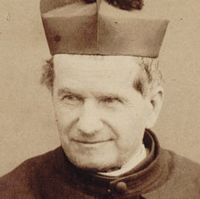
 By St John Bosco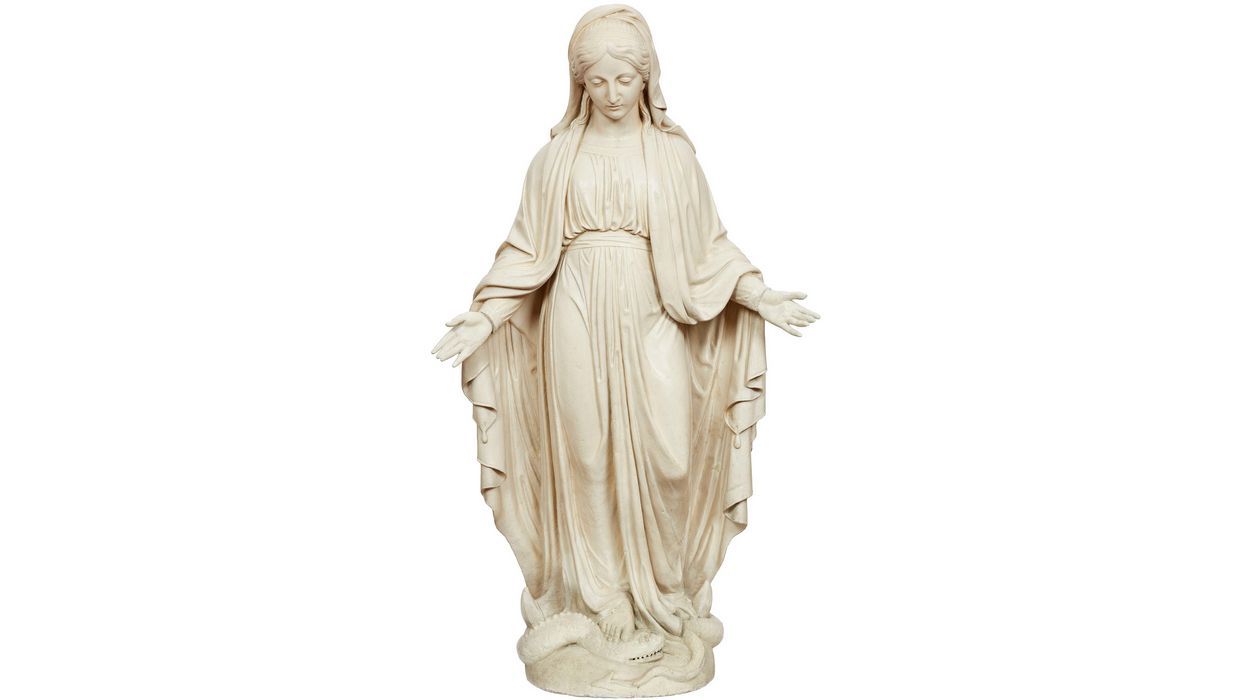
Reading time: 134 min.
In 1858, St. John Bosco published “The Month of May dedicated to Mary Immaculate for the use of the people,” a simple and accessible work designed to foster Marian devotion among the faithful, especially young people and families. The month of May, traditionally dedicated to Mary in popular piety, is marked here by daily meditations, edifying examples and practices of piety that help the reader to live each day with spiritual intensity. In clear and affectionate language, Don Bosco proposes a path that combines doctrine and life, filial affection for Our Lady and a concrete commitment to conversion. The text reflects his pastoral pedagogy, centred on trust in Mary Immaculate as a sure guide to Jesus. This work is part of the broader educational and spiritual project of the Turin saint, who saw Marian devotion as a key to the Christian formation of the people.
Contents
The Church approves this devotion and grants indulgences to those who practise it.
Instruction on how to practise the Marian month
Three things to practise throughout the month
Little flowers to be drawn by lot and practised one each day of the month
Day one of May. God our Creator
Day four. The Church of Jesus Christ
Day five. The head of the Church
Day six. The Shepherds of the Church
Day Eight. The Holy Sacraments
Day Nine. Dignity of the Christian
Day Thirteen. The salvation of the soul
Day Sixteen. Particular judgement
Day seventeen. The Universal Judgement
Day Eighteen. The pains of hell
Day Nineteen. Eternity of the pains of hell
Day twenty-four. Holy Communion
Day Twenty-five. The sin of impurity
Twenty-sixth day. The virtue of purity
Day twenty-seven. Respect for humanity
Day twenty-nine. A means of ensuring Paradise
Day thirty. Mary, our protector in this life
Day Thirty-one. Mary, our protector at the point of death
Day one of June How to assure oneself of Mary’s protection
Formula for the offering of the heart to Mary
Indulgences granted by Pope Pius IX
The month of May, which is the most delightful of the year, should rightly be consecrated to Mary. In this month, nature covers the meadows with grass, the plants with flowers, and the vineyards with shoots. In it, man devotes himself with special ardour to cultivating the land, which begins to offer him hope of an abundant harvest; but which is also a source of fear for him because of the dangers to which the fruits of his labour are exposed. For a hailstorm, a whirlwind, an invasion, a drought or other misfortune can in a moment overturn all his hopes and cause hunger and famine in a country, a city, and sometimes, an entire kingdom. Therefore, in addition to the spiritual needs that must move us at every moment to have recourse to this Mother of mercy, there is also a temporal reason, namely that she may bless and protect our homes, our livestock, the fruits of the fields, and defend us from misfortune.
It is true that devotion to this great Queen of Heaven has always been a comfort to mankind. From the time of the Apostles to the present day, there is no century, no year, no month, no week, no day, no hour, and we can say that there is no moment that is not marked by some favour obtained by this merciful mother for her devotees. It is also true that there is no kingdom, no city, no country or house where, if there is no altar, there is not at least an image or statue in honour of Mary as a sign of graces and favours received. However, the month of May seemed to be especially dedicated to Mary.
Since1700 in, various villages in Piedmont have been performing special exercises of Christian piety every day in May in honour of Mary. It was found that this series of daily supplications to this Mother of mercy was a very powerful means of obtaining her protection in our various needs. This devotion grew daily. Private families, religious communities, villages and towns welcomed this devotion as a source of great blessings. Parish priests and bishops promoted it zealously in their respective dioceses. And in 1747, Monsignor Saporiti, Archbishop of Genoa, gave orders for a book to be printed entitled: The Month of Mary, that is, the Month of May consecrated to Mary with the exercise of various flowers of virtue to be practised in Christian homes.
The Church approves this devotion and grants indulgences to those who practise it.
At the beginning of this century, as spiritual and temporal needs became more pressing, the devotion of Mary’s devotees to spreading devotion to her during the month of May also grew. The bishops approved this and took pains to establish it in their dioceses. But religious practices do not entirely satisfy Catholics unless they are approved by the Vicar of Jesus Christ, the Supreme Shepherd appointed by God to rule and govern the universal flock of all Christendom. And thus, the same Pontiffs approved, promoted and enriched with heavenly treasures the practices carried out in honour of Mary during that month. His Holiness Pius VII, of blessed memory, with his Decree of 21 March1815, granted the following indulgences:
1st 300 days of indulgence for each day to all those who perform some act of piety during the month of May in honour of Mary Most Holy.
2nd Plenary indulgence on the day of the closing or on any day of that month in which confession and communion are made.
3rd The same Supreme Pontiff, with another Decree of 18 June 1822, confirmed the above indulgences, making them applicable to the souls in Purgatory.
Here, Christian reader, is a brief account of the origin of the Marian month. This devotion is based on the great veneration that Christian faithful have always professed towards the great Queen of Heaven; it is based on the great spiritual and temporal needs that surround us and from which we can be relieved by Mary; it is based on the consent of the faithful, on the approval of the bishops and of the Vicar of Jesus Christ himself.
Therefore, animated by the spirit of a child who turns to a tender mother, undertake to read and practise what has been set forth therein for the common good.
Instruction on how to practise the Marian month
Every Christian is warmly invited to attend the sacred services held in the parish or in another public church. Those who cannot attend church, or who wish to add something to what is done in public in their own families, may do the following[1] : On the last day of April, in your own home and in the room where the family usually gathers to recite prayers before the image of Mary, prepare a small altar and adorn the image or statue in the best way possible; place candlesticks, rugs, and some vases of flowers, especially if they are fresh, as the season allows. If possible, do this in the same room where you work, study, play, and relax, to sanctify that place and regulate your actions as if they were done under the pure gaze of the Blessed Virgin.
On the evening before the first day of May, gather the family and other faithful before the aforementioned illuminated altar and recite the third part of the Rosary, or at least the Litany of the Blessed Virgin. After these prayers, read the meditation assigned for each day, with the accompanying example and ejaculatory prayer. Then draw one of the spiritual flowers listed below at random. These should be copied and folded into small pieces of paper with the acts of virtue that are to be practised daily during the month.
To facilitate the practices of piety for this month, it is best not to increase the Christian exercises too much, because they would be done too quickly or unwillingly, especially if there are children or people who are very busy with temporal affairs.
Read carefully the consideration assigned for each day, and punctually fulfil the practice indicated by the little flower you have drawn. In the evening, before going to bed, it would be good to recall the reading of the day.
During the month, receive the Holy Sacraments of Confession and Communion at least twice.
Since the indulgences that can be gained during this month can be applied to the souls in Purgatory, you are strongly encouraged to apply them, because, as St. Augustine teaches, while we relieve the souls in Purgatory, we also do greater good for ourselves.
It is also good to note that for holy indulgences it is not necessary to use this or any other book; it is sufficient to take part in church services or to perform some devotional exercises in the family. The Supreme Pontiffs require only that some act of piety be performed in honour of Mary, praying for the present needs of the Holy Church.
At the end of the month, you will make an offering from your heart to Mary, as explained at the end of the daily reflections.
Three things to practise throughout the month
- Do everything that we can to avoid committing any sin during this month; let it be entirely consecrated to Mary.
- Take great care to fulfil the spiritual and temporal duties of our state. For example, recite the morning and evening prayers with particular devotion; pray with the sign of the Holy Cross, which is usually done before and after meals. Attend the sacred functions of the Church on feast days with greater exemplarity.
- Invite our relatives, friends and all those who depend on us to take part in the devotions in honour of Mary during the month.
Little flowers to be drawn by lot and practised one each day of the month
- When it is time to get up, I will rise promptly from bed and dress with the utmost modesty.
- I will listen devoutly to Holy Mass in suffrage for the souls in Purgatory and, if I cannot, I will recite five Our Fathers, Hail Marys and Requiem.
- I will forgive with a good heart all those who have offended me, and I will say, Lord, forgive my sins, as I forgive those who have offended me.
- I will mortify my tongue with silence, occupying it with singing some praise to Mary.
- I will mortify my mouth by abstaining from some portion of food or drink.
- I will mortify my eyes by keeping them fixed for a few moments on a crucifix or on an image of Mary.
- I will say the Angelus with special devotion in the morning, evening, and at noon, kissing the medal of Mary.
- In the evening before going to bed, I will recite a Hail Mary for those whom God will call to eternity during the night.
- I will pause for a few moments to think about the fruit of my past confessions, and then I will make an act of contrition.
- I will pause for a few moments to think about the passion of Jesus Christ, then I will say: Holy Mother, please let the wounds of the Lord be imprinted on my heart. Each time this ejaculatory prayer is recited, an indulgence of three hundred days is gained.
- Everything I do tomorrow, I want to do for the soul in Purgatory who was more devoted Mary during life.
- Before going to bed, I will kiss the Crucifix, saying: Mary, if I die tonight, let me die in God’s grace.
- I will prepare to make a confession as if it were the last of my life.
- I will receive Communion in honour of Mary; and if I cannot, I will recite the acts of faith, hope, and charity.
- I will give some good advice to someone I know, to atone for the scandal caused by my words during my life in the past.
- I will give alms according to my means; if I cannot, I will recite three Hail Marys for the conversion of sinners.
- I will kiss the ground three times, saying: I am dust, and to dust I shall return.
- I will pause for a while to consider the confessions of my past life, and if anything makes me judge them null or doubtful, I will prepare to remedy them as soon as possible with a general confession.
- I will recite thirty-three Gloria Patri in honour of the thirty-three years Jesus lived with Mary, his mother.
- I will not eat or drink during the day unless necessary.
- I will have a Mass celebrated or at least go to hear one for the souls of my deceased relatives.
- I will spend the day in the utmost seclusion in imitation of the time Mary spent in the Temple.
- I will fast in a manner compatible with my state in honour of the sufferings of Mary during the passion of Jesus, her son.
- I will give alms in suffrage for the soul that has been suffering longest in Purgatory.
- I will avoid vanity in my dress and speech, and I will say three Angelus Dei to obtain the spirit of humility and penance. Each time the Angelus Dei is said, 100 days of indulgence are gained.
- I will recite the litany of the Blessed Virgin so that she may obtain from Jesus that all those who die this month may die in God’s grace.
- Mi I will prepare to make a general confession, or at least review my confessions since my last general confession, according to the advice of my confessor.
- I will recite the seven joys, and if I cannot, I will say seven Hail Marys, saying: Jesus, Joseph, and Mary, may my soul rest in peace with you.
- In honour of Mary, I will give up something dear to me, so that it will not be so painful for me to leave the world at the point of death.
- I will think of the occasion that caused me to fall into sin, and I will strive to avoid it in the future.
- I will flee from idleness and ask Mary’s forgiveness for the negligence committed during this month, and with my arms crossed I will say: Hail, Queen, etc.
Before reading each day, say: v Deus, in adjutorium meum intende. – n. Domine ad adjuvandum me festina. – Gloria Patri etc. – My Jesus, have mercy on me[2] .
Reasons for being devoted to Mary
Come with me, Christian, and consider the countless reasons we all have to be devoted to Mary. I will begin by mentioning the three main ones, which are as follows: Mary is holier than all creatures, Mary is the mother of God, Mary is our mother.
- Throughout the Old Testament, Mary is called all beautiful and without stain. She is compared to the shining sun; to the moon in the fullness of its light; to the brightest stars; to a garden full of the most delightful flowers; to a sealed fountain from which the clearest water flows; to a humble dove; to a pure lily. In the Gospel, she is called full of grace by the Angel Gabriel, “Hail, full of grace.” Full of grace, that is, created and formed in grace, which means that Mary was without original and actual sin from the first moment of her existence, and she persevered without sin until her last breath. Full of grace, and therefore, there was not the slightest defect that entered her most pure heart; nor was there any virtue that was not practised by Mary in the most sublime degree. The Catholic Chiesa expresses this holiness of Mary by defining that she was always free from all guilt, and invites us to invoke her with the following precious words: Regina sine labe originali concepta, ora prò nobis. “Queen conceived without original sin, pray for us who have recourse to you.”[3]
- Mary’s being free from every stain of original and actual sin; is adorned with every virtue we can imagine; her having been filled by God with more grace than any other creature, all these prerogatives made her stand out among all women to be raised to the dignity of Mother of God. This is the announcement made to her by the Angel. This was repeated by Saint Elizabeth when she was visited by the Blessed Virgin. This is the greeting given to her every day by faithful Christians who say, Holy Mary, Mother of God, pray for us. O glorious name of Mother of God, human intelligence fails, so bowing our heads in the deepest veneration, we limit ourselves to saying that no creature can be raised to a more sublime dignity, no creature can attain a greater degree of glory; and consequently, no creature can be more powerful with God than Mary.
- But if the title of Mother of God is glorious for Mary, it is also very consoling and useful for us who are her children. For by becoming the mother of Jesus, true God and true man, she also became our mother. Jesus Christ, in His great mercy, wanted to call us His brothers, and with this name, He makes us all adopted children of Mary. The Gospel confirms what we say here. The Divine Saviour was on the cross and suffering the pains of the most painful agony. His most holy mother and the Apostle Saint John stood at His feet immersed in the deepest sorrow. When Jesus opened his eyes, and perhaps it was the last time He opened them in His mortal life, He saw His beloved disciple and His dear mother. He then opened his dying lips and said to Mary, “Woman, behold your son, John”; then he said to John, “Behold your mother, Mary”; “Mulier, ecce filius tuus; ecce mater tua.” In this act, the holy Fathers unanimously recognise the will of the Divine Saviour, who, before leaving the world, wanted to give us Mary as our loving Mother and make us all her children. Mary is also our mother because she regenerated us through Jesus Christ in grace. For just as Eve is called the mother of the living, so Mary is the mother of all the faithful by grace (Ricardo da s. Lorenzo). In this regard, St. William Abbot expresses himself thus: Mary is Mother of the Head; therefore, she is also Mother of the members, which are us: Nos sumus membra Christi. By giving birth to Jesus, Mary also regenerated us spiritually. Therefore, Mary is rightly called Mother by all and as such deserves to be honoured. Gugl. Ab. cant. 4.
Behold, O Christians, the person whom I come to propose for your veneration during this month. She is the holiest of all creatures; the mother of God, our mother, a powerful and merciful mother who ardently desires to fill us with heavenly favours. She tells us, “I dwell in the highest heavens to fill my devotees with graces and blessings”, ut ditem diligentes me, et thesauros eorum repleam.
Take courage, therefore, devotees of Mary; it is time to celebrate a great feast for our Mother, the Mother of Jesus. When the feast day of our earthly mother comes, we enjoy gathering our relatives and friends to be in their company and offer them a bouquet of flowers with some expressions of affection. The month of May is the feast of our true Mother, our heavenly Protector. Let us therefore celebrate it with joy. The most beautiful bouquet we can offer her is one composed of the virtues of which She has given us shining examples.
Let us resolve on this day to direct our morning and evening prayers and all the affections of our hearts to the one we are privileged to call our Mother. Let us pray from this moment onwards so that she will intercede for us with her son Jesus for a special grace. Let us ask her for the grace we know we need most.
Example
To inspire you to solemnise the month of May with fervour in honour of Mary, consider the example of the army of the East when it was in Constantinople. Far from their homeland, without churches and almost without sacred ministers, those Christian soldiers brought from their homes their devotion and trust in Mary. Here is the account given by a periodical printed on 7 June 1855, “The month of May was celebrated in some hospitals with a pious and regular solemnity that greatly honours the army of the East. There is no doubt that the blessings of heaven rained down upon many souls touched by grace will pour out upon the entire army and be crowned with a happy outcome of the war itself.
Before those halls were in our power, they were mosques, that is, churches consecrated to Mohammed. In that year, the praises of the Queen of Heaven began to resound there. An altar to Mary was erected there and adorned with a taste that shows how each regiment has its own artists. There you can see columns carved as if by magic. There are marbles that bear a striking resemblance to the finest marbles. There are decorations in paper and colour, which are the work of some convalescents who devote their time to things that serve to increase the decorum of the cult of the Holy Virgin. Each house has organised its own choir of hymns, and all the musicians and the most talented members of the musical society take care to take part. Some have composed spiritual songs, which they sing together with joy in honour of Mary. In the evening, when the singing of the sacred praises and litanies of the Blessed Virgin has ended, the chaplain or another guest gives a sermon appropriate to the day, which is listened to eagerly by the large number of devout listeners gathered there. Often the hall cannot hold the crowd of listeners. The wounded themselves are brought there half an hour earlier to be sure of a place. This is the most beautiful moment of the day for them.” Behold, O Christian, how we too can celebrate this month and give Mary a sign of tender devotion. In cities, in the countryside, in homes, in solitude, in cloisters and in military regiments, tributes of devotion can be offered to the Queen of All Saints.
Short prayer
Pious Virgin, here is my heart; inflame it with holy love.
Prayer
Remember, O most holy Virgin Mary, that never was there anyone who sought your help and was not helped by you. Inspired by this confidence, I turn to you. Do not despise the prayers of this most humble child of yours, O Mother of the Eternal Word. Hear him favourably, O merciful, O pious, O sweet Virgin Mary[4] .
Day one of May. God our Creator
Deus in adiutorium etc.
Jesus, my mercy.
- In In honour of Mary, pause for a few moments to consider the majesty of God the Creator. If we, as Christians, open our eyes and give free rein to our thoughts, we cannot help but recognise the existence, power, and wisdom of God, from whom everything was created, on whom everything depends, and by whom everything is preserved. Anyone who admires a well-built house does not dare to say that it was built and put in order by chance. Anyone who said that a watch made itself would be despised as a madman. So, at the sight of the order and marvellous harmony that reigns throughout the universe, we cannot hesitate for a moment to believe in a God who created, set in motion, and preserves all things. It is God who said, ‘Let there be light,’ and there was light. Light was separated from darkness, and, in an instant, it spread throughout the vast spaces of heaven and earth. At the word of Almighty God, the sea was enclosed within certain limits, and the earth was covered with grass, trees, and fruit-bearing plants. At His voice, birds, fish, and other animals populated the sky, the earth, and the waters. Saying fiat, let there be, He illuminated the sun, the moon, and the stars. He gave existence to everything with his omnipotence, and He provides for everything with his goodness. He is the one who sustains and moves the formidable weight of immensity. He is the one who gives motion and life to all living beings. He gives existence to everything as creator, provides for everything as preserver, and everything refers to Him as its ultimate end. To all things He says, I made you: ego sum. And in this word, which everyone can and must understand, His power and divinity are expressed.
- But here is a truth that will certainly increase our wonder. All the things we see in the universe were created for us. The sun that shines during the day, the moon that dispels the darkness of the night, the stars that adorn the firmament, the air that gives us breath, the water that serves our needs, the fire that warms us, the earth that gives us fruit, everything was made by God for us. Omnia subiecisti sub pedibus eius. What feelings of gratitude, respect, and love should we not have towards a God so great and at the same time so good! What should we do to respond to this great goodness of our God? We should fulfil exactly the precepts of His holy law. See, O Christian, if we are obedient to the commands of this our God, beyond what He has already done for us, He will add favour upon favour. Our lives will be filled with heavenly blessings in this life and in the life to come. But this God, being infinitely just and merciful, will give an eternal reward for the service we render Him. A reward of glory if we serve Him with good works, but a terrible punishment if we are rebellious to His holy law.
Example
Every object that presents itself to our eyes in this world is a speaking fact of the majesty, power, and goodness of God the Creator. Many examples could be given of courageous Christians who made great sacrifices to serve God, but we will mention Mary’s offering in the temple as an example for all. When Mary reached the age when unmarried women began to be in danger in the world, she was taken by her parents, St. Joachim and St. Anne, to the temple. She certainly had to make a great sacrifice in leaving her relatives, friends, and all the comforts of her father’s house for the sole purpose of learning how to serve God. But Mary made this sacrifice with joy, because it was for the glory of God. She remained there for several years, shining with the brightest virtues, imitating a host of other virgins in the same place who were being taught religion and how to preserve the innocence of their morals. The Church celebrates Mary’s offering at the temple on 21 November. It was in imitation of Mary that many abandoned the comforts of the earth to go and serve God in cloisters or deserts, or by sacrificing their very lives amid the most atrocious torments. Let us at least devote to the Lord that time of life which, in His goodness, He is pleased to give us.
Short prayer
Oh, how many graces
Must I render
To the great God
Who created me!
Who in baptism
Made me His child,
From eternal exile
Freed me!
Prayer. Remember, O most holy Virgin Mary…
Deus in adiutorium etc.
- God is not only the Creator of all things in heaven and earth, but He is also the Creator of ourselves. He created the body with those beautiful qualities that we admire in it; to this body He added a soul that is far more precious than the body and all other things that we see in the world. God has given us a soul, that is, He has given us the invisible being that we feel within us and that continually strives to rise to God; that intelligent being that thinks and reasons and cannot find its happiness on earth, and therefore, even amid the riches and pleasures of the earth, is always restless until it rests in God, for God alone can make it happy.
- This soul is immortal. God is infinitely just and infinitely merciful; being just, He must reward virtue, which is often oppressed in this life, and He must equally punish vice, which is often triumphant among men. Since this cannot happen in this world, there must be another life in which justice, which is the essence of God, gives the good their deserved reward and the wicked their just punishment. Furthermore, the soul is made in the image and likeness of God. This image and likeness would be imperfect if it did not have the principal prerogative of the Creator, which is immortality. We feel this within ourselves in the inner voice that speaks to everyone in their heart and says: your soul cannot be destroyed and will live forever. When God created the soul, He breathed on the man and gave him the spirit of life. This breath is simple, spiritual, made in the image and likeness of God, who is eternal and immortal; therefore, our soul must be immortal. Through the soul, we have the ability to create ideas, to combine them, to produce certain masterpieces that raise the human being above all other creatures and prove, as is indeed the case, that the soul is the symbol or mark of God’s intelligence.
- God gave our soul freedom, that is, the ability to choose good or evil, assuring it a reward if it does good and threatening punishment if it chooses evil. Since this does not happen in this life, God reserved eternity for those who have done good, where they will be rewarded with a reward that will never end, and those who have transgressed the Divine law will be punished with eternal torment. This is precisely what our Divine Saviour taught when He said, the wicked will go to eternal punishment prepared for the demons and their followers; the good will go to the possession of a kingdom of glory where they will enjoy all good things.
O Christian, you too have an immortal soul. Think that if you save it, all is saved, but if you lose it, all is lost. You have only one soul, and one sin can cause you to lose it. What would become of us and our souls if God were to call us to His Divine Tribunal at this moment? You who read, think of your soul, and I who write, will think seriously of mine.
Example
An event that happened to a minister of King Louis XVI of France teaches us about the loving care that Mary takes for the health of our souls. This minister had the misfortune of associating with bad company in his youth, which caused him to lose his love of virtue, religion, and faith. He was in his eightieth year. From the age of 15, he had not practised any religious acts. After being a philosopher, a Freemason, and a materialist, he finally became an atheist, believing in nothing. God, who had created that soul for Himself, was waiting for him. Mary was the “the Mother” of mercy who was to lead him to her son Jesus. He had become blind and infirm, and his soul was on the threshold of eternity. The parish priest, who truly cared about the salvation of that soul, spared no effort to win him over. He had presented himself at his door ten times, and ten times he had been refused entry by the servants, following their master’s orders. That zealous pastor, deeply distressed at the thought that a soul redeemed by the blood of Jesus Christ might be lost, not knowing what else to do, turned to Her who is called the health of the world and the refuge of sinners. He placed his trust in Mary, prayed, and asked others to pray that she might be a mother of mercy also for that soul, which seemed soon to be presented before the tribunal of God. He then went to the door of that gentleman, and the servants tried to send him away as they had done before. He insisted, and at last he was admitted. After a few pleasantries, the sick man said without preamble to the parish priest, ‘Father, would you do me the favour of giving me your blessing?’ The parish priest, amazed at these words, replied wholeheartedly. Having received it, he added, “Oh, how your visit comforts me! I am blind and cannot see you, but I am well aware of your presence. Since you are near me, I feel a peace in my heart that I do not remember ever having enjoyed in my life.” The parish priest, blessing him in his heart and praising the mercy of God, began to speak to him of the comfort that the Catholic religion gives in life, and even more so at the point of death. The sick man joyfully accepted the words of the Holy Minister, prepared himself to make his confession, began it, and finished it in the following days to his great satisfaction. The life of that gentleman was prolonged by about six months, but he remained full of faith in God and confidence in the Blessed Virgin Mary. He gave clear signs of repentance for his sins and endeavoured to make amends for the scandal he had caused. Fortified by the Holy Sacraments and the other comforts that the Catholic religion offers to sick Christians, he breathed his last in the Lord on 10 April 1837. (From the Manual of the Archconfraternity.)
Short prayer.
I turn to you in supplication
To you, Mary,
Show me
The way to heaven.
Prayer. Remember, O most holy Virgin Mary…
Deus in adiutorium etc.
- A mystery incomprehensible to the human mind, which demonstrates the preciousness of our soul and God’s great goodness towards us, is the redemption of mankind. Our parents Adam and Eve sinned and, with their sin, closed Paradise to themselves and all their posterity. God, in a stroke of infinite goodness, promised to repair the eternal perdition of men through the Messiah whom He would send in the fullness of time. In order that faith in the Messiah, or Saviour, might remain alive among men, God had it proclaimed in all ages by the holy Patriarchs and Prophets. Clear revelation was given to Abraham, Jacob, Moses, David, and later to many other prophets. Isaiah said: a man of admirable gentleness, holy by nature, conceived by the Holy Spirit, will be born of a Virgin. Others call him God the Mighty, the author of peace, predicting that He would be born in Bethlehem.
Five centuries before the birth of the Saviour, the prophet Daniel fixed the time with a calculation of seventy weeks of years, corresponding to four hundred and ninety years. At the end of these weeks, Jesus was born in Bethlehem of Mary, ever Virgin, and in the humblest form, God, Creator of heaven and earth, became man: et Verbum caro factum est. Thus, God, through repeated prophecies, warned men to keep alive their hope in the Saviour. The closer the time of His coming drew, the clearer the divine promises became.
- The Saviour, then, to prove his coming and make known to the whole world that He was the promised Messiah, began His preaching with a holy and divine doctrine, confirmed by a series of amazing miracles, all of which tend to prove His goodness and divine power. At His word, the blind receive their sight, the deaf their hearing, the mute their speech, and the dead come out of their tombs alive. Jesus preaches, but He does not preach only temporal rewards. He teaches that we must worship one God in spirit and truth, love and adore Him alone. He teaches that we must extend our charity to everyone, even to our enemies, because the purpose of His religion and His coming is charity. He preaches patience, submission, and humility, even to the point of rejoicing in the tribulations He sends us. He announces a happy and eternal life, that is, heaven. But this happiness must be earned by us through our efforts, through the practice of virtue, and the avoidance of vice.
- Let us pause here, O Christian, and while we are filled with gratitude, let us consider the immense goodness of God. I beg you to keep your mind fixed on two thoughts: that is, consider the precious treasure you carry within you, which is your soul, for which God became man, and consider also what a great evil sin is, since to repair its consequences, the Son of God had to leave the delights of heaven, subject Himself to all the miseries of our life, and end with death on the cross. But while we admire the goodness of our Divine Saviour, let us promise Him to avoid anything that might renew the sufferings He endured for our souls. Let us admire His great humility and flee especially from vanity and pride. It is true that this body is a beautiful gift given to us by God to cover our soul, but humility is the most beautiful adornment of the soul, and vanity and pride are sins that must be avoided at all times, especially during this month dedicated to the purest and most humble of virgins, Mary Most Holy.
Example
St. Francis of Girolamo always nourished in his heart and sought to enkindle in others a tender devotion to the most sacred humanity of Jesus Christ and to His mysteries. He was particularly devoted to the mystery of the Incarnation. He used to say that we are greatly obliged to sanctify the month of March, because at that time the Divine Word, with ineffable condescension, lowered Himself to take on human flesh for our sake in the purest womb of Mary. When he considered the Child Jesus, he was moved to bitter tears by compassion for His sufferings.
To this devotion to the mystery of redemption, he added a filial tenderness towards His Most Holy Mother, the Virgin Mary. From his youth, he could not speak of her except with the greatest veneration. In obedience to her, he fasted on bread and water alone every Saturday of the year and on the eve of her feasts, adding to this a bloody flagellation of his body. He never missed an opportunity, whether in his sermons or in his speeches, to extol her virtues, her greatness and her goodness towards us, before her Divine Son. Although busy from morning to night, he never failed to recite his Rosary every day, a custom he observed inviolably even when travelling. While at sea from Naples to Massa, he invited the boatmen to recite the Rosary with him and, to inspire them with such a praiseworthy devotion, he explained to them the mysteries commemorated in it.
To increase devotion to the Rosary, he preached every Tuesday for twenty-two years, expounding to many people the glories and greatness of this Queen and recounting the graces she had bestowed on her devotees. He introduced the pious custom of publicly renewing the offering of himself to Mary every month. He had printed in Italian the verses of the Salve, and had it sung in the streets. He distributed many thousands of copies to the faithful, and by this means succeeded in preventing the singing of many profane and even scandalous songs. Let us try to imitate this Saint in whatever way we can.
Short prayer.
The sweet fruit
Of your womb
Oh! You, show us,
Great Mother, at least.
Prayer. Remember, O most holy Virgin Mary…
Day four. The Church of Jesus Christ
Deus in adiutorium etc.
- Our Divine Saviour, who came down from heaven to save us, wanted to establish a means of ensuring the preservation of the deposit of the faith by founding a spiritual kingdom on earth. This kingdom is his Church, or the congregation of Christian faithful throughout the world, who profess the doctrine of Jesus Christ under the guidance of legitimate pastors, and especially of the Roman Pontiff, who is its head appointed by God. This Church, like a loving mother, was to receive at all times and in all places all those who wished to take refuge in her maternal bosom; and therefore, she was to be visible and accessible to all at all times. Hence, in the Gospel, this Church is compared to a pillar against which the attacks of the enemies of souls are powerless. She is compared to a rock on which stands a great edifice that will last until the end of time. You are Peter, said Jesus Christ to the Prince of the Apostles in appointing him head of the Church, you are Peter, and on this rock, I will build my Church, and the gates of hell shall not prevail against it.
Jesus Christ recommended to His followers that if questions arose among them, they should defer their resolution to the Church: dic ecclesiæ; that if anyone refused to listen to the Church, treat him as a pagan and a publican: quod si ecclesiam non audierit, sit tibi tamquam ethnicus et publicanus. This Church is the pillar and foundation of all truth, so that any doctrine that does not rest on the foundation of this Church rests on error: ecclesia est columna et fundamentum veritatis, says St. Paul.
- This Church is also called Catholic, which means universal, because, as has been said, like a loving mother, she welcomes at all times and in all places those who wish to come to her maternal bosom. She is universal because she embraces all the doctrine taught by Jesus Christ and preached by the Apostles.
She is also called Holy because Her founder, Jesus Christ, is the source of all holiness; no one can be holy outside this Church, since only in it is the true doctrine of Jesus Christ taught, only in it is His faith and His law practised, and only in it are the sacraments instituted by Him administered.
It is also called Apostolic because its pastors are successors of the Apostles and teach the same doctrine preached by the Apostles as they learned it from Jesus Christ.
The title Roman is added because its head, the Pope, is the bishop of Rome, and for this reason this city, once the capital of the Roman Empire, is now the centre of religion, the capital of the Catholic world.
- And since there is only one God, one faith, one baptism, there is also only one true Church, outside of which no one can be saved.
Consider, O Christian, and tremble when you think of the great number of those who are not in the bosom of the Catholic Church and therefore all outside the way that leads to heaven. Consider, and rejoice in your heart, because God has created you in his Church, in which there are so many means of salvation. Be grateful to God, and to thank him, try to observe the precepts that the Chiesa proposes to her children in the name of God. Be constant in listening to the entire Holy Mass every Sunday and on other holy days of obligation; observe fasts and vigils, and do not eat meat on Fridays and Saturdays. In short, let us strive to be Catholics, not in name only, but in fact, observing exactly what the Holy Church commands and abstaining from what it forbids.
If we happen to hear others speaking about the Church, let us behave as respectful children towards their loving mother. Let us never say anything against what the Church commands or forbids; and as far as we are able, let us always speak well of her and courageously oppose anyone who tries to speak ill of her.
Example
The splendour of the Church is full of examples that demonstrate how Mary was always, not only the support of the Church, but also a merciful mother who lovingly sought out her children, sometimes performing miraculous wonders to increase their number. We choose the example of Alfonso Ratisbon, a young Jew from one of the wealthiest families in Germany. Deeply attached to his religion, he was a relentless enemy of Christians, especially since one of his brothers had embraced the faith. He came to Rome in 1842 for pleasure. There, his hatred for the Christian religion and his zeal for Judaism grew. He was already about to leave the city when he went to take leave of Baron Bussiere, a Protestant convert to Catholicism. This gentleman engaged Alfonso in a conversation about religion and, finding him extremely obstinate in his Judaism, begged him at least as a courtesy to allow him to place a medal of Mary around his neck. He agreed, laughing madly at such a proposal. It was 20 January 1842, when Alfonso left a church where he had entered out of curiosity for a short time. Suddenly, the building disappeared from his sight, and a light poured over him and filled the place where he stood. There, in the midst of that radiant splendour, he saw standing on the altar, full of majesty and sweetness, the Virgin Mary, as she appears on the miraculous medal. She motioned to him to kneel, and with an irresistible force he was drawn towards Mary. It was at this fortunate moment that Alfonso opened his eyes to the truth, and, illuminated by faith, he burst into tears. His heart found no comfort except in giving vent to his warm thanksgiving and asking with the most fervent entreaties for baptism. He prepared himself for eleven days, and on 31 January of the same year, he was reborn to Christ, and Mary had another son. Such a sudden and remarkable conversion was declared miraculous by the Holy See after careful examination. Every year on 20 January, a feast is held in Rome in memory of this miracle in the church of St. Andrew Fratte, where the miracle took place.
Short prayer.
Grant me to breathe,
Virgin Mary,
As a good Catholic
My soul.
Prayer. Remember, O most holy Virgin Mary…
Day five. The head of the Church
Deus in adiutorium etc.
- Jesus Christ in the Gospel compared His Church to a kingdom, an empire, a republic, a city, a fortress, a family. All these things are visible by their nature and cannot exist without a head to command and subjects to obey. The invisible head of the Church is Jesus Christ, who assists the sacred pastors from heaven until the end of the world: ecce ego vobiscum sum usque ad consummationem sæculi. The visible head was St Peter and after him, his successors, the Popes.
The Divine Saviour said to St. Peter: ‘You are Peter, and on this rock, I will build my Church, and the gates of hell shall not prevail against it. I will give you the keys of the kingdom of heaven; whatever you bind on earth shall be bound in heaven; whatever you loose on earth shall be loosed in heaven.” With these words, the Saviour made St. Peter head of his Church and conferred on him that fullness of power by which he can establish everything that contributes to spiritual and eternal good.
After His resurrection, Jesus Christ confirmed what He had said to St. Peter. Appearing to His Apostles on the shores of the Sea of Tiberias, He said to St. Peter: Feed my sheep, feed my lambs; pasce oves meas, pasce agnos meos. From Holy Scripture, it is clear that the lambs refer to all the faithful Christians, and the sheep are the sacred shepherds, who must depend on the Supreme Shepherd, who is Peter, and after him, his successors.
- In order that we might be assured that this Supreme Shepherd would always preserve the deposit of faith without ever falling into error, Jesus Christ said to St. Peter, “I have prayed for you, O Peter, that your faith may not fail”, rogavi prò te, Petre, ut non deficiat fides tua, et tu aliquando conversus confirma fratres tuos. This is why the other Apostles, after the Saviour’s ascension, considered St. Peter as their leader. As soon as the Saviour ascended into heaven, he immediately took up the government of the Church. He proposed the election of an Apostle to replace Judas the traitor; he was the first to preach to the people; he was the first to perform miracles when he went to the temple; he was the first to be instructed by God that not only the Jews but also the Gentiles were called to the faith. Difficulties arise in the Church? A council is gathered in the city of Jerusalem. Peter raises the question, explains it, defines it, and all obey Peter as they would Jesus Christ Himself. This is what true Catholics have done in all times, in all places, in every religious question. They have always had recourse to the Supreme Pontiff, and all Christians have submitted to him as to St. Peter, as to Jesus Christ Himself.
- Here, Christian, is what I propose for your consideration. A God made man to save us, before leaving the world, He founded a Church and appointed a Head to take His place on earth until the end of time: usque ad consummationem sæculi. Let us also recognise in the Roman Pontiff the universal Father of all Christians, the successor of St. Peter, the Vicar of Jesus Christ, the one who takes the place of God on earth, the one to whom Jesus Christ said: whatever you bind on earth shall be bound in heaven; whatever you loose on earth shall be loosed in heaven. But let us remember well that no one can profess the religion of Jesus Christ unless he is Catholic; no one is Catholic unless he is united with the Pope.
Example
Heretics, in order to draw Catholics away from the Church and from the Roman Pontiff, have always begun by despising devotion to the Blessed Virgin, because Mary is the mother of mercy for all those who invoke her. Indeed, we have many converted heretics who attribute their conversion to devotion to Mary. A case in point is the Protestant and now fervent Catholic, Frederick Hurter. He was president of the Protestant Consistory in Schaffhausen, Switzerland, and was considered one of the best preachers and professors of Calvinism. Although he was very attached to the errors of his sect, he was very sorry, as he himself confessed, that Protestantism, to which he belonged, rejected all cult of the Blessed Virgin. This was the mustard seed that produced the tree of Hurter’s conversion. From his youth, without any particular knowledge of Catholic doctrine concerning the Great Mother of God, he felt penetrated by an inexpressible veneration for Her. He found in Her, the advocate of Christians. He turned to her from the bottom of his heart in his private life. Sometimes, from his pulpit, he tried to inspire thoughts of veneration for the Virgin Mary in his pupils, and he even tried to make known the greatness of She who is the Mother of God.
As his affection for Mary grew in his heart, Federico began to have some doubts about his beliefs. These doubts prompted him to examine the Catholic religion more closely, which every day appeared to his heart to be truer, more divine, indeed the only true religion. Moved solely by the desire to know the truth, he resigned from his position as president of the consistory and applied himself with the utmost diligence to the study of Catholic dogma. He spent four years in this study, and during this time he prayed fervently to the Blessed Virgin to make him know the truth, intimately convinced that he was outside the truth as long as he lived in Protestantism. On 29 February 1844, he left for Rome with the firm intention of declaring himself a faithful son, as he put it, of that tender mother who is the Catholic Church. Having arrived in the city that is the centre of unity, the capital of the Christian world, he did not want to delay the execution of his great act any longer. He renounced the honours, positions, and salaries he had among the Protestants, disregarded the protests of his relatives and friends, and, overcoming all human respect, renounced his errors, received Holy Communion and Confirmation in June of that year, 1844. This illustrious man of letters acknowledges the extraordinary grace of his conversion through the intercession of the Most Blessed Virgin.
May this comforting fact serve every good Catholic to remain closely united and obedient to the head of our holy religion, who is so particularly protected by the great Mother of God, the most holy Virgin.
Short prayer
Never separate me
By any sad event
From the great Vicar
Of Jesus Christ.
Prayer. Remember, O most holy Virgin Mary…
Day six. The Shepherds of the Church
Deus in adiutorium etc.
- The Church is a congregation of faithful Christians scattered throughout the world, who, like a large flock, are governed by a supreme shepherd, who is the Roman Pontiff. But if every Christian were to have a direct relationship with the Vicar of Jesus Christ, he would find it difficult to convey his words to them and rarely communicate his thoughts. God, however, thought of and provided for all the needs of our souls. Listen, this is one of the most beautiful aspects of Catholicism. God established St. Peter as Head of the Church, and when he died, the Roman Pontiffs succeeded him in the government of the Church, and they succeeded one another in such a way that, from the reigning Pius IX, we have an unbroken series back to St. Peter, and from St. Peter we have a series of Pontiffs, one succeeding the other, who have preserved intact the apostolic succession of Jesus Christ down to us.
The Apostles then exercised their Apostolate in agreement with and dependent on St. Peter. The Apostles were succeeded by other bishops, who always in agreement with and dependent on the successor of St. Peter, governed the various dioceses of Christianity. The bishops receive supplications, hear the needs of the people, and bring them to the person of the Supreme Hierarch of the Church. The Pope then, according to need, communicates his orders to the bishops throughout the world, who then communicate them to the simple Christian faithful.
In addition to the Apostles, Jesus Christ established seventy-two disciples, whom He sent to various countries to preach the Gospel. The Apostles also ordained seven deacons and other ministers to help them in preaching the Gospel and administering the sacraments. Thus, among us, besides the Pope and the bishops, there are other sacred ministers, especially parish priests, who, closely united and in agreement with the bishops, assist them in preaching and administering the Sacraments, help them to maintain the unity of the faith and, above all, to preserve a close relationship with the Head of the religion, which is indispensable for always keeping error away from the truths of the faith.
- Hence, we can say that our parish priests unite us with the bishops, the bishops with the Pope, and the Pope unites us with God. Furthermore, since the sacred pastors who govern particular churches have always succeeded one another in regular succession, always dependent on the Pope, always teaching the same doctrine, administering the same Sacraments, it follows with certainty that the ministers of the Catholic Church in every time and place have always practised the same faith, the same law, the same Sacraments, as they were preached by the Apostles and instituted by our Lord Jesus Christ.
- Let us therefore be docile to the voices of sacred ministers, as sheep must be to the voice of their shepherd. God has given them to us as our teachers in the science of religion; therefore, let us go to them to learn it, and not to worldly teachers. God has given them to us as guides on the path to heaven, so let us follow them in their teachings. God said to his ministers, qui vos audit, me audit;” whoever listens to you, listens to me”; qui vos spernit, me spernit; “whoever despises you, despises me.” Therefore, let us willingly go to listen to them in their sermons, instructions, catechisms, and explanations of the Gospel. Let us follow their advice when we approach the Sacraments, or when they instruct us to receive them worthily; let us listen to their voices as if they came from Jesus Christ Himself.
Example
What happened to St. Romanus when he was led to martyrdom can give us a rule for how to respond when we are questioned about the reasons for our beliefs. This saint, cruelly tormented by a prefect named Asclepiades, seeing the tyrant’s hardness, wanted to try to soften him with a miracle. Turning to him, he said, “If you do not believe me, ask that child you see in his mother’s arms, and from his innocent mouth you will hear confirmation of what I have preached to you and preach to you about my religion.” The prefect looked at the child and, convinced that his age made him incapable of speaking, said to him in jest, “Can you tell me who is the Christ that the Christians worship?” Then the child raised his voice boldly and cried out, “Jesus Christ, worshipped by Christians, is the true God.” “Who told you this?” asked Asclepiades. The other replied, “My mother told me, that is, the Church”. “Who told your mother?” asked the prefect in amazement. “God told my mother” Mihi mater, matri Deus. This is how Christians should respond when questioned about the truth of the faith. Who told you that Jesus Christ is the Son of God, that He died to save us, that He will judge us all together at the end of the world? Who told you this? The holy ministers said it, who learned it from our mother, who is the Church; the Church learned it from God Himself. Mihi mater matri Deus. (Boll. in s. Romano).
Ejaculaton.
Grant me to listen,
O my Lord,
To the providential voices
Of my shepherd.
May my soul
Entrust itself entirely to him,
Thus secure,
May he guide me to heaven.
Prayer. Remember, O most holy Virgin Mary…
Deus in adiutorium etc.
- Our religion is supernatural and divine, therefore it contains certain truths so sublime that man in this present life, after much effort, can hardly comprehend even a small part of them. Nor should this surprise us, for even in the temporal objects that fall under our eyes, such as grass, plants, water, fire, and the structure of the human body, we see many things whose existence we know but whose essences and qualities we understand only imperfectly. Therefore, if we are forced to admit secrets in temporal things, we must admit them even more in spiritual things. Such truths in the act of religion are called mysteries. The act by which we bend our will to believe is called faith. Without faith, it is impossible to please God, says St. Paul. Faith is the substance of things we hope for from God. Faith is the basis and foundation of all our justification, says the Church, speaking in the name of God.
- This faith is not based on the authority of men who can fall into error, but is based entirely on the word of God, who is eternal, immutable, and who can never change in any way. Therefore, with faith we believe that God created heaven and earth and all things in heaven and earth. We believe that through original sin the whole human race became unworthy of Paradise and deserving of hell; that God promised a Saviour, who came and is Jesus Christ, true God and true man; that he became man to save our souls, and that he died on the cross for us. It is also a truth of faith that there is one God in three truly distinct persons, that there is one baptism, one true Church, which is the Catholic Church; that no one can be saved outside this Church; that the head of this Church is the Roman Pontiff, whom we must obey as we obey Jesus Christ, whose place he takes; that the sacraments instituted by our Lord Jesus Christ are seven, neither more nor less. It is a truth of faith that there is a God who rewards the good with Heaven and punishes the wicked with Hell; that we have a simple and immortal soul; that a single mortal sin can cause us to lose it for all eternity. These are the principal truths that our religion proposes to believe. However, let us not be distressed if we do not understand these truths; on the contrary, we should rejoice because it is a sign that God has reserved great things for us in the next life, things which, as St. Paul says, ear has not heard, nor has the eye ever seen, the tongue cannot express, nor can the heart of man imagine. We do not understand these things in this present life. But God assures us that they are prepared for us in the next life. Therefore, let us take courage, for we will understand everything in blessed eternity if, through God’s mercy, we are saved. Then we will understand what seems mysterious to us here on earth, then we will see God as He is in Himself: tunc videbimus sicuti est, says St. Paul.
- However, I must warn you, Christian, that our faith must have certain qualities, without which it is useless for our salvation. Our faith must be complete, that is, it must embrace all the articles of our religion. All the truths of faith are revealed by God; therefore, whoever denies a single article of faith denies God Himself. Therefore, he who says he loves his neighbour, and yet takes God’s name in vain; he who honours his parents, and yet takes what belongs to others, or gives himself over to dishonesty, contempt for the sacraments, and contempt for the Vicar of Jesus Christ, this man, I say, transgresses one article of faith, which makes him guilty of all the others. The articles of faith are all linked together and form a chain that binds reason to revelation, and thus a ladder is formed by which man climbs up to God. But if one link in the chain is broken, or one step of that mystical ladder is broken, all our relationship with God is broken. What good is it to believe in the Church, in the Vicar of Jesus Christ, if you then despise its teachings? If you speak ill of the Supreme Pontiff? Let us speak clearly: either all the articles of our faith or none; because to deny one is to deny them all. In order for faith to be truly complete, it must be active, that is, it must be joined with good works. Jesus Christ speaks clearly in the Gospel: not all, he says, not all who say, ‘Lord, Lord,’ will enter the kingdom of heaven, but all who do the will of my Heavenly Father. Mt c.7. St. James says, “what good is it, my brothers, if any of you say you have faith but do not have works? Just as a body without a soul is dead, so faith without works is dead.” O Christian, do you want to know if your faith is alive or dead? Read carefully, and you will know. He has a dead faith who believes that a single mortal sin is enough to send us to hell, and yet commits it with indifference. He has a dead faith who believes that we must love God above all things, and yet loves creatures, loves the pleasures of the world, and is wholly occupied with enlarging and enriching his family; fides sine operibus mortua est. Those who know that the greedy will not inherit the kingdom of heaven, yet see the poor devoured by hunger and oppressed by the cold, and are not moved to offer them any help, have a dead faith. Fides sine operibus mortua est.
Let us pray to the Holy Virgin to keep us firm in the faith and obtain for us from her Divine Son the grace and strength to be constant in the practice of our holy religion until our last breath.
Example
There is no faith more alive and active than that of the martyrs. Church history counts over sixteen million of these glorious heroes who can serve as examples to us. We choose to highlight a recent event, the martyrdom of the missionary Marchand of Besancon. In 1835, he was preaching the Gospel in China, a country far away from us, when he was imprisoned for being a Christian. After five years of imprisonment, he was taken out and placed in an iron cage. Brought before the king, he was asked, “Are you also a rebel?” “No,” he replied, “I have not taken part in any rebellion.” However, the king, believing the accusations made by the mandarins, subjected him to the painful torture of the pincers. The executioners immediately heated iron pincers and tore the flesh from his thighs piece by piece. The courageous missionary offered his body to the God who had given it to him, commended his soul to Him, and, with his eyes turned towards heaven, felt his heart overflow with joy because he had been made worthy to suffer for Jesus Christ. The king, indignant at the heroic patience of the confessor of the faith, condemned him to a cruel death. The mandarins, or executioners, led Marchand some distance from the king’s palace; then, pulling him out of the cage, they stripped him almost naked and began to torment him. With five red-hot pincers, they suddenly clamped the flesh of his thighs and legs. Smoke and a foul odour rise; the bystanders all tremble; and the holy martyr, steadfast in his faith in Jesus Christ, raises his eyes to heaven and says only, “Ah, my Father, my God…” While these atrocious torments are being repeated, a mandarin asks him the following question, “Why do Christians tear out the eyes of the dying?” He was alluding to the administration of holy oil. The missionary gathered his strength and replied, “That is not true. I know of no such thing done by Christians.” His words were interrupted by new torments, so the mandarin questioned him again: “Why do spouses present themselves before the priest near the altar?” “The spouses”, replied the missionary, “come to make their union known to the priest and to implore heavenly blessings.” The torments of the pincers are renewed; then the mandarin resumes, “What enchanted bread is given to those who are confessed, that they become so attached to religion?” The half-dead missionary replied, “It is not bread that is given to them; it is the body of our Lord Jesus Christ, which has become food for the soul.” Then, almost as if in punishment for the words he had uttered, a gag was placed in his mouth, and accompanied by a hundred soldiers and an immense crowd of people, he was led a mile away from that place. There the missionary was laid at the foot of a cross-shaped scaffold. In an instant, the executioners seized the patient, raised him to his feet and tied his arms almost in the shape of a cross. Two executioners stood at his sides with knives in their hands. A funeral drumbeat was heard, and when it ceased, they seized the breasts of the condemned man, cut them off with a single blow and threw the pieces to the ground. While these torments were being repeated, the victim turned his gaze to heaven for the last time, then, placing his soul in the hands of Jesus Crucified, almost torn to pieces, he lowers his head, breathes his last, and his soul flies to God. Then his body is cut into pieces.
Go to heaven, O fortunate minister of Jesus Christ, and while we admire your triumph, implore from heaven the grace and strength to follow your example; and that, if we do not have the glorious fate of giving our lives for the faith, we may at least live as fervent Christians until death. (Annals of Prop. No. 53).
Short prayer.
Glorious God
Who sees all
Make me steadfast
In my faith.
Prayer. Remember, O most holy Virgin Mary…
Day Eight. The Holy Sacraments
Deus in adiutorium etc.
- The more we consider our holy Catholic religion, the more we learn its beauty and greatness, and the more the goodness, wisdom, and mercy of God, who is its founder, become manifest. This appears clearly in the Holy Sacraments. It is a truth of faith that these Sacraments are seven, neither more nor less; they were all instituted by our Lord Jesus Christ while he was in this world. These sacraments are: Baptism, Confirmation, Eucharist, Penance, Extreme Unction, Holy Orders, and Matrimony. These sacraments are so many sensible signs established by God to give our souls the graces necessary for our salvation, which is to say that the seven sacraments are like seven channels through which heavenly favours are communicated from the divinity to humanity.
- Through Baptism we are welcomed into the bosom of Holy Mother Church; we cease to be slaves of the devil; we become children of God, and therefore heirs to Paradise.
In Confirmation, we receive the fullness of the gifts of the Holy Spirit and become perfect Christians.
In the Eucharist, Jesus Christ gives us His body, His blood, His soul and His divinity under the species of consecrated bread and wine.
This is the greatest wonder of Divine power. With an act of immense love towards us, God found a way to give our souls proportionate and spiritual food, that is, by giving us His own Divinity.
In Penance, we are forgiven for the sins committed after Baptism.
In Extreme Unction, or Holy Oil, God comes to the aid of the sick, and through the sacred anointing, He communicates to us the graces necessary to erase from our souls the sins with their remnants, to give us the strength to bear evil patiently, to die a good death if God has decreed to call us to eternity, and also to give bodily health if it is useful for the health of the soul.
In the sacrament of Holy Orders, or sacred ordination, God gives the sacred ministers the graces necessary to attain the high degree of holiness required of them, and also to guide and instruct the Christian faithful in the truths of the faith, in the avoidance of vice, and in the practice of virtue.
Finally, Marriage is the sacrament that gives married couples the grace to live together in peace and charity and to raise their children in a Christian manner, should God, in His infinite wisdom, deem it fit to grant them children.
- Here, Christian, are briefly explained the great means that Jesus Christ has instituted for our salvation. He obtained great benefits for us through his Incarnation, but all these benefits are communicated through his Holy Sacraments. If you do not take care to take advantage of these means of salvation according to your state of life, you cannot participate in the great mystery of Redemption, and therefore you cannot save your soul. Pause for a few moments to consider how you have responded to these great signs of Divine love. If you realise that your conscience is pricked by any sin, try to remedy it as soon as possible, especially by preparing yourself to make a good confession and a good Communion.
Example
In the lives of the Holy Fathers, we read a story that shows how much piety benefits our spiritual and temporal interests. There were two shoemakers living in the city of Alexandria in Egypt. One had a large family, but while he was busy supporting them, he was very concerned about the things of the soul, following the advice of Christ who said: seek first the kingdom of God and its righteousness, and God will provide for you. He was a frequent visitor to the Church, that is, he willingly attended to hear the word of God, he was frequent in confession and communion and in other exercises of Christian piety; yet it seemed that God multiplied his temporal goods. The other did the opposite, that is, he was anxious for temporal gains, not caring to go to Church or think about his soul. As a result, his affairs went badly, and although he was alone, without a family, and worked harder than his companion, he nevertheless struggled to earn enough to feed himself. Seeing his neighbour supporting himself and his family with less effort, he began to wonder and envy him. One day he could not refrain from saying to him, “How is this business going? I work harder than you, and I do not earn enough to feed myself; and you, working less, provide for yourself and your family?” To this question, wanting to deceive his companion in a holy way and make him frequent the Church, he replied, “Know, brother, that I go to a certain place where I find money, by which I have become rich; if you want to come with me, I will call you every day, and what we find will be half mine and half yours.” “Gladly”, replied the other; and he began to go with him, and every day he took him with him to the Church. As God willed, in a short time, he became rich and prosperous. Then his companion said to him, “Now you see, my brother, how much good it has done you to attend Church! Know that here you find the grace of God, which is the greatest treasure in the world, and as you yourself have experienced, God cares for those who care for Him. So, continue as you have begun, attend Church frequently, and God will not forsake you.”
Christians, many want to make their fortune through sin, while they live as enemies of God, do not attend church, do not pray, do not receive the sacraments, do not sanctify the feast days, and yet they would like God to prosper them and make them happy. Fools! Do they not know that sin is what makes peoples miserable and unhappy? Miseros facit populos peccatum (Prov. c. 14).
Short prayer
Jesus Lord,
Who redeemed us,
To Heaven guide me,
The sacraments.
And you, great Virgin,
Mother of love,
Kindle in my heart
The ardour of faith.
Prayer. Remember, O most holy Virgin Mary…
Day Nine. Dignity of the Christian
Deus in adiutorium etc.
- By Christian dignity, I do not mean bodily goods, nor even the precious qualities of the soul created in the image and likeness of the Creator Himself; I mean only your dignity, O man, inasmuch as you were made a Christian through Holy Baptism and received into the bosom of Holy Mother Church. Before you were regenerated in the waters of Baptism, you were a slave to the devil and an enemy of God, excluded forever from Paradise. But at the very moment that this august Sacrament opened the door of the true Church to you, the chains that bound you to the enemy of your soul were broken; hell was closed to you, and Paradise was opened. At the same time, you became the object of special love on the part of God; the virtues of faith, hope and charity were infused into you. Having thus become a Christian, you were able to raise your eyes to heaven and say, God, creator of heaven and earth, is also my God. He is my father. He loves me, and He commands me to call Him by this name.
Our Father, who art in heaven; Jesus the Saviour calls me His brother, and as His brother I belong to Him, to His merits, to His passion, to His death, to His glory, to His dignity.
The sacraments instituted by this loving Saviour were instituted for me. The Paradise that my Jesus opened with His death, He opened for me, and He keeps it prepared for me. So that I might have someone to think for me, He wanted to give me God as my father, the Church as my mother, and the Divine Word as my guide.
Know therefore, O Christian, your great dignity. Agnosce, christiane, dignitatem tuam. However, while I invite you to rejoice in your heart for the great benefit you have received in becoming a Christian, I beg you to think of the many people who have also been redeemed by the precious blood of Jesus Christ, but who live immersed in idolatry or heresy, and therefore outside the way of salvation. Many of them would bless the Creator every moment if they could have the graces, favours, and blessings that you have. But tell me, how have you responded to the great goodness that God has shown you?
- O my brother, if we take a look at our past life, we see that we have not only dishonoured the dignity of a Christian, but that we have behaved towards our Heavenly Father in such a way that even the infidels could not have done worse. Every time we have transgressed any commandment of God or of his Church, we have dishonoured the dignity of a Christian.
Woe is me! If I consider the transgressions committed against the holy law of God, if I consider the ease and the many means by which I could have served Him, I must cover my face in shame and repeat the rebuke made by God through the mouth of one of His prophets: Man, he says, having been raised to the highest honour, did not recognise it: he degraded himself to act like a senseless beast and behaved like unclean animals: homo cum in honore esset, non intellexit: jumentis insipientibus comparatus est et similis factus illis. Come now, O Christian, and firmly resolve to live more in keeping with your dignity in the future. Let us prostrate ourselves before God and say with all our hearts, My God, Father of mercies, I repent with all my heart for having offended You. I resolve to amend my life in the future and to do all I can to live in keeping with the dignity of a Christian, to which You have raised me.
But since the most beautiful ornament of Christianity is the Mother of the Saviour, Mary Most Holy, I turn to you, O most merciful Virgin Mary, and I am sure that I will obtain God’s grace, the right to Paradise, and, in short, the restoration of my lost dignity, if you pray for me, Auxilium Christianorum, ora pro nobis.
Example
Many examples show that Mary Most Holy has always been the Help of Christians. The glorious titles addressed to her every day in the Litany of the Blessed Virgin Mary are proof of this; let us mention a few. The word litany means supplication, because litanies are nothing more than a series of supplications with which we pray to the Holy Trinity to have mercy on us and we pray to the Blessed Virgin Mary to intercede for us with God. They are also called the Litany of Loreto, because they are sung with greater solemnity in the Church of Loreto. These litanies are very ancient in the Church. St. Sergius, Pope, to give thanks to the Virgin for a special favour received from her, decreed that they should be recited on the principal feasts of Our Lady. Other Popes enriched them with many indulgences. Pius VII extended this indulgence to 300 days each time they are recited, applicable to the souls in Purgatory. In the litanies we read the words: Mary, help of Christians; Auxilium Christianorum. St. Pius V, after a victory won by the Christians against the Turks through the intercession of Mary, was the first to add this invocation to the litanies in 1771. The glorious Pius VII, recognising Mary’s protection in his restoration to the papal see and the peace restored to the Church after a series of sad events, established in 1815, as a sign of gratitude to the great Queen of Heaven, the feast in her honour called Mary Help of Christians. This feast is celebrated on 24 May. Let us invoke Mary’s help especially by frequently reciting her litanies.
Short prayer.
In the midst of the dangers
Of the sea of life,
Mary, help me,
Guide me to heaven.
Prayer. Remember, O most holy Virgin Mary…
Deus in adiutorium etc.
- The gifts granted by God to Christians are great; but God has set a time for man to use them. The number of years, months, weeks, days, hours, and minutes that pass from birth to death is the time that God has placed in our power to use His benefits and save our souls.
This time is a precious treasure. A gentle philosopher named Seneca used to say that there is nothing more precious than time: nullum temporis pretium. That philosopher said this because man, by using his time well, can acquire knowledge, honours, and riches. But we Christians value time for more important reasons. We say that time is precious because, in a moment of time well spent, as St. Bernardino of Siena says, man can earn eternal happiness. Therefore, a moment of time is worth as much as God is worth: tantum valet tempus, quantum Deus. Tempore enim bene consumpto comparatur Deus.
However, we must be careful to remember that we can only take advantage of time in this life. In hell, there is only eternity. The damned weep bitterly for the time they have lost, saying, “oh, if only we had one hour!” Or if only we had one moment to put our souls in order; but they will never have that moment. In heaven, there is no weeping, but if the blessed could weep, they would weep only for the time lost in this life, in which they could have earned greater merit for Paradise. The saints knew this great truth, and therefore they took the utmost care to use it well. St. Alphonsus Liguori, being in a certain way compelled to occupy his time in a holy manner, vowed never to waste a moment of his life, and now he enjoys the reward of time well spent with an eternity of glory.
- “But what?” exclaims St. Bernard, “there is nothing more precious than time, and there is nothing more despised.” Nihil pretiosius tempore, sed nihil vilius æstimatur. You will see that gambler wasting his time in games and passing his days and nights. If you ask him, “What are you doing?” he will reply, “We are passing the time.” O fool that you are, can you not see that by wasting time, you are not playing, but the devil is playing with your eternal salvation? You will see that other man wandering around, spending hours in the middle of the street watching people pass by, talking about useless and sometimes obscene things. If you ask him, “What are you doing?” he will reply, “I am passing the time.” Poor blind men! They waste so many days, and days that will never return. O despised time, you will be the thing most desired by worldly people at the point of death. They will wish they had time to put their souls in order, but God will answer: tempus non erit amplius. Therefore, God urges us to remember Him and to obtain His grace before the light of our days fails. Memento creatoris tui, antequam tenebrescat sol et lumen (Eccl. 12:2). What a pity it is for the pilgrim who realises he has taken the wrong path when night has already fallen and there is no time to remedy it! This will be the sorrow of those who find themselves at the point of death and have not spent their time serving God. O brother, let us take the advice given to us by the Saviour and begin to walk the path to Heaven while we still have the light, for this light is lost in death. Ambulate, dum lucem habetis.
- If any of us were told that in a short time the cause of his life and his possessions would be decided, he would certainly hurry to find a good lawyer to plead his case, using every means to obtain a favourable judgement! And what do we do? We know for certain that soon, and it may be at any moment, the matter of our eternal salvation will be decided, and we waste our time. Some will say, but I am young; I will give myself to God later. Know, I reply, that hell is full of those who wished to give themselves to the Lord later. Jesus Christ cursed the fig tree that He found without fruit, even though it was not the season for figs. Non enim era tempus ficorum (Mark 11:13). By this, Jesus Christ meant to tell us that man must bear the fruit of good works at all times, even in his youth, otherwise he will be cursed and will bear no fruit in the future. Iam non amplius in æternum ex te fructum quisquam manducet. Thus said the Redeemer to that tree, and thus He curses those whom He calls and who do not respond.
Another will say, but what evil am I doing? My God! Is it not evil to waste time in games and useless conversations that are of no benefit to the soul? Does God perhaps give us this time so that we may waste it in this way? What evil did those workers do who stood idle in the marketplace because no one gave them work? Yet they were rebuked by the owner of the vineyard with these words, “Why are you standing here idle all day? (Mt 20). Does not the Saviour say that at the end of our lives He will ask us to give an account of every idle word: de omni verbo otioso. Will He ask us to give an account of every moment of our lives usque ad ultimum quadrantem? Listen, therefore, to what God tells us, if we have wasted time in the past, redimamus tempus et horas: let us strive to make up for the time and hours lost. And we will make up for the time and hours lost if we do in the future what we have neglected in the past: tempus redimes, says St Anselm, si quæ facere neglexisti facis.
Grant, O my God, that I may repent of the time I have lost, and use the time You give me to do good works and weep for my sins.
Examples
The saints understood the preciousness of time, and therefore worked day and night to fill it with the greater glory of God. St. Bernard said, all the time you spend not thinking of the Lord, think of it as lost. St. Lawrence Justinian said that a worldly person would give up riches, honours, and all pleasures at the point of death for a moment of life. St. Francis Borgia, hearing others spend their time talking about worldly things, turned to God with holy affection. But when asked for his opinion on what had been said, he did not know how to respond. When corrected, he replied, “I would rather be considered simple-minded than waste time; malo rudis vocari, quam temporis facturam pati.” A nun, who died in the odour of sanctity, appeared to one of her companions and said to her, “I would be happy to suffer the painful infirmity she suffered in death until the day of judgement in order to gain the glory that corresponds to the merit of a single Hail Mary.”
Short prayer.
Mary, give me
A pure soul
From Heaven show me
The sure way.
Grant that every work
Of my life
May return to my God
Always pleasing.
Prayer. Remember, O most holy Virgin Mary…
Deus in adiutorium etc.
- God is in heaven, on earth, everywhere. God knows everything, sees everything, is present in everything. God is at your right hand; God is at your left hand; God is above you; God is within you. In God we live, says the Apostle, in God we move, and in God we have our existence. Go where you will, and you will always be in the presence of God. The prophet David said, if I ascend to heaven, you are there, O my God; if I descend into hell, there you are; if I take wings like a bird and fly to the ends of the sea, even there your hand will hold me. After these things, the prophet David, inspired by God, speaks thus, Will darkness hide me from your face? Will the darkness of night hide me from Your presence, so that I may give myself to pleasure? But no, for darkness is not dark before You, and the night is as bright as the noonday. Tenebræ non obscurabuntur a te; et nox sicut dies illuminabitur.
- God sees us; He sees all our past actions. He sees what we are doing now; He sees what we do in deeds, words, and thoughts, even in the darkest and most secret places. Nothing can be hidden from Him. He looks down from heaven and sees everything on earth. Let us take courage to do good, for the smallest action of our life is manifest before the eyes of God. Men often forget what we do for them; God does not. He sees a glass of fresh water given for His honour and glory, and He prepares the reward. Take courage, therefore, for God sees and prepares a reward for what we do for Him.
- But if God watches over our good deeds to reward them, He watches equally over our evil deeds to punish them. Therefore, whenever we are tempted by dangerous things to commit unworthy actions, to say evil words, to entertain perverse thoughts, let us immediately say with the patriarch Joseph, How can I do such evil in the presence of my God? Beware of those who say, God does not see, God does not hear, God does not know such and such an action. Non est Deus in conspectu eius (Psalm 9). Those who speak thus deceive you. God sees everything and prepares a reward and punishment for our actions; he sees everything, and every minute action of our life will be brought before His divine tribunal. Stop for a moment and consider… you cannot say a word, you cannot take a step, you cannot move a hand or an eye without God seeing you, and what is more, without God giving you the strength to act. See, then, O Christian, what you do when you sin! You offend a God who sees you, a God who preserves your life, a God who can take your life away in an instant; a God who will judge you and who can cast you instantly, body and soul, into hell. O great goodness of my God! You are always close to me to favour me, and I have lived ungrateful, completely forgetful of You. Grant that, at least in the future, I may think of nothing else but You, to serve You, to love You, my Supreme Good, in this present life, so that one day I may come to enjoy You eternally in Paradise.
Example
When God called the patriarch Abraham out of idolatry and sent him toward Canaan, He gave him only one reminder of His presence; “walk in My presence and you will be perfect” ambula coram me, et esto perfectus; meaning that the thought of God’s presence is enough to free us from sin wherever we are and whatever danger we find ourselves in.
Among the teachings that the great Tobit gave to his son, one was this, “my son, in all the days of your life, always keep your God in mind.” Omnibus diebus vitae tuae in mente habeto Deum. Saint Taide was walking along the path of iniquity. She met Paffunfio, who said to her, “God sees you, would you dare to sin in His presence?” This thought was enough to stop her from doing evil. She gave herself to God and, always accompanied by the thought of God’s presence, became a great saint. Saint Teresa said that all harm comes from not reflecting on the fact that God is present.
Short prayer.
With thoughts of God present
Grant that our lips, heart, and mind
Follow the path of virtue,
O great Virgin Mary.
Prayer. Remember, O most holy Virgin Mary…
Deus in adiutorium etc.
- All things that exist in heaven and on earth were made to serve man. Omnia subiecisti sub pedibus eius. But you, O man, for what purpose did God create you? You answer me, “I was created by God so that I might know Him, love Him, serve Him in this life, and by this means go one day to enjoy Him in Paradise.” What a beautiful answer! Therefore, you were born to know God; therefore, you must use all the powers of your soul and all the energies of your body to know this beneficent Creator. All human knowledge is nothing without the knowledge of God. Vani sunt omnes homines quibus non subest scientia Dei. If you possess the knowledge of all ancient and modern philosophers; if you know all the secrets of nature; if you also had the knowledge of the cherubim, the seraphim, and all the angels of heaven, but with all this knowledge you lacked the knowledge of God, it would be of no use to you, says St. Paul: nihil prodest. But alas, how much time have I wasted in learning useless things, in hearing, reading and studying dangerous things, sometimes sinful, contrary to the law of God himself! If you have neglected the knowledge of God’s things in the past, if you do not want to betray your purpose, be more diligent in the future, try to read good books, keep good company, be more assiduous in attending sermons, explanations of the Gospel, and catechism. If anyone invites you to take part in things that are useless or harmful to the good of your soul, quickly reply, God created me to know Him, and I must make every effort to obtain this knowledge of Him. Everything in the world is foolishness without the knowledge of the things of God: Sapientia huius mundi, stultitia est apud Deum.
- You were created to know God, you were created to love God. Love whatever you will on earth, but you will always find a void in your heart if you do not love God. He alone can satisfy us in this life and in the life to come. Although the precept of loving God is natural to man, God nevertheless wanted it to be recorded in the Gospel; “you shall love the Lord your God” diliges Dominum Deum tuum. If you had two hearts, or could divide what you have into two parts, you could use one part to love God and the other part to love the world. But no, says God, “you shall love your Lord God with all your heart, with all your soul, with all your mind.” Diliges Dominum Deum tuum ex toto corde tuo, ex tota anima tua, ex tota mente tua.
Oh Christian! What have you loved in the past? Will you not be forced to say, like the prodigal son, that you have squandered your spiritual and temporal possessions in a life of luxury? Have you not spent your heart and soul in the love of creatures, riches, honours, and certain illicit pleasures? If, to our misfortune, we have been among these unhappy people, let us not be so in the future. Let us love this God, let us love Him because He was the first to love us. He created us, He preserved us, He did us so many favours, let us love Him because He preserves our life and gives us what we need. Let us love Him for the great goods that He has prepared for us in this life and even more in the next through His passion and death. Let us love Him because He alone in heaven and on earth is worthy of being loved above all things and served faithfully.
- God created us to serve Him. This is a great truth; “you shall love your God and serve Him alone”: diliges Dominum Deum tuum, et illi soli servies. This word “serve” means to do those things that please Him and to avoid all those things that displease Him. Therefore, the service of God consists in the strict observance of the commandments of God and of the Church. God wants this worship, this supreme and absolute service, to be rendered to Him alone: illi soli servies. Hence, many Christians are mistaken in applying these truths. If we ask them, “To what end are your great cares directed?” most of them reply, “I work to get a good job.” Others say, “We are trying to buy a field, a vineyard, a meadow, a farm.” These say, “I study make money, to win a dispute, to earn well, to obtain that honour, those pleasures.” Oh, you fools! You are deceiving yourselves. If you were created for these things, I would say to you, love them, seek them; make them the object of your cares. But we, O Christian, are created to serve God and no other. If we have followed another path in the past, we have erred. Therefore, let us open our eyes while there is still time, let us ask the Lord to have mercy on us for the evil service we have done Him in our past life, and let us promise Him to serve Him better in the future. Let us do as a traveller does who, realising he has taken the wrong road, turns back and sets out on the right path that will surely lead him to the place he had intended to go. But let us remember that serving God in this life is the only means of enjoying Him one day in the heavenly homeland. May the Holy Virgin, who spent every moment of her life in the service of the Lord, obtain for us at least to consecrate to God the time that in His infinite goodness He deigns to leave us in life. May she obtain from Jesus, her Divine Son, the grace to know, love, and serve God in this life and then go to enjoy Him eternally in heaven.
Examples
A minister of Francis I, King of France, had devoted himself to serving his king faithfully throughout his life. But, like many men in the world, he thought little of the most important thing, his soul. When he came to the point of death, he expressed his remorse with these words, “Wretched me! I have used so much paper to write letters for my sovereign, and I have not spent a single sheet to write down my sins and make a good confession. Let us not wait until the point of death to put our conscience in order.”
St. Dositheus belonged to a rich and noble family; his parents took great care to give him a worldly education, raising him in luxury and softness, but they cared little for the truths of the Christian religion. Divine providence arranged for the noble young man to go on a trip to Palestine for pleasure; and among other places, he went to visit the Garden of Gethsemane where the divine Saviour had sweated blood. There he saw a painting depicting the pains of hell. At this sight, Dositeo was horrified, and reflecting that the way of life he had led until then would undoubtedly lead him to eternal perdition, he resolved to abandon his relatives, friends, riches, honours, and worldly pleasures to give himself entirely to God and ensure the salvation of his soul. To this end, he went to a monastery and made earnest requests to be received. At the sight of a delicate young man nobly dressed, the abbot was reluctant to accept him, fearing that his fervour was only temporary. He raised many objections concerning the austerities of the life he would have to lead, but the young man, who wanted to save his soul at any cost, replied only, “I want to save my soul.” At this frank and repeated reply, the abbot accepted him into the monastery. There, in oblivion of the world, Dositheo spent his life in penance and virtue, and died a saint.
Short prayer.
For what purpose was I created?
Make it known to me, my Lord,
Let me avoid the path
That leads to eternal horror.
Prayer. Remember, O most holy Virgin Mary…
Day Thirteen. The salvation of the soul
Deus, in adiutorium etc.
- Pause for a moment, O Christian, in your occupations, and come with me to hear what Jesus Christ tells us. He speaks thus: “Why are you busy with so many things in the world? Only one thing is necessary, and that is to save your soul.” Unum est necessarium. If you save this soul, everything is saved for you; but if you lose it, everything is lost. You can acquire riches, positions, honours, glory; you can appear very wise in the eyes of the world; you can be considered the most talented, the most learned of your neighbours, of your country, of the whole world; but your soul is the most precious treasure in the world: anima humana est toto mundo pretiosior (St. John Chrysostom). Nothing can compare to the value of the soul. What can you give, says Jesus Christ, that can compensate for your soul? Quam dabit homo commutationem pro anima sua? (Mt c. 16). “What good is it, O man, to gain the whole world, if this gain harms your soul?” Quid prodest homini, si mundum universum lucretur, animæ vero suæ detrimentum patiatur?
- O Christian! Do you believe this great truth? If you believe it, why do you not think about it? If you think about it, why do you not abandon sin? Why do you not quickly place your soul in God’s grace with a good confession? If we had two souls, some might say: I want to enjoy the pleasures of the earth, and thus lose one; and then I will save the one that remains. But we have only one soul. Therefore, Jesus Christ tells us that the salvation of the soul is the most necessary thing in this world. Unum est necessarium. O Lord, said the prophet David, I ask you for one thing only: to save my soul: unam petii, hanc requiram, ut inhabitem in domo Domini (Ps. 26,4). Therefore, the Apostle St. Paul warned the Christians of the city of Philippi to work with fear and trembling to save their souls: cum metu et tremore salutem vestram operamini (Phil. c. 2). St. Francis Xavier said that there is only one good and one evil in the world, “the only good is to be saved, the only evil is to be damned.” St. Teresa often repeated to her companions: “sisters, one soul, one eternity.” Meaning: one soul, once lost, everything is lost, and for eternity.
- The health of the soul is an important matter; it is unique; but it is irreparable, that is, if you make a mistake once, it is wrong forever. If you lose a lawsuit, you can appeal to another court, or try to win another one; if you lose your health, you hope to regain it with the care of doctors; if you break a contract, you try to make another; if hail destroys this year’s harvest, you hope for a better one next year; but if, by misfortune, you lose the salvation of your soul, all is lost forever: periisse semel æternum est. Think, O Christian, if death were to strike you at this moment, what would become of your soul? If your conscience is clear, thank God and make every effort to remain in that state. But if you have scandals to repair, things to return, old habits to eradicate, confessions to make, or sacrileges, ah! for charity’s sake, do not delay! Because if death overtakes you in such a state, you will miss the most important thing, you will miss the only thing, you will miss the irreparable thing, because once the soul is lost, it is lost forever.
Examples
St. Francis Xavier was in Paris, absorbed in worldly thoughts, when he heard St. Ignatius say to him, ‘What good is it for a man to gain the whole world if he loses his soul?’ St. Francis listened in profound silence, and St. Ignatius added, “Think, Francis, that the world is a traitor. It promises and does not deliver. But even if it did deliver, it could never satisfy your heart. But even if it did, how long would your happiness last? Could it last longer than your life? And in the end, what would you take with you into eternity? Is there perhaps a rich man who has taken a coin or a servant with him for his convenience in the next life?” At these words, St. Francis left the world, deeply moved by the thought of saving his soul, and devoted himself to following Jesus Christ, becoming a great saint.
Benedict XII was asked by a prince for a favour that he could not grant without sin. The Pope replied to the ambassador, “tell your sovereign that if I had two souls, I could lose one for him and keep the other for myself; but since I have only one, I cannot and will not lose it.” If in the future we too are tempted to commit some sin, let us respond to those who tempt us to evil, if I had two souls, I would lose one and commit this sin; but I have only one soul and I want to save it at any cost.
Short prayer.
Jesus, Joseph and Mary, I give you my heart and my soul.
Jesus, Joseph and Mary, assist me in my last agony.
Jesus, Joseph and Mary, may my soul rest in peace with you.[5]
Prayer. Remember, O most holy Virgin Mary…
Deus, in adiutoriam etc.
- Before considering what sin is, look at a crucifix and then reason thus in your heart: sin is an act, a desire, a word against the holy law of God. When I commit a sin, I turn my back on God the Creator, on that God of goodness who has filled me with so many blessings, and I despise His grace and His friendship. Those who sin say to the Lord: Go away, O God, far from me, I no longer want to obey You, I no longer want to serve You, I no longer want to recognise you as my God, I will not serve You. The Lord says from the cross: do not take vengeance; and man replies: but I want to take vengeance. God says: do not take what belongs to others; and man replies: but I want to take it. God says: deprive yourself of that dishonest pleasure; man replies: I do not want to deprive myself of it. God says: sanctify the holy days; man replies: and I want to profane them; and in saying this, he abandons God, the supreme goodness, to give himself to creatures and satisfy this miserable body.
- But who is God, against whom you want to take it out? He is the one who gave you life, preserves it, and can take it away at any moment. God is that great benefactor who has given you everything you have in this life. Health, temporal goods, memory, language, eyes, ears, feet, hands, everything was given by Him, and you have used these gifts to offend Him. What is more, this same God whom you despise is your Saviour, who suffered the most painful death to save your soul, shed all His blood on the cross, and after all this prepared eternal happiness for you. And who are you, O Christian, to rebel against your Creator? You are a miserable creature, who can do nothing, a blind man who sees nothing, a poor man who possesses nothing. Miser et pauper et cæcus et nudus (Apoc. 3). And you, miserable creature, dare to anger this God of yours, in whose presence heaven, hell and earth tremble? Vilis pulvisculus tam terribilem maiestatem audet irritare? (St. Bernard).
- While you consider the majesty of your God, whom you offend, and your own vileness, I beg you to reflect seriously with me. This God, being your master, can in a moment deprive you of all the goods He has given you; He can deprive you of your health, of your life, and plunge you into the eternal pains of hell. It is true that God is infinitely good, but being just, He cannot help but be very angry when you offend Him. Therefore, when you sin, you have reason to fear that your sins will reach such a number as to put an end to the number that God has established. In plenitudine peccatorum puniet. It is not that God’s mercy is lacking, but that you lack the time to ask for forgiveness, you lack the will, you lack that special grace which is no longer deserved by those who abuse Divine mercy to offend Him. Therefore, you must rightly fear that another mortal sin will strike you with divine wrath and send you to eternal damnation.
My God, the offence I have given You is enough. I want to spend the life I have left loving You and weeping for my sins. I repent with all my heart, my Jesus; I want to love You, give me strength. Most Holy Virgin Mary, Mother of God, help me. So be it.
Examples
If God punished those who sin immediately after they sin, He would certainly not be so dishonoured as we unfortunately see every day. But although He differs in applying the fullness of punishment, He has, nevertheless, left us terrible examples to show how He punishes those who outrage His holy law even in this present life. Lucifer was the most beautiful angel in heaven. He committed the sin of pride by wanting to be like God; and for this sin he was cast out of heaven together with a large group of his companions, and they were condemned to eternal punishment in hell.
Adam and Eve committed a sin of disobedience in the Garden of Eden, and both were immediately cast out of that place of delight, condemned with their posterity to those very grave punishments in soul and body to which we are still, alas, subject.
As the human race grew in number, vices multiplied. God sent a flood that covered the entire face of the earth and destroyed all men and animals, except those He had placed in the ark.
The inhabitants of Sodom, Gomorrah and other neighbouring cities gave themselves over to the sin of dishonesty. God sent a rain of fire, which set the houses ablaze, incinerated the inhabitants, and opened up chasms in the earth that swallowed everything, revealing a place we call Asphalt or the Dead Sea.
The Jews sin, and as punishment for their iniquity, millions perish in the desert. The entire Jewish nation falls back into sin, is enslaved, oppressed by other scourges, and ends up being completely dispersed, with no king, no prince, no priesthood, and no city where they can gather and form a nation.
Judas Iscariot betrays the divine Master and goes to hang himself. Ananias and Sapphira tell a lie to St. Peter and both fall dead on the spot. If God has punished sins so many times and in so many ways in this present life, how great, frightening, and terrible will be the punishment reserved for eternity!
Short prayer.
From the sin that enslaves man
To the false pleasures here below
Free my soul, O Mary, and serenely
Seek always your son Jesus.
Prayer. Remember, O most holy Virgin Mary…
Day Fifteen. Death
Deus, in adiutorium etc.
- Before considering what death is, come with me in thought to the bedside of a dying man, and in his presence let us read the decree that God makes known to all men through the mouth of the Apostle St. Paul: statutum est omnibus hominibus semel mori. It is established that all men must die once. All those who have lived since the beginning of the world until now have had to submit to this decree. There is no science, no power, no health, no strength that can resist death. One can resist iron, fire, water, but who can resist death? Resistitur ignibus, undis, ferro, regibus, morti autem quis resistit? Let us go and find who still exists, of the many kings, monarchs, and emperors who lived in times past; all changed countries and went to eternity. Nothing remains of them but a few inscriptions on their tombs, and if we open their graves, we see nothing but a handful of ashes, which will soon be scattered with the other dust of the earth. Dic mihi, ubi sunt amatores mundi? says St. Bernard. Tell me, where are the lovers of the world? The same saint replies: nihil ex eis remansit, nisi cineres et vermes ( ). Nothing remains of them but ashes and worms. If only we knew the place and time of our death; but no, says the Saviour, it will come when we least expect it. Death may surprise me in my bed, at work, on the road or elsewhere. An illness, a fever, an accident, something falling on me, a blow from an assassin, a bolt of lightning, are all things that can take my life. This could happen a year from now, a month from now, a week from now, a day from now, an hour from now, or perhaps as soon as we finish reading this reflection. Christian, if death were to strike us at this moment, what would become of your soul? What would become of my soul? Woe to us if we are not prepared; those who are not prepared today to die well are in grave danger of dying badly.
- Can we perhaps flatter ourselves that death will not come for us? No one has ever been so foolish as to believe himself exempt from death. The decree of death is for everyone. The hour of our death will come, it is certain. That day will come, that evening when we too will find ourselves lying in a bed. If God grants us such a favour, we will have a priest who will hold the Crucifix in one hand and a lighted candle in the other, commending our soul to the Lord. Our most faithful relatives and friends will surround us, weeping. Oh, if only you could now reflect on the thoughts that will run through your mind in that last moment of life! Now the devil, to induce you to sin, covers and excuses your faults, but in death he will reveal their gravity and place them before you. But what can you do in that terrible moment when you must set out on your journey into eternity?
- A terrible moment, on which your eternal salvation or eternal damnation depends. As you close your mouth for the last time, a candle will be lit, almost as if to illuminate your soul as it embarks on its journey into eternity. A candle is kept lit before us on two occasions: when we are baptised and when we are about to die. The first time, we see the precepts of God’s law; the second time, we will know whether we have observed them. Therefore, Christian, by the light of this candle you will see whether you have loved your God or despised him; whether you have honoured his holy name or blasphemed it; you will see the scandal you have caused, the goods you have not returned, the honour of your neighbour you have not repaired; you will see the confessions you have made without sorrow and without resolution…
But oh God! You will see everything in a moment, when the way to eternity will open before your eyes. A point, or a moment, on which depends an eternity of glory or pain. Do you understand, Christian, what I am saying? I mean that from that moment depends whether you will go to Heaven forever, or to Hell forever; whether you will be always happy, or always afflicted; whether you will always be a child of God, or always a slave of the devil; whether you will always rejoice with the angels and saints in Heaven, or groan and burn forever with the damned in Hell. O my God, from this moment I convert myself to you; I love you, I want to love you and serve you until death. Most Holy Virgin, my merciful Mother, help me at that moment. Jesus, Joseph and Mary, may my soul rest in peace with you.
Examples
St. Bernardino of Siena tells of a prince who, finding himself at the point of death, said in terror: “Behold, I have so many lands and so many palaces in this world, but if I die tonight, I do not know what place I will have in eternity.” St. Alphonsus recounts that a king of France, having reached the end of his life, said to his friends: “With all my power, I cannot delay death for a moment.” The brother of the great servant of God, Thomas à Kempis, had invited a friend to visit a house he had built with great luxury. But his friend told him that there was a great defect. “What is it?” he asked. “The flaw”, he replied, “is the door you had made.” “What”, replied the other,”a flaw in the door?” “Yes,” concluded the friend, “because one day you will have to leave through that door, dead, and thus abandon the house and all your possessions”. At death, we abandon everything in the world; only our good works will accompany us into eternity.
Short prayer.
O Mother of God
O mystical rose,
Have mercy
My spirit.
O Holy Mary,
Your strong help
Give at the point of death
To my soul.
Prayer. Remember, O most holy Virgin Mary…
Day Sixteen. Particular judgement
Deus, in adiutorium etc.
- We will have to appear before the court of Jesus Christ twice: in the Last Judgement, which will take place at the end of the world, and in the particular judgement after death. There are three things to consider in the particular judgement: the appearance, the examination, and the sentence. Even the greatest saints trembled at the thought of having to appear before God to be judged. As soon as the last breath is breathed, the soul must immediately appear before the Divine Judge. The first thing that makes this appearance terrible is finding oneself alone before God who is about to judge you. What can the soul take with it? The Apostle tells us: it will take with it all the good and evil it has done in its life. Referet unusquisque prout gessit sive bonum sive malum. There can be no excuse, no , no , no pretext. St. Augustine says that above us we will have an angry judge, on one side the sins that accuse us, on the other the demons ready to carry out the sentence, within our conscience that agitates and torments us, and below us a hell that is about to swallow us up. At that moment, the soul would like to flee, but the powerful force of God holds it back: manifestari oportet. Blessed are those Christians who will appear before God with a store of good works!
- Before pronouncing the sentence, the Saviour will examine what we have done in our lives. He will open the books of our conscience. Iudicium sedit, et libri aperti sunt. How many things will be seen in those books, in that conscience. Ah! Who are you? He will begin to ask, who are you? Christian, you will answer. If you are a Christian, I will see if you have observed my law. Then he will begin to remind you of the promises you made at Holy Baptism, by which you renounced the devil, the world, and the flesh. He will remind you of the graces you received, the Sacraments you received, the sermons, the instructions, the corrections of your relatives; everything will be laid before you. But you, the judge will say, in spite of so many gifts, so many graces, how badly you have responded to your profession as a Christian. As soon as you began to know me, you began to offend me. As you grew older, you increased your contempt for my law. Missed Masses, profanation of holy days, blasphemies, bad confessions, fruitless and sometimes sacrilegious communions, this is what you did instead of serving me. Then the Divine Judge will turn in anger towards the scandalous one and say to him, see that soul walking on the path of sin? It is you who instilled malice in him with your words. See that other one down there in hell? It is you who took him away from me with your treacherous advice, delivered him to the devil and caused her perdition. Now go, your soul, for the soul you caused to be lost: repetam animam tuam pro anima illius. Tremble, O Christian, at this examination, and begin right now to calm the wrath of the Supreme Judge with a prompt amendment of your sins.
- When the Divine Judge asks the sinner to give a strict account, he may seek some excuse to excuse himself, saying that he did not think he would be subjected to such a strict examination. But he will immediately be answered: did you not hear that sermon, did you not read in that book that I would ask you to give an account usque ad ictum oculi, until the last glance, usque ad ultimum quadrantem, until the last minute of your life? The soul will commend itself to divine mercy, but mercy is no longer for it, because with death the time of mercy ends. It will commend itself to the Angels, to the Saints, to Mary Most Holy; and She, on behalf of all, will reply: You did not want me as your mother in life, neither do I want you as my son after death; I no longer know you. Nescio vos. Finding no escape, frightened by the appearance of the threatening Judge, and by the hell he sees open beneath his feet, the sinner will cry out in terror: horrendum est incidere in manus Dei viventis; it is a horrible thing to fall into the hands of a judging God. At that very moment, the Judge will pronounce the terrible sentence, saying: by your own mouth you are judged, O unfaithful servant, ex ore tuo te iudico, serve nequam. Depart from me, my Heavenly Father has cursed you, and I curse you: go into eternal fire. Once these words have been uttered, the soul is abandoned to the demons, who drag it away to suffer the torments of hell. What a terrible and frightening sentence!
Oh! For the love of Jesus and Mary, prepare yourself with good works to hear a favourable sentence. Take courage, the sentence pronounced against the sinner is frightening, but the invitation that Jesus Christ will make to the faithful Christian is immensely consoling. Come, He will say to him, come to the possession of the glory that I have prepared for you. You have served me, now you will enjoy eternal happiness: intra in gaudium Domini tui. My Jesus, grant me the grace that through a holy life I may prepare myself for that terrible moment when I must appear before your Divine tribunal. Most Holy Virgin, help me, protect me in life and in death, and especially when I appear before your Divine Son to be judged.
Examples
The venerable Ancina, Bishop of Saluzzo, was always overcome with fear whenever he heard people talking about the judgment of God. One day, hearing the Dies irae sing, he was terrified at the thought of the moment when his soul would appear before the tribunal of God. He therefore resolved to abandon the world, which he did, and he led such a life that he died in the odour of sanctity.
Philip I, King of Spain, once rebuked a servant who had lied to him, saying simply, “Are you deceiving me?” The servant was so sensitive to this rebuke that he returned home and died of grief. What will become of Christians when Jesus Christ says to them, “You have thus violated my law”?
Short prayer.
Let me experience, O Virgin,
In life, terrible suffering,
The thorns, the gall, the cross,
Let me experience everything.
But on the last day
When Jesus, in His wrath,
Will come, oh, render Him
appeased, I pray.
Prayer. Remember, O most holy Virgin Mary…
Day seventeen. The Universal Judgement
Deus, in adiutorium etc.
- Just as a father gathers his children at certain times of the year to see who deserves reward or punishment, so God, the Father of all mankind, will one day gather all men to give public judgement of eternal glory to the righteous and eternal punishment to the wicked. I will gather all nations in the valley of Jehoshaphat, says God, and I will enter into public judgement with them. Congregabo omnes gentes in vallem Iosaphat et disceptabo cum eis. Before the Judge comes, fire will descend from heaven and burn the earth and all things in it. Terra et quæ in ipsa sunt opera exurentur. (2 Peter 3). So palaces, churches, villas, cities, kingdoms, everything will become a heap of ashes. When all men are dead, a trumpet will sound, which will resound in all corners of the earth, and all the dead will come out of their graves, taking on the same form they had before. Canet enim tuba; et mortui resurgent. (1 Cor. c. 15). At the sound of that trumpet, the blessed souls of heaven will descend to be united with their bodies, with which they served God in this life; and the unhappy souls of the damned will come out of hell to be united with those bodies with which they offended God. What great consolation it will be for the soul of the righteous to be reunited with the body to go with it to enjoy the eternal glory of heaven. On the other hand, what pain will the soul of the damned feel when it is reunited with the body with which it must go to suffer the pains of hell forever. This thought made St. Jerome tremble. Whenever, he says, I consider the day of judgement, I tremble in all my limbs, and I seem to hear that trumpet sounding in my ears: arise, ye dead; come to judgement.
- After all men have risen and souls have been reunited with their bodies, angels sent by God will cry out from all sides: “People, people, listen to the voice of God, and gather in the valley of judgement, in the valley of Jehoshaphat. When that great gathering has taken place, the angels will separate the reprobate from the righteous (Mt. 13). The righteous will remain on the right and the damned on the left.” Let us imagine what a terrible moment it will be for the reprobate to see themselves separated from so many friends and relatives, whom they must abandon and never see again. When the appearance of the Judge is imminent, all the elect will be lifted up into the air and will go to meet the Lord (1 Thess. 1:4). Meanwhile, the heavens will open and all the angels of heaven will come to assist in the judgment, carrying before them the signs of the Passion (St. Thomas, op. 2). The Cross will appear, then the Apostles and all the Saints who followed them; the Queen of all Saints and Angels, will come. Finally, the Eternal Judge will come, seated on the clouds of heaven in the utmost splendour of His majesty (Mt c. 24). What terror will seize the sinners when they see the Son of God appear, whom they have so greatly outraged, and who will be their judge!
- But in the meantime, the Divine Judge appeared, and all those who have lived from the first day of the world until that last day awaiting for the great judgement of the Divine Judge. Then, so that everyone may know publicly the reason for their salvation or damnation, He will reveal to everyone even their most secret and shameful sins. Revelabo pudenda tua (Naum. c. 3). The most authoritative theologians say that the sins of the elect will indeed be revealed, but like glorious scars received in battle against the enemy, according to the words of the prophet David, who said: “Blessed are those whose iniquities are forgiven and whose sins are covered.” On the contrary, St. Basil says that all the sins of the reprobate will be seen by all at a single glance. But gathering in the valley of Jehoshaphat is nothing, the manifestation of sins is nothing, and even the appearance of the Judge is little in comparison with the terrible sentence He will pronounce. He will first turn to the elect and say these comforting words to them: “Come, O blessed of my Heavenly Father, come, possess the kingdom that was prepared for you from the beginning of the world.” He will also bless Mary Most Holy and invite her devotees to come with her to heaven. Singing hymns of glory to Christ the Saviour, the elect will enter triumphantly into Paradise to possess, love and praise God for ever. The damned, seeing themselves alone, will cry out, “What will become of us?” And to you, Jesus Christ will say, “depart from me; my Father has cursed you and I curse you, go into eternal fire.” In ignem æternum. At that moment, the earth will open, and all those wretched souls, mixed with the demons, will fall into the abyss, never to be opened again.
Oh my soul, pray to the Most Holy Virgin, to intercede for you before the Eternal Judge and obtain forgiveness for your sins before that terrible day. Now She is your mother, and She will defend your cause. O Mary, be my deliverer, and on the day of judgement, calm the wrath of your Son; obtain mercy and forgiveness for me from Him.
Example
So that everyone may have a rule about the things they must do or avoid in order to receive a favourable judgement on that last day of the world, it is good to refer to what we read in the Holy Gospel, which describes the coming of the Saviour in the final judgement. The Gospel says: “when the Saviour comes in His majesty and with Him all the angels, He will sit on the throne of His majesty, and all the nations of the earth will be gathered before Him. He will separate them from one another, as the shepherd separates the sheep from the goats. He will place the sheep on His right and the goats, that is, the reprobate, on His left.” Then the King, that is, the Eternal Judge, will say to those on His right: “Come, you who are blessed by my Father, come into the kingdom prepared for you from the foundation of the world; (read carefully, Christian) for I was hungry and you gave me food, I was thirsty and you gave me drink, I was a stranger and you took me into your home; I was naked, and you clothed me; I was sick, and you visited me; I was in prison, and you came to see me.” Then the righteous will answer him, saying, “Lord, when did we see you hungry and feed you, or thirsty and give you drink? When did we see you a stranger and welcome you into our house? Naked and we clothed you? When did we see you sick or in prison and visit you?” The king will reply, “Truly I tell you, whatever you did for one of the least of these brothers and sisters of mine, you did for me.”
Then He will say to those on his left, “Depart from me, you who are cursed, into the eternal fire prepared for the devil and his angels. For I was hungry and you gave me no food, I was thirsty and you gave me no drink. I was a stranger and you did not take me in, naked and you did not clothe me, sick and in prison and you did not visit me.” Then they too will answer, “Lord, when did we see you hungry or thirsty or a stranger or naked or sick or in prison, and did not take care of you?” Then he will answer them, saying, “Truly, I say to you, as long as you did not do it to one of the least of these, you did not do it to me.” And these will go into eternal punishment, but the righteous to eternal life.
Short prayer.
On the last day,
Day of weeping,
Mary, cover me
with your mantle.
Prayer. Remember, O most holy Virgin Mary…
Day Eighteen. The pains of hell
Deus, in adiutorium etc.
- God’s mercy and justice are the two attributes that shine most brightly in His divine power. As long as man lives with his soul united to his body, it is a time of mercy. But when the soul is separated from the body, the time of justice begins for man; and those who did not want to take advantage of God’s mercy in this life will have to suffer the rigours of divine justice in hell. Hell is a place destined by Divine justice to punish with eternal torment those who die in mortal sin. It is a matter of faith that this place of eternal torment exists. Whether we call it hell, abyss, chasm, prison, place of torment, place of darkness, of disorder, of gnashing of teeth, of rage, of vengeance, of darkness, of smoke, of fire, or by any other name we wish to call it according to what is revealed in Sacred Scripture, it always means a place where everyone is punished for the sins committed in life. Per quæ peccat quis, per hæc et torquetur (Wisdom 11). The holy prophet David says that man is cast down into hell like a log of wood thrown into a burning furnace. In a moment, that log is surrounded by flames and becomes burning coal. Pone eos ut clibanum ignis. And “the more a sense of the body has sinned, the more it will be tormented.” Quantum in deliciis fuit, tantum date illi tormenti (Apoc. c. 18). Sight will be tormented with darkness, smell with the most unpleasant odours, hearing with continuous screams and the cries of the damned. The mouth will suffer a ravenous hunger.
- But one of the greatest torments is the pain of fire. According to the Gospel, there is a terrible fire that is not extinguished day or night. That fire, kindled by the justice of God, torments the damned in every part. Those unhappy souls, tormented in this way, will suffer thirst, hunger, and the heat of the flames. They weep, scream, and despair. O hell, O hell, how unhappy are those who fall into you! What do you say, Christian? If you cannot now hold your finger over the light of a candle, if you cannot suffer a spark of fire on your hand without crying out, how will you be able to live among those flames? Think that a single sin is enough to send you to hell and make you suffer those atrocious pains for all eternity.
- The torments of the damned increase greatly when they think of the reason why they are damned. They suffer those terrible torments for the pleasure of a moment, for an outburst of passion, for something worthless. Propter pugillum hordei et fragmen panis. They will think of the time they were given to remedy their eternal perdition; they will think of the good examples of their companions, of the warnings of their confessors, of the resolutions they made in confession and did not carry out, and they will think of this at a time when there is no longer any remedy for their ruin. The will can never again have anything it desires and, on the contrary, will suffer all evils. The intellect will know the great good it has lost, that is, Paradise. O hell, O hell, what horrible evils you prepare for the transgressors of God’s law! Come, then, penance; do not wait until there is no more time. Who knows if this is not the last call that God is giving you, to which if you do not respond, He will give free rein to His justice and plunge you into those eternal torments? Christian, go and write everywhere that a single mortal sin can send you to hell, and therefore beware of committing it.
Example
We have a terrible example in the Gospel concerning the pains of hell. The divine Saviour Himself explains it in the following way (Luke 16). There was a rich man (Ephraim) who dressed in purple and other luxurious clothes. His greatest delight was to prepare sumptuous meals every day for himself and his friends. There was also a certain beggar named Lazarus, who, though covered with sores, dragged himself to the rich man’s gate and lay there waiting for alms. Unable to obtain anything, he asked that at least the crumbs of bread that fell from the rich man’s table might be given to him. But neither the rich man nor his servants would give him anything. Only the dogs came to lick his sores. It was not long before the beggar died, perhaps from hunger and exhaustion. But oh, what a blessed death! The angels carried his soul to Abraham’s bosom, or limbo, which was the place where the souls of the righteous dead rested before the coming of the Saviour. Shortly after Lazarus’ death, the rich man also died, but what a sad fate followed him. The rich man died, says the Gospel, and his soul was buried in hell. God allowed the rich man to raise his eyes from the midst of his torments and see Abraham in the distance, and with him Lazarus, who was with him in glory. The rich man did not dare to commend himself to Lazarus, because he had despised him too much in life. He turned to Abraham and exclaimed, “Father Abraham, have mercy on me.” “What do you want,” Abraham replied? “Father Abraham,” continued the other, “I do not ask you to deliver me from these flames, nor even to lessen them; I do not ask to enjoy the delights I enjoyed in life; I ask only one favour, and grant it out of pity.” “What is this favour?” “That you send Lazarus to dip the tip of his finger in the water and come here to drop a drop on my tongue to refresh it, for I am horribly tormented in these flames.” Abraham replied, “Son, remember that you enjoyed pleasures and riches in your life; but Lazarus had nothing but suffering. Is it not therefore just that he should now be comforted, and you be tormented? Besides, there is a great chasm, or a great division between us and you, so that no one from here can go to you, nor can anyone from there come to us.” Seeing that he could not obtain any comfort for himself in hell, the rich man thought that he could at least warn his relatives to make better use of their riches, lest they one day increase his torment by their presence in hell. So he said to Abraham, “Father, since you cannot help me, I beg you to send this Lazarus to my father’s house, for I have five brothers, and I want him to warn them of the misfortune that awaits them, so that they will not also come to this place.” Take note, Christian, that those who do not believe in the holy word of God do not even believe the dead, even if they were to rise again. Therefore, Abraham replied, “Your brothers and other relatives have the law of Moses and the prophets; let them listen to them.” “No”, he said, “no, Father Abraham, but if someone who has died were to go to them and tell them of the horror of these punishments, they would certainly repent.” Abraham concluded: “if they do not listen to the law of Moses and to what the prophets preached, they will not believe even if someone were to rise from the dead.”
Short prayer.
From the horrible evils
Of eternal exile,
Mary, save me,
I am your child.
Prayer. Remember, O most holy Virgin Mary…
Day Nineteen. Eternity of the pains of hell
Deus, in adiutorium etc.
- The pains of the damned would not cause so much terror if they were to end one day. But this is not so. Remove this deception, says God; the damned in hell will be tormented day and night for all eternity. Cruciabuntur die ac nocte in sæcula sæculorum (Apoc. c. 20). This is a truth of faith, and God has willed that it be repeated in many places in Sacred Scripture: Depart from me, says the Saviour to the reprobate, or cursed, go into eternal fire (Matt. 25). The wicked will go to eternal torment, and the punishment of the damned will be like a death that never kills, forever (2 Thess. 1). O Christian, if by misfortune you fall into hell, you will never come out, and you will suffer those evils for all eternity. Who will not tremble at this thought?
- The damned in the midst of the flames are tormented in soul and body. But the remorse of conscience is the worst of all evils. The Saviour says that the fire of hell is combined with remorse, which like a worm will gnaw at the conscience of the reprobate for eternity: vermis eorum non moritur et ignis non extinguitur. The first remorse will be thinking for how little one has been damned. What pain to think that for a moment’s satisfaction one has lost an eternal kingdom of happiness! When Gionata saw himself condemned to death by his father Saul, thinking that he was condemned only for having tasted a little honey, he exclaimed: “I do not regret dying; but what pains me is dying only for having tasted a little honey.” Paululum gustavi melis, et ecce morior. Oh God! And what pain will the damned suffer at the thought of the cause of their damnation? Oh, if we could question the damned and ask them: what remains for you, O unhappy ones, of those tastes, those satisfactions, those pleasures enjoyed in life? What remains for you of that last sin for which you are damned? Ah, we unhappy ones! they will reply, for a brutal pleasure that vanished like the wind, we will burn in this fire, desperate and tormented for all eternity! The damned will also think of the ease with which they could have saved themselves. A damned soul appeared to Saint Umberto and said that the greatest affliction he suffered in hell was the thought of how little he had done to damn himself and how little he would have had to do to save himself.
- At least the damned could deceive themselves and say: these torments will end one day; but no. Twenty years will pass since you have been in hell, a thousand will pass, and then hell will begin; a hundred thousand, a hundred million, a thousand million years and centuries will pass, and hell will begin again. If an angel brought the news to a damned soul that God wanted to free him from hell after so many millions of centuries had passed, as many as there are drops of water, leaves on the trees, grains of sand in the sea and on the earth, this news would bring the greatest consolation to a damned soul. He would say: it is true that so many centuries must pass, but they will end one day. But all these centuries and all imaginable times will pass, and hell will always be as it was in the beginning. Every damned soul would make this pact with God, “Lord, increase my suffering as much as you like, keep me in these torments for as long as you wish, just give me the hope that they will end one day.” But no, this end will never come, and God will always reply: “in hell there is no redemption.” Everything he sees, everything he hears, everything he tastes, everything he suffers, everything reminds him of eternity. Always, never, eternity he will see written on those flames that torment him; always, never, eternity on the tips of the swords that pierce him; always, never, eternity on those demons that torment him day and night; always, never, eternity on those doors that will never open again. How many, at the thought of eternity, abandoned the world, their homeland, their relatives to go and confine themselves in caves, in deserts, living only on bread and water and sometimes on grass roots, and all this to avoid the eternal pains of hell! And you, Christian, what do you do? After having so often deserved those pains by sin, what do you do? Let us prostrate ourselves at the feet of our God, repent of our sins, and say to him: Lord, I promise never to sin again in the future. Give me every evil in this life, provided you do not send me to hell. Dear Mother Virgin Mary, deliver my soul from hell.
Examples
St. Polycarp, Bishop of Smyrna, when he was being led to martyrdom, told the proconsul to bring wild beasts against him. The proconsul replied, “since wild beasts do not frighten you, you will certainly fear the fire in which I will burn you alive if you do not renounce your religion.” To which St. Polycarp replied, “you are indeed threatening me terribly; do you think I should fear a fire that will be extinguished in an hour or so? I will tell you what fire you should fear and which you do not know. There is a fire of most atrocious pains reserved in the next life for the wicked; that is the fire I fear” (From Cesari).
There is a gentleman in the kingdom of France who had spent his life in worldly pleasures and delights. However, he was very learned, and one day he began to wonder whether the damned in hell would be freed after a thousand years; and he answered his own question in the negative. Then he said to himself: perhaps they will be freed after a hundred thousand years? But his answer was again no. Then he said to himself: perhaps after a thousand million years they will be freed? No, he said. Or at least will the damned leave hell when as many thousands of years have passed as there are drops of water in the sea? And he answered himself that never. Moved by this thought, he felt great sorrow for his sins and began to weep for the dissolute life he had led until then; then he abandoned sin, the world and its vanities. As he began to taste the sweetness of God’s service, he said, “Oh, how foolish and miserable are the men of the world, who for the pleasure of a moment go to eternal punishment that will never end.” (From Passavanti).
Short prayer.
I hear a voice deep in my heart
A voice that always says to me:
O good, O unhappy one,
You will have eternity.
Prayer. Remember, O most holy Virgin Mary…
Deus, in adiutorium etc.
- The justice with which God punishes sin in the next life strikes fear into the hearts of those most obstinate in sin. Unhappy are those who already find themselves in those places of eternal torment. Blessed are we who can still avail ourselves of God’s mercy. Rejoice, O Christian, and open your heart to great hopes. As long as the soul is united with the body, it is a time of mercy and forgiveness. God, who is greatly displeased by our offences, suffers us with infinite goodness, concealing our sins and waiting for us to repent. Dissimulans peccata hominum propter pænitentiam (Wisdom XI). No, God says elsewhere, “I do not want the death of the sinner, but I want him to convert and live.” Let the sinner leave the way of iniquity and convert to his Lord, and I will have compassion on him. Moreover, says God, if your soul were all stained with sins, return to me, and I will make you white as snow. Dealbabuntur ut nix. Take courage, therefore, O sinner. God could have put you to death as soon as you committed your first sin. But He kept you alive to show you His mercy, and now He offers you His grace.
- However, the time in which God shows his mercy is the present life. He wanted to make us aware of this very important truth through a long series of events recorded in the Bible. Adam disobeys God, and by this disobedience condemns himself and all his descendants to eternal death. But God quickly comes to the rescue with His mercy, and by changing the eternal death of the soul into the temporal death of the body, He provides a means of salvation with the promise of the Saviour.
As humanity multiplied, they filled the earth with iniquity, so that God determined to send a universal flood. But before carrying out this punishment, He sent Noah to preach the imminent divine scourge for a period of one hundred and twenty years. He punished the Jewish people several times, but as soon as they showed signs of repentance, God quickly took them under His protection and freed them from the oppression of their enemies. The densely populated city of Nineveh fell prey to the greatest disorder, and God decided to punish it with the total destruction of the city and its citizens. But God wanted to make one more effort by sending the prophet Jonah to preach repentance. Nineveh listened to the voice of God’s minister, abandoned sin, and the divine wrath was appeased, giving way to infinite mercy. Nineveh was saved.
What shall we say then of the signs of mercy given to us by our Divine Saviour? How many miracles, how many parables, how many facts, how many expressions demonstrate this truth in the Gospel. Suffice it to say that, as the Saviour assures us, there is more rejoicing in heaven over one sinner who repents than over ninety-nine righteous people who walk in the way of salvation. What more? The Saviour went so far as to say that He had not come to call the righteous, but sinners: non veni vocare iustos, sed peccatores. If you want a fact that shows how far God’s mercy has gone, look up at a crucifix, and you will see the Son of God who died for us, that is, to save our souls condemned to hell because of sin.
This mercy is great, and God wants to show it to us in this life; but woe to those who abuse it. Therefore, says St. Augustine,” if you are now, unfortunately, in sin, hope in mercy, but if you are in grace, fear His justice.” Post peccatum spera misericordiam, ante peccatum pertimesce iustitiam. Let us remember that God is merciful and just. He is merciful to those who want to take advantage of His mercy, but he uses the rigour of his justice towards those who do not want to take advantage of His mercy.
Take courage, Christian, God calls us, offers us generous forgiveness of our sins, wants to close hell to us, wants to open Paradise to us. Jesus calls us from the cross; Mary and all the saints invite us from heaven. Let us make a great celebration in Paradise with a prompt return to the Lord.
Example
A young man from Modena, from a respectable family, after completing his studies, allowed himself to be led astray by some bad companions. One abyss leads to another, so that, he threw himself into gambling, debauchery, and pleasures, and even became the leader of his companions, drawing them with him down the path of sin. The whole city of Modena was talking about the scandalous life of this young man when the hand of God struck him with a serious illness. As the illness grew worse, the doctor gave up hope for his recovery and recommended that the sick man be given the Holy Sacraments as soon as possible. When his mother urged him to confess, the wretched son pushed her away with words of contempt and insult. Shortly thereafter, she tried again, explaining to him the most compelling reasons for religion, but her son burst into blasphemy. The good mother, deeply afflicted, did not know what to do. A neighbour who had been informed of the sad case rushed over, took the mother aside and suggested that she place a medal of the Immaculate Conception under her son’s pillow without his knowledge. Having done so, they both began to recite the litany of the Blessed Virgin. O how merciful you are, Mary! The litany was not yet finished when the sick man called out loudly, “Mother, mother.” She ran to him, breathless, and her son said to her, “Quick, quick, go and call the archpriest to come and confess me.” With her heart full of joy, the mother ran to the confessor, who, jubilant, hurried to the sick man. He listened to his confession, then brought him the Holy Viaticum, accompanied by many people. When Jesus entered the sick man’s room, the young man, filled with contrition for his sins, asked forgiveness for the scandals he had caused, promising to make amends if God, in His mercy, would keep him alive. Against all expectations, the sick man quickly recovers from his mortal illness and, keeping his promise with all his heart, immediately sets about repairing the grave damage caused to his companions by his scandalous life through his edifying conduct. In order to make public the grace and his conversion he recognised from the Mother of Mercy, he had the whole story written down by a notary public, and as an authentic account, it was published in many newspapers, including L’Amico della gioventù.
Short prayer.
O Mother of love,
Implore my heart
That sinned ungratefully.
Love for my God,
Who loved me so much.
Prayer. Remember, O most holy Virgin Mary…
Deus, in adiutorium etc.
- We see a great example of God’s mercy towards sinners in the Sacrament of Confession. If God had said that He would forgive our sins only through Baptism, and not those that we might unfortunately commit after receiving this Sacrament, how many Christians would surely go to perdition! But God, knowing our great misery, established another Sacrament, through which the sins committed after Baptism are remitted. This is the Sacrament of Confession. This is how the Gospel speaks: eight days after his resurrection, Jesus appeared to his disciples and said to them, “Peace be with you. As the Heavenly Father sent me, so I send you”, that is, the power given to me by the Heavenly Father to do whatever is necessary for the salvation of souls, I give to you. Then the Saviour breathed on them and said, “Receive the Holy Spirit. Whose sins you forgive are forgiven them; whose sins you retain are retained.” Everyone understands that the words ‘retain’ and ‘not retain’ mean ‘give’ and ‘not give’ absolution. This is the great power given by God to His Apostles and their successors in the administration of the Holy Sacraments. From these words of the Saviour arises an obligation on the sacred ministers to hear confessions, and equally an obligation on the Christian to confess his faults, so that it may be known when absolution should or should not be given, what advice should be given to repair the evil done, in short, all that paternal advice which is deemed necessary to repair the evils of the past life and not to commit them again in the future.
- Nor was confession practised only at certain times and in certain places. As soon as the Apostles began to preach the Gospel, the sacrament of Penance began to be practised. We read that when St. Paul preached in Ephesus, many faithful who had already embraced the faith came to the feet of the Apostles and confessed their sins. Confitentes et annunciantes actus suos. From the time of the Apostles until now, the practice of this great sacrament has always been observed. The Catholic Church has always condemned as heretics those who have had the audacity to deny this truth. Nor is there anyone who has been able to dispense from it. Rich and poor, servants and masters, kings, monarchs, emperors, priests, bishops, even the Supreme Pontiffs themselves, all must bend their knees at the feet of a sacred minister to obtain forgiveness for those sins which they may have committed since their Baptism. But alas! How few Christians take advantage of this Sacrament, or take advantage of it badly! Some approach without examining themselves, others confess with indifference, without sorrow or resolution, others conceal important things in confession, or do not fulfil the obligations imposed by the confessor. They take the most holy and useful thing and use it to their own ruin. St. Teresa had a terrible vision about this. She saw souls falling into hell like snow falling on the mountains in winter. Frightened by this revelation, she asked Jesus Christ for an explanation, and he replied that those souls were going to perdition because of the bad confessions they had made during their lives.
- Take courage, Christians, let us take advantage of this sacrament of mercy, but let us take advantage of it with the proper dispositions. Let us first examine our faults diligently, confessing them all, those that are certain as certain, those that are doubtful as doubtful, in the way that we know them, but with great sorrow for having committed them; let us promise not to commit them again in the future. But above all, let us show the fruit of our confessions by improving our lives. God says in the Gospel that the goodness of the tree is known by its fruit, so the goodness or worthlessness of our confessions will be seen by the improvement of our lives: ex fructibus eorum cognoscetis eos.
Example
A young man from the town of Montmirail in France had lived a Christian life until the age of fifteen, when he had the misfortune of falling into bad company. Bad company and reading bad books threw him into the abyss of unbelief and debauchery. His parents tried hard to bring him back to good sentiments, but when they couldn’t, they went to church on the evening of the Immaculate Conception (8 December 1839) and recommended him to the prayers of the members of the Sacred Heart of Mary. On the same evening he was entrusted to their care, the young man came home and, without saying a word, contrary to his usual habit, went to bed. He was not thinking of Mary, but she was thinking of him. On 10 December, almost beside himself, he called his father and said, “Father, I am unhappy and suffering greatly. It is thirty-six hours since I last ate or slept. I am like an angry lion, and I no longer know what to say or what to do; I must go to the parish priest.” He left, went to the parish priest, and, agitated by the remorse of his conscience, begged him to hear his confession. “Please,” he said to the parish priest, “confess me immediately. I can no longer live in this state.” The priest encouraged him, comforted him, and shortly afterwards listened to his painful confession. Having received absolution, he immediately felt his heart flooded with such consolation that he could not contain it within himself. When he got home, he told his father of the grace he had received and the peace of paradise he was enjoying. What still weighed heavily on his heart was the repentance of those whom he had led astray with his scandals. Full of Christian courage, caring nothing for what his former companions would say, he told them what had happened to him, the consolation he felt after his confession, and urged them as best he could to try it themselves. In short, this new prey of Mary’s mercy did as the penitent David, who, to make amends for the scandal he had caused, sought to win souls for God. Docebo iniquos vias tuas.
Short prayer.
Implore God for me,
Mother of love, that
For my sins
I may have sorrow.
Prayer. Remember, O most holy Virgin Mary…
Deus, in adiutorium etc.
- When you, O Christian, go to church and see a priest in the tribunal of penance, remember that he is a minister of Jesus Christ, who in the name of God forgives the sins of men. If there were a criminal condemned to death for a serious crime, and as he was being led to the scaffold, a minister of the king appeared before him and said, your sin is forgiven; the king grants you the gift of death and welcomes you among his friends; and so that you may not doubt what I say, here is the decree that authorises me to revoke your sentence of death, what feelings of gratitude and love would this guilty man express towards the king and his minister! This is exactly what happens to us. We are truly guilty, for by sinning we have deserved the eternal punishment of hell. The minister of the King of kings, in the name of God, in the tribunal of penance, says to us, God sends me to you to absolve you of your sins, to close hell to you, to open Paradise to you, to restore you to friendship with God. So that you may not doubt the power given to me, here is a decree signed by Jesus Christ himself, which authorises me to revoke the sentence of death from you. The decree is expressed thus, those whose sins you forgive are forgiven; those whose sins you retain are retained. Quorum remiseritis peccata, remittuntur eis; quorum retinueritis, retenta sunt. With what esteem and veneration must we approach a minister who, in the name of God, can do us so much good and prevent us from so much evil!
- Therefore, every time you approach this august Sacrament, imagine that you are approaching Jesus Christ himself. He himself says, whoever listens to you, that is, His ministers, listens to Me; whoever despises you, despises Me. Qui vos audit, me audit; qui vos spernit, me spernit. We are convinced that when we go to confession, we hear the voice of God pronouncing the sentence of absolution or condemnation. But just as the confessor does and says everything with divine authority and as a father, so in that tribunal of penance he is a friend who desires nothing but the good of our soul; he is a doctor capable of healing all the wounds of the soul; he is a judge, but not to condemn us, but to absolve us and free us from eternal death; he is a minister of God who washes away the stains of the soul with the blood of Jesus Christ. With what confidence should we not speak to him and sincerely open to him every secret of our conscience!
- Nor should we be hindered by the fear that he will reveal to others the things heard in confession. No, this has never been the case in the past, nor will it ever be the case in the future. A good father undoubtedly keeps the confidences of his children secret. The confessor is a true spiritual father; therefore, even humanly speaking, he keeps what we reveal to him strictly secret. But there is more. An absolute, natural, ecclesiastical, and divine precept binds the confessor to keep silent about anything heard in confession. Even if it were a matter of preventing a grave evil, of freeing himself and the whole world from death, he cannot make use of information obtained in confession, unless the penitent expressly gives him permission to speak about it. Go, therefore, Christian, go often to this friend. The more often you go to him, the more you will be assured of walking on the path to heaven; the more often you go to him, the more you will be assured of the forgiveness of your sins and of that eternal happiness promised by Jesus Christ himself, who gave such great power to His ministers. Do not be deterred by the multitude or the gravity of your sins. The priest is a minister of God’s mercy, which is infinite. Therefore, he can absolve any number of sins, however grave they may be. Let us bring only a humble and contrite heart, and then forgiveness will surely be ours. Cor contritum et humiliatum, Deus, non despicies.
Example
Among the many examples that can be given of steadfastness in preserving the seal of confession, that of St. John Nepomuk, canon of Bohemia, is famous. This holy priest had devoted himself entirely to hearing the confessions of the faithful. People came to him from all over; even the queen chose him as her confessor. Now it happened that the king, whose name was Wenceslaus, out of some whim of his, wanted to know what the queen had said in confession. He urged St. John several times to tell him, but he always replied that what he had heard was known only to God, that he was bound by a great secret, and that for no reason in the world would he reveal even the slightest thing heard in confession. “If you do not tell me what I ask, I will punish you severely; I will have you put in prison on bread and water, I will have you beaten with rods, and who knows… perhaps your head will pay for your obstinacy.” “Prince,” replied the holy confessor, “I tell you again that a great duty binds me before God, to whom I must strictly obey. You may dispose of my life as you see fit and condemn me to any punishment, even death, but I can never, ever reveal anything I have heard in confession. Only God can penetrate this secret.” The king, enraged, condemned the saint to atrocious torments and a merciless death. The brave confessor, steadfast in his duty, endured every suffering with Christian heroism and confirmed with his own blood that dogma so glorious to Christianity which says: the secret of confession is inviolable; only God can penetrate it.
Short prayer.
Mary, deliver me
From these wicked bonds,
And be the light
Of my eyes.
Prayer. Remember, O most holy Virgin Mary…
Deus, in adiutorium etc.
- If you wish, Christian, to have a true idea of the Holy Mass, take your thoughts back to the Upper Room, when the Saviour celebrated it for the first time with his Apostles. On the eve of his Passion, the Saviour gathered His disciples to celebrate the last Passover with them. At the end of the supper, He rose from the table, took bread, blessed it, and gave it to His disciples, saying: “Take, eat, this is my body, which will be sacrificed for your salvation.” He then took a cup, poured wine into it, raised his eyes to heaven, blessed it, and gave it to his Apostles, saying, “Take this, all of you, and drink it: this is my blood, which will be shed for the forgiveness of the sins of the world. Do this in memory of me.”
With these words, Jesus Christ instituted the Sacrament of the Eucharist, and thus instituted the Holy Sacrament of the Altar, without which this Sacrament is not complete. He also commanded us to do as He had done. This is why the Holy Sacrament of the Altar is called the Sacrament and Sacrifice of the body and blood of Our Lord Jesus Christ, which is offered and distributed under the species of bread and wine. This sacrifice was made by Jesus Christ on Mount Calvary, and it is called bloody, that is, with the shedding of all His blood. What is done in the Holy Mass is the same, with the only difference that it is bloodless, that is, without the shedding of blood. Therefore, when we see the priest come out of the sacristy and go to the altar to celebrate the Eucharist, it is the same as seeing Jesus Christ come out of the city of Jerusalem and carry the cross to Mount Calvary to be crucified there and shed every last drop of His precious blood. la Since nothing can be imagined more precious, more holy, or greater than the body and blood of Jesus Christ, when we go to hear Holy Mass, we cannot do anything that could bring greater glory to God or be of greater benefit to our souls.
- But I want you to keep in mind, O Christian, that the blood of Jesus Christ was shed on the cross also for the souls in Purgatory. Therefore, Holy Mass is the most effective means of raising the souls of the faithful departed, if by chance they find themselves in those pains. Therefore, try to have a Mass celebrated, and if you cannot, at least try to attend one in suffrage of your relatives or some of your deceased friends. Listen to what the Holy Fathers say in this regard. St. Gregory the Great says: “the punishment of the living and the dead will be mitigated for those for whom the Holy Sacrifice of the Mass is celebrated; this punishment will be mitigated in a special way for those for whom we pray specifically in the Holy Mass. The same saint says elsewhere: to listen devoutly to a Mass is to lift up the souls of the faithful departed, obtaining the remission of their sins.” St. Jerome, great Doctor of the Holy Church, expresses it thus,
“For every Mass devoutly celebrated, many souls leave Purgatory. Elsewhere he adds: The souls who are tormented in Purgatory suffer no torment while the Mass is being celebrated, if the priest prays for them in offering this sacrifice”. Therefore, I recommend to you as much and as I know and can, never to forget your deceased relatives and friends whenever you have a Mass celebrated or go to listen to Holy Mass.
- However, I must warn you, reader, not to let what unfortunately happens to many Christians happen to you when they go to hear the Mass of the Holy Sacrifice. Oh, how sad it is to see so many Christians paying little or no attention to this august sacrifice of the altar! Some go to hear it rarely, or stay there reluctantly; others listen distractedly, without modesty, without veneration, without respect, remaining seated or standing, sometimes laughing, sometimes talking or looking here and there. When we go to hear the Holy Mass, let us try to attend with the utmost recollection. Let our spirit, our heart, and our feelings be intent on nothing else but honouring God. Oh! What graces and blessings can a well-heard Mass bring us? Let us listen to what Blessed Leonardo tells us. “I believe,” he says, “that if it were not for the Holy Mass, the world would already have sunk, unable to bear the weight of so many iniquities. It is the powerful support that keeps it standing.” To encourage all Christians to be diligent in listening to the Holy Mass, the same saint used to preach thus, “Let me climb to the tops of the highest mountains, and there I will cry out in a loud voice, Deceived people, deceived people! What are you doing? Why do you not run to church to listen devoutly to as many Masses as you can?”
Example
Let us go with diligence to hear Holy Mass. If we have to suffer some inconvenience or lose some time, let us not be troubled; God will reward us for everything. St. Isidore was a poor farmer. Every day of the year, he rose early in the morning, went to hear Holy Mass, and then went to do the things his master commanded him to do. In this way, he brought the Lord’s blessings upon his work and upon his master’s fields, so that everything went well for him. If the Mass is a source of blessings in temporal things, what graces will it not obtain for us from the Lord for our souls in this life and in the life to come?
Short prayer.
Hail, Most Holy
Divine Body,
Of the pure Virgin
Was born a child.
Prayer. Remember, O most holy Virgin Mary…
Day twenty-four. Holy Communion
Deus, in adiutorium, etc.
- Understand, O Christian, what it means to receive Holy Communion. It means to approach the table of the angels to receive the body, blood, soul, and divinity of Our Lord Jesus Christ, who is given as food for our souls under the species of consecrated bread and wine. At Mass, when the priest pronounces the words of consecration over the bread and wine, the bread and wine become the body and blood of Jesus Christ. The words used by our divine Saviour in instituting this sacrament are: “this is my body, this is my blood,” hoc est corpus meum, hic est calix sanguinis mei. These same words are used by priests in the name of Jesus Christ in the sacrifice of the Holy Mass. Therefore, when we go to receive Communion, we receive the same Jesus Christ in body, blood, soul, and divinity, that is, true God and true man, alive as He is in heaven. It is not His image, nor even His figure, as in a statue or a crucifix, but it is Jesus Christ himself, as He was born of the Immaculate Virgin Mary and died for us on the cross. Jesus Christ himself assured us of His real presence in the Holy Eucharist when He said: “this is my body, which will be given for the salvation of men.” corpus, quod pro vobis tradetur. “This is the living bread that came down from Heaven.” hic est panis vivus, qui de caelo descendit. The bread that I will give is my flesh. The drink that I give is my true blood. Whoever does not eat this body and drink this blood does not have life within him.
- Jesus, having instituted this sacrament for the good of our souls, desires that we approach it frequently. Here are the words with which He invites us: “come to me, all you who are weary and burdened, and I will give you rest,” venite ad me omnes qui laboratis et onerati estis, et ego reficiam vos. Elsewhere He said to the Jews, “Your fathers ate the manna in the desert and died; but he who eats the food represented by the manna, the food that I give, the food that is my body and my blood, will never die. He who eats my flesh and drinks my blood abides in me, and I in him; for my flesh is true food, and my blood is true drink.” Who could resist these loving invitations from the divine Saviour? To respond to these invitations, the early Christians went every day to listen to the word of God and every day they received Holy Communion. It was in this sacrament that the martyrs found their strength, the virgins their fervour, and the saints their courage.
And how often do we approach this heavenly food? If we examine the desires of Jesus Christ and our own needs, we must receive Communion very often. Just as manna served as bodily food for the Jews every day during the time they lived in the desert until they were led to the promised land, so Holy Communion should be our comfort, our daily food in the dangers of this world, to guide us to the true promised land of paradise. St. Augustine says thus: If we ask God every day for bodily bread, why do we not also seek to feed ourselves every day with spiritual bread through Holy Communion? St. Philip Neri encouraged Christians to go to confession every eight days and to receive Communion even more often, according to the advice of their confessor. Finally, the Holy Church expresses its keen desire for frequent Communion in the Council of Trent, where it says, “It would be most desirable that every faithful Christian should keep himself in such a state of conscience that he could receive Holy Communion every time he attends Holy Mass.” To encourage Christians to approach holy confession and Communion frequently, Pope Clement XIII granted the following favour, “those faithful Christians who have the praiseworthy habit of confessing every week may obtain a plenary indulgence whenever they receive Holy Communion.”
- Some will say, “I am too sinful.” If you are a sinner, try to be reconciled with God through the sacrament of confession, and then approach Holy Communion, and you will receive great help. Another will say, I rarely receive Communion in order to have greater fervour. This is a deception. Things that are done rarely are usually done badly. Moreover, since your needs are frequent, frequent must be the help for your soul. Some add, I am full of spiritual infirmities, and I dare not receive Communion often. Jesus Christ replies, “those who are well do not need a doctor;” therefore, those who are most subject to ailments need to be visited often by a doctor. Take courage, then, Christian, if you want to do the most glorious deed for God, the most pleasing to all the saints in heaven, the most effective in overcoming temptations, the surest in making you persevere in the good, it is certainly Holy Communion.
Example
A young man named Savio Domenico, out of a lively desire to please Mary, offered her a prayer every day, but every Saturday he received Holy Communion in honour of her, whom he used to call his dearest Mother. In 1856, he observed the month of Mary with such fervour that all his companions were edified. Every day he asked Mary to take him from the world rather than lose the virtue of purity. On the day of his retreat, he asked for only one grace, to be able to make a good Communion before he died. The Blessed Virgin granted his request. Nine months later (9 March 1857), he died at the age of fifteen, after receiving the Holy Viaticum with the greatest transports of tenderness and devotion. In the moments that passed between receiving the Viaticum and his death, he kept saying, “O Mary, you have heard me, I am rich enough. I ask nothing else of you but that you assist me in these last moments of my life and accompany me from this life to eternity.” Almost at the very moment he ceased to utter these words, his soul certainly flew to heaven, accompanied by Mary, to whom he had been fervently devoted during his life.
Short prayer.
I adore you every moment
O living bread of heaven,
Great Sacrament.
Prayer. Remember, O most holy Virgin Mary…
Day Twenty-five. The sin of impurity
Deus, in adiutorium, etc.
- St. Paul commands that this sin should not even be mentioned among Christians, impudicitia nequidem nominetur in vobis. I would refrain from speaking of it, O great Apostle of Jesus Christ, if this sin were not the great teacher that sends so many souls to eternal perdition. We can truly say that this sin opened the gates of hell, and unhappily, many rush into it. In order to have a proper horror of it, let us see how God detests this abominable vice. Those who give themselves over to this sin are compared to unclean animals. Man, who was raised to the highest dignity, lost his intellect and has become like unclean animals that drag themselves through the mud. Jumentis insipientibus comparatus est, et similis factus est illis. O Christian, know your dignity, and at the same time, understand the great evil you do when you abandon yourself to impure words, thoughts, and deeds. Furthermore, why did God send a flood upon the whole earth? Because the human race had abandoned itself to impurity. Omnis caro corruperat viam suam. Why did He send a fire upon Sodom, Gomorrah, and the neighbouring cities? Because those inhabitants had abandoned themselves to this vice. Why was Onam struck by sudden death after a single sin? Because that was a sin of impurity. What special precept did God publish from Mount Sinai amid thunder and lightning? It is the one that says: do not commit adultery, that is, do not do impure things. What is the evil that the divine Saviour forbade us to fix our gaze on or dwell upon? It is impurity. What is that great evil that St. Paul considers so great that it should not be named among Christians? It is impurity. Impudicitia nequidem nominetur in vobis.
- From this doctrine revealed by God, you will know the great evil that is impurity: but you will know it much more if you consider its disastrous consequences. If you enter families and ask the reason for so much discord, so much misery, so many fortunes ruined, many are forced to answer that the abominable vice of dishonesty was the cause. Let us ask the doctors who frequent private homes and public hospitals, and they will tell us how many are sent to the grave in the prime of life. Oh, if the ashes of these people could speak from their graves, they would give us very useful advice. Some would say that impurity was the cause of fights, gambling, drunkenness, and death. Others would say that this vice weakened their health and led them to an early grave, proving that sins shorten life: dies impiorum bremabuntur.
- But let us draw a veil over these misfortunes that befall the body, and mention some of the evils that it produces in the spirit. God says that to give oneself over to impurity is the same as losing one’s faith, luxuriari idem est ac apostatare a Deo. In fact, we see Christians who are cheerful, fervent in their religious practices, assiduous in the sacraments; but as soon as impurity finds its way into their hearts, they begin to grow lukewarm; they diminish their frequency in the sacraments; they become bored with the word of God; they begin to doubt the truths of the faith, and falling from abyss to abyss, they end up becoming unbelievers and sometimes true apostates. Luxuriari idem est ac apostatare a Deo. What then shall we say of the eternal torments reserved in the next life for the impure? I do not wish to continue in this horrendous consideration; rather, I suggest some means of keeping those who are innocent away from this vice and preserving those who have had the misfortune of being infected by it. Frequent confession and frequent communion are the two most effective remedies. Avoid obscene talk, bad reading, and people given to gambling, drunkenness, and similar disorders. Frequent recitation of the word of God and reading of good books, saying three Hail Marys to the Immaculate Virgin morning and evening, and kissing her medal. If you, O Christian, practise these means, you will undoubtedly keep yourself far from this terrible vice that has already sent so many souls to hell.
Example
A young woman from the city of Turin had the misfortune of abandoning herself to the vice we are discussing. And as happens to many other unhappy people, she also lost her devotion, left her father’s house, and led a dissolute life. Thus ruined in matters of the soul, she was soon ruined in matters of the body; and having fallen seriously ill, she was almost at the point of death. No one dared to speak to her about religion. Those who dared to say a word to her were sent away with curses. A pious priest, informed of the sad case, was brave enough to try. He went to see the sick girl, but she, like a fury from hell, uttered a thousand curses and tried to force him to flee. The faithful minister of God endured everything, and after many incidents, he managed to get her to accept a medal of the Immaculate Conception. Full of hope of gaining a daughter for Mary, the priest left and went to join other devotees who had gathered in the church to invoke the protection of She who is the refuge of sinners. At the end of the same day, he returned to the sick woman, who welcomed him more warmly. He managed to get her to say three Hail Marys. Then he left. He had not yet reached home when a servant called him back urgently, saying that the sick woman wanted to confess. He went promptly and found her weeping with sorrow for her sins, wishing to confess before she died. She made her confession and showed signs of the most sincere repentance. She herself asked to receive the Holy Viaticum, extreme unction, and the papal blessing, which were promptly administered to her. It seemed that she was about to breathe her last when, gathering all her strength, she addressed these last words to the large number of people who were gathered around her bed in sorrow, “Rejoice all in your hearts; I have been unhappy; the world has deceived me. I abandoned God and His most holy mother, but she did not abandon me. She obtained for me that I should not die a bad death; she obtained from her Son the grace to be able to confess, and thus close the gates of hell and open the gates of paradise. After my death, tell everyone of the great favour that Mary obtained for me. I am dying, and in dying I hope to find her again in heaven.” Having said this, she let her head fall back on the bed, and after a few moments, she breathed her last.
Short prayer.
Mary, you are a tender mother
For the innocent, and together
For the sinner who groans,
Who hope in your mercy.
Take my heart, O Virgin,
You can transform it;
Give it your love
Give it your divine love.
Prayer. Remember, O most holy Virgin Mary…
Twenty-sixth day. The virtue of purity
Deus, in adiutorium, etc.
- As much as it is horrible to speak of the sin of impurity, so much is it consoling to speak of the virtue of purity. This virtue alone is enough to make holy those who possess it. Those who love it are compared by Jesus in the Gospel to angels, erunt sicut angeli Dei in caelo. (Mt 22.) Oh, how worthy of esteem you are, O holy virtue of purity! You make man, who is dust and ashes, a heavenly spirit, an angel. Indeed, you make him superior to the angels themselves, because angels are pure spirits, and we must tame the inclinations of the body in order to preserve it. This virtue is so precious in the eyes of God that the Holy Spirit himself assures us that there is nothing in the world of greater value, non est ponderatio digna continentis animae. (Eccl. 26). St John the Evangelist was the beloved disciple of Jesus Christ because he had preserved this virtue in a sublime manner. And God wanted to reward him even in this life by letting him know the great reward that is reserved for the chaste and the virgins in heaven. While he was in exile on the island of Patmos, God revealed many mysteries to him, raising him up to contemplate the beauties of Paradise. Among other things, he saw a multitude of blessed souls dressed in white robes and holding palm branches in their hands. They were singing a hymn that no one else could sing, and they constantly surrounded the Saviour wherever He went. Amazed, the holy Apostle said to the angel who accompanied him through Paradise, “Who are these who enjoy such glory?” The angel replied, “These are the virgins, those who did not stain the stole of innocence, and therefore follow the divine Lamb wherever He goes.” Virgines enim sunt, hi sequuntur agnum quocumque ierit.
- This virtue is not only precious in the eyes of God, but it is also a source of blessing in this present life. God has shown the great esteem He has for it in many ways. He wanted St. Joseph, who was a virgin, to be His foster father; He wanted to be born of a virgin mother; and what is more, she was a virgin before, during, and after giving birth. The Holy Spirit tells us that with the virtue of purity all good things come: venerunt omnia bona pariter cum illa. In fact, those who have the good fortune to be able to speak with those souls who preserve this precious treasure discover such tranquillity, peace of heart, and contentment that they surpass all earthly goods. You see them patient in misery, charitable to their neighbours, peaceful in the face of insults, resigned to their illnesses, attentive to their duties, fervent in prayer, eager for the word of God. You see in their hearts a living faith, a firm hope and an ardent charity.
- Take courage, therefore, Christian, and make every effort to preserve the priceless treasure of this virtue. If you do so, you will raise yourself above all men and be made equal to the angels of paradise even in this present life. But if you want to preserve this virtue, you must imitate the Queen of Virgins. Imitate her in her diligence in religious practices and in the exercise of humility, because only the humble are made strong by God to fight the temptations of the senses. Imitate her in her seclusion, so that your conversations are with no one but angels, that is, with people who speak of the things of the Lord, and not of the disorderly things of the world. Imitate her by associating with people who love this virtue, and especially by avoiding people of the opposite sex. Imitate her in the modesty of your eyes, in the sobriety of your eating and drinking, in avoiding theatres, dances, and other dangerous spectacles. If you imitate the Holy Virgin in this way, you will be sure to preserve the virtue of purity here on earth, and then receive a glorious reward in heaven.
Example
St. Aloysius Gonzaga can serve as a model for all those who wish to preserve the virtue we are talking about. From a young age, he was so reserved that when the servants came to help him dress, he did not even dare to let them see his bare feet; he was so modest in his eyes that he never looked his mother in the face. One day, he was in a group when a rather elderly person began to talk indecently. “Oh,” said Louis, “this kind of talk is not fitting for someone with white hair, and it is even more unbecoming in the presence of these young Christians who are listening to you.” The old man blushed and fell silent. However, to ensure that he would preserve this virtue, St. Louis began from his earliest years to practise filial devotion to She who is called the Most Pure Mother and powerful protector of those who wish to offer their hearts to God. At the age of only ten, he made a vow of perpetual chastity, placing himself entirely under the powerful protection of Mary, praying to her to help him preserve this virtue until death. The Blessed Virgin granted his request, and Louis is now among those privileged souls who took the stole of baptismal innocence to the next life, which certainly now forms a special crown of eternal glory for him in heaven.
Short prayer: Mary conceived without original sin, pray for us who have recourse to you[6] .
Prayer. Remember, O most holy Virgin Mary…
Day twenty-seven. Respect for humanity
Deus, in adiutorium, etc.
- If someone asked you, O Christian, what is human respect is, you would perhaps answer that you do not even know. And I would say almost the same to you. Yet, for something we do not even know, many are going to eternal perdition. To give some definition to this enemy of souls, I think we can say, a vain fear that prevents us from doing good or that pushes us to do evil so as not to displease others. Believe me, Christian, many would walk the path of virtue if this vain fear did not deceive you and make you abandon the good you should do, causing you to do the evil you would like to avoid in your hearts. That young man wants to give himself to God, to sanctify the feasts, to go and listen to the word of God. But he fears his companions, who will mock him. That father would like to stay away from that game, from that tavern, no longer stay in the square during holy services; he would like to take better care of his family, but he fears being mocked by some of his companions, so he continues in evil. Others say, if I no longer go to that house, they will say that the confessor forbade me. If I abandon those companions, they will say that I want to go to the desert. If I do not engage in obscene talk, they will say that I have no spirit. If I go to the sacraments more often, they will say that I want to become a monk. And because of these vain fears, they continue in evil, neglecting the most important practices for the soul. O unhappy people! Do you not know that the wisdom of the world is foolishness with God? Sapientia huius mundi stultitia est apud Deum?
- Be convinced, however, that such things are not usually said; it is vain fear that makes you think so. Believe me, if they see you constant in the fulfilment of your duties, they will have great veneration for you. And even if such things were said, would it perhaps cause some harm to your possessions or your reputation? And even if some harm were to come to you, should you therefore do what the world says, and not what God says? The world speaks, Jesus Christ speaks; who is more worthy of being listened to? Is it better to listen to Jesus Christ and go to eternal life, or to listen to the world and go to hell? Oh, you fools! said a good Christian to some who wanted to tempt him to evil. You are fools; if I go to hell because I listen to you, will you perhaps come and rescue me?
- If what we have said in general is not enough to make us despise human respect, at least let us be resolved by what Jesus Christ says in the Holy Gospel. Let us listen to his words: whoever confesses me, I will confess him before my heavenly Father; but whoever is ashamed to confess me before men, I will also be ashamed of him before my heavenly Father. Take courage, Christian, and never let the chatter of the world cause you to omit any good or induce you to do any evil.
Example
A soldier named Belsoggiorno recited seven Our Fathers and seven Hail Marys every day in memory of the seven joys and seven sorrows of the Blessed Virgin. If he did not have time during the day, he did so in the evening before going to bed. Indeed, if he remembered that he had not fulfilled this duty when he was already in bed, he would immediately get up and recite the prayer on his knees. Imagine how much laughter and contempt his companions showed him! He paid no attention and persevered in his prayer. One day in battle, Belsoggiorno found himself in the front line in the presence of the enemy, waiting for the signal to attack. It then occurred to him that he had not said his usual prayer, and quickly making the sign of the Holy Cross, he began to recite it. As soon as his companions noticed, they began to mock him, and the mockery spread from mouth to mouth, so that almost everyone was mocking him. Belsoggiorno had learned to overcome human respect, and seeing that the words of his companions did not hurt him, he continued his prayer. Meanwhile, the battle began, and it was bloody on both sides. But what was Belsoggiorno’s amazement when he saw all those who had mocked him a moment before lying on the ground around him, without him having suffered any injury. He could not help but be filled with fear and gratitude towards the powerful protector Mary who had saved him. During the rest of that war, which was very long, he never suffered any injury. O devotee of Mary, never be ashamed to greet this merciful Mother whenever you pass by one of her churches, statues or images. And when you hear the sign of the Hail Mary on the street, uncover your head without human respect and recite it devoutly, for Mary will give us great reward for this homage (From many authors).
Short prayer.
O sweet Mother and tender,
Source of holy love,
Share some of your fervour
Let it descend into my heart.
Let profane thoughts
Be scornfully despised,
That I may seek
The glory of the Lord.
Prayer. Remember, O most holy Virgin Mary…
Deus in adiutorium, etc.
- I offer you a comforting thought today, Christian. It is paradise. To give you an idea, let us consider the visible things on earth, and then compare them with those in heaven. Imagine a clear night: how beautiful the sky is with its multitude and variety of stars! Suppose also a beautiful day when the brightness of the sun does not prevent you from seeing the stars and the moon. Then put together all that is great, precious, tasty and delicious to the taste in the sea, in the countries, in the cities and in the courts of kings and monarchs throughout the world. All this together is nothing when compared to the glory of paradise, because this is an idea of the goods of the earth; but what will it be when we are admitted by God to contemplate and enjoy the immense goods that are in the kingdom of that glory? Do we like freedom? Well, in paradise we will be able to walk at will in all places through the air, the moon, the stars, and the sun. We will be able to transport ourselves in an instant from heaven to earth and from earth to heaven; we will be able to enter the most closed places, the most secret corners, without hindrance and without fear. Do we like music? But how sweet will be the music of the angels and saints in paradise! A single heavenly instrument played for a few moments by a seraphim transported St. Francis of Assisi into ecstasy. Do we like to be literate? Let us go to heaven, and in a moment we will become more learned than Solomon, more enlightened than all philosophers; there, in an instant, without boredom or fatigue, we will learn the most sublime sciences. Do we like to admire the beauty of creatures? But how much more beautiful must the Creator be?
- Consider then the joy that the soul will feel in meeting relatives and friends, in beholding the nobility, beauty, and multitude of cherubim, seraphim, and all the angels, all the saints, who by millions upon millions praise and bless the Creator. There we will see Adam, Abraham, the patriarchs, the prophets, the choir of the Apostles, the immense number of martyrs, confessors and virgins. Oh, how they rejoice in that fortunate kingdom! They are always happy, without infirmity, without sorrow, without worries to disturb their joy and contentment: neque luctus, neque clamor erit ultra.
- But observe, O Christian, that what we have considered so far is very little in comparison with the great consolation that is felt in the sight of God. He consoles the blessed with His loving gaze and pours a sea of delights into their hearts. We will no longer see Him with the eyes of faith, but we will see him face to face; we will contemplate His face and His divine majesty up close. Videbimus eum sicuti est. The blessed will be so immersed in delights that they will exclaim, “I am satisfied, O Lord, with your glory.” Satiabor cum apparuerit gloria tua. Just as the sun illuminates and beautifies the whole world, so God illuminates the whole of paradise with His presence and fills those fortunate inhabitants with incomprehensible joy. Therefore, all the hosts of angels, saints and blessed ones, at the height of their joy, will sing in gratitude to God: Holy, holy, holy is the God of hosts, to whom be honour and glory for ever and ever. Take courage, therefore, Christian, for you will have to suffer something in this world, but the reward you will receive in heaven will infinitely compensate you for all you suffer on earth. What great consolation will be yours when you find yourself in Heaven in the possession of blessed eternity, in the company of your relatives, friends, saints, and blessed ones, and you will say, I will be with the Lord forever, my happiness will never end, semper cum domino erimus. Then you will bless the moment when you gave yourself to the Lord; you will bless the moment when you made that good confession and began to frequent the holy sacraments; you will bless the day when you left bad company and gave yourself to virtue; and, filled with gratitude, you will turn to your God, singing His praise and glory for ever and ever. So be it.
Example
A few apparitions of Mary in this life were enough to fill her devotees with extraordinary joy. How much more so will it be to enjoy her company forever in heaven? St. Gregory the Great tells us that a girl named Musa was very devoted to Mary, but she had the fault of willingly spending time with her companions in frivolity. So that she would not lose her devotion and innocence as she grew older, Mary wanted to take her with her. But first, like a tender mother, she prepared her little by little. One night, this lady appeared to her together with many virgins who seemed to be of the same age, and said to her, “Do you want to accompany these maidens and be my servant?” “O God, I wish I could,” replied Musa, “I would gladly be their companion.” “Come,” said the Vergine , “if you want to obtain this favour, you must change your ways and stop being so frivolous and light-hearted. If you do so, I will return with them in a month, and you will become like one of these beautiful maidens.” At this, Musa was astonished and became so serious that she seemed to have grown up. She kept to herself, spoke little, rarely laughed, and no longer behaved like a little girl. Her parents, seeing such a change, asked her what was wrong, and she told them what she had seen. They thought it was a dream, but because the deadline was short, they waited to see what would happen. The thirtieth day was approaching, and the girl fell ill in such a way that she suddenly died. As she lay there with her eyes closed, she suddenly opened them and saw the Blessed Virgin, with the same company as before, calling her. Musa replied, “Behold, Lady, I follow you; behold, Lady, I come,” and with these words she died, joining the choir of holy virgins in heaven to sing the praises of Jesus and His Holy Mother forever.
Short prayer.
Oh, what a reward and what a crown
To our fidelity
The Lord promises and gives
In the immense eternity.
Dear God, infinite goodness
I want to be faithful to You;
I offer you my heart, I offer you my life.
Only give me heaven one day.
Prayer. Remember, O most holy Virgin Mary…
Day twenty-nine. A means of ensuring Paradise
Deus, in adiutorium, etc.
- A very effective means of gaining paradise, but one that is greatly neglected by men, is almsgiving. By almsgiving I mean any act of mercy performed towards one’s neighbour for the love of God. God says in Holy Scripture that almsgiving obtains forgiveness for sins, even if they are many. Eleemosyna operit multitudinem peccatorum. The divine Saviour says in the Gospel: “Give to the poor what you have in excess. Whoever has two coats should share with anyone who has none; and whoever has food should do the same” (Luke 14:27). God assures us that whatever we do for the poor, He considers as done to Himself. “All that,” says Jesus Christ, “which you do to one of the least of these my brethren, you do unto Me (Matthew 25). Do you desire that God forgive your sins and deliver you from eternal death? Give alms. Eleemosyna ab omni peccato et a morte liberat. Do you want to prevent your soul from going to the darkness of hell? Give alms. Eleemosyna non patietur animam ire ad tenebras. (Tob. A.) In short, God assures us that almsgiving is a very effective means of obtaining forgiveness for our sins, finding mercy in the eyes of God, and leading us to eternal life. Eleemosyna est quae purgat a peccato, facit invenire misericordiam et vitam aeternam.
- If, therefore, you desire God to show mercy to you, begin by showing it to the poor. You will say, I do what I can. If you do what you can, rest assured. But take heed that the Lord tells you to give to the poor all that is superfluous, quod superest, date pauperibus. Therefore, I tell you that those purchases and increases in wealth that you have from year to year are superfluous. Superfluous is the refinement you have in tableware, meals, carpets, and clothes, which could be used to feed the hungry, quench the thirsty, and clothe the naked. Superfluous is the luxury of travel, theatres, dances, and other entertainments, where one might say that the wealth of the poor ends up.
You will say: I have no riches. If you have no riches, give what you can. But you are not lacking in means and ways to give alms. Are there no sick people to visit, to assist, to watch over? Are there no abandoned young people to welcome, to educate, to shelter in your home, if you can, or at least to take them where they can learn the science of health? Are there no sinners to admonish, doubters to advise, afflicted people to console, quarrels to calm, insults to forgive? See with how many means you can give alms and earn eternal life! Can you not do more than offer a prayer, a confession, communion, recite a rosary, attend Mass in suffrage for the souls in purgatory, for the conversion of sinners, or for the enlightenment of the infidels and their conversion to the faith? Is it not also a great act of charity to burn perverse books, to spread good books, and to speak as much as you can in honour of our holy Catholic religion?
- Another reason that should inspire us to give alms is that mentioned by the Saviour in the Holy Gospel. He says you will not give the poor a cup of cold water without your heavenly Father rewarding you. For everything you give to the poor, you will receive a hundredfold in this life and a reward in eternal life. So giving something to the poor in this life is to multiply, or rather to lend at a hundredfold even in this life, God reserving the full reward for us in the next life.
This is the reason why we see so many families giving copious alms everywhere and growing ever richer and more prosperous. God gives the reason; “give to the poor, and it will be given to you: give, and it will be given to you. You will receive a hundredfold in this life, and eternal life in the next,” centuplum accipiet in hac vita et vitam aeternam possidebit.
Example
The story of Tobit is a model of how alms should be given. He said these memorable words to his son, “Give alms according to your means, and never turn your face away from any poor person, for then the face of the Lord will not be turned away from you. Be merciful as you are able. If you have much, give abundantly; if you have little, give what little you can, but willingly, for almsgiving will be a reward for you, which you will earn now, and it will be a treasure before God on the day of need. Remember, my son, that God loves those who give willingly” (Tob. 4).
Let us also imitate Mary in giving alms. Guided by a true spirit of charity, she went to visit Saint Elizabeth and stayed in her house for three months, serving her as a humble servant. She was invited to a wedding in the city of Cana in Galilee. In the middle of the meal, the wine ran out. Unable to provide it herself, she asked her son Jesus, who, at her request, changed the water into wine. Let us imagine how many graces and blessings Mary will obtain in heaven from her beloved Jesus on behalf of those who, through their advice, works, prayers, almsgiving or in some other way, perform acts of mercy towards their neighbour.
Short prayer.
Fortunate are those in the world
Who know how to use their riches for
Eternal happiness
In the glory of the Lord.
Prayer. Remember, O most holy Virgin Mary…
Day thirty. Mary, our protector in this life
Deus, in adiutorium, etc.
- We are in this world as in a stormy sea, as in exile, in a valley of tears. Mary is the star of the sea, the comfort in our exile, the light that shows us the way to heaven, drying our tears. And this is what this tender mother does by obtaining for us continuous spiritual and temporal help. We cannot enter certain cities or countries where there is not some monument to the graces obtained by Mary for her devotees. Leaving aside the many famous shrines of Christianity, where thousands of testimonies of graces received hang on the walls, I will mention only that of the Consolata, which we are fortunate to have in Turin. Go, reader, and with the faith of a good Christian, enter those sacred walls and behold the signs of gratitude to Mary for the benefits received. Here you see a sick person sent away by doctors, who regains his health. There, a one who has been freed from fever; there, another healed of gangrene. Here, grace has been received, and someown has been freed from the hands of murderers through Mary’s intercession; there, another who was not crushed under a huge falling boulder; there, rain or clear skies have been obtained. If you then glance at the small square in front of the sanctuary, you will see a monument that the city of Turin erected to Mary in 1835, when it was freed from a deadly cholera epidemic that horribly infested the neighbouring districts.
- The favours mentioned concern only temporal needs, but what shall we say of the spiritual graces that Mary has obtained and obtains for her devotees? It would take large volumes to enumerate the spiritual graces that her devotees have received and receive every day at the hands of this great benefactress of the human race. How many virgins owe the preservation of their state to her protection! How much comfort to the afflicted! How many passions have been overcome! How many martyrs have been strengthened! How many snares of the devil have been overcome! St. Bernard, after enumerating a long series of favours that Mary obtains every day for her devotees, ends by saying that all the good that comes to us from God comes through Mary, Totum nos Deus habere voluit per Mariam.
- She is not only the help of Christians, but also the support of the universal Church. All the titles we give her recall a favour; all the solemnities celebrated in the Church originated from some great miracle, from some extraordinary grace that Mary obtained for the Church.
How many heretics have been confounded, how many heresies have been eradicated, so that the Church expresses its gratitude by saying to Mary, “You alone, O great Virgin, were the one who eradicated all heresies,” cunctas haereses sola interemisti in universo mundo.
Examples
We will give a few examples that confirm the great favours that Mary obtained for her devotees. Let us begin with the Hail Mary. The angelic salutation, or Hail Mary, is composed of the words spoken by the angel to the Blessed Virgin, and those added by Saint Elizabeth when she went to visit her. The words “holy Mary” were added by the Church in the fifth century. In that century, there lived in Constantinople a heretic named Nestorius, a man full of pride. He reached the point of impiety of publicly denying the august title of Mother of God to the Blessed Virgin. This was a heresy that aimed to destroy all the principles of our holy religion. The people of Constantinople were filled with indignation at such blasphemy, and to clarify the truth, supplications were sent to the Supreme Pontiff, who was then called Celestine, urgently requesting a remedy for the scandal. In the year 431, the pontiff convened a general council in Ephesus, a city in Asia Minor on the shores of the Archipelago. Bishops from all parts of the Catholic world attended this council. St. Cyril, Patriarch of Alexandria, presided in the name of the Pope. From morning till evening, all the people stood at the doors of the church where the bishops were gathered. When they saw the door open and St. Cyril appear at the head of more than 200 bishops, and heard the condemnation of the wicked Nestorius pronounced, words of jubilation resounded in every corner of the city. The following words were repeated by all, ‘The enemy of Mary is defeated! Long live Mary! Long live the great, exalted, glorious Mother of God. It was on this occasion that the Church added the following words to the Hail Mary, ‘Holy Mary, mother of God, pray for us sinners. Amen.’ The other words, “now and at the hour of our death,” were introduced by the Church in later times. The solemn declaration of the Council of Ephesus, the august title of Mother of God given to Mary, was also confirmed in other Councils, until Pope Gregory the Great instituted the feast of the Maternity of the Blessed Virgin, which is celebrated every year on the second Sunday of October. Nestorius, who dared to rebel against the Church and blaspheme against the Great Mother of God, was severely punished even in this life.
Another example. At the time of St. Gregory the Great, a great plague raged in many parts of Europe, especially in Rome. St. Gregory, in order to put an end to this scourge, invoked the protection of the great mother of God. Among the public works of penance, he ordered a solemn procession with the miraculous image of Mary venerated in the Basilica of Liberius, today St. Mary Major. As the procession advanced, the contagious disease receded from those districts until it reached the place where the monument of Emperor Hadrian stood (which for this reason was called Castel Sant’Angelo), and an angel in human form appeared above it. He placed his bloody sword in its sheath as a sign that divine wrath had been appeased and that, through Mary’s intercession, the terrible scourge was about to cease. At the same time, a choir of angels was heard singing the hymn, Regina coeli laetare alleluia. The holy pontiff added two verses to this hymn with a prayer, and from that time it began to be used by the faithful to honour the Annunciation during Eastertide, a time of great joy for the resurrection of the Saviour. Benedict XIV granted the same indulgences of the Angelus Domini to the faithful who recite it during Eastertide.
The custom of reciting the Angelus is very ancient in the Church. Not knowing the exact hour at which the Annunciation was announced, whether in the morning or in the evening, the early faithful greeted her at these two times with the Hail Mary. From this came the later custom of ringing the bells in the morning and evening to remind Christians of this pious custom. It is believed that this was introduced by Pope Urban II in 1088. He had ordered this to encourage Christians to turn to Mary to implore her protection in the morning during the war that was raging between Christians and Turks at the time, and in the evening to implore happiness and harmony among Christian princes. In 1221, Gregory IX added the ringing of bells at midday. The popes enriched this exercise of devotion with many indulgences. Benedict XIII in 1724 granted an indulgence of 100 days for each time it was recited, and a plenary indulgence to those who recited it for a whole month, provided that on one day of the month they made a sacramental confession and communion.
Short prayer.
O Mary, our advocate,
Dispenser of all graces,
Messenger of health
To the just and to sinners.
Oh! From heaven, merciful Mother
Look upon your devotees,
Grant our prayers,
O great Mother of the Lord.
Prayer. Remember, O most holy Virgin Mary…
Day Thirty-one. Mary, our protector at the point of death
Deus, in adiutorium etc.
- Mary protects her devotees in all the needs of life, but she protects them even more at the point of death. Just as a captain rushes to defend a fortress when it is in danger, so Mary comes to fight the enemies of our soul, who will make every effort to win our soul in those last moments of life. Mary will be a terrible captain, who, like an orderly army, will repress the attacks of the infernal enemy; terribilis ut castrorum acies ordinata.
St. Aloysius Gonzaga, in the last moments of his life, comforted by Mary, not only did he not fear death, but he was filled with joy as the last hour of his life drew nearer. We note that Mary is so terrible to evil spirits that, as St. Bonaventure says, “when her name is invoked, all hell trembles,” ab invocatione nominis tui trepidat spiritus malignus. Hence, the sick person, freed from temptations, prepares himself to die a holy death. Thus, the son of St. Bridget, named Charles, was freed from the snares of the devil, and the Mother of mercy did not allow the enemies of the soul to enter the sick man’s room. This is what God revealed to St. Bridget herself.
- In fact, we consider Mary as our mother, and so we have some idea of the graces she will obtain for us at the point of death. Earthly mothers never abandon their children. The more their miseries and evils increase, the more they strive with maternal solicitude to lift them up in the midst of every danger. So Mary, who loves her children so much in life, with what tenderness, with what goodness will she not rush to protect them in their last moments, when they are most in need? She herself revealed these precise words to St. Bridget, “As a faithful mother, I want to be present at the death of all those who have served me; I want to be present. I want to protect them, I want to console them.”
- Mary helps all her devotees at the point of death by sometimes showing herself visibly. Such is the sentiment of St. Bonaventure, St. Charles Borromeo, St. Philip Neri, St. Alphonsus, and many others. Such is also the thought of the Church, which calls Mary auxilium christianorum, Help of Christians. This help must certainly be greater when the dangers are greater, as at the point of death. This is precisely what we ask every day when we say, Holy Mary, pray for us at the hour of our death. But more tender and consoling than any other are the words spoken by the sacred ministers and others who recite the office of the Blessed Virgin, when they call out, “Mary, mother of grace and mercy, defend us from the snares of the infernal enemy, and at the hour of death, receive our souls.” Tu nos ab hoste protege, et mortis hora suscipe.
Example
I could give many examples here in which Mary visibly favoured her devotees at the point of death. I will mention only one, referring the reader especially to the distinguished work of Pallavicino, who reports a hundred such examples, all noted and narrated with that critical reserve which is the principal gift of that illustrious writer. The Doctor of the Church, Vincenzo Belloacese, recounts the following. A priest was called to administer the last rites to a dying woman. He went to the church, took the Holy Sacrament with him, and set off for the place where the sick woman was. Entering a wretched little room, devoid of every comfort, he saw the poor woman lying on a little straw, immersed in the most abject misery; whereupon he felt a pain of true compassion in his heart. But his pain turned to surprise when he saw a choir of virgins coming from the he sky, expressly to give help and comfort to the poor dying woman. And what is more, the Mother of God herself, with her holy hand, was serving her devotee. At such a sight, the priest did not dare to advance, when the glorious Virgin turned a kind glance towards him, and he knelt down, bowing his forehead to the ground to adore her Son in the sacrament. Having done this, she and the other virgins also bowed deeply, rose and withdrew to one side to leave the way free for the curate. When the widow asked to confess before receiving the Holy Host, the Blessed Virgin immediately rose from the ground and, finding nothing else, took a rustic seat and carried it with her own hands to the place where the confessor could best hear the sacramental confession. The humble priest did not dare to sit in the presence of Jesus and Mary, but he was compelled to do so by Mary’s gestures. After hearing her Confessione, administered Viaticum to that most happy soul, who, transported by the love of God and the company of Mary and the other glorious Virgins, separated herself from her body to fly to heaven and give thanks for all eternity to her great benefactress.
Short prayer.
Oh! Incomparable Mother
Who in life and at the last hour,
You are our true hope,
Comfort our hearts.
Grant that at our last breath,
At the grim horror of death,
Our soul and heart may pronounce:
Mary, hope, love.
Prayer. Remember, O most holy Virgin Mary…
Day one of June How to assure oneself of Mary’s protection
Deus, in adiutorium etc.
- Now that we have come to the end of the month of Mary, I think it is fitting to conclude by giving you some useful reminders to ensure the protection of our great Mother in life and in death. Mary, being our mother, must certainly abhor the insults made to her son Jesus. Therefore, those who wish to enjoy her protection in life and in death must refrain from sin. Our hope would be in vain if we believed that we could enjoy Mary’s protection while offending her son Jesus, whom she loved above all else. But we must not only guard ourselves from offending Jesus, but also meditate with all the strength of our hearts on the divine mysteries of his passion and follow Him in penance. Mary herself said one day to St. Bridget, “My daughter, if you want to do me a favour, love my son Jesus with all your heart.”
Mary is the refuge of sinners, so we too must strive with holy counsels, with solicitude, with prayers, with good books, and in other ways to lead souls to Jesus and increase the children of Mary. Nothing is closer to Jesus’ heart than the salvation of souls; therefore, Mary, who loves her Son tenderly, cannot receive more pleasing homage than that which is gained by winning some soul to her.
We must also try to offer her the victory over some of our passions. So if someone is naturally quick-tempered and often bursts into acts of impatience, cursing and blasphemy, or has acquired the habit of speaking obscenely and with little respect for religious matters, he should restrain his tongue in order to pay homage to the Virgin. In short, everyone must strive to avoid what is evil and do what is good for the love of Mary.
- Among the many acts of devotion we can offer to Mary is preparing ourselves to celebrate her solemnities devoutly with triduums, novenas, and octaves, according to custom, either in public churches or in private homes. St. Elizabeth, Queen of Portugal, fasted on bread and water every Saturday and on all the vigils preceding the solemnities of the Virgin. Some others usually go to confession and receive Communion on all feast days, as did St. Aloysius Gonzaga, St. Stanislaus Kostka, and others. Others give alms to the poor, and give it in suffrage for those souls who were most devoted to Mary during their lifetime. There are also some devotees of Mary who, in her honour, often attend Holy Mass with the intention of giving thanks Most Holy Trinity who raised Mary to the most beautiful throne in heaven. Others revere with special devotion the saints most closely related to her, such as St. Joseph, her most holy spouse, St. Joachim and St. Anne, her most happy parents.
- There are also special devotional practices, which are like flames of fire that make this merciful Mother burn with love for us. For example, the Angelus in the morning, at noon, and in the evening; the Rosary every day or at least on every feast day; attending Vespers; participating in the exercises of piety that are held on Saturdays in honour of her Immaculate Heart. But I recommend that you say the following ejaculatory prayer three times every evening before going to bed, “Dear Virgin Mary, save my soul.” Let us always remember that devotion to Mary is one of the surest means of obtaining eternal life. She herself assures us of this, saying, “those who are devoted to me will have eternal life,” qui elucidant me, vitam aeternam habebunt.
Example
I urge you never to let a Saturday pass without doing something in honour of Mary. From the earliest days of the Church, Christians used to practise some devotion to the Blessed Virgin on Saturdays. Saturday means rest, and it was chosen to allude to the rest, or dwelling, that the Divine Word deigned to take in the most pure womb of Mary. One of the most ardent propagators of the cult of Mary on Saturdays was St. Ildephonso, Archbishop of Toledo. He had composed some hymns in praise of this mother of mercy, and on the following Saturday, he heard the angels singing them in the Church, among whom was Mary herself. After this event, the cult of Saturdays spread rapidly throughout Europe. From the 10th century onwards, abstinence from meat was practised on this day in honour of Mary. Shortly afterwards, the Mass and the office to be recited on that day were composed. Both the prayer and the office were approved by Pope Urban II at the Council of Chiaramonti in 1095. Let us never let a Saturday pass without practising some act of virtue in honour of Mary, and if we can, let us receive Holy Communion, or at least go to hear a Mass in suffrage of the souls in purgatory.
Short prayer.
Oh, if only I could see one day
All hearts languishing with love
For such a beautiful queen and hear
Her name praised everywhere;
So that on earth, may every border
Resound with sweet harmony,
Long live Mary, long live Mary,
Long live God who loved her so much.
Prayer. Remember, O most holy Virgin Mary…
To offer your heart to Mary, choose the first of June, consecrated to her sacred heart, or another day before or after, especially if there is a solemn feast, such as Pentecost, Corpus Christi or similar. To offer yourself and the whole month, which you will spend in honour of Mary, on the day before Holy Confession, you will prepare yourself to receive Holy Communion with singular fervour and with pious thoughts and devout affections. Afterwards, having given thanks as you usually do, you must fervently:
- Offer to Mary all the devotions you have practised throughout the month, and present them to her in homage to her most loving heart.
- Honor now and throughout the day, the heart of Mary, which, as the Lord revealed, is the goal of His love and of all hearts after that of Jesus, is full of every grace, and is the heart from which and through which every grace descends upon us.
- Unite your heart to the hearts of all the saints, especially those who in this life were most devoted to Mary, so as to make up for the imperfection of your love.
- Pray the Vergin to accept forever the offering we make of our hearts, obtaining for us that we may one day come to pay her homage perfectly in heaven, as we now give it to her feebly on earth.
- In On this day, recite your prayers with greater fervour and devotion, visit a church or an image of Mary, give alms, in short, spend the day as holily as you can.
May Jesus and Mary live forever in your heart.
Formula for the offering of the heart to Mary
Most Holy Virgin, Mother of God, Mary, I, N. N., though a most unworthy sinner, prostrate at your feet, in the presence of Almighty God and all the heavenly Court, I present and offer to you my heart with all its affections. I consecrate it to you, and I want it to be yours and your dear Jesus’ forever. Accept, O most gracious Mother, from this poor servant of yours, this devout offering united to the hearts of all the saints, and grant that from this moment I may begin and continue to live solely for you, for your most holy Son and my God. With His divine help and your loving assistance, I hope to do so, and for my part, I promise it. Place my poor heart between your two hearts, Jesus and Mary, so that it may be inflamed with your most pure love, so that, living by your beautiful fire on earth, it may then burn with eternal love for you up there in heaven, in the company of the angels and saints.
Remember, O most holy Virgin Mary, that never was it known that anyone who implored your favours was rejected or abandoned by you. Encouraged by this confidence, I present myself to you. Do not despise, O Mother of the eternal Word, the prayers of this most humble son of yours, but hear them favourably, O merciful, O holy, O sweet Virgin Mary.
So be it.
Indulgences granted by Pope Pius IX
It is with great consolation that we announce to our readers that the Holy Father, the reigning Pius IX, has deigned to impart his apostolic blessing to all those who in any way contribute to the dissemination of the Catholic Readings.
The priest John Bosco, in his earnest desire to promote spiritual praises and hymns in honour of God, the Blessed Virgin Mary, and the saints, has implored the reigning Supreme Pontiff to grant the following indulgences, which the Holy Father has graciously approved by signing the venerable rescript with his own hand.
- An indulgence of one year for those who teach the singing of sacred hymns free of charge, practising them either in public or in private at least a few times; another of one hundred days for those who practise them in a public or private oratory whenever they take place.
- A plenary indulgence to be gained at the end of the Marian month by those who, during that month, have been particularly engaged in singing sacred hymns in church and have participated in the devotions of the Marian month.
- Plenary Indulgence once a month for those who, on at least four feast days or even weekdays, take part in singing or teaching sacred hymns; and this Indulgence shall be gained on the day on which the Holy Mass is celebrated and Communion is received. In order to gain the aforementioned Indulgences, it is required that the hymns be approved by the ecclesiastical authority.
- These indulgences may be applied to the souls of the faithful departed.
Romae apud S. Petrum, die 7 Aprilis 1858.
Benigne annuimus iuxta petita
PIUS P. P. IX.
Praise Mary,
O faithful tongues.
Let your harmony resound in the heavens
with your harmony.
Praise, praise, praise Mary.
Mary, you are a lily
Of pure whiteness
That enamours the heart
With your Son, the Word.
Praise, etc.
Of divine light
You are the noble dawn,
The sun praises you.
The moon bows down.
Praise, etc.
With mighty foot
You press down the enemy leader
You crush the ancient
Malicious serpent.
Praise, etc.
Your pure breast
Gave food and shelter
To the great little babe
Jesus of Nazareth.
Praise, etc.
You already reign blessed
Among angelic choirs,
With resounding songs
Exalted by all.
Praise, etc.
Heaven gives you
The most beautiful graces,
And a circle of stars
Forms your crown.
Praise, etc.
O Mother of God,
And mystical rose
Come to the aid of
My spirit.
Praise, praise, praise Mary.
With the approval of the Ecclesiastical Review.
Turin, printed by G. B. Paravia e Compagnia, 1858
[1] V. The month of May; Genoa, 1747.
[2] The reigning Pope Pius IX grants an indulgence of one hundred days each time this ejaculatory prayer is recited.
[3] The reigning Pope Pius IX grants an indulgence of one hundred days each time the above short prayer is recited.
[4] The reigning Pope Pius IX granted an indulgence of three hundred days each time this prayer of St. Bernard is recited with a contrite heart, and a plenary indulgence to those who recite it for a whole month, to be gained on a day of that month chosen at will.
[5] The reigning Pope Pius IX grants 300 days of indulgence each time this ejaculatory prayer is recited; and those who recite it every day for a month will gain a plenary indulgence on the day they make their confession and receive communion.
[6] The reigning Pius IX grants an indulgence of 100 days each time this ejaculatory prayer is recited, and a plenary indulgence to those who recite it for a month, on the day they make their confession and communion.
 BSOL Editor