


 By P. Fabio ATTARD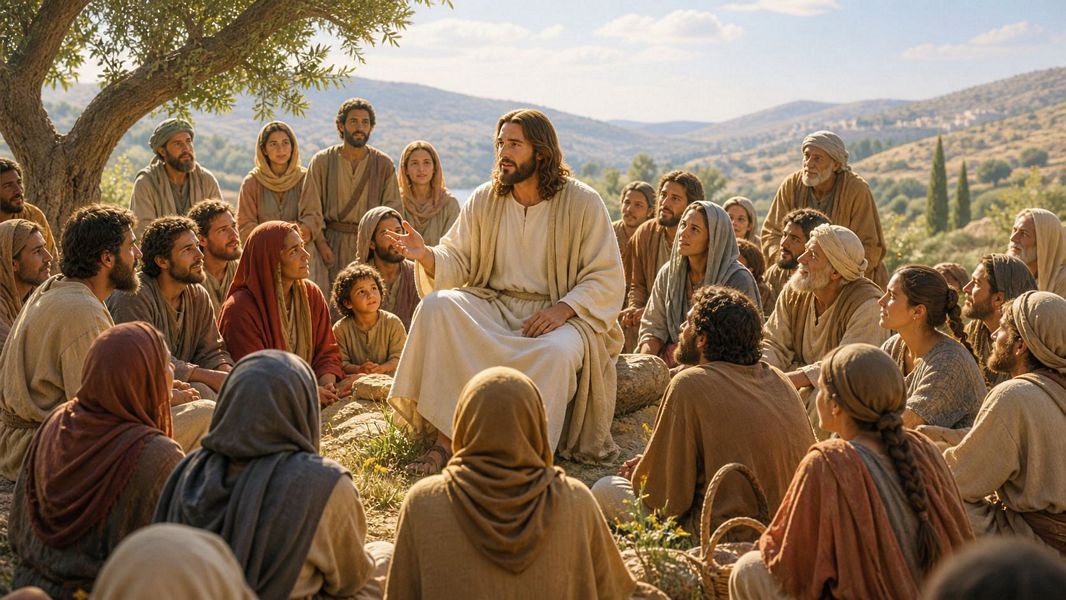
Reading time: 4 min.
We too are sent. Our workplaces, neighbourhoods, families, and friendships are the “towns and places” where Christ intends to come, and He sends us there ahead of Him to prepare the way.
In the Gospel of Luke, at the beginning of chapter 10 (verses 1-19), Jesus extends His mission beyond the Twelve, sending seventy-two disciples ahead of Him to prepare the way. It is a decisive moment: the mission is no longer reserved for a small apostolic circle, but extends to a wider group of ordinary followers. The implication is clear: every disciple is a missionary, sent to their particular corner of the world to make Christ present.
For Christians today, whether we work in offices or hospitals, raise children at home or serve in schools, run businesses or care for the elderly, this passage speaks directly to our baptismal calling. We too are sent. Our workplaces, neighbourhoods, families, and friendships are the “towns and places” where Christ intends to come, and He sends us there ahead of Him to prepare the way.
The instructions Jesus gives are not just for religious “professionals”, but for all who bear His name. They are instructions that reveal what Christian witness must look like in any context: travelling light, bringing peace, healing the wounded, announcing the nearness of the Kingdom through the concrete reality of our lives.
In a culture that often relegates faith to private conviction or Sunday worship, Luke 10 reclaims the whole of life as missionary territory. These three reflections explore how Jesus’ words to the seventy-two illuminate what it means to live as disciples sent into the ordinary circumstances of daily life.
- Travelling light: freedom from the burden of self-sufficiency
“Carry no purse, no bag, no sandals.” Jesus sends His disciples out deliberately vulnerable, radically dependent on God and on the hospitality of others. This instruction challenges the fundamental assumptions of contemporary life: that security comes from accumulation, that value comes from self-sufficiency, that we must always have everything under control.
For Christians navigating ordinary life – careers, family responsibilities, economic pressures – this call to gospel poverty does not mean abandoning prudent planning or responsible management. Rather, it exposes a deeper spiritual
question: what do we truly rely on?
We live in a culture that teaches us to trust in our ability to manage every eventuality. We accumulate certifications, credentials, contacts – building ever larger “bags”. And we exhaust ourselves trying to maintain the illusion of self-sufficiency.
Jesus’ instruction frees us from this burden. Travelling light means recognising our fundamental dependence on God’s providence, on the community of believers, on the grace we cannot manufacture. It means being willing to acknowledge when we do not have the answer, when we need help, when our carefully laid plans collapse and we must trust that God will provide another way.
In practical terms: admitting that we are not perfect and that maintaining a perfect image ultimately enslaves us; being honest with our children about our struggles; choosing simplicity over accumulation, presence over productivity, trust over anxiety.
We are not called to be Christians who seem to have it all figured out. We are invited to discover that Christ is sufficient, that His grace is truly enough, that dependence on God is pure freedom.
- First of all, peace: presence in a fragmented world
“Whatever house you enter, let your first words be, ‘Peace to this house.'” Before any activity or productivity, let there be, first of all, peace. We live fragmented lives: a thousand things at once, half-present in conversations. Jesus sends us to bring peace. Mind you: it is not the superficial peace born of the illusion of having everything under control, but the true and profound peace that comes from knowing we are sustained by God even in the midst of chaos.
This peace is a counter-cultural witness: when colleagues are stressed and we remain steadfast, not through denial but through trust; when neighbourhoods are anxious and we offer a calm presence, not through naivety but through hope.
Think of the daily “houses” you enter: your workplace, your home, the gym, your children’s school, your neighbourhood. Bringing peace might mean not joining in workplace gossip, but speaking with respect; creating a home atmosphere where people can breathe and where there is room for silence; being the neighbour who listens without judging.
This peace becomes particularly powerful and meaningful with those who are struggling. How many people carry invisible burdens, mental health struggles, financial anxiety, relationship crises, existential despair. They do not need solutions. They need someone who can sit with them in their pain without being destabilised, who radiates a peace that suggests solid ground beneath the chaos.
Our Christian witness is primarily about who we are: people who have found a peace that the world can neither give nor take away.
- Healing and proclamation: making the Kingdom visible
“Cure those in it who are sick, and say, ‘The kingdom of God is very near to you’.” Word and action are inseparable. This means recognising the wounds around us and responding with concrete acts of empathy: acknowledging the sense of emptiness and meaninglessness that some carry, the ruthless competition, the burnout of others, offering them the gift of a presence that knows how to listen without judging; staying close to those who feel isolated, to the elderly, with small and simple gestures that nevertheless leave a mark on a suffering heart.
The Kingdom draws near when people can say: “I have encountered something different here. I have been welcomed, valued, restored.”
This is how the early Church grew, not primarily through eloquent sermons, but through communities that lived so differently that people were driven to ask: “What do you have that we do not? Why do you love like this? Where does this hope come from?”
Our lives become the proclamation. And when people ask, we are ready to name the source: “The kingdom of God is near you. The love you have experienced does not come from us alone; it comes from Christ, who has made all things new and who invites you into this new reality.”