


 By BSOL Editor
Reading time: 18 min.
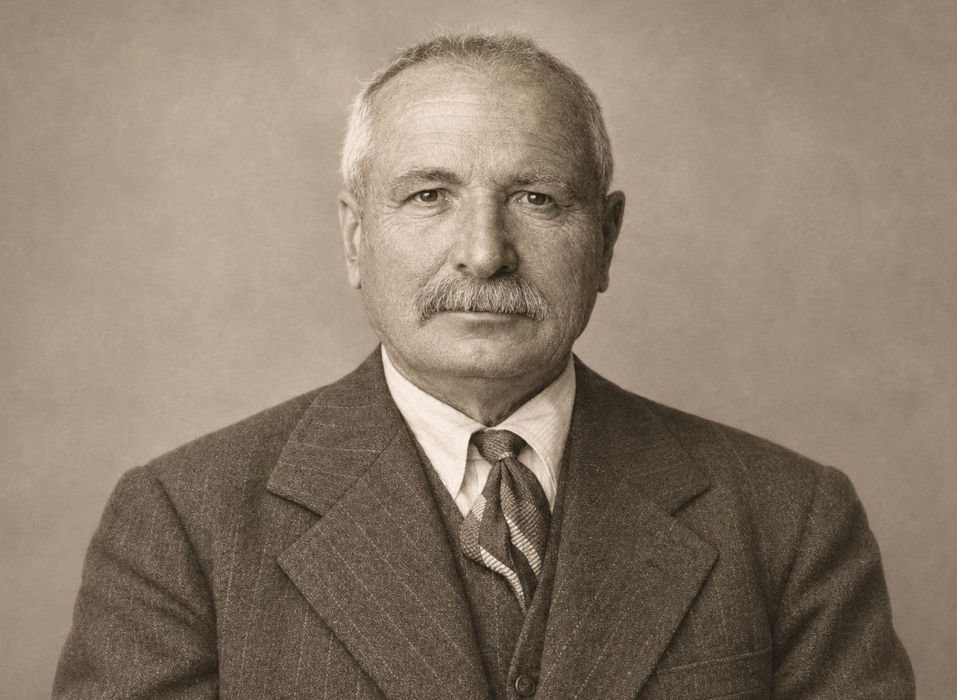
Saint Artemide Zatti, Salesian Coadjutor, was born in Boretto in 1880 and, very poor, emigrated at a very young age to Argentina where he discovered his vocation in the service of the neediest. Having entered the Salesian Aspirantate in Bernal, he tenaciously faced difficulties in his studies and fell ill with consumption, from which he recovered thanks to his unshakeable faith and a promise to Our Lady. He renounced the priesthood and, as a lay nurse, dedicated his life to the hospital in Viedma, organising the pharmacy, treating the sick even on the streets on his bicycle, supporting poor families with tireless charity. Beatified in 2002 and canonised in 2022, Zatti embodies the Salesian ‘Good Samaritan’, a model of lay holiness and prophetic dedication to his neighbour.
- Biographical profile
Artemide Zatti was born in Boretto (Reggio Emilia) on 12 October 1880. It was not long before he experienced the harshness of sacrifice, so much so that at the age of nine he was already earning his living as a labourer. Forced by poverty, the Zatti family, at the beginning of 1897 (Artemide was then 17 years old), emigrated to Argentina and settled in Bahía Blanca.
Young Artemide immediately started working, first in a hotel and then in a brick factory. He started attending the parish run by the Salesians. At that time, the parish priest of Bahía Blanca was the Salesian Fr. Carlo Cavalli, a pious man of extraordinary goodness. Artemide found in Fr. Cavalli his spiritual director and the parish priest found in Artemide an excellent collaborator.
He soon turned towards Salesian life. He was 20 years old when he went to the Aspirantate in Bernal. Those were very hard years for Artemis, who was ahead of his companions in age but behind them due to the few studies he had done. But he overcame all difficulties, thanks to his tenacious will, sharp intelligence, and solid piety. Without a shadow of complexes, he accepted with ease to sit in the pews among 11–14-year-old boys. He made himself available for all occupations, even the most delicate and tiring ones that were entrusted to him, since he was considered a ‘factotum’ by his superiors because of his maturity and skill.
Assisting a young tubercular priest, he unfortunately contracted the disease. The paternal interest of Father Cavalli – who followed him from afar – meant that the Salesian house of Viedma was chosen for him, where there was a more suitable climate and, above all, a hospital with a good Salesian nurse who in practice acted as a ‘doctor’, Father Evasio Garrone. The latter immediately realised the serious state of health of the young man and at the same time sensed his uncommon virtues. “He could be my successor,” he thought, as he was beginning to feel the weight of years and ailments. He invited Artemis to pray to Mary Help of Christians to obtain his recovery, but he also suggested making a promise, “If she heals you, you will devote your whole life to these sick people.” Said and done. Artemis gladly made this promise and was mysteriously healed. He would later say, ‘Creì, prometì, sané’ (I believed, I promised, I was healed). His path was now clearly mapped out and he embarked on it with enthusiasm.
He accepted with humility and docility the not little suffering of renouncing the priesthood (because of the illness he had contracted). Neither then nor later did a lament ever come out of his mouth for this unattained goal. Every time he spoke of it in his life, he did so ‘sin amargura’ (without bitterness) as the witnesses at the process stated. He made his first profession as a lay brother on 11 January 1908, and his perpetual profession on 8 February 1911. In keeping with his promise to Our Lady, he immediately and fully dedicated himself to the hospital, initially taking care of the adjoining pharmacy, after having duly obtained the title ‘qualified in pharmacy’.
When Fr. Garrone died in 1913, all responsibility for the hospital fell on his shoulders. In fact, he became its deputy director, administrator, expert nurse, esteemed by all the patients and by the doctors themselves, who gradually gave him more and more freedom of action. Throughout his life, the hospital was the place where he exercised his virtue, day after day, up to a heroic degree. He got up at 4.30 a.m.; meditation and Mass; a visit to all the wards; then on his bicycle – his legendary bicycle – to assist the sick scattered throughout the city. After lunch, from 2 to 6 p.m., he made another visit to the sick inside and outside the hospital; until 8 p.m. in the pharmacy; another return to the wards and until 11 p.m. study and ascetic readings. Then he rested, but he was always available for possible calls.
As you can therefore see, his service was not limited to the hospital but extended to the entire city, or rather to the two localities on the banks of the Negro River: Viedma and Patagones. Why the bicycle and not a car, which was also given to him and which he hastened to sell? First and foremost, out of a spirit of poverty, but also because he was convinced that the bicycle ‘was better suited for approaching people’. On his way out, he routinely carried his white coat and bag of the most common medicines. One hand on the handlebars and the other with the rosary. He preferred poor families, but was also called upon by the wealthy. In case of need, he moved at all hours of the day and night, whatever the weather. He did not stay in the city centre, but also went to the hovels of the peripheries. He did everything for free, and if he got something, it went to the hospital. When the nurse would tell him that the medicine was too expensive, Artemis would immediately reply, “This is not to be said. Providence is rich. It will provide everything.” His fame as a saintly nurse spread throughout the South, and sick people came to him from all over Patagonia. It was not uncommon for the sick to prefer the visit of the holy nurse to that of the doctors.
Artemide Zatti loved his sick in a truly moving way. He saw Jesus Himself in them, to such an extent that when he asked the Sisters for an item of underwear or a garment for a patient, he would say, “Give me a garment for an old Jesus”; “Give me a garment for a 12-year-old Jesus.” There was a time when the superiors ordered that only 70 patients be admitted. This is what he said to one of his confreres, “What would happen if the 71st sick person was Jesus himself and no bed was available?” His concern for the sick was such that it reached delicate nuances. There are those who remember seeing him carry the body of a patient who had died during the night on his shoulders towards the mortuary, to remove it from the sight of the other patients, and he would do this reciting the De Profundis.
He was always obsequious towards the doctors and hospital owners. But the situation was not always easy, either because of the character of some of them, or because of the quarrels that could arise between the legal managers and he who was one in fact. But he was able to win them all over, and with his balance, he managed to resolve even the most delicate situations. Faithful to the Salesian spirit and the motto ‘work and temperance’, bequeathed by Don Bosco to his sons, he carried out a prodigious activity with habitual readiness of mind, with a spirit of sacrifice especially during his night duty, with absolute detachment from any personal satisfaction, never taking holidays or rest. Some have said that his only five days of rest were those spent… in prison! Yes, he also experienced imprisonment because of the escape of a prisoner who was being treated in hospital, an escape that, in a manifestly sectarian manner, was attributed to the saint. He was acquitted and his return home was a triumph.
Only a profound inner dominion could make it possible for him to win the victory over difficulties and the facile irregularity of the timetable. Instead, he was edifying in witnessing fidelity to the common life. It amazed everyone how this holy religious, so busy with his many commitments at the hospital, could at the same time be the representative of the regularity of community life. He was the one who rang the bell; he was the one who preceded all the other confreres in community appointments. As a good Salesian, he knew how to make cheerfulness a component of his holiness, always cheerfully smiling.
The few photos that have come down to us show him always smiling. He was a man of easy human relations, with a visible charge of sympathy, happy to entertain humble people. But he was above all, a man of God. He radiated it. One of the hospital doctors said, “When I saw Mr Zatti my disbelief wavered.” And another, “I have believed in God ever since I met Mr Zatti.”
When Fr. Pietro Berruti, General Prefect of the Salesians who died in the concept of sanctity, made an extraordinary visit to Patagonia, he expressed this judgement on the saint in writing, “Hospital miracle. Brother Zatti is the man of Providence.
The hospital is a miracle of Providence; I do not understand how it can exist.”
In 1950, Mr. Zatti fell from a ladder and it was during this accident that the symptoms of a cancer manifested themselves, which he himself lucidly diagnosed. However, he continued to attend to his mission for another year, until after heroically accepting suffering, he passed away on 15 March 1951, in full consciousness, surrounded by the affection and gratitude of a population that from then on, began to invoke him as an intercessor with God.
All the inhabitants of Viedma and Patagones flocked to his funeral in an unprecedented procession. On 7 July 1997, he was declared Venerable, and on 14 April 2002, John Paul II entered him in the album of the Blessed. On 9 October 2022, he was canonised during a celebration in St Peter’s Square by Pope Francis.
- Coadjutor Artemide Zatti: a disruptive novelty
From the letter written by Fr. Juan Edmundo Vecchi on the occasion of the Beatification of Artemide Zatti (31 May 2001) we recall some passages that are still significant points for reflection and stimulus to action.
The very title of the letter is already interesting and provocative: Beatification of Coad. Artemide Zatti: a disruptive novelty.
– Today’s novelty, to which the title of the letter refers, consists precisely in including a coadjutor among those whom the Church has deemed worthy of being proposed, by a public act, as models of spiritual life and charity to his religious brothers and sisters and, more broadly, to all Christians. And this on the basis of the testimony of many, confirmed by God through a ‘miraculous’ event attributed to his intercession.
– Artemide Zatti is the first non-martyr Salesian coadjutor to be beatified, and the fact confers, as I have said, a touch of completeness to the series of models of Salesian spirituality that the Church officially declares as such.
I have called this novelty ‘disruptive‘, in the sense that it shakes us up, challenges us in our charismatic fidelity and in our capacity to propose truly significant and attractive models of the Salesian lay vocation today (p. 5) …
– I intend to address a pressing invitation to meditate on the figure of Zatti, in order to provoke an orientation and a practical commitment, at the provincial and regional level, in favour of the vocation of the Salesian coadjutor. Where we fail to communicate and ‘contagion’ at that level, our work becomes less incisive and dreams of global reforms become sterile. To be truly effective, it is essential to think globally and act decisively at the local level (p. 6).
At the end of the letter, Fr. Vecchi takes up this aspect of novelty, which he makes coincide with the value and prophetic force of consecrated life. This means: the primacy of God, the gift of self in a movement of undivided love for God and for one’s brothers and sisters, the ability to arouse amazement at the gift of life, a decisive and uncompromising fight against the evil that is in us and outside of us.
The event of his beatification and canonisation, which proposes him as a singular model to our Family and to the Church, emphasises a fundamental element of our experience as consecrated persons. It is the priority given to the spiritual dimension of existence, novelty and prophecy brought by the Incarnation, which manifests itself in a charity capable of performing acts greater than man. This is the main prophetic form of Christianity, surprising with the radical choice of love, fearlessly contesting all ambiguity, working decisively against evil, which humiliates people. Perhaps the urgency today is not to establish a large number of (formal educational) institutions, but to revise the message conveyed by our personal and community life as a gospel unfolded in time, and an extension of Jesus’ life and actions. In a word, our holiness! (pp. 55-56).
2.1. Original witness of Salesian holiness
The apostolic consecration of this saint was incarnated in his generous gift to the service of the poor and the sick. His being Salesian has taken on a physiognomy of its own. Holiness is not something generic, but a process of spiritual identification, fruit of the action of grace and the free and creative response of the believer.
The attentive observer cannot fail to notice his total consecration to the Salesian mission lived out in welcoming the poor of every kind, in dedication to the needy, and in medical attention to the contagious or repulsive sick, in making room for those excluded from society, in pastoral care to bring the sick, even the dying, to God. It was an active presence in the social sphere, all animated by the charity of Christ that drove him interiorly! His testimony is addressed to every Salesian, to every local and provincial community.
It speaks of vocation as an experience of life in God according to the characteristics of the charism, of which the Spirit has gifted us (pp. 26-27).
2.2. Absolute dedication to the mission: Good Samaritan, in the style of Don Bosco.
Pope Benedict XVI in his first encyclical Deus caritas est expressed it this way: “The Christian’s programme – the programme of the Good Samaritan, the programme of Jesus – is ‘a heart that sees’. This heart sees where love is needed and acts accordingly” (n. 31). In fact, “the parable of the Good Samaritan remains as a criterion of measure; it imposes the universality of love that turns towards the needy person met ‘by chance’ (cf. Lk 10:31), whoever he may be” (n. 25).
In Artemis Zatti, the compassion of the Good Samaritan springs from faith’s own seeing. There is a strong reference to faith as the foundation and soul of all charitable and welfare work, a faith that leads him to recognise the face of Christ in every poor, marginalised, outcast person; faith that leads him to live the concreteness of love; faith that culminates in the supreme gift of introducing him to the fundamental experience of being a child of God, in the face of which all human misery and destitution is filled in the measure of a hope that expands towards a fullness of eternal and complete happiness.
There is a series of anecdotes that show him taking and bringing close to himself the sick, from whom others turn away because they are contagious, deformed, repulsive, difficult to treat. This alone gives a glimpse of the vision with which he proceeded. But we are even more edified by expressions such as these, repeated to the Daughters of Mary Help of Christians, who were at all times delicate, always willing and charitable collaborators of the Hospital, in which a section was reserved for women. ‘Sister, please, a dress and a bed for a 14 (or 75) year old Jesus’…
He had a special ability to treat young patients and even help them close their eyes in the Lord with a sense of trust, joy, and serenity.
I like, among many others, to recall this moving anecdote heard by a witness. To a young boy who had arrived at the supreme moment, Zatti, standing beside him as father and brother, says, “Let us go to our Father: close your eyes, put your hands together. Now we say, Our Father’. During the prayer, the young man’s soul flies to heaven (p. 28).
2.3. Nurse educator
This animating faith is in turn promoted by charity that educates to faith. In a very simple, ordinary, and Salesian way, Zatti developed in his recipients and collaborators the sense of faith, valuing the moments of morning and evening as times of recollection, of finding our vital breath in God.
In the hospital, he created a family environment which – as I have already recalled – had its morning moment at waking up, answering in chorus a now ritual question, “Is everyone breathing?” followed by personal assistance to the needy and thanksgiving to the Lord.
A family moment was also, after lunch, the game of bocce and his very Salesian moment in the evening “Goodnight” (p. 29).
2.4. ‘Sanctified work’: synthesis between spirituality and professionalism
The vision of faith and the flow of charity are kneaded within the concreteness of life as a leaven that ferments and animates commitments, responsibilities and ensures that the demands of competence, professionalism, and updating do not take over and rise to the ultimate horizon of everything: this would be a real tragedy and a cankerworm that would lead to the emptying of consecrated life and its very insignificance. The prospect of wanting to relaunch the consecrated lay life with a certain absolutization of the professional aspect has impoverished, when not suffocated, the vocation itself.
The search for professionalism – which today appears to be an inescapable requirement of our societies, especially the most evolved – represents a challenge for religious life. In fact, it could risk flattening itself on the secular side, making it the source of its identity, and hiding – or, in any case, letting slip into the background – the identity of religious life, which is linked to supernatural motivations. To such a challenge, it is necessary to respond with a particular “grace of unity“, which transforms professionalism into a resource for consecrated life, and indeed, if one can say so, into its further qualification (p. 31).
2.5. Reflecting God with evangelical radicalism
Precisely because his existence was based on the fundamental choice of God and His will, he became a transparency of God’s love and goodness. The union with God that permeated every moment and commitment of the day was manifested both in a balanced and orderly lifestyle and in attentive care for relationships and fraternal life.
Concerning the intensity with which the servant of God lived his faith, with a continuous union with God, Bishop M. Pérez expressed it as follows, “The impression I received was of a man united with the Lord. Prayer was like the breath of his soul, all his behaviour showed that he lived fully God’s first commandment; he loved Him with all his heart, with all his mind, and with all his soul.” Fr. F. López confirmed the same, “It was evident that the servant of God practised continuous prayer. On his bicycle he pedalled and prayed, and when he attended the sick, he naturally offered expressions of faith and pronounced words that lifted the spirit, even with the religious” … Fr. F. Prieto thus testified, “In the performance of community acts he was exemplary. I mean to say that he never made use of the freedoms he had in his post to exempt himself from any community act.” And the witness continued, “The servant of God was an observant, exemplary religious. Punctual, unfailing. I never heard him say, ‘I was not there because…’. His presence was very fraternal…”. (pp. 33-34).
- Pastoral work for vocations: invitation to an extraordinary commitment
The proposal of holiness that arises from Artemide Zatti relaunches both the conviction of the significance of the Salesian coadjutor’s presence in the Salesian mission, and the necessity and importance of a specific commitment to promote and accompany this vocation, seeking the ways and conditions that favour its birth and growth. It is first and foremost, a gift from God that must be recognised and cultivated. Pastoral work for vocations takes concrete form in prayer, proclamation, proposal, welcome, accompaniment, sharing in the reality and in the religious, social and cultural context in which one is called to live and work as an individual and as a community.
The basic difficulty in proposing the vocation to the consecrated life is the loss of the sense of God in our society and culture, the process of de-Christianisation that in the space of a few generations has spread like a dark shadow, attacking the vital ganglia of the ecclesial and social structure, especially in countries of ancient Christian tradition. This situation, which is one of secularism and educational emergency, commits us today to the frontier and trench of a new evangelisation and education with the contribution of a strong and courageous identity.
These difficulties, of whose incidence we are aware, far from weakening, must stimulate and make our commitment more convinced. In this context, the words of John Paul II in the apostolic exhortation Vita Consecrata, referring to the difficulties and prospects for vocations, seem to me more appropriate than ever. “The new situations of scarcity must therefore be faced with the serenity of those who know that what is required of each one is not so much success as the commitment of fidelity.” It is a commitment of fidelity: fidelity to God’s gift and fidelity to Don Bosco’s project. Our first attitude must be one of trust in the Lord and recourse to Him (p. 49).
Fr. Vecchi also recalled some characteristics and conditions that enable the vocation of the coadjutor to be evangelised.
But I do not remember any Salesian vocations founded that did not have these four characteristics: a spirit and desire for God, to the point of giving Him primacy in love and the organisation of life; fascination for Don Bosco; passion for the educational and pastoral youth mission; a sense of fraternal complementarity, without complexes of subalternity, benign, tolerant and generous in the community. It is often said that the vocation of the Salesian coadjutor, while being complete and significant in itself, has weak visibility, and this refers above all to his experience as a consecrated person, to his being an educator-pastor, to his capacity for animation and communication of the values of the charism. This is a consideration that challenges every Salesian and every community in the present context and in the new operational model… How can we ensure that the young people and co-workers grasp the basic motivations that move our life and constitute its originality, and that they feel encouraged to follow our path? The answer may come from caring for the personal experience of life and its communication, from the quality of formation, from the enhancement of those forms of “visibility” that manifest the “meaningfulness” lived and witnessed (pp. 50-51).
3.1. Intercession of Artemide Zatti and vocational fruitfulness: a singular testimony.
One who has experienced the efficacious intercession of Artemide Zatti precisely with regard to the vocation of the consecrated lay person is Pope Francis. When he was Provincial of the Jesuits in Argentina, he gave his testimony in a letter written to Fr. Cayetano Bruno, a Salesian, on 18 May 1986.
“Dear Fr. Bruno: Pax Christi! In your letter of 24 February, you asked me to try to write something about the experience I had with Mr. Zatti (of whom I have become a great friend), regarding the vocations of Brother Coadjutors. […] We had a very great shortage of Brother Coadjutors. I take as a reference the year 1976, the year in which I became acquainted with the life of Mr. Zatti. In that year, the youngest Coadjutor Brother was 35 years old, a nurse, and would die four years later of a brain tumour. The one who followed him was 46, and the one who came after that one was 50. The others were all elderly (many of them are still working today as rowers in their 80s). This ‘demographic picture’ of the Coadjutor Brothers in the Argentine Province led many to think that this was an irreversible situation, and that there would be no more vocations. Some even questioned the ‘relevance’ of the vocation of the Brother Coadjutor in the Company, because – looking at the facts – it seemed that they would die out. In addition, efforts were being made in various places to delineate a ‘new image’ of the Brother Coadjutor, to see if – by this route – there would be a stronger attraction of young men to follow this ideal.
On the other hand, Father General, Fr. Pedro Arrupe S.I., strongly insisted on the necessity of the vocation of the Brother Coadjutor for the entire body of the Company. He went so far as to say that the Company was not the Company without Brother Coadjutors. The efforts made by Fr. Arrupe in this area were enormous. The crisis was not only of some Provinces, but of the whole Company (regarding vocations of Coadjutors).
In 1976, I think it was around September or so, during a canonical visit to the Jesuit missionaries in northern Argentina, I stayed a few days in the Archbishopric of Salta. There, between chats at the end of meals, Bishop Pérez told me about the life of Mr. Zatti. He also gave me the book of his life to read. His very complete figure as a Coadjutor drew my attention. At that moment, I felt that I had to ask the Lord, through the intercession of that great Coadjutor, to send us vocations of coadjutors. I made novenas and asked the novices to make them. […] In Salta, on various occasions I felt the inspiration to recommend to the Lord and to Our Lady for the Miracle of the increase of vocations in the Province (this in general, and not specifically of Coadjutors, which I did with Mr. Zatti). I also made a promise: that the novices would go on pilgrimage to the feast of the Lord and the Lady of the Miracle if we reached the number of 35 novices (this was realised in September 1979). Back to the call for vocations of Coadjutors. In July 1977, the first young Coadjutor entered (he is currently 32 years old). On 29 October of that year, the second entered (currently 33 years old).” The letter continues, presenting year by year the list of 16 other Coadjutors who entered from 1978 to 1986. It then continues, “Since we began our prayers to Mr. Zatti, 18 young Coadjutors have entered and 5 others have come out of the novitiate and the juniorate. In total, 23 vocations. The novices, students, and young Coadjutors made the Novena in honour of Mr. Zatti several times, asking for vocations of Coadjutors. I myself did it. I am convinced of his intercession in this matter, since, considering the number, it is a rare case in the Company. In gratitude, in the 2nd and 3rd editions of the Devotional of the Sacred Heart, we put the Novena to ask for the Canonisation of Mr. Zatti. An interesting fact is the quality of those who have entered and who persevere. They are young people who want to be Coadjutors as St Ignatius wanted them to be, without ‘sugar-coating’ them. For us, the vocation of the Brother Coadjutor is very important. Fr. Arrupe said that the Company, without them, was not the Company. They have a special charism that is nourished in prayer and work. And they are good for the whole body of the Company. […] They are pious, cheerful, hard-working, healthy. They are very virile and are conscious of the vocation to which they were called. They feel special responsibility to pray for young Jesuit students preparing for the priesthood. ‘Inferiority complexes’ for not being priests are not seen in them, nor does it cross their minds to aspire to the diaconate… etc. They know what their vocation is and they want it that way. This is healthy. And it is good. This was, in general lines, the story of my relationship with Mr. Zatti on the problem of vocations of Coadjutor Brothers for the Company. I repeat that I am convinced of his intercession, because I know how much we have prayed by placing him as our advocate. Nothing else for today. I am yours affectionately, in our Lord and in His Most Holy Mother, Jorge Mario Bergoglio, S.I.”.
A splendid stimulus also for us to interpose the intercession of Artemide Zatti for the increase of good and holy vocations of Salesian Coadjutors (pp. 52-55).
3.2. Devotion and entrustment to Mary Help of Christians
I cannot conclude without mentioning the presence and role that Mary Help of Christians had in Artemide Zatti’s vocation and path to holiness. A witness affirms, “I believe that the Servant of God felt devotion to Mary Help of Christians like few do.” And in the Positio we read: ‘To grasp the afflatus with which he was a lover of Mary one has to scroll through his letters, where he advises his family members to have recourse to Mary; where he states that, if he is in the Congregation, he owes it to Her; where he recognises that he owes his life to Our Lady and where there is a call for Her help and intercession at every step’. Indeed, he attributed his recovery from consumption to Our Lady – as we have seen – and for this he consecrated his whole life to God, in the sick and the poor. Every day, he honoured Her with the recitation of the Rosary, even as he cycled through the streets of Viedma, and every day he made the sick recite the Rosary. The Marian greeting when he entered homes was characteristic, “Ave Maria purissima.” These are many signs that testify to the presence of Mary continually felt, who sustained the servant of God in his mission and who inspired him in the faith that moved him and in the charity of a Good Samaritan at the service of the needy.
Fr. Pierluigi Cameroni, SDB
Director of the Salesian Work of the Sacred Heart – Bologna