


 By BSOL Editor
Reading time: 4 min.
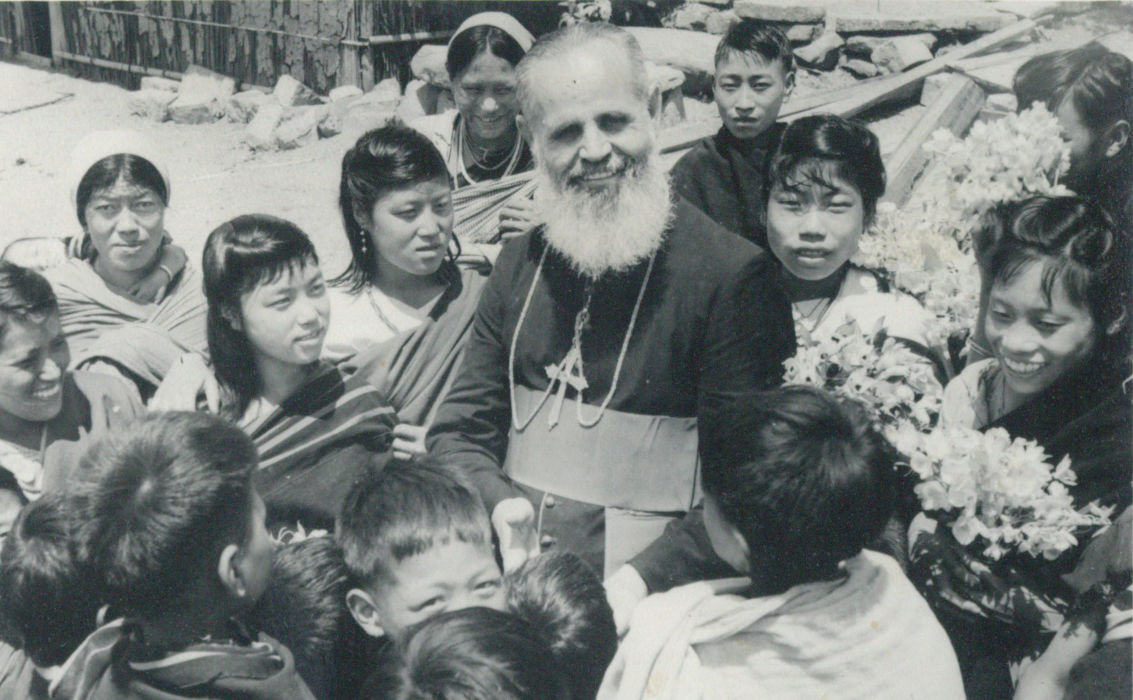
Fifty kilometers a day on foot to reach a village no one else reached. This is the image that, more than any other, endures in the memory of Bishop Oreste Marengo, a Salesian bishop and missionary in north-eastern India. On 24 October 2026, Pope Leo XIV authorized the Dicastery for the Causes of Saints to promulgate the decree recognizing his heroic virtues: the Servant of God is now Venerable.
A milestone, not yet the finish line
Recognition of heroic virtue is an essential step on the path to sainthood. An in-depth examination of Marengo’s life, work, and practice of the Christian virtues has concluded with a positive outcome. Beatification will now require the examination and formal recognition of a miracle attributed to his intercession.
From the Langhe to Assam
Oreste Marengo was born in Diano d’Alba, in the province of Cuneo, on 29 August 1906. He discovered his vocation among the Salesians of Valdocco and, in 1923, at just 17, set off as a missionary for Assam, in north-eastern India. He was ordained a priest in 1932 and devoted his entire life to bringing the Gospel to local peoples as he travelled among them: the Adivasi, Garo, Khasi, Boro, and Naga.
His tools of the trade were his feet. He walked up to 50 kilometers a day to reach the most remote villages, and for this he is remembered as the “Walker of God”. But behind that toil lay neither mere human stubbornness nor some vague philanthropic spirit. It sprang from an intimate union with the Lord. Marengo walked to bring people and communities to Christ, convinced that only by remaining united with Him could the mission bear lasting fruit.
A bishop who was not attached to his office
In 1951, he became the first bishop of Dibrugarh; in 1964, he became the bishop of Tezpur and, in 1973, Apostolic Administrator of Tura. He sought to impose neither a Western model nor one of his own. He worked tirelessly to establish schools, clinics, and parishes, and to ensure that communities themselves became active participants in the mission. He learnt local dialects and languages, and promoted social, educational, and healthcare development while respecting traditional identities.
The gesture that best defines him came in Tura in 1978. Marengo resigned as Apostolic Administrator to make way for the appointment of the first local bishop. He did not return to Italy or retire. At over seventy, he stayed on as a simple assistant parish priest, serving priests who had once served under him. He died in Tura on 30 July 1998. His actions demonstrated that the work of the mission belongs to Christ, and that unity comes before one’s own place in the hierarchy.
“One in Christ, united in mission”
North-eastern India, the former Assam, has always been a mosaic of ethnic groups, languages and traditions, marked by deep-seated internal tensions. Bishop Marengo made no distinctions: he approached peoples who had long been distant from, or rivals of, one another with the same love and respect. By bringing the Gospel to each, he gathered them around the one table of the Eucharist. He showed that the identity of being “one in Christ” is stronger than any cultural or linguistic division, laying the foundations for cohesive and reconciled communities.
It is no coincidence that his story resonates with the theme chosen by Pope Leo XIV for World Mission Day 2026: “One in Christ, united in mission”. Although he lived in the last century, Marengo anticipated its two pillars: deep communion in Christ and unity in the work of proclaiming the Gospel.
Three lessons for today. The newly declared Venerable leaves the Church and contemporary society at least three lessons: a culture of encounter. Anticipating the idea of a “Church that goes forth”, he sought personal, everyday encounters with people on the geographical and existential margins; knowing when to step aside. In contrast to the logic of power and career advancement, he handed leadership of the dioceses over to local clergy, affirming the autonomy of indigenous communities; interethnic dialogue. In a fragmented region, he became a bridge-builder, learning the languages of the peoples he served and promoting their development while respecting their identities.
Why this matters to us. The story of a young man from Piedmont who left in 1923, aged 17, for a distant and unfamiliar land may seem remote. In reality, the questions Marengo raises are strikingly relevant today. What does it really mean to go out to meet others, rather than merely talk about the margins? How can authority be exercised without treating it as something one owns? How can unity be built in a world divided by opposing identities, without erasing differences? His answer lies not in strategies, but in a way of life: daily faithfulness, the patience to learn a language, the toil of walking a path once again. And, at a certain point, the freedom to make way for those who come after, knowing that mission is not personal property, but a gift to be safeguarded together.
A collective effort between Italy and India
His recognition as Venerable is the fruit of international collaboration. Those involved included the Salesian General Postulation, led by Fr. Pierluigi Cameroni, which oversaw the process in Rome and the drafting of the Positio, written by Dr. Matteo Penati; the Diocese of Tura in India, custodian of his mortal remains, together with the historical research centers in Shillong; the Diocese of Alba and the community of his birthplace, Diano d’Alba, united in a prayer group that preserves Marengo’s spiritual legacy and has passionately promoted his cause for beatification. From the hills of Diano to the paths of Assam, the “Walker of God” now has one more title. But what he leaves to the Church remains what it has always been: the road is travelled on foot, together, and with Christ as the starting point.
Fr. Pierluigi Cameroni, SDB
Director of the Salesian Work of the Sacred Heart – Bologna