

 By Fr Pierluigi CAMERONI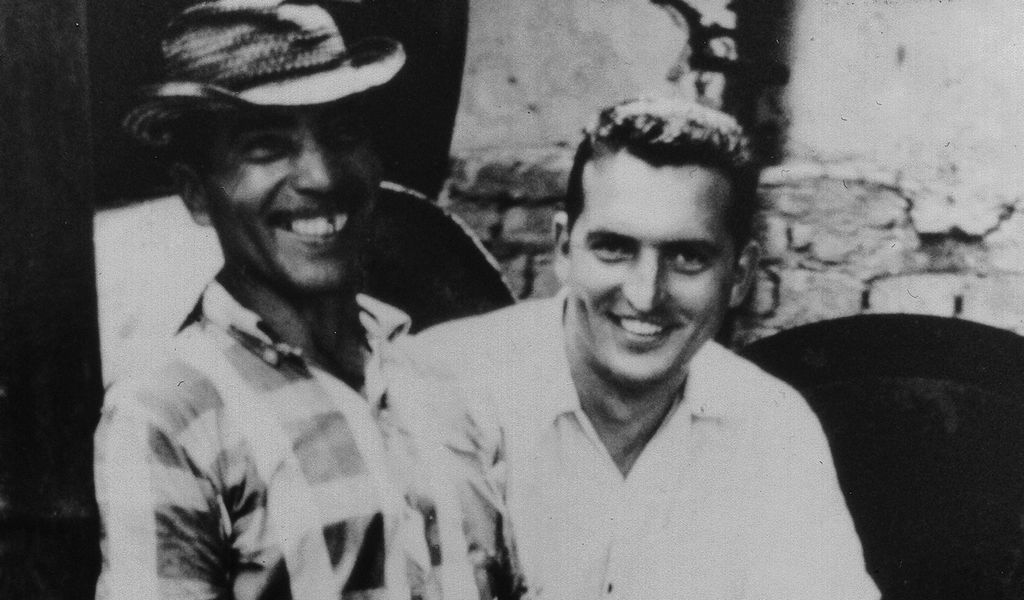
Reading time: 12 min.
In July 1976, in the heart of the Brazilian Mato Grosso, a young German Salesian missionary and an indigenous Bororo catechist sealed with their blood their fidelity to the Gospel and their covenant with the poorest of the poor. Father Rodolfo Lunkenbein and Simão Bororo were killed while defending the lands and rights of the Bororo people from the violence of the fazendeiros. Their sacrifice is a shining testament to how the Christian message can be embodied in the promotion of justice, respect for indigenous cultures, and the defence of the oppressed. This essay retraces Father Rodolfo’s spiritual and missionary journey, from his youthful vocation to his martyrdom, highlighting how his life fully embodied the motto chosen for his first Mass: “I have come to serve and to give my life”.
1. A pilgrimage
I would like to begin by sharing what I experienced in May 2016 when I was invited by the Provincial of Campogrande (Mato Grosso do Sul – Brazil), Fr Gildásio Mendes Dos Santos, to visit the places where Fr Rudolf Lunkenbein and Simão Bororo lived and were killed, and to accompany the path of discernment regarding the opening of the Cause of Beatification. A discernment that had already begun, and had been prepared for some time with research, testimonies and documents, but which needed a guiding and decisive step.
After inaugurating the Marian month in Cuiabá, the city where the Salesians arrived in 1894, I visited the indigenous lands of the Bororo and Xavantes where the Salesians have been present since 1904. Upon arriving in Meruri, I was received by the Bororo community through traditional rites of their culture, including songs, dances, initiation, and body painting. A sort of path followed that increasingly took shape as a pilgrimage with specific stages and stations:
– departure from the mission courtyard, the place where Fr Rudolf and Simão were killed on July 15th, 1976, almost as if to signify that the Salesian courtyard is truly a place of martyrdom, both in the sense of pastoral educational dedication to the mission received, and in the sense of the willingness to live one’s vocation faithfully to the point of the outpouring of blood;
– stop at the cemetery of the Bororo community, where Fr Rudolf and Simão are buried, and where two villagers commemorated the story and the figure of the two witnesses (as they used to do in the early days of the Church), emphasising their love for the little ones and the poor. They spoke with a vividness of recollection and emotional involvement as if the events had taken place a short time before. On Fr Rudolf’s tomb is carved the motto he chose for his First Mass: ‘I came to serve and to give my life’. The Bororo called him ‘Golden Fish’, almost symbolically to remind us how the early Christians expressed the mystery of Christ in the symbol of the fish;
– pilgrimage to the mission’s parish church, Sagrado Coração de Jesus, passing through the Holy Door. In fact, as it was the Year of Mercy, the diocesan bishop had decided that the church in Meruri should be a jubilee church, in memory of Fr Rudolf and Simão. They demonstrated by their life and death that justice is essentially a trusting surrender to God’s will, and they defended the poor and oppressed, forgiving their killers, as Simão did before he died, and as Fr Rudolf expressed in his first homily;
– Eucharistic celebration, where the common sacrifice of Fr Rudolf and Simão was remembered in union with the sacrifice of Christ. Meruri represents the covenant through blood: a Salesian, Fr Rudolf, who gives his life for the Bororo; a Bororo, Simão, who gives his life for Fr Rudolf;
– meeting with some witnesses: two women recounted how, through Fr Rudolf’s intercession, they had received healing graces: one for a daughter who was very ill and in danger of dying; the other for another girl who had an ear infection and was instantly healed. The meeting with Fr Gonzalo Ochoa, a direct witness to the killing of the missionary and Simão, and with Fr Bartolomeo Giaccaria, who has been working among the Xavantes since 1954. The testimony of a young Salesian aspirant belonging to the Bororo was very touching. He was moved, speaking of Fr Rudolf and saying that his family had told him that, thanks to the sacrifice of the Salesian missionary, his people had not died out, but had actually grown in number and also in fruitfulness of vocations;
– visit to the cemetery of Araguaya where the mortal remains of the missionaries Fr John Fuchs and Fr Pedro Sacilotti are kept. They were killed by the Xavantes on November 1st, 1934 and are a seed of hope for the Salesian mission among the Indios of Mato Grosso.
- ‘A covenant of hearts and dreams in missionary lands’
Rudolf Lunkenbein was born on April 1st, 1939 in Döringstadt, Germany. Even as an adolescent, reading Salesian publications aroused in him the desire to be a missionary. He was sent to Brazil as a missionary and did his practical training in the Meruri mission, where he remained until 1965. He was ordained a priest on June 29th, 1969 in Germany, choosing as his motto, ‘I have come to serve and to give my life’. He then returned to Meruri, welcomed with great affection by the Bororo, who gave him the name Koge Ekureu (Golden Fish). He participated in the founding of the Indigenous Missionary Council (CIMI) in 1972 and fought for the defence of the indigenous reserves. On July 15th, 1976 he was killed in the courtyard of the Salesian mission. On his last visit to Germany in 1974, his mother begged him to be careful, because they had informed her of the risks her son was running. He replied, “Mum, why do you worry? If they want to break my finger, I will hold out my two hands to them. There is nothing more beautiful than to die for the cause of God. That would be my dream”.
Simão Bororo, a friend of Fr Lunkenbein, was born in Meruri on October 27th, 1937 and was baptised on November 7th the same year. He was a member of the Bororo group that accompanied the missionaries Fr Pedro Sbardellotto and Salesian coadjutor Jorge Wörz to their first missionary residence among the Xavantes, in the mission of Santa Teresina, in 1957-58. Between 1962 and 1964, he participated in the construction of the first brick houses for the Bororo families in Meruri, becoming an expert bricklayer and dedicating the rest of his life to this trade. He was mortally wounded in an attempt to defend the life of Fr Lunkenbein on July 15th, 1976. Before he died, he forgave his killers.
Through their sacrifice, Fr Lunkenbein and Simão Bororo bore witness to the presence among us of Someone who is stronger than evil, stronger than those who profit from the suffering of the desperate, stronger than those who oppress others with arrogance… Martyrs do not live for themselves, they do not fight to affirm their ideas, and they accept that they must die only out of fidelity to the Gospel. One is astonished at the fortitude with which they faced the trial. This fortitude is a sign of the great hope that animated them: the certain hope that nothing and no one could separate them from the love of God given to us in Jesus Christ.
Fr Lunkenbein proclaimed a fraternal God, promoted justice and sought fullness of life for the Bororo people, who lived in a context of marginalisation, of contempt, threatened by those who wanted to unscrupulously occupy their land. He testified how the proclamation of the Gospel is manifested in the respect and promotion of the culture, traditions, lifestyles and rhythms of the indigenous population, supporting their liberation processes.
Fr Lunkenbein and Simão experienced a true encounter with Jesus Christ, sealing a profound covenant in blood, through the gift of self, “a covenant of hearts and dreams in missionary lands”. - July 15th, 1976
The storm that had been brewing for some time broke out at nine o’clock that morning, when the fazendeiros arrived in Meruri. They did not immediately attack the mission. They stopped two land surveyors four kilometres from the village. They disarmed the four natives accompanying them, threatened them with their own weapons, put them in their cars as prisoners and drove off. They reached some farmhouses where they stopped for a bite and to drink cachaça and rum. Excited as they were, they set their sights firmly on the mission. The ancient struggle for land was underway. Two organisations connected with the Ministry of the Interior, the Funai and Incra, protect the interests of the natives and the settlers respectively; but in carrying out their tasks they encountered many difficulties. Hundreds of small landowners, displaced from the large farms of the rich landowners, invaded the territories of the natives and settled there, sometimes in situations of extreme poverty. This was the case in Meruri. The presence of Funai’s land surveyors who had come to divide up the land had suddenly stoked their anger. When the fazendeiros arrived (62 in all, armed with guns and knives) eager to vent their anger, they found only a small missionary, Fr Ochoa. They began to rough him up, shouting that the missionaries were all thieves, that they wanted the natives’ land for themselves. The Bororo warriors had left a week earlier to hunt the arara (a large colourful parrot) and the pecari (a kind of wild boar). The little missionary was pushed and insulted and did not know how to defend himself when Fr Rudolf arrived.
He was sweaty from the effort and smiling. His hands were greasy because he had to repair the jeep once again. The invaders were men known in the village. The cacico, Eugenio, who had finished breakfast and was approaching, immediately recognised João, Preto, and several others. João and Fr Rudolf were talking about land and measurements, and the missionary was trying to explain. “Not so, these measurements are official things, ordered by the Funai…”. The settlers, on the other hand, felt defrauded. So, Fr Rudolf proposed making a list of all those who wished to protest: he in person would collect their protest and forward it to Funai, the government organisation that protects the indigenous people. So, they entered the Rector’s office, and Fr Rudolf sat down. He wrote on a large sheet of paper one after the other 42 names. That sheet with his obviously nervous handwriting remained on the table.
Fr Rudolf had no idea that he was writing for the last time, and that he was writing down the names of his killers. Everything seemed settled. The cacico, the nine natives, the land surveyors, the fazendeiros returned to the open air and Fr Rudolf shook hands with each one. The land surveyors unloaded their equipment from a car to retrieve it. The weapons seized from the Bororos were also taken out. On seeing this strange operation, Fr Rudolf broke out in an exclamation of astonishment and reproach. It was fatal for him. João Mineiro immediately slapped him. The natives rushed to his side. João pulled a Beretta revolver from his pocket. He was taking aim when Gabriel, one of the Bororos, grabbed his wrist. At the same instant Preto drew his pistol and fired at the missionary. From the veranda Sr Rita saw Fr Rudolf bring his hands to his chest, and his tall, robust figure stagger by. Preto fired four more shots at the missionary, who collapsed to the ground. Simão, who had tried to defend the missionary, was shot dead. The young native’s mother, Tereza, ran to her son’s side to rescue him, and was shot in the chest. Finally, the assailants fled. They jumped into their cars. Sr Rita ran to where Fr Rudolf lay in his blood. He was alive, but at death’s door. She could only offer him a word of comfort, “Padre diretor, vai para a casa do Pai” (Father Rector, go back to the Father’s house). The missionary attempted a smile, then his heart stopped. The sacrifice was accomplished. Rudolf Lunkenbein’s Mass was over. - History of the Cause
On September 7th, 2016, the Congregation for the Causes of Saints informed Msgr. Protógenes José Luft, S.D.C., Bishop of Barra do Garças (Brazil), of the Holy See’s approval for the Cause of martyrdom of the servants of God, Rudolf Lunkenbein, a Salesian priest, and Simão Bororo, a layman, who were killed in hatred of the faith on July 15th, 1976 in the Salesian mission of Meruri (Mato Grosso – Brazil).
“Meruri Rodolfo! Meruri Simão! Meruri, martírio, missão!”. This phrase from the poem by Msgr. Casaldáliga, bishop emeritus of the Prelature of São Félix do Araguaia, could not have been more fitting to describe what happened in Meruri, on January 31st, 2018 when Msgr. Protógenes José Luft, Bishop of Barra do Garças, officially opened the Diocesan Inquiry into the life, martyrdom, as well as the reputation for holiness and signs of the servants of God Rudolf Lunkenbein, a professed Priest of the Society of St Francis de Sales, and the native Simone Cristiano Koge Kudugodu, known as Simão Bororo, a layman.
There could not have been a better gift to present to Don Bosco on his feast day: a missionary son of Don Bosco and a native recipient of his mission, walking together on the path to sainthood. This is how Msgr. Pedro Casaldáliga’s poem continues, “In the Mass and in the dance, in the blood and in the earth, Rudolf and Simão weave the covenant! Meruri in life, Meruri in death, and the strongest love is the mission fulfilled”.
The Cause is advancing rapidly: over 40 witnesses have already been heard, both Salesians, Sisters, Bororo natives, and relatives of Fr Rudolf. It is unbelievable how this Cause has struck the hearts of so many people in the Province of Mato Grosso, in Salesian Brazil and in the Church. Rudolf and Simão’s example of faith and love for the Kingdom of God is truly a sign and a call to renewal and missionary ardour. Fr Rudolf and Simão are part of a long line of Catholic missionaries and murdered indigenous people who have accompanied, evangelised the Indios and fought for their rights. The fight to defend the land, the peoples who inhabit it and its immense natural, cultural and spiritual riches, has been and still is made fruitful by the blood of martyrs.
This Cause developed in the context of the 125th anniversary of the start of the Salesian missionary presence in Mato Grosso: every milestone always presupposes a preceding contribution of holiness. Furthermore, the Cause took place in the path of preparation and celebration of the special Synod for the Amazon region desired by Pope Francis. This Synod aims to “identify new ways for the evangelisation of God’s people in the areas of the greater Amazon, especially the indigenous peoples”.
5. Listening to Fr Rudolf
Fr Lunkenbein in his letters, homilies and other interventions manifested his missionary heart and the prophetic power of the Gospel in promoting justice and solidarity. In his first homily, delivered on the Fifteenth Sunday after Pentecost at the parish of Aschau (Germany) on September 15th, 1968, the newly ordained priest began by recalling how “the texts of the Sunday Mass always reveal in a new way the meaning and purpose of life”. He expressed how the Word of God has always been the lamp that has enlightened his path. He then proceeded to comment on the sixth chapter of St Paul’s Letter to the Galatians First of all, he contextualised the proclaimed word in a truly meaningful way, reawakening the dignity of the human person as a community being and a child loved by God, “We are rational beings, we are not animals. We live together in community. We are children of God, both Christians and non-Christians, and we are all loved by the One who created us and is our Father”. He then exhorted the listeners to live with responsibility with a truly evocative expression, “Therefore every Christian should act as a human person with a Christian posture”. In all photos, Fr Rudolf appears as a tall person, always smiling, with a strong and robust physique, as if to signify his inner strength as well.
Those who approached him for the first time were impressed by his imposing height of 1.92 metres, however, immediately after the initial impact, everyone felt welcomed by the contagious goodness and cheerful, affectionate smile of this Salesian missionary priest.
He continued in his homily, “Let us be humble, that is, let us be modest in our approach, placing ourselves in our rightful place as creatures of God, our Father, Lord of creation, life, and death; this is our fundamental orientation. To be humble does not mean to despise one’s own dignity, but on the contrary, to be humble is to know how to live in the presence of God who dwells in us”. The Christian, following the example of Christ and following in his footsteps, is called to renounce oneself and live according to the vocation one has received, “Our sending is like his: to be here for people, for sinners, for the sick, for the elderly, and to love them. In this way we are like Christ Jesus. Our task as Christians is to follow in his footsteps. His steps, however, are the way of love and goodness. ‘Let us not grow weary in doing good’ (Gal 6:9)”.
He concluded his homily with a prayer that, in the light of his life which ended in the ultimate sacrifice, takes on an extraordinary prophetic value, “Lord, you who told us to love all; Father, you who taught us to pray, ‘forgive us our trespasses, as we forgive those who trespass against us’. We ask, ‘May your kingdom come also for our enemies. Give them their daily bread as you give it to us’. I cannot exclude anyone from my prayer and my love. And no one who does good can be excluded by God. Let us love all as the Lord has loved us. Amen”. It is a prayer of forgiveness and reconciliation, asking for bread even for one’s enemies and manifesting a horizon of love that excludes no-one. It is interesting to note that he motivated this prayer by recalling the reconciliation that took place between Bororo and Xavantes, long-time avowed enemies, and sealed at Christmas 1964 when a Xavante Cacico received baptism with a Bororo Cacico as his godfather.
In his last writings, allusions to death often appear, “Even today, a missionary must be willing to die in order to do his duty. The help you give us shows that you have clearly understood what it means to be a Christian today: to sacrifice oneself with Christ, to suffer with Christ, to die with Christ and to conquer with Christ for the salvation of the whole world, of our neighbour”.
(Letter to his compatriots, 11.08.1975).
The figure of the indigenous catechist Simão represents a model of a Christian “who embraced his vocation with radical evangelical commitment, experienced the inculturation of the Gospel in his own life, testified to his personal faith in Jesus Christ, and shared the joy of the Gospel with his people and the missionaries”. The holiness of Fr Rudolf and Simão is the testimony of a faith in the Risen Lord lived in daily service, in fraternal contact with people, in work, in the preaching of the Word and catechesis, in ordinary prayer, in love for Our Lady, in joy and evangelical commitment to the cause of the native population.
 BSOL Editor