

 By BSOL Editor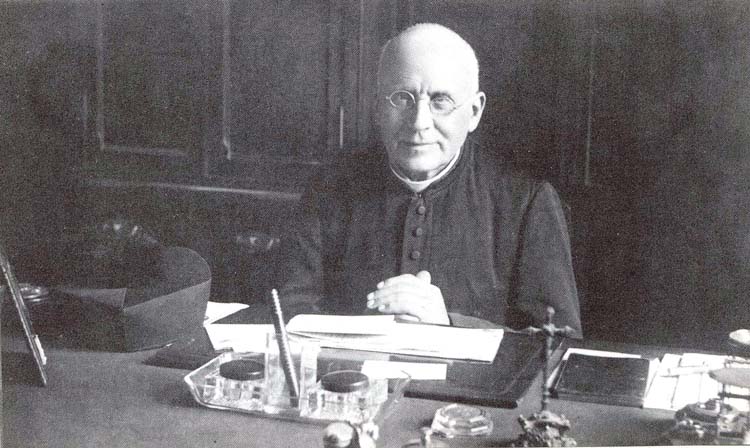
Reading time: 4 min.
In the journey of Salesian history, Blessed Philip Rinaldi occupies a special place. The third successor of Don Bosco and the last to have known him personally, he remains a discreet but luminous figure: a man of profound humility, a practical educator, a spiritual guide capable of reading the times without losing his roots. Today he is recognised as a master of fatherhood, of embodied pedagogy and of Salesian spirituality lived in daily life.
A vocation that slowly emerged
Philip Rinaldi was born on 28 May 1856, in Lu Monferrato, into a farming family. Nothing suggested a priestly future; his vocation came with difficulty, amidst hesitations and escapes. It was Don Bosco who sought him out and convinced him with truly paternal patience.
At twenty-one, he entered Valdocco and found in Don Bosco not only a formator, but a father who accompanied him step by step. Philip was not brilliant in his studies, but he soon revealed a great capacity for relationships, listening, and discernment.
Ordained a priest in 1882, he began his ministry in Spain, where he animated the works with missionary energy and organisational spirit. Returning to Italy, he became Spiritual Director of the Congregation, until his election as Rector Major in 1922, at a fragile moment after the imposing figures of Fr. Rua and Don Albera.
Rinaldi brought a new style: less severe, more paternal; less focused on structures, more on people. His governance was marked by trust and an extraordinary ability to encourage without forcing.
The portrait of a father
Those who knew him described him as a vigorous man, but with a gentle and reassuring manner. He did not like the spotlight, but silent closeness. Modern in thought, simple in speech, he had his own way of accompanying, without reproaches, but with good firmness.
Between 1913 and 1915, during conferences to young students in Foglizzo, he offered the most mature guidelines of his educational vision. Those words — transcribed by his students — reveal a realistic educator, capable of preserving the spirit of Don Bosco while opening it to the new challenges of the twentieth century.
Educating by preventing, not correcting
Fr. Rinaldi was a great interpreter of the preventive system. He repeated that the educator’s task is “to make young people unable to make mistakes,” not through prohibitions but by creating a healthy environment where they feel loved and accompanied.
It is not about avoiding difficulties, but about growing internally. The Salesian, according to Rinaldi, must be a living presence, not a spectator, sharing time, environments, games, efforts.
For him, education is not born from books, but from relationships. He distrusted “academic” pedagogy and invited learning from young people themselves,
“The educator must know life, souls, and have the spirit of sacrifice.”
Science is useful, but only if combined with experience, goodness, and daily holiness.
A Congregation that grows like a family
During his rectorship, Fr. Rinaldi renewed Salesian life without ruptures. He clearly distinguished the roles of the educating community — Director as father, Prefect for organisation, Catechist for spiritual growth — but without creating distances.
His goal was one, the family spirit. Not a militarised community, but a home where everyone feels welcomed and responsible.
Among his most fruitful intuitions was the revival of youth companions, educational groups within oratories and colleges. Not simple associations, but spaces where young people themselves became protagonists, supporting their companions and learning to serve. A true school of citizenship and faith.
Tradition and novelty: creative fidelity
Rinaldi did not limit himself to preserving what Don Bosco had done; he asked himself what Don Bosco would do today.
For this reason, he encouraged the revision of regulations, the updating of works, attention to the changing world. Not to change the spirit, but to make it alive.
For him, Salesian identity is not defended by rigidifying, but by breathing with the present time: cultivating fidelity to the spirit, not to the letter, having courage to innovate without breaking, placing the centrality of the person more than structures.
In this, he was surprisingly modern and anticipatory.
A concrete and luminous spirituality
Alongside the pedagogue, the spiritual man emerges. Fr. Rinaldi was deeply devoted to Mary Help of Christians, but he was never a detached mystic. His spirituality was simple, daily, made of trust and realism.
He followed the line of Saint Francis de Sales: gentleness, Christian optimism, and a serenity that comes from abandonment to God. He knew that holiness is not an exception, but a concrete path, lived in patience, service, education.
Father of a larger family
His gaze was not limited to consecrated Salesians. Rinaldi was a builder of the Salesian Family; he strengthened the Cooperators, energetically supported the Daughters of Mary Help of Christians, and encouraged the apostolic presence of the laity.
In 1921, he founded the first missionary studentate in Ivrea for young people destined for foreign missions, a sign of trust in young people and in the universality of the Gospel. He died on 5 December 1931. Over time, his figure revealed itself in all its greatness. On 29 April 1990, John Paul II proclaimed him Blessed, recognising his simple and paternal holiness.
A legacy that still speaks
Today, the figure of Fr. Philip Rinaldi returns to be a source of inspiration. In a world that struggles to educate and generate trust, his testimony reminds us that education and holiness walk together.
He brought Don Bosco’s legacy into the heart of the 20th century with creative fidelity, without nostalgia, without forcing, with the silent strength of accompanying love.
His message remains relevant:
• educating is an act of fatherhood and trust;
• the Salesian spirit lives when it becomes a home;
• innovation is true only when it comes from the Gospel.
Fr. Rinaldi continues to teach that holiness is not made of extraordinary gestures, but of daily goodness. It is the simplest — and most revolutionary — secret of every education that comes from the heart.
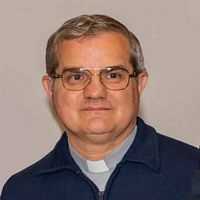 Fr Pierluigi CAMERONI
 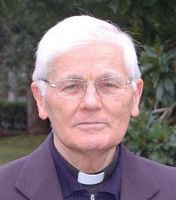 P. Wirth MORAND