

 By P. Natale CERRATO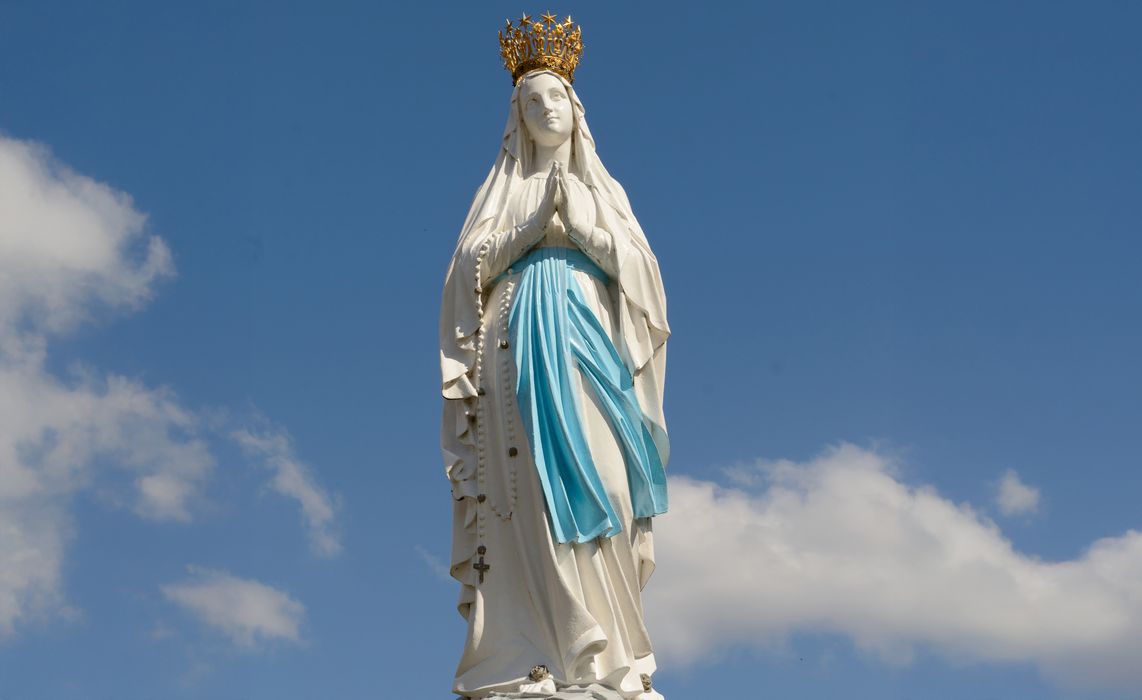
Reading time: 4 min.
The meeting between Don Bosco and the young Bartolomeo Garelli, which took place on 8 December 1841, the Feast of the Immaculate Conception, in the sacristy of the Church of St Francis of Assisi, has become the humble symbol of the Oratory’s beginnings in Salesian tradition. The testimonies of his first successors, Fr Michele Rua and Fr Paolo Albera, highlight how Don Bosco himself recognised that simple Hail Mary as the seed from which the entire Salesian work would grow. It is a page of history that reveals the evangelical power of small beginnings.
Fr Michael Rua, first Successor of Don Bosco, jealous custodian of the first Salesian history and Don Bosco’s words, wrote to the Salesians on 17 May 1904:
“My dear sons, our good father Don Bosco began his work on the day of the Immaculate Conception, the feast on which he wanted the greatest facts and the main arrangements concerning our Pious Society to be marked by” (Lettere Circolari di Don Michele Rua ai Salesiani, Torino, 1965, p. 367).
Fr Paul Albera, Don Boscos second Successor and one of his closest disciples, in his Circular to the Salesians of 15 May 1911 on piety, stated: “On 8 December 1886 [Don Bosco] gave a talk to his confreres in Turin. He reminded the listeners of his first meeting with Bartholomew Garelli in the sacristy of St Francis of Assisi, which had taken place 45 years earlier; then he went on at great length to describe the journey that his work had made over the years from such humble principles. But far from attributing even the slightest part of merit to himself, he concluded by saying ‘And all this good that our Pious Society is doing is the fruit of that Hail Mary that I said before setting out to catechise that poor child.’”
The date 8 December 1841 is therefore associated by Salesian tradition with the beginning of Don Bosco’s festive oratories for poor and abandoned youth, the fundamental work to which all the others are linked.
Three documents compared
1854 saw a first document of Don Bosco’s which remained as a handwritten item for a long time and was addressed to civil and religious authorities. It bears the title: Cenno storico dell’Oratorio di S. Francesco di Sales (Historical Outline…) and begins: “This Oratory, a gathering of young people on Sundays and holy days, began in the Church of St. Francis of Assisi. For many years during the summertime, the Rev. Fr Cafasso used to teach catechism every Sunday to bricklayers’ boys in a little room attached to the sacristy of the aforementioned church. The heavy workload this priest had taken on caused him to interrupt this work which he loved so much. I took it up towards the end of 1841, and I began by gathering two young adults in that same place who were in serious need of religious instruction. These were joined by others, and during 1842 the number went up to twenty, and sometimes twenty-five.” (Piccola Biblioteca dell’I.S.S. No. 9, p. 34-35).
The second document dates back to 1862 and bears the title: Cenni storici intorno all’Oratorio di San Francesco di Sales (Historical Outlines….). It begins as follows: “The idea of the Oratories came from frequenting the prisons in this city. In these places of spiritual and temporal misery there were many young men in the flower of their youth, alert, good-hearted, well able to be the consolation of their families and an honour to their town; and here they were locked up, discouraged, the opprobrium of society.”(ibid., p. 56).
The third document is the Memoirs of the Oratory of St Francis de Sales, written by Don Bosco in 187375. We can read there: “On the Solemnity of the Immaculate Conception of Mary (8 December 1841) at the appointed hour I was vesting to celebrate Mass at the appointed time...” (MO 102ff). And here, the document tells us, a poor boy entered the sacristy of St Francis of Assisi out of curiosity and was immediately thrown out by the sacristan, but Don Bosco had him called back to him as a friend and, after celebrating Holy Mass, he questioned him and spoke to him with fatherly affection starting his catechism lesson with a Hail Mary! (MB II, 73-76)
The meeting with Garelli on 8 December 1841 was then seen and considered by Don Bosco as the emblematic beginning of his Oratory. This is clear from the testimony of Fr Rua and Fr Albera. This fact, apparently insignificant, he did not, of course, find ecessary to describe in official documents intended for external authorities. Instead he recounted it in those Memoirs of the Oratory of a confidential nature to let his sons know that all the good that the Salesian Society was doing was the fruit of that small seed.
That is why Don Bosco wanted various anniversary celebrations to happen on that date.
The inauguration of the Chapel of St Francis de Sales at the Marchioness Barolo’s little hospital took place on 8 December 1844. The inauguration of the second Oratory opened near Porta Nuova and dedicated to St Aloysius took place on 8 December 1847 at Don Bosco’s behest. And on 8 December 1851 the tenth anniversary of the beginning of the Oratory was celebrated at Valdocco.
Therefore Bishop Cagliero, later Cardinal, said that in 1862 Don Bosco had told him: “Up to now we have celebrated the feast of the Immaculate Conception with solemnity and pomp. Indeed it was on this day that our work of the festive oratory began” (BM VII, 197).
Doubts about that meeting
The episode of 8 December 1841 raised doubts and questions not only about the accuracy of the date, but also about the name and place of origin of the boy and the historical consistency of the story itself. But these are doubts and questions that, after careful examination, do not become evidence. There is, in fact, not a single one of those hypotheses that is not also open to doubts and questions (N. CERRATO, Vi presento D. Bosco, Torino, LDC, 2006, p. 116-117).
However, it is reasonable to suppose that Don Bosco himself only later saw in that encounter and in that Hail Mary the paradigmatic beginning of his Oratory and spoke of it to his closest friends even years before writing his Memoirs.
The testimonies, then, of Don Boscos disciples, such as Fr Michael Rua, Fr John Cagliero and Fr Paul Albera, are worth more than our hypotheses and doubts, while Don Bosco’s Memoirs have, yes, a didactic purpose, but they are based on a candidly described story and on something he had truly experienced.
 P. Wirth MORAND
 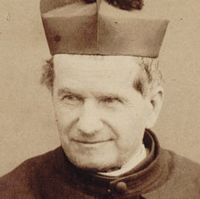 St John Bosco
  BSOL Editor