

 By BSOL Editor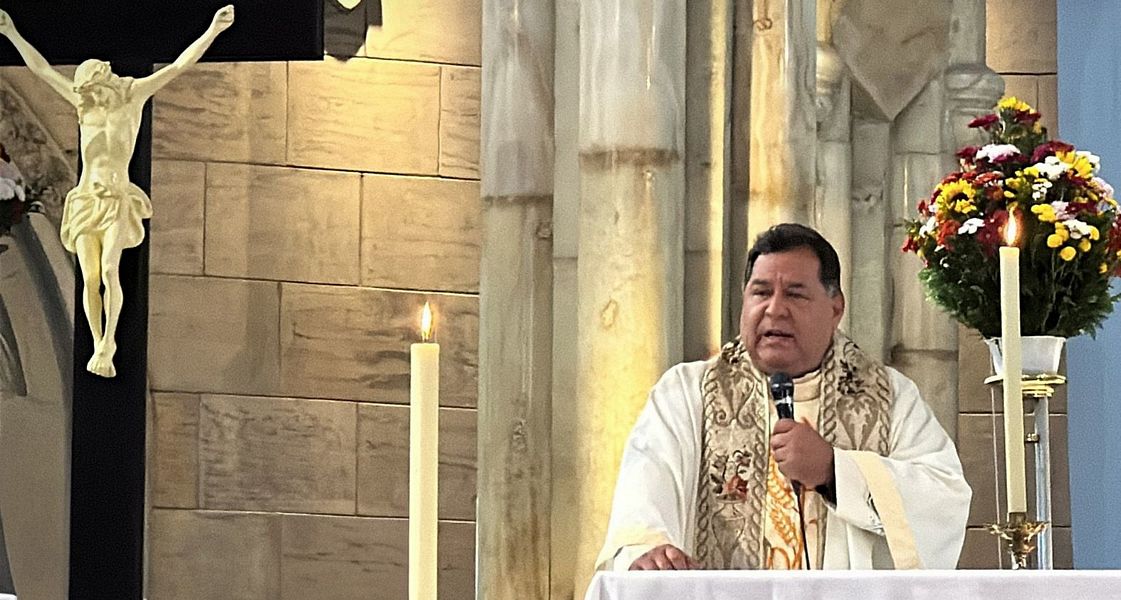
Reading time: 3 min.
Fr. Juan Aaron CEREZO HUERTA, born in Mexico City in 1968, is the new Salesian provincial of one of the largest and most complex metropolises in the world. Ordained as a priest in 1996, he has dedicated his life to the education and guidance of the most vulnerable young people, from street children to teenagers in youth centres. With a doctorate in Spiritual Theology from Rome and twenty years of experience in various Mexican Salesian works, he brings a deep understanding of Don Bosco’s charism and a clear vision: to bring the Salesian presence to where it is still lacking and to offer young people concrete opportunities for growth and professional development.
Could you introduce yourself?
I was born on 29 June 1968 in Mexico City. I did my primary studies at the Normal School of the Juan Ponce de León Institute in Puebla. I later studied Philosophy at the Centro América Institute in Mexico City, and Theology at the Cristo Risorto Institute in Tlaquepaque, Jalisco.
I made my first religious profession on 15 August 1989, and was ordained a priest on 3 February, 1996.
I obtained a degree in Educational Psychology from the Nuova Galizia Institute in Guadalajara, Jalisco, and took specialisation courses in Human Development at the Ibero-American University, Querétaro campus. I earned a Licentiate in Spiritual Theology from the Salesian Pontifical University (Rome), with the thesis “Spiritual Accompaniment in Some Writings of Don Bosco”, and later a Doctorate in Spiritual Theology from the same university, with the thesis “The Contributions of Fr. Paul Albera to Salesian Spirituality”.
During my ministry, I have worked in various Salesian communities and works, including: the Arti sanato di Nazareth (for street children) in Mexico City; the Salesian College of Querétaro; the Alborada Salesian Oratory in Mérida, Yucatán; the Parish of St Francis of Assisi in Coacalco, State of Mexico; the Juan Ponce de León and Trinidad Sánchez Santos colleges, the Miguel Rúa Oratory and the Temple of St Michael in Puebla. In addition, I have served as Delegate for Youth Ministry and for the Salesian Family.
When did you first feel the call, and what brought you to the Salesians?
I felt God’s call to the priesthood when I made my first communion. When I met the Salesians at the Oratory in Coacalco, I truly identified with the charism, seeing the clerics playing with us in the courtyard.
What are your fondest memories of your childhood?
My fondest childhood memories are the times I spent playing with my friends who lived near my house; also, the trips the whole family took to various places like the beach and the woods.
What has been the most difficult moment and the most rewarding moment of your ministry?
The most difficult moments of my life were the death of my father when I was a novice, and my mother’s death when I was returning from Rome after finishing my licentiate.
The most rewarding was my priestly ordination.
You have been appointed provincial in one of the ten largest cities in the world. What are the biggest challenges in educating young people?
It is a very big responsibility because large cities present a complexity of tasks and challenges. But they also offer the benefit of collaborating with other institutions on one of the main objectives, which is education. Education is one of the most important paths to real social change.
One of the educational challenges for young people is finding decent work that offers them the opportunity to develop professionally and earn a respectable income.
Could you share an experience with young people or in your mission that has particularly marked you?
One of the most meaningful experiences I have shared with young people is working together in ministry: with street children as educators; in the Oratory as youth leaders; on missions in service to communities; in the parish as agents of evangelisation; in the colleges in the Salesian Youth Movement. Working together with young people has been my greatest satisfaction.
What role do prayer and community life play in your daily routine?
The life of prayer is nourishment for a religious. Having constant, quality moments of prayer allow a Salesian to prepare for the mission; only in this way can he offer young people an authentic encounter with God.
What place does Mary Help of Christians hold in your life?
I grew up in a family with a devotion to the Virgin of Guadalupe. In Mexico, being a Guadalupano is natural and essential. In the Virgin, we find our refuge, support, help, strength, and hope. For Mexicans, the Virgin of Guadalupe is our second mother.
Do you have any projects that you are particularly keen on?
I dream of reaching the states of Guerrero, Veracruz, Campeche, and Tabasco, where we Salesians are not yet present. I believe we owe a great debt to all those people who are waiting for a Salesian presence.
What message would you like to give to young people today?
Young people never cease to be the future, that is, the hope in a world that is increasingly complex in its principles, challenges, needs, opportunities, and realities. Young people are the hope for something new, meaningful, and better. I am convinced that in the hands of many young people lies the hope for change and transformation.
 Fr Bruno FERRERO