


 By St John Bosco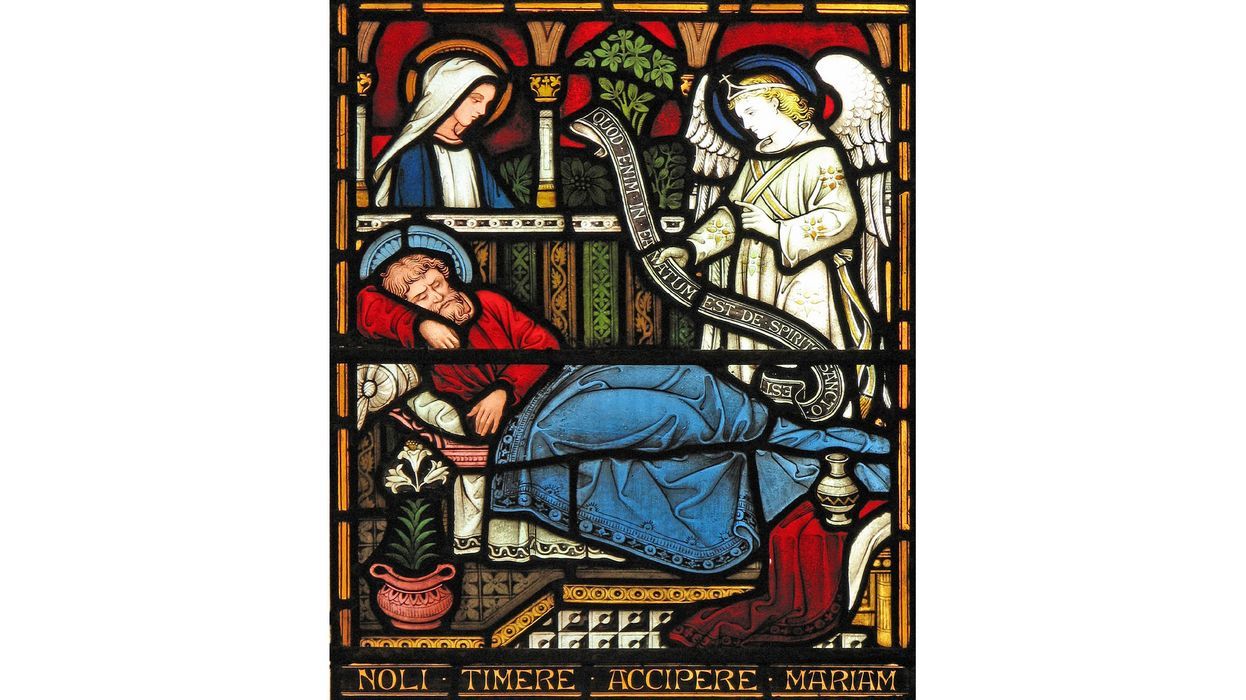
Reading time: 51 min.
Don Bosco’s devotion to Saint Joseph stemmed from his recognition of Joseph’s powerful intercession. For this reason, the founder of the Salesians chose him as a secondary patron, alongside Mary Help of Christians, and wished to keep his memory alive. He asked Giuseppina Pellico, Silvio Pellico’s sister, to translate a very popular work by Father Jean-Joseph Huguet, entitled “Dévotion des sept dimanches consacrés à honorer les douleurs et les allégresses de Saint Joseph: avec indulgences plénières chaque dimanche” (Devotion of the Seven Sundays dedicated to honouring the sorrows and joys of Saint Joseph: with plenary indulgences each Sunday), published in Lyon in 1862.
This text proposes a spiritual journey of seven consecutive Sundays dedicated to meditating on the sorrows and joys of Saint Joseph, enriched by the plenary indulgences granted by Pope Pius IX. Ample space is given to edifying stories and graces attributed to his intercession: protection during calamities, healings, conversions. The central sections highlight the saint’s greatness, power, and love for humanity, his role as a refuge for sinners, and as patron of a good death.
Devotion of the seven Sundays consecrated to honouring the sorrows and joys of Saint Joseph
(with plenary indulgence every Sunday)
Index
Preface
General note on devotion to Saint Joseph and the indulgences that can be gained thereby
Example
Exercises in honour of the seven sorrows and seven joys of St. Joseph
First Sunday. Excellence of the name of Joseph
Example
Practice
Second Sunday. The greatness of St. Joseph
Example
Practice
Third Sunday. St. Joseph filled with graces and merits
Example
Practice
Fourth Sunday. Power of St. Joseph
Example
Practice
Fifth Sunday. Love of St. Joseph for men
Example
Practice
Sixth Sunday. St. Joseph refuge of sinners
Example
Practice
Seventh Sunday. St. Joseph patron of a good death
Example
Practice
Salutation of St. Joseph
Meditation for the Feast of St. Joseph (March 19)
Example
Practice
Meditation for the Feast of the Patronage of St. Joseph
Example
Practice
Preface
Devotion to the glorious Saint Joseph makes new and comforting progress in the Church every day; the devout children of Mary have understood that nothing can be more pleasing to Jesus and His divine Mother than to honour with particular worship him who was united to them by such intimate and pure bonds, and from whom they received such great services during their time on this earth.
The glory of Saint Joseph, already so great, seems to have received a new enlargement after the dogmatic definition of the Immaculate Conception of the Most Holy Virgin, his chaste spouse. Mary is incomparable in all her privileges, she is singular in all her greatness; she alone is Immaculate in her Conception; she is Mother, but her fruitfulness is crowned by the most beautiful flowers of her virginity; she is Virgin, but her virginity is crowned by the fruits of her fruitfulness; she is Queen, but her reign extends over all the greatness and powers of the universe; she is blessed by God, but she is blessed above all women. If she is therefore singular among mothers, singular among virgins, singular among queens, should she not likewise be singular among spouses? It was therefore necessary that Saint Joseph be singular in his merits so that she might have reason to love him singularly among the saints. Certainly, Most Holy Mary, yielding in merits only to her divine Son, was a thousand times holier than Saint Joseph; but it must be said, however, that this holy Patriarch must have had a virtue in some way proportionate to that of Mary, since in well-ordered unions there must be similarity in customs, inclinations, and conditions on both sides. It is therefore true that the dogmatic definition of the Immaculate Conception, which raised Mary’s glory to such a high degree, also contributed to increasing that of Joseph, who had to be all the more holy and perfect the more his chaste spouse was enriched with all the gifts of nature and grace.
This magnificent gem added to Mary’s diadem filled Joseph’s heart with the liveliest joy; for he knew better than any other saint how justly Mary deserved the title of Immaculate, he who, during the thirty years he spent with that august Virgin, had never seen the slightest imperfection in her, not even an involuntary one. This incomparable glory rendered to Mary in recent times gives us a particular right to the heart of Saint Joseph. In fact, in order that that privilege might be more glorious to Mary, God willed to grant it to the vows and prayers of her children. What can we not expect after this from Saint Joseph, always so ready to succour the faithful servants of Mary and to render them a hundredfold for what they have done for his most chaste Spouse? Let us therefore address him with the greatest confidence; let us not separate him from the homage we pay to Mary. If we honour Mary in a special way on Saturday, let us consecrate Wednesday to Saint Joseph. If we are faithful in celebrating the month of Mary, let us prepare ourselves by devoutly observing the month of Saint Joseph.
It is impossible to love Mary without loving Saint Joseph; and whoever does not love one must necessarily love the other very little. These two devotions strengthen each other and help us to render to Jesus the love we owe Him. If Saint Bernard said: Per Mariam itur ad Iesum — Through Mary one goes to Jesus — we have no difficulty in adding: Through Mary one goes to Joseph, and through Joseph to Mary, and through both to Jesus, and through Jesus to Mary and to Saint Joseph; in a word, Jesus, Mary and Joseph must never be disjoined in our love.
It is to further inflame the faithful in devotion to this holy Patriarch that we have deemed it useful to print separately an extract from our work The Power of Saint Joseph (this work, of which four editions were sold out in two years, contains in 450 pages everything concerning devotion to Saint Joseph. Its devotees will find two Marches, several novenas, a visit for every day of the month, meditations for every Wednesday of the year, with a quantity of examples, practices and prayers) to spread among all the devout children of Mary the salutary practice of the Seven Sundays consecrated to Saint Joseph. We have added two meditations for the two principal feasts of Saint Joseph, in order to help the faithful to spend them more holily; these two meditations, added to the seven preceding ones, can serve as a novena for devout souls who wish to obtain some special grace through the intercession of this great saint, to whom Jesus and Mary know not how to deny anything.
May this little work, placed under the auspices of Mary Immaculate, cooperate in making known and loved the most powerful and most charitable of all saints.
General note on devotion to Saint Joseph and the indulgences that can be gained thereby
Since heaven revealed to earth the glory of Saint Joseph, so little known in the early centuries, the words of King Ahasuerus can be applied to him much better than to Mordecai: Thus, shall it be done to the man whom the king delighted to honour.
Our century, says the learned and pious Bishop of Luçon, seems to have more especially embraced these prophetic words: Go to Joseph and do whatever he tells you. Already the heroic confessor, the Supreme Pontiff Pius VII of holy memory, had granted many indulgences in favour of those who invoke this most powerful Patriarch. The holy Pontiff Pius IX, who so gloriously occupies the chair of Saint Peter, wishing in his tender and ardent love for Mary to propagate everywhere the devotion to her chaste Spouse, extended to the whole Church the moving solemnity of the Patronage of Saint Joseph, which is celebrated on the third Sunday after Easter. To revive the confidence of devout souls towards him who is invoked as the patron and model of interior life, he added to the practices in honour of the Saint new and great indulgences to those which his predecessors had already granted.
By concession of Gregory XVI, dated 22 January 1836, 300 days of indulgence were gained each time that, within the year, at the choice of the faithful, for seven consecutive Sundays, the prayers known under the title of the seven joys and seven sorrows of Saint Joseph were recited, and on the seventh Sunday a plenary indulgence; His Holiness Pius IX, on 1 February 1847, added a plenary indulgence to each of the seven Sundays, applicable to the souls in purgatory; and on 22 March of the same year His Holiness extended these same indulgences to all those who, not knowing how to read or not having the aforesaid prayers, would recite on each of the seven Sundays seven Our Fathers, Hail Marys, Glory’s, etc., adding the due conditions for gaining the holy indulgences.
The faithful servants of Saint Joseph responded to this pious invitation of the Vicar of Jesus Christ by eagerly adopting the practice of the seven Sundays consecrated to honouring the glorious Spouse of Mary. The precious graces they obtained, the miracles that the Lord worked through the intercession of Saint Joseph in favour of his devotees, have greatly contributed in recent times to further propagating devotion to Saint Joseph. Now, it is precisely to help, as much as we can, devout souls to practice this holy exercise that we offer a meditation for each of the seven Sundays consecrated to the joys and sorrows of our holy Patriarch, so that, addressing him with greater love and fervour, we may obtain whatever we ask in his name.
Although there is no fixed time for gaining the plenary indulgences granted to this holy practice, one could preferably choose the Sundays preceding the feast of Saint Joseph; or those particular junctures in which we need more abundant graces, for example, to know one’s vocation, to obtain the conversion of a sinner, or the successful outcome of an affair that concerns the glory of God. After each meditation, the sorrows and joys of Saint Joseph should be recited.
Example
Here is a fact reported by serious and trustworthy authors, which proves how pleasing this devout exercise in honour of St. Joseph is to him and what precious graces it obtains for those who practise it with devotion.
Two Franciscan Fathers were sailing off the coast of Flanders when a terrible storm arose, which sank the ship carrying three hundred people. By a true act of divine Providence, the two religious managed to seize one of the pieces of the ship on which they sustained themselves for three days between life and death, having incessantly before their eyes the immense abyss that at every moment threatened to swallow them. Faithful servants of St. Joseph, full of confidence in his most powerful protection, they commended themselves to him with fervent prayer, no longer being able to expect any help from anyone but God. The prayer was not yet finished when it was already answered. Suddenly the storm dissipated, the sky cleared and the waves calmed. The hope of salvation was reborn in their hearts. But behold a new miracle. They saw a young man full of grace and majesty coming towards them on the waters, who, after courteously greeting them, offered to guide them. Imagine their joy at such unexpected help. On that piece of ship, guided by him whom they, confused, did not yet know whether he was an angel or a man, they arrived safe and sound on the shore, where, having prostrated themselves at the feet of their liberator, after having given him the most heartfelt thanks, they earnestly begged him to tell them his name. “I am Joseph,” he said, “to whom you commended yourselves; if you wish to do something that is pleasing to me, do not let a day pass without devoutly reciting the Lord’s Prayer and the Hail Mary seven times, in memory of the seven sorrows with which my soul was afflicted, and in consideration of the seven joys with which my heart was perfectly consoled during the time I spent on earth in the company of Jesus and Mary.” At these words he disappeared, leaving them filled with joy and wonderfully fervent to honour and serve him all the days of their lives.
Exercises in honour of the seven sorrows and seven joys of St. Joseph
I.
O most pure Spouse of Mary, glorious St. Joseph, as great was the travail and anguish of your heart in the perplexity of abandoning your most immaculate Spouse, so inexpressible was your joy when the divine mystery of the Incarnation was revealed to you by the angel.
For this your sorrow and for this your joy, we pray you to console our soul now and in our extreme sorrows with the joy of a good life and a holy death, similar to yours, in the arms of Jesus and Mary. Our Father, Hail Mary, Glory Be.
II.
O most happy Patriarch, glorious St. Joseph, who were chosen for the office of foster father of the Incarnate Word, the sorrow you felt in seeing the child Jesus born in such poverty was immediately changed into heavenly jubilation upon hearing the angelic harmony and seeing the glories of that most resplendent night.
For this your sorrow and for this your joy, we implore you to obtain for us that, after the journey of this life, we may pass to hear the angelic praises and to enjoy the splendours of heavenly glory. Our Father, Hail Mary, Glory Be.
III.
O most obedient executor of the divine laws, glorious St. Joseph, the most precious blood that the Child Redeemer shed in the circumcision pierced your heart; but the name of Jesus revived it, filling it with contentment.
For this your sorrow and for this your joy, obtain for us that, every vice being removed from us in life, with the most holy name of Jesus in our heart and on our lips, we may joyfully breathe our last. Our Father, Hail Mary, Glory Be.
IV.
O most faithful saint, who shared in the mysteries of our redemption, glorious St. Joseph, if Simeon’s prophecy concerning what Jesus and Mary were to suffer caused you mortal agony, it also filled you with blessed enjoyment for the salvation and glorious resurrection that he also foretold would follow for innumerable souls.
For this your sorrow and for this your joy, obtain for us to be among those who, through the merits of Jesus and the intercession of the Virgin Mother, are gloriously to rise again. Our Father, Hail Mary, Glory Be.
V.
O most vigilant guardian, intimate familiar of the incarnate Son of God, glorious St. Joseph, how much you suffered in sustaining and assisting the Son of the Most High, particularly in the flight you had to make into Egypt; but how much you also rejoiced, always having the same God with you and seeing the Egyptian idols fall to the ground!
For this your sorrow and for this your joy, obtain for us that, keeping the infernal tyrant far away, especially by fleeing dangerous occasions, every idol of earthly affection may fall from our heart and that all of us, employed in serving Jesus and Mary, may live only for them and happily die for them. Our Father, Hail Mary, Glory Be.
VI.
O angel of the earth, glorious St. Joseph, at whose beckoning you marvelled at the King of heaven subject; if your consolation in bringing him back from Egypt was disturbed by the fear of Archelaus, nevertheless reassured by the angel, you happily dwelt with Jesus and Mary in Nazareth.
For this your sorrow and for this your joy, obtain for us that, our heart free from harmful fears, we may enjoy peace of conscience and live securely with Jesus and Mary, and among them also die. Our Father, Hail Mary, Glory Be.
VII.
O example of all holiness, glorious St. Joseph, having lost the child Jesus through no fault of your own, you sought him for three days with the greatest sorrow, until with supreme jubilation you rejoiced at having found him in the temple among the doctors.
For this your sorrow and for this your joy, we implore you with our heart on our lips to intercede, so that we may never lose Jesus through grave fault; but if by extreme misfortune we should lose him, we may seek him with tireless sorrow until we find him favourable, particularly at our death, to pass to enjoy him in heaven and there with you eternally sing his divine mercies. Our Father, Hail Mary, Glory Be.
Antiphon. Jesus himself was about thirty years old, being, as was supposed, the son of Joseph.
V. Pray for us, Saint Joseph.
R. That we may be made worthy of the promises of Christ.
Let us pray.
O God, who ineffably in your providence deigned to choose blessed Joseph as the spouse of your most holy Mother; grant, we beseech you, that we whom we venerate as our protector on earth, may deserve to have as our intercessor in heaven. Who lives and reigns for ever and ever. Amen.
NB. The prayers alone are sufficient to gain the indulgences of the seven Sundays, without it being necessary to add the following meditations.
First Sunday. Excellence of the name of Joseph
It is the sentiment of many Fathers that God himself is the author of the blessed name of Joseph, inspiring his parents so that its meaning might be wonderfully fulfilled in him. Indeed, this name, which in Hebrew means increase, augmentation, foreshadowed, says St. Bernard, the progress that Joseph was to make in holiness, just as the ancient patriarch of the same name, the son of Jacob, was so great among his brothers.
Adam received from the Lord the power to give a name to her who had been given to him as a companion. Thus, the Holy Spirit wished to choose a name for him who was to take his place and represent him before the august Mother of God.
If the name of the patriarch Isaac was revealed by an angel to his father Abraham; if the name of the holy Precursor St. John the Baptist was announced by an angel to Zechariah and St. Elizabeth, can we not then believe that Joseph, chosen by God to be the father of Jesus and the chaste spouse of Mary, enjoyed at least the same privilege?
How great a love God shows for this holy Patriarch, in imposing on him himself, so that he might have nothing earthly, the name he is to bear among angels and among men!
The Son of God wished to honour this august name before his birth, during his life and after his death. Before his birth he wished that one of those ancient patriarchs, who prefigured his divine person, should bear the name of Joseph. During his mortal life it was the blessed name that he first pronounced with that of his Mother; it is the name of Joseph that he repeated most often, and always with all the respect and love of the most affectionate and devout son.
After his death, the divine Saviour would not entrust the care of taking his own body down from the cross, of receiving it into his arms and burying it in the tomb, except to that just man of Arimathea who was indeed called Joseph.
A faithful imitator of the examples of Jesus, with what veneration and what tenderness the august Mary must have pronounced the name of Joseph, of Joseph who was united to her by such close and pure bonds!
It must therefore be most pleasing to Mary to see the holy name of Joseph respected and honoured. She once commanded a Moorish slave, who was about to receive baptism, to take the name of Joseph, in memory of her holy spouse. It was Mary who, opening the heavens, revealed to the eyes of St. Gertrude the incomparable splendour of the throne on which her glorious spouse sat, and who also made her observe how, at the mere name of Joseph, all the saints in paradise gently bowed their heads to honour him.
Among all the blessed who reign in heaven, St. Joseph is the only one who has the honour of seeing his own name associated and, as it were, inseparably united to the divine names of Jesus and Mary.
After the glorious name of the Mother of God and of her adorable Son, that of Joseph holds the first rank, and heaven and earth have no other to pronounce, from which pious souls receive a more abundant grace, a more certain hope, a sweeter suavity.
Indeed, observe with what tender confidence the name of Joseph is invoked throughout the Church, how Christian parents consider themselves happy to be able to impose it on their children at the baptismal font, as a pledge of health and heavenly protection.
How glorious is your name, O my most beloved Father! It has the power to scatter and overcome the temptations of hell. Ah! from now on I want to be more faithful in invoking it in those moments of trial, and I hope that you will defend me against the assaults of the infernal enemy.
The name of Joseph, O pious souls, be with that of Jesus and Mary your first word upon waking and your last before falling asleep. Place those amiable names at the beginning of all your writings, as an efficacious prayer and a certain pledge of blessing; complete all your work with these holy names, and may God grant that you may breathe your last pronouncing those names so sweet and so apt to revive your confidence.
Example
The holy name of Joseph, so sweet to the souls who bear it, and to the angels, who rejoice at seeing those entrusted to them placed under such powerful patronage, is formidable to demons, who dare not harm those who have St. Joseph as their patron. Here is a fact reported by Father Barry in confirmation of this truth: “I have learned,” he says, “from a good source, that a man of considerable standing, having had several children who were all taken from him in their youth, either by witchcraft or other accidents, turned to one of his friends whom he suspected of magic, and begged him to teach him some expedient to preserve the children God gave him. That man, after many refusals and difficulties, finally told him that he wanted to give him a proof of his friendship. I know from experience, he said, that demons fear and tremble at the sound of the name of Joseph, and that they hardly dare to harm those who bear that name. Follow my advice: give the name Joseph to the first of the children that God grants you, and be certain that he will escape the misfortune of which the others were victims. Indeed, having had a son, he was named Joseph, and to the great satisfaction of his relatives, he lived a long life.”
One can therefore believe, added Father Barry, that a special blessing is reserved for those who bear this name, since it has been observed to be rare for people bearing this name to have distinguished themselves by wickedness or infamy. A pious ecclesiastic, having had the opportunity to see the registers of criminal cases of the Parliament of Provence, had the curiosity to examine the names of all the delinquents registered for two hundred years, that is, from the time when the name Joseph began to be more in vogue, and found that not one of those unfortunates was named Joseph.
Practice
Invoke Jesus, Mary, Joseph often throughout the day.
Recite the seven sorrows and seven joys.
Second Sunday. The greatness of St. Joseph
To say that St. Joseph is the spouse of Mary, is to say of him, exclaims St. John Damascene, the greatest thing that can be said.
Mary, so sublime in perfection, certainly deserved to receive from the hands of God a spouse of eminent holiness.
“If there had been a woman purer than Mary,” says the learned Billeurt, “she would have been chosen as the Mother of God; and if a man more just than Joseph had been found, he would have been the spouse of Mary.”
“You see the dignity of Mary,” says Bossuet, “in that her blessed virginity was chosen from all eternity to give Jesus Christ to the world; and you see the dignity of Joseph in that the purity of Mary, which was so useful to our nature, was entrusted to his care, and preserved to the world such a necessary thing.”
St. Paul proves that the excellence of Jesus Christ surpasses that of all angels by the nobility of his name: Tanto melior angelis effectus, quanto prae illis differentius nomen haereditavit. What esteem should we not have for St. Joseph, who rightly bears the name of father of God, and who, after having been associated with divine paternity, could say with the Eternal Father, speaking to the same Son: I will be a Father to him, and he will be a Son to me; Ego ero illi in Patrem, et ipse mihi erit in Filium!
If God, says St. Paul, in giving offices, at the same time provides the necessary qualities to fulfil their duties: Qui facit nos idoneos ministros; what maturity of intellect, what rare prudence must he not have given to that man chosen by His wisdom for the administration of such important affairs, such as having in custody the Son of God himself with His Most Holy Mother Mary? What elevation of spirit must He not have given to Joseph, who for thirty years was to study in the school of Incarnate Wisdom; but above all, what capacity of heart, what extension of will, what greatness of love must He not have given to him, who was to be the living altar upon which all the fire of the love of God, enclosed in the person of Jesus Christ, was to rest! But if we cannot even comprehend the dispositions of St. Joseph for this sublime paternity, how can we have a just idea of the merits that the great Patriarch acquired in the exercise of his divine functions?
Some doctors seem to wonder why the Savior never uttered a word in praise of the Most Holy Virgin and St. Joseph, although he praised his Precursor, St. Peter, and even certain sincerely converted sinners. It is undoubtedly because by calling Himself their son and rendering them all the obedience that fathers and mothers can demand from their children, He could not do anything more honourable or more glorious for them.
“If the name of depositary,” says Bossuet, “carries with it a proof of esteem and is a mark of probity: if to entrust a deposit we choose among our friends those whose virtue is most recognized, whose fidelity is most proven, finally the most intimate, the most trusted: what will be the glory of St. Joseph, made by God the depositary not only of the most blessed Virgin Mary, so pleasing in his eyes for her purity, but also of his own Son, who is the sole object of his complacency and the sole hope of our salvation! So that in the person of Jesus Christ, St. Joseph is established as the depositary of the common treasure of God and men. What eloquence can ever equal the greatness and majesty of this title!”
“Having God constituted St. Joseph to exercise the authority of father over the Incarnate Word, it must be held for certain,” says St. Alphonsus de’ Liguori, “that he conferred upon him all the gifts that were fitting for such a great office. There can be no doubt that he enriched him with all the graces and all the privileges granted to the other saints.”
If the wisdom of St. Joseph had such a noble employment in the government of the Incarnate Word, his patience in trials was no less glorious for him. Every step he took, all the care he gave, the sweat he shed, concerned nothing but the life of Jesus, upon whom depended the general salvation of all men. So that, if other saints suffered more than him, certainly no one suffered for a more worthy subject. The anchorites practiced great abstinences to preserve the life of the soul; but St. Joseph deprived himself of what was necessary to sustain Jesus and Mary. The martyrs suffered atrocious torments for the name of Jesus, but St. Joseph exposed his own life to save that of Jesus.
If faithfully serving God is reigning, as God himself says, the services that St. Joseph rendered him are so great and concern such an important matter, and were spent in such a glorious employment, that they not only distinguish him from other saints, but he can be their model, so that the noble quality of servant, which God gave to the patriarchs, apostles, and all the saints of the old and new law, singularly befits St. Joseph.
Judge from these sublime considerations what respect we owe to this admirable saint, what confidence we should have in his protection. For if he is singular in merits, there is no doubt that he is also singular in power and credit in heaven with Jesus and Mary, to whom he rendered such great services during their mortal life.
Example
In the early years of the seventeenth century, the plague caused great havoc in the city of Avignon. The clergy and magistracy resorted to St. Joseph with a vow to solemnly celebrate his feast every year, if he delivered them from that cruel epidemic. From that moment there were no more victims and the scourge disappeared entirely; but the slaughter spread to Lyon. There it raged even more horribly and it was believed for a moment that the city would be entirely depopulated. Instructed by the example of the Avignonese, they too resorted to St. Joseph and their prayers were answered and the plague ceased to rage.
From that time began the devotion of the Lyonnais for this great Patriarch. Father Barry, a contemporary, recounts in his book several miracles obtained by this great saint on that occasion. “Last year,” he says, “when the plague was raging most fiercely, I know that many of the inhabitants wore a ring on their finger on which was written the name of St. Joseph in order to be preserved from the plague; and God, blessing their faith and their confidence in this amiable name, did not permit any of them to be struck by the disease.”
Practice
Give alms to a poor person or say a prayer in honour of St. Joseph.
Recite the seven sorrows and seven joys.
Third Sunday. St. Joseph filled with graces and merits
One must judge the graces that God communicates to his saints by these two great principles: by their relationship with Jesus Christ and by the excellence of their dignity and vocation. “The closer a thing is to its principle,” says St. Thomas Aquinas, “the more it participates in its energetic influence; which led St. Dionysius to say that angels, being closer to God than men, participate more in his divine favours.” Now Joseph was as close to the principle of holiness as a man could be. And is not Jesus Christ truly the divine sun of justice, whose light and heat work holiness in souls, according to how much or how little they partake of it? And was it not granted to St. Joseph to receive its celestial influences directly for thirty years? There can be no doubt, says St. Alphonsus de’ Liguori, that while Joseph lived with Jesus Christ, his merits and his holiness grew in such a way as to surpass the merits of all other saints.
The higher and more sublime the dignity and office to which a saint is destined by Providence, the more precious and abundant must be the graces communicated to him, it being proper to God’s wisdom to give his saints graces suitable to the degree to which he exalts them. Now, as the dignity of Joseph, spouse of Mary and father of Jesus, is unparalleled, so his holiness, after that of the Mother of God, was above the holiness of all men.
It is a received doctrine in the Church that there are particular graces for the different states to which God calls us; consequently, St. Joseph must have received a very particular grace relative to the august title of chaste spouse of Mary and putative father of Jesus. All doctors recognize that we receive a grace of filial adoption when God honours us by making us his adopted children; we must therefore also admit a grace of adoption, so to speak, paternal, which the Savior poured into the heart of Joseph by choosing him as father; and this grace was all the more remarkable, it being incomparably more glorious for a virtuous man to be the father of God than simply to belong to him as an adopted son.
St. Joseph concurs with Jesus and Mary in the fulfilment of God’s eternal decrees for the salvation of mankind; he was chosen from the origin of the world for such high destinies, says a learned bishop; and the most adorable Trinity, forming the heart of Jesus and making the heart of Mary after that model, made the heart of Joseph as similar to that of the Son and the Mother as the divine glory of the Son and the incommunicable glory of the Mother can permit.
If the Holy Spirit communicated with such fullness to the Apostles, whose office concerned only the mystical body of the Son of God, which is the Church, what shall we say of the heart of that great Patriarch? The Holy Spirit did not descend upon him in the form of a tongue of fire; but the Eternal Father entrusted to him His Only Begotten Son, who is His word and His Word. Now who can recount the spiritual riches and graces that Joseph discovered in Jesus? It is a dreadful thing, says the law, to see a poor father while the son is in abundance. Who would therefore believe that the Saviour, who is the Lord of all virtues, could have forgotten Joseph, whom He tenderly loved as His father? We must therefore believe that He immensely enriched him with every kind of grace and virtue. Having been pleased to be indebted to Joseph for all the help He needed in His infancy — for nourishment, sustenance, and the very preservation of His life — could He not have abundantly compensated him? This great Saint therefore found in the love of Jesus an ineffable source of graces and means to increase these very graces.
But this source had its increases and on certain occasions it spread with greater abundance. In the courts of kings of this earth there are days of joy and feasting when they lavish with greater profusion and scatter with full hands the riches of their treasures. For example, at the birth of a prince, after a signal victory, after some resounding service rendered to the State or to the person of the prince himself, many usually make their fortune. Thus, God worked with Joseph; every day for him was favourable, but there were more favourable and more adventurous days. Who could doubt that then, when some mystery was fulfilled, God would not pour out His treasures upon Joseph with greater profusion? I consider this great Saint at the birth of Jesus Christ, prostrate and all in tears at the foot of the manger, and in the transport of my admiration I say to myself: O my God! If ever heaven had to pour out its graces upon the earth, it was on that day. But these graces, so liberally scattered, upon whom will they have descended with greater abundance if not upon Joseph? He is alone with Mary in the stable of Bethlehem; he has the good fortune to be the first to adore the Messiah, the Saviour recently born; he receives His first glances; he gathers His first sighs and His first tears. Should he not therefore have also received His first graces, like the first rays of the rising sun?
I also consider him in the flight into Egypt. What must he not have suffered on that long journey, seeing the sufferings and privations of Jesus and Mary! What a desire to alleviate their rigours, what a disgust at not being able to do so! He is sensitive to the sufferings of Jesus and Mary; will Jesus and Mary be insensitive to his vows? He watches over Providence; will Providence have its eyes closed upon him? And so, it is with the other mysteries. The whole, entirely the life of Joseph was filled with such precious circumstances of graces, merits and virtues.
Example
Mr. Augery, a lawyer at the parliament of Dauphiné, being in Lyon at the time when the plague afflicted this city in the year 1638, saw one of his sons, Theodore Augery, seven years old, struck by the scourge with all the signs that presaged a near and inevitable death. In his extreme sorrow, the afflicted father turned with the liveliest confidence to Saint Joseph and promised him that, if he saved his son, he would, in his honour, attend Holy Mass for nine days in the church consecrated to him, would illuminate his image with candles and place there a painting whose inscription would indicate the benefit obtained through his intercession. Meanwhile, the doctors, having visited the young invalid, found him in such a deplorable state that they had him immediately transported to the lazaretto, saying that he would not remain alive for more than two hours. But as soon as the child arrived at the lazaretto, he was instantly cured. The father, full of gratitude towards his glorious benefactor, fulfilled his vow with feelings of great devotion. It was he himself, says Father di Barry, who gave me the official report of the fact, written in his own hand and in which he narrated all the circumstances of that cure.
Di BARRY.
Practice
Thank God for the graces granted to St. Joseph.
Recite the seven sorrows and seven joys.
Fourth Sunday. Power of St. Joseph
If in the world he is considered fortunate who has a friend among the great of the court, who enjoys good graces and has free access to the person of the Sovereign, because one hopes to obtain through his mediation what one desires, how much more fortunate should we consider the faithful servant of Joseph who has in the heavenly court a powerful protector, always ready to present his supplications and his vows to the Lord! Cast a glance at the innumerable multitude of saints who compose the heavenly Jerusalem, and observe if there is one who is more favoured by God and more powerful with Him than the great St. Joseph. He was chosen and called in the eternal decrees of Providence to be the head of the Holy Family: Quem constituit Dominus super familiam suam; he was by grace inseparably united to the adorable person of the Only Begotten Son of God and to His most blessed Mother.
The Son of God, says St. Teresa, never refused anything to St. Joseph, while He lived under his dependence; how much less will He refuse him what he asks for us now that He reigns at the right hand of God His Father! Can it be believed that He loves him less in heaven than He loved him on earth? If in the time of His mortal life He chose him as His dearest favourite to be always near His person, in order to receive from him all the services He needed, and to reciprocate with the most tender and most grateful affection, is it possible that He does not continue the same favour now that He reigns in the splendour of the saints? What has he done to lose the grace of God and cease to be His prime minister in heaven as he was on earth? Should He not rather grant him the same privileges, having made him closer to His divinity than any other saint, and not deny him what he desires? Dubitandum non est, quod Christus familiaritatem et reverentiam quarti exhibuit illi cum viventi tanquam filius patri suo, in coelis utique non negavit, sed potius complevit.
It is certain that St. Joseph enjoys greater credit with God than the angels and all the blessed. What, in fact, is the wise and generous prince who does not show himself sensitive to the prayers of his father or of his old governor much more than to the supplications of all the servants who compose his court and his kingdom?
St. Antoninus also gives an excellent reason. The power of a person, says that great doctor, comes from nature, from grace, and from merit. Nature makes a father omnipotent over the heart of his son; grace makes a husband omnipotent over the heart of his own spouse; merit makes a servant omnipotent with his master, to whom he has rendered great services. Now what creature has closer ties than Joseph with Jesus and Mary, being the father of the one and the spouse of the other? Who could be more grateful to God than that great saint whose angelic purity was never clouded by the breath of passions, and who for thirty years exercised all the works of mercy towards the adorable person of the Son of God with such ardent zeal, with such profound humility and with such inviolable fidelity. “And if it is written,” says St. Bernard, “that the Lord does the will of those who fear Him, how will He refuse to do the will of St. Joseph who nourished Him for so long with the sweat of his brow? Voluntatem timentium se facies quomodo voluntatem nutrientium non faciet?” “We must be well persuaded,” says St. Alphonsus Liguori, “that God, in consideration of his great merits, will never deny St. Joseph a grace in favour of those who honour him.” Ah! if, by the testimony of Jesus Christ himself, everything is possible to him who has only as much faith as a mustard seed, should we not believe, without fear of error, that Saint Joseph is omnipotent in heaven, his faith having been greater than that of Abraham and the Apostles, and his charity more ardent than that of the cherubim and seraphim?
“Many saints,” says the angelic Doctor, “have received from God the power to assist and help us in certain particular needs; but the power of St. Joseph is not limited; it extends to all our necessities; and all those who invoke him with confidence are certain to be promptly heard.” Other saints enjoy, it is true, great credit in heaven; but they intercede and supplicate as servants, and do not command as masters. Joseph, who saw Jesus subject to his authority, obtains what he desires from the King his Son; and, as the learned Gerson says, he does not ask, but commands: Non impetrat, sed imperat. “Jesus,” says St. Bernardino of Siena, “wishes to continue in heaven to give St. Joseph proofs of His filial respect by obeying his desires; Dum pater orat natum, velut imperium reputatur.” “Oh! how happy we shall be,” says St. Francis de Sales, “if we can merit to have a part in his holy intercessions! because nothing will be denied him, neither by the Most Holy Mary, nor by her Son. He will obtain for us, if we trust in him, a holy increase of every kind of virtue, but especially of those which he possessed in the highest degree, such as the most holy purity of body and spirit, the most amiable virtue of humility, constancy, valour and perseverance; virtues which will make us victorious over our enemies in this life, and worthy to go and enjoy in eternal life the reward that is prepared for those who will imitate the examples that St. Joseph has given them.”
If the Lord once blessed the royal house of Pharaoh, if He multiplied his riches and his revenues in consideration of Joseph his servant, can we after this doubt that Jesus, for the love of Joseph his adoptive father, does not wish to enrich us with His most precious goods, and to increase the few graces, virtues and good habits that we already have? Ah! our Lord said to him, much better still than the king of Egypt said to the son of Jacob made his prime minister: “My kingdom is all in your hands, I rest upon you more tranquilly than upon anyone else, after my Mother, to carry out the plan of saving all men. I leave at your disposal the treasure of my graces, freely share them with your brothers; reveal to them the richness and beauty of the dwelling that I have prepared for them in my kingdom, and which they will eternally enjoy if they are faithful to serve and honour me.”
Example
The superior of the congregation of the religious of the Incarnate Word was, a few years ago, afflicted with an eye disease so much so that she could no longer read; her sight had become blurred and she feared losing it entirely. Having consulted the best doctors, they replied that it was the effect of a fluxion which they judged incurable. This good nun, seeing that men could not cure her, and art declared itself powerless to free her from her infirmity, turned full of confidence to St. Joseph her most beloved protector, and vowed to recite for a year the office composed in his honour. As soon as her prayer was finished, she was at the same instant entirely cured of that ailment.
(The devotion to St. Joseph).
Practice
Recite today three times the Ave Joseph.
Recite the seven sorrows and seven joys.
Fifth Sunday. Love of St. Joseph for men
There is no other measure of the love one has for one’s neighbour than that of the love one bears for God. The love of God and neighbour are, says St. Gregory, two links of the same chain, two rivers flowing from the same source. It is indubitable that St. Joseph’s love for God, when he was still on earth, incomparably surpassed the love of all men, all saints, and all angels. It is from the love with which Joseph burns for God that we must measure his love for us; and it is easy to understand that both exceed human comprehension.
To this fundamental reason, many others must be added. Joseph is our father, for we are children of Mary, brothers and co-heirs of Jesus Christ, her divine Son. Jesus, by becoming his Son, placed in his heart a love more tender than that of the best of fathers; and this not only to be loved by him as a son, but so that this same love might spread over all men who had likewise become his children. Judge if Joseph, the most tender of fathers, could forget the men entrusted to his tenderness. God, wishing our glorious saint to serve as father to His only Son, also willed, says a venerable sister of St. Joseph, the first Carmelite in France, that he should take the place of father to his adopted brothers, to the mystical members of the divine Infant. It is in this way that He communicated to him a very special grace of love and tenderness and solicitude for us, which leads him to do us as much good as the most devoted father could wish for his children, whom he loves more than himself.
Most divine Jesus, who rested so many times upon Joseph’s heart to kindle there a furnace of love proportionate to the paternal cares with which he was entrusted, You knew how to make that heart great, so that all Christians might find in it a refuge in their sorrows and their troubles. St. Joseph knows that his divine Son loved us even to incarnating, suffering, and dying for us. How many times in the course of his life did he not hear the Saviour manifest the vivid desire with which he burned to give for each of us, even to the last drop, his blood! How then could it be possible for Joseph to look upon us with indifference and see a family perish without sorrow, of which Jesus Christ is the firstborn?
It is in the service of men that St. Joseph was enriched with so many graces and such glorious privileges, and that he was chosen to be the chaste spouse of Mary and the father of Jesus. If there had been no men, and if God had not loved them to the point of incarnating to save them, Joseph would not have received the sublime title that places him above all angels and all saints. He knows these truths; how then could he, so grateful, not be grateful to us and not love us?
When Joseph lived on earth, he was endowed with an excellent heart, inclined to compassion and mercy towards all men. Now that in heaven his charity is perfect, could he be insensitive to our dangers, to our miseries? Joseph is our father, yes, but of the same nature as us; he suffered and wept like us; he knew all our dangers; and this is one more reason to love us and pity us in our sorrows.
It is because Joseph is the father of all Christians that we must turn to him with filial trust; have recourse to his charity in all our needs, and we will prove the truth of what St. Teresa assures us; that is, that no one, however poor and abandoned, ever invoked him in vain; always from on high he turns his merciful gaze towards the unhappy who implore him from their sad exile.
From the hands of Joseph, as from the hands of Mary, graces pour down in torrents; he pours out the blessings of heaven upon all men, but he spreads them with greater abundance upon those who invoke him. Let us implore him with confidence, and let us not be discouraged if our prayer is not answered as promptly as we would like. The learned founder of the religious of the Incarnate Word said to a person who wished to obtain a grace: “Recite the litanies of St. Joseph for nine days with lively faith; if you do not obtain it, repeat similar novenas twenty times, and you will say to him: I will continue to do so until I obtain the grace.”
A soul that perseveres in this way in prayer, and at the same time applies itself to imitating the virtues of the glorious Saint Joseph, is certain to obtain what it desires, if the request can redound to the glory of God.
Example
While in 1638, the plague afflicted the city of Lyon, many miraculous healings were obtained through the intercession of St. Joseph. We will content ourselves with reporting the following narrated by an eyewitness and trustworthy person in a work printed at the time. “Father Melchiorre del Fany, occupied for a month in serving those who were in quarantine, was struck by the plague, and the disease made such rapid progress that there was no longer any hope of saving him. In agony for three days, he was about to breathe his last, when one of his confreres vowed to invite the dying man, in case of recovery, to celebrate nine masses in honour of St. Joseph in the church consecrated to him, promising to serve them. As soon as that vow was made, the sick man recovered his speech, felt better, and in a few days was entirely cured.”
It was on this occasion that Father de Barry composed his work on Devotion to St. Joseph, which is full of extraordinary and miraculous facts. In a short time, 26 editions were published, so great was the confidence of the Lyonnais in St. Joseph!
(Di BARRY, p. 246).
Practice
Thank St. Joseph for the graces he obtained for us.
Recite the seven sorrows and seven joys.
Sixth Sunday. St. Joseph refuge of sinners
The ancient Joseph was appointed by Pharaoh as protector of all the subjects of his kingdom. Hence it is that to every request of theirs: Go to Joseph, he said to them, and do whatever he tells you. The Lord, choosing St. Joseph to be the guide and head of the Holy Family, likewise appointed him protector of all men. “God,” says St. Teresa, “has made him in a certain way his plenipotentiary minister, his general treasurer, to help and relieve souls, however great their needs.” But it is especially with regard to poor sinners that he shows all the tenderness of his heart, because if the ancient patriarch Joseph received with such kindness his own brothers, who had wanted to kill him, if, forgetting their cruel outrages, he carried charity to the point of embracing them and even excusing them in their fault, with how much greater mercy still will St. Joseph welcome poor sinners, and make them feel that he is not raised to such a high degree of glory except to snatch them from the hands of the devil and lead them back to the bosom of God, from whom they had strayed through sin!
If the second Joseph does not weep over the misfortune of those who lose God, he will do much more, making them shed tears of contrition. The remembrance of the bitterness with which his heart was filled when he lost Jesus, though without fault, increases his compassion for sinners and engages him even more vividly to obtain for them the grace to weep for their wanderings. He himself will be their guide to lead them to the temple, where, after three days of sadness and tears, they will not fail to find Jesus: Tu quaerens cum Joseph Mariaque reperies, says Origen.
The love that St. Joseph bears us is a compassionate love, which makes him sensitive to our miseries, and since sin is the greatest of all evils, he has greater tenderness and compassion for sinners. The conformity of his heart with that of his divine Son inspires in him that pious affection. What tender love must the holy Patriarch not have for sinners, having been so long in the company of a God descended from heaven and made man to save them!
Go then, wretched sinners, go to Joseph with confidence, and say to him as those Gentiles who, desirous of being introduced to the Saviour, said to the apostle St. Philip: Domine, volumus Jesum videre. Ah! merciful father, lead me yourself to Jesus; rebellious and guilty we dare not present ourselves: but we will repeat to you what the Egyptians said to him who was your figure: “Our salvation is in your hands: Salus nostra in manu tua est.” Through your paternal mediation and your prayers, we hope to return to grace with Jesus. What consolation for poor sinners to find such a powerful advocate in the very father of their Judge, such a zealous defender in a cause of such grave importance, the infallible result of which is the deprivation or possession of eternal happiness!
Among the praises that the Church bestows upon him, is the title of conqueror of hell. He merited this glorious title when, to snatch the divine Infant from the death that Herod was preparing for Him, he transported him to Egypt; because, that wicked prince being a figure and minister of the infernal dragon, persecutor of Jesus and of all the souls redeemed by Him, Joseph, by conquering that prince, conquered the devil: and this first victory was only the prelude to another more resounding one. The learned Origen observed that, in the order that the angel gave to Joseph to go to Egypt, there was included the power to cast out all the demons who had in a certain way fixed the centre of their dwelling in that unfaithful land. In fact, at the instant when the holy Patriarch entered there with the holy Child and the Mother, the idols were overthrown, the oracles fell silent, the father of lies found himself chained, and the spirits of darkness fled at the first appearance of the divine Sun of justice, although barely nascent and still hidden under the veil of humanity, as the prophet Isaiah had predicted. These victories over hell undoubtedly belonged to the Infant-God, but He wanted to use the right arm of St. Joseph. Hence it is that from that moment the conquered devil began to fear the holy name of Joseph. Therefore, with how much greater reason will he not fear him now that he sees his merit, his holiness, his dignity and his power shine with such magnificence, for which he has a place in heaven next to Mary his chaste spouse, whom we invoke as Mother of mercy and refuge of sinners? Hence it is that the spirit of evil approaches only with fear the Christian who declares himself a devoted servant of St. Joseph. Therefore, have the greatest confidence in this holy Patriarch, if you wish to obtain eternal glory; go, present yourselves to Joseph; commend your soul to him, honour him always; this devotion is an indication of divine election and almost a pledge of salvation.
Here are the words that a saint favoured with extraordinary revelations puts into the mouth of Mary: “On the last day, when all men will be judged, the damned will experience bitter regret for not having known, because of their sins, how powerful and effective the protection of St. Joseph was to help them save themselves and return to God’s grace. The world has not sufficiently known how admirable are the prerogatives with which the Lord favoured my holy Spouse, and how powerful is his intercession with my divine Son and with me. I assure you that St. Joseph is one of the most capable of restraining God’s justice against sinners.”
Example
A person, whose name I must keep silent out of due respect, writes me the following letter, says Father Barry: “Having heard that you are engaged in collecting facts suitable for demonstrating the power and goodness of St. Joseph, I want to tell you one whose manifestation is dictated to me by gratitude. In my youth, I had made a vow of chastity, and I had the misfortune to violate it. Ashamed of my sin, I did not have the strength to accuse myself in the holy tribunal, and I profaned the Sacraments. My conscience, torn by cruel remorse, made me pay dearly for the triple crime. I had no peace day or night, always seeing myself close to falling into eternal flames. I detested my guilty weakness; I cursed the infamous pleasure that had dragged me into such an abyss, and yet I could not bring myself to make the confession that alone would have put an end to my sufferings. In such a state of perplexity, the idea came to me to resort to St. Joseph. It was a good inspiration. I devoutly recited for nine days the hymn of vespers and the prayer of his office. As soon as that novena was finished, I felt free from that false shame. I confessed my sin not only without repugnance, but willingly, and my sufferings ended. Convinced by this experience of the power and goodness of St. Joseph, from then on I carry his image upon me with the intention of never separating myself from it; from that moment I have easily overcome all temptations, and I have received so many graces that I will never be able to thank my great protector enough.”
Practice
Pray to St. Joseph for the conversion of sinners.
Recite the seven sorrows and the seven joys.
Seventh Sunday. St. Joseph patron of a good death
A Christian soul desires not only a protector who can sustain it in its last struggles with hell, but it desires even more a merciful friend who knows how to console it, strengthen it, and sweeten the sorrows of agony. Who better than St. Joseph can sustain such a sweet and important office, having himself received at his deathbed the most powerful help and the most tender testimonies of affection from Jesus and Mary? They served him with their own hands and comforted him with a charity worthy of the God-Man and his most holy Mother; they supplied the help that their indigence did not allow them to give him with redoubled care, with pledges of tenderness that raptured the angels with admiration. Joseph, thus helped and assisted by Jesus and Mary, died a death that should not be called death. It was amidst their caresses that he fell asleep in a sleep of peace. He gently received death in the arms of life, without anguish and without the slightest pain.
Now the putative Father of Jesus, the chaste spouse of the Mother of divine grace, reigns in heaven with a glory certainly inferior to that of Mary, but adorned with prerogatives that place him above all the blessed; it is from there that he pours out upon his faithful servants, in the throes of agony, abundant graces, which he draws from the merits of Him who was his Son on earth and who delights in glorifying him in heaven. Jesus Christ, to reward St. Joseph for having saved his life by freeing him from the fury of Herod, gave him the special power to snatch from the snares of the devil the dying who have placed themselves under his powerful protection. Father of our judge, could he lack authority to appease him and bring him back to clemency? Conqueror of infernal spirits, will he not be able to drive them away and disperse them with his presence? Favoured with the holiest and most fortunate death that can be given, will he not come with his divine spouse to help faithful Christians who invoke his name to die well? The Son of God, says the venerable Bernardino da Bustis, having the keys of paradise, gave one to Mary and the other to St. Joseph, so that they might introduce all their children into heaven. One has only to remind our Lord of the services that St. Joseph rendered him, says the venerable Agnes of Jesus, to obtain all that one desires from divine goodness. Several saints, adds the angelic Doctor, have received from God the power to assist us in certain particular needs; but the credit of the august Spouse of Mary has no limit, it extends to all our necessities, and all those who with confidence resort to him are certain to be heard. Let us therefore address ourselves to this blessed Patriarch to obtain, through his intercession, the grace of a good death, that grace so precious, the crown of God’s mercies, the greatest proof of his love and pledge of having chosen us. And since we do not know our last day, let us not let any pass without rendering him some devout homage, in order to merit the grace of persevering like him, until the last breath of our life, in justice and charity.
“I would never have believed that death was so sweet,” said the learned and pious Suarez in his last hour, who wrote such beautiful pages in honour of St. Joseph.
“I greatly feared death,” said a pious bishop of the Society of Mary, Monsignor Douarre, on his bed of pain; “today I no longer fear it. For ten months I have considered it in my meditation, and for twenty-five years I have prayed to St. Joseph to obtain for me the grace of making a good death.” (Annals of the Propag. of the Faith, no. 133).
Your name, O Joseph, is for us an inexhaustible source of graces; from now on, from our heart it will pass more often to our lips, which will pronounce it with an entirely filial love. In our trials we will invoke it as a comforting angel; in our sufferings as a salutary refreshment, which will calm our pains; in our struggles as a powerful bulwark that will defend us from the arrows of our enemies. And when that supreme moment comes for us when the soul will pass from this dwelling of clay to the eternal dwellings, if at that hour our tongue still has strength to pronounce your name, may, O Joseph, with your name on our lips and with those of Jesus and Mary, our last breath be given.
Example
The venerable Sister Prudenziali Zagnoni, celebrated in the order of St. Francis for the eminence of her virtues, having had a great devotion to St. Joseph throughout her life, was rewarded at the hour of her death with the sweetest favour. The saint appeared to her and came himself to alleviate the spasms of her last moments, and to crown her consolation, he held in his arms Him who forms the joy of angels, the beauty of paradise, the life of innocent souls: the child Jesus. The ineffable happiness with which the heart of the holy sick woman was flooded cannot be expressed. Suffice it to say that the religious sisters themselves who assisted her were amazed to see her address her words now to St. Joseph, now to his divine Son; thanking the one for having come to visit her, which for her was like a foretaste of paradise; thanking the other for having come, in such a lovable form, to invite her to the wedding feast which he prepared in heaven for his virgin spouses. The gestures and glances of the sick woman indicated that St. Joseph had done something more; that he had given her the Child in her arms as if to recall to that devout servant of his blessed death in Nazareth in the arms of the Saviour.”
(Franciscan Legend, Feb. 14).
Practice
The devout children of Mary and Joseph are invited to repeat every evening, before falling asleep, the following beautiful invocations, to which are attached precious graces and great indulgences:
Jesus, Joseph, Mary, I give you my soul with my heart!
Jesus, Joseph, Mary, assist me in my last agony!
Jesus, Joseph, Mary, may my soul breathe in peace with you!
Three hundred days of indulgence each time these three ejaculatory prayers are devoutly recited; one hundred days for each of them; the indulgences are applicable to the souls in purgatory.
Recite the seven sorrows and the seven joys.
Salutation of St. Joseph
Hail, Joseph, full of grace; Jesus and Mary are with you; blessed are you among all men, and blessed is Jesus, fruit of your chaste Spouse.
St. Joseph, putative father of Jesus and spouse of the Blessed Virgin Mary, pray for us poor sinners now and at the hour of our death. Amen.
“Ave, Joseph, gratia plene, Iesu et Maria tecum; benedictus tu in hominibus, et benedictus fructus Sponsae tuae, Iesus.
“Sancte Ioseph, pater nutriti Iesu et Beatae Virginis Mariae sponse, ora pro nobis peccatoribus, nunc et in hora mortis nostrae. Amen.”
Meditation for the Feast of St. Joseph (March 19)
St. Teresa model of confidence in St. Joseph
One of the glories of St. Teresa’s providential mission in her later years was to propagate the cult of St. Joseph throughout the Catholic Church. “St. Teresa,” says Father Patrignani, “was one of the most brilliant stars, one of the most beautiful diamonds in the crown of St. Joseph. She was raised up by God to propagate the devotion of the chaste spouse of Mary throughout the world.”
With that celestial page in which her seraphic pen praised St. Joseph and demonstrated his power with God, she revived the confidence of Christians in the blessed Patriarch who is never invoked in vain.
Let her speak for herself.
“I took the glorious St. Joseph as my advocate and protector, and I commended myself to him with the greatest fervour. His help was visibly manifested. This tender father of my soul, this most beloved protector, hastened to draw me out of the state in which my body languished; as he delivered me from greater dangers of another kind, which threatened my honour and my eternal salvation. To crown my good fortune, he always granted me more than my prayers and my hopes. I do not remember ever having asked for a grace that he has not obtained for me. What a spectacle I would present to your eyes if I were allowed to relate the signal graces with which God filled me, and the dangers, both of soul and body, from which I was delivered through the mediation of this great saint! The Most High grants to other saints only the grace to succour us in this or that particular need; but the credit of the august Spouse of Mary has no limit, it extends to all our necessities, and all those who with confidence resort to him are certain to be heard. Our Lord wants us to understand by this that in the same way that he was subject to him on this earth of exile, recognising in him the authority of putative father and governor, he still delights in heaven to do his will by granting all his requests. Many people whom I had advised to commend themselves to this incomparable protector have likewise experienced it; hence the number of souls who honour him is growing, and the happy success of his mediation confirms the truth of my words more and more every day. I displayed all the zeal of which I was capable for his feast day, more out of vanity than devotion; I wanted this feast to be celebrated with the most solemn pomp and with the most elegant refinement. In this my intention was upright, it is true, but here is the unpleasant side: for the slightest good done with the help of divine grace, I committed an infinity of imperfections and defects; while for evil, for refinement and vanity, I had in me an admirable shrewdness and activity. May the Lord forgive me for it!
Knowing today, from long experience, the wonderful power of St. Joseph with God, I would like to persuade everyone to honour him with particular devotion. So far, I have always seen people who have true devotion to him, supported by good works, progress in virtue; because this heavenly protector wonderfully favours the spiritual advancement of souls who commend themselves to him. For many years, on his feast day, I have asked him for a particular favour, and he has never refused me. If, due to some imperfection, my request deviated from the aim of divine glory, he would straighten it out in such a way as to bring me a greater good.
If I had the authority to write, what pure pleasure I would feel in recounting in detail the graces for which so many people, like myself, are indebted to this great Saint; I would certainly do so. But let it suffice for me to implore, for the love of God, those who do not believe me to put him to the test; and they will see how advantageous it is to commend oneself to this great Patriarch and to honour him in a special way. People who practice mental prayer should always love him with filial tenderness. For my part, I do not know how one can contemplate the Queen of Angels bestowing maternal care on the Child Jesus without at the same time giving thanks to her chaste Spouse for the perfect solicitude with which he assisted Mother and Son. Those who do not find anyone to teach them how to pray should take this admirable saint as their teacher, and under his direction, they should not fear going astray. May God grant that I myself have not gone astray by daring to speak of him!
Following the example of Saint Teresa, despite all your miseries and imperfections, turn with confidence to St. Joseph, O pious souls; ask through his powerful mediation for the graces you need: the grace of conversion, the grace of spiritual renewal, the grace of a good death. When the people, urged by hunger, turned to the King of Egypt for corn, that prince sent them to Joseph, whom he had appointed dispenser of all the riches of his kingdom. It is likewise to Joseph, his prime minister, that the Saviour sends us to obtain more surely, through his intercession, the graces that are necessary for us: Ite ad Joseph; let us have recourse to him with the firm confidence of obtaining whatever we ask. He is the favourite of the King of heaven, whom we must please if we wish to be well received by divine majesty; he is the father whom we must make favourable to us in order to obtain some favour from the Son; he is the steward of his house, who must present our supplications to make them pleasing to the master; he is the best and most charitable advocate we can employ with his spouse, to plead our cause before Jesus Christ, reconcile us with him and restore us to his good graces until our last breath.
Go then to Joseph, that he may intercede for you. All Christians find in the life of this great Patriarch great reasons for confidence. The noble and the rich should consider, in praying to him, that Saint Joseph is the great-grandson of patriarchs and kings; the poor should consider that he lived like them in poverty; artisans that he continually worked as a simple artisan; virgins that he preserved the most perfect virginity throughout his life, and was chosen by God to be the guardian and protector of the Queen of virgins; married people that he was the head of the most august family that could ever exist; children that he was the foster father of Jesus, the preserver and governor of his infancy; priests that he often had the supreme good fortune to carry Jesus in his arms, and indeed offered to the Eternal Father the first fruits of the Saviour’s blood on the day of the circumcision; religious people that he sanctified his solitude of Nazareth with the practice of the most perfect virtues and with pious conversations with Jesus and Mary.
From him who sits on the throne to him who must beg for bread to live, all find in his credit cause for hope, in his greatness powerful reasons to honour him, and in his virtues things to imitate.
Example
St. Joseph is so great that he sometimes grants the requests of those who pray to him mechanically, without a formal intention of obtaining any grace. A few years ago, a poor young man from the city of Turin, who had no religious principles, bought a penny’s worth of tobacco and wanted to read the piece of paper in which it had been given to him; there was a prayer to St. Joseph for a good death. The good young man struggled to understand its meaning, yet he was so moved by it that he could not tear himself away; so, his companions, driven by curiosity, wanted to see that piece of paper, but he hid it and began to amuse himself with them. He was, however, impatient to reread that prayer, so ineffable was the sweetness he had felt in reading it the first time. Having reread it several times, he then knew it by heart and recited it without thinking.
St. Joseph was not insensitive to that involuntary homage; he touched the heart of that poor young man, who, having presented himself to a priest who gathers and instructs abandoned young people, was brought back to God by him. The good young man responded to grace. He had time to instruct himself in the religion he had hitherto neglected; he was able to make his confession and communion well, but shortly after fell ill and died consoled, praising and invoking the name of St. Joseph.
Practice
Do not end the day without asking God, through the intercession of St. Joseph, for the grace you most need.
Meditation for the Feast of the Patronage of St. Joseph
(Third Sunday after Easter)
St. Joseph had a part in the most important work ever done. He governed the Holy Family with as much prudence as fidelity. He was the guardian of Him who governs all created beings; the angel of the great council rendered to him the offices that our guardian angels render to us; he is the guardian of the Saviour of the world, having saved Him from a thousand dangers; the master of the Lord; the superior of the King and Queen of heaven; their tutor, their nourisher, their guide, their friend, their defender. He had this advantage, as the holy doctors observe, that his cares, his work, and his solicitations had as their immediate object the adorable person of the Saviour. Those who nourish Jesus Christ in the poor, who are His suffering members, deserve a great reward, and the Holy Spirit promises them abundance in temporal and eternal goods; but nothing is comparable to the glory and good fortune of St. Joseph who truly nourished the Son of God himself, and to whom the Lord could truly say, more than to any other man: I was hungry, and you fed me; I was thirsty, and you gave me drink; I was an orphan and you sheltered me.
If God anciently promised to give to men who received a Prophet, in the name of the Prophet, the reward due to the Prophet himself, is he not obliged by the same law to give to Joseph, who received a God in the name of God, rewards worthy of the greatness of God?
Do not natural right, reason, and the holiness of Joseph require that Our Lord seat this holy Patriarch on a throne closest to Him after that of His august Mother? All power has been given to the Son of God both in heaven and on earth; and in the kingdom of glory could there be servants interposed between his Father and him? Can it be believed that the amiable Saviour placed far from Himself a Saint who sheltered Him for thirty years in His own house, who carried Him in his arms so often, who loved Him with such tender and constant love?
Mary is the sovereign of the heavens, Regina coeli; and in the empire of that august Queen would there be anyone above her chaste Spouse? They were too united on earth to be separated in eternity. If, by virtue of divine adoption, we are to hope one day to see God unveiled and enjoy a glory similar to his, what even more magnificent reward must be reserved for him who was chosen to be the father of the only Son of God?
Tell us, O blessed Joseph, tell us the honours that Jesus, your adopted Son, renders to you in the presence of Angels and the Blessed, making you sit in heaven on the throne of glory that He himself formed for you. What ineffable consolation filled your heart when you heard these wonderful words come from His divine mouth:
“Come, my father, come to triumph in the kingdom that was prepared for you from the beginning of the world; come to enjoy the happiness that you merited with the long and laborious services you rendered to me, not only in the person of the least of my brethren, but to Myself. You sheltered Me in your house, when, having left heaven, I lived as a stranger and an orphan among men; and now, after having freed you from your exile, I want to give you a permanent dwelling, a place of honour in the celestial homeland; you clothed My body exposed to the rigour of the seasons with cloths and garments, and I will clothe you with the most beautiful ornaments of my glory; you nourished Me with the fruit of your labours when I was hungry, and I will satisfy you with the eternal delights that My elect largely taste at the banquet of the immaculate Lamb: you gave Me drink when I was thirsty, and I will quench your thirst eternally at the torrents of divine joys; you often bore the weight of toil and hardship to provide for My sustenance, and I will make you enjoy henceforth an infinite rest in duration and ineffable in sweetness; come then, come, My beloved, come to take possession of all these goods.”
After such a loving invitation, is it not likely that Jesus, turning to His heavenly Father and presenting Saint Joseph to Him, would say — but with greater tenderness than young Tobias did when speaking of his guide, the archangel Raphael, whom he did not yet know: My Father, what reward shall We give to this man that can adequately repay the good offices I have received from him? He was the guardian and protector of my Mother’s virginity; he made Me a cradle on the day of my birth; he led Me to Egypt to free me from Herod’s deicidal fury; he raised Me with the greatest care; he loved Me and filled me with all sorts of good things; Bonis omnibus per eum repleti sumus. What shall We give him?
Great God, who take part in the obligations that the Incarnate Word believes He has towards St. Joseph; sovereign goodness who never allow Yourself to be surpassed in generosity by your creatures; God of heaven, who promised Your glory to those who give a cup of water in Your name to the poor beggar, what testimony of gratitude will You not render to the great Patriarch? Father of all goodness, will You not reward the fidelity and prudence of that blessed servant by giving him half of Your goods and the freedom to dispose of them for the benefit of those who honour and invoke him? And You, O Jesus, only Son of God, most perfect idea of perfect gratitude, what will You render to him from whom you received so much honour and so many good things? Faithful to Your promise: Give and it will be given to you; a full, pressed down, and overflowing measure will be poured into your lap, You will give him a palace in heaven for a house on earth, the bosom of a God for the bosom of a man, eternal glory for temporal honours, Your heart for his, finally love for love.
Grant, O blessed Joseph, that we may have a share in all those goods that crown your merits and in the superabundant joys that fill your heart, after we have contributed with all our strength to the glory that God destined for you and that we are obliged to render to you.
Example
The following fact was narrated to us by the director of a college of the Marist Fathers: “Not long ago, a good young man, full of great will but lacking in talent for study, came to me asking me to teach him a way to study profitably. Faith was very much alive in that young heart. — ‘I,’ he said, ‘would very well resign myself to always occupying the last place, but I suffer greatly because of my relatives, who are displeased and cannot believe that I study; but God is my witness that I do what depends on me.’ — ‘My son,’ I replied, ‘do you know the devotion to Saint Joseph?’ — ‘Not yet, Father.’ — ‘Do you want me to tell you about it?’ — ‘You would do me a favour.’ — And I recounted some traits of the power and goodness of St. Joseph, of which I myself had been a witness. Behold, the heart of the pious student opened to confidence. We began together a novena to St. Joseph to obtain those successes so legitimately desired. The novena was not yet finished when, the young man having to do a translation from Latin (that was the part in which he was weakest), he did it so perfectly that he did not make a single error in his work. He then immediately came to look for me to tell me: ‘Father, St. Joseph has already granted our request; I did my translation very well, I am sure to be first or second’; and he was not mistaken. The next day, to the great astonishment of all, he was proclaimed second in his class, and not a month passed before he was first. At the end of the year, a first prize and a beautiful crown gladdened the pious student and his good relatives; and for four consecutive years, the same prodigy of protection from St. Joseph in favour of his faithful servant was renewed. ‘I am happy, Father,’ that grateful young man told me, ‘I am happy to love St. Joseph in such a way; I am sure that one day I will also owe him my perseverance and my salvation.’ He was not mistaken in his hopes; he was the sweetest consolation of his family, after having edified his teachers.” (This fact was attested by all the professors and numerous students of that college.)
Practice
Renew today your consecration to St. Joseph.
by Fr. Huguet, translated by Giuseppina Pellico
Second Edition
Turin, Typ. of the Orat. of St. Franc. of Sales, 1867
With Ecclesiastical approval.
 BSOL Editor