


 By BSOL Editor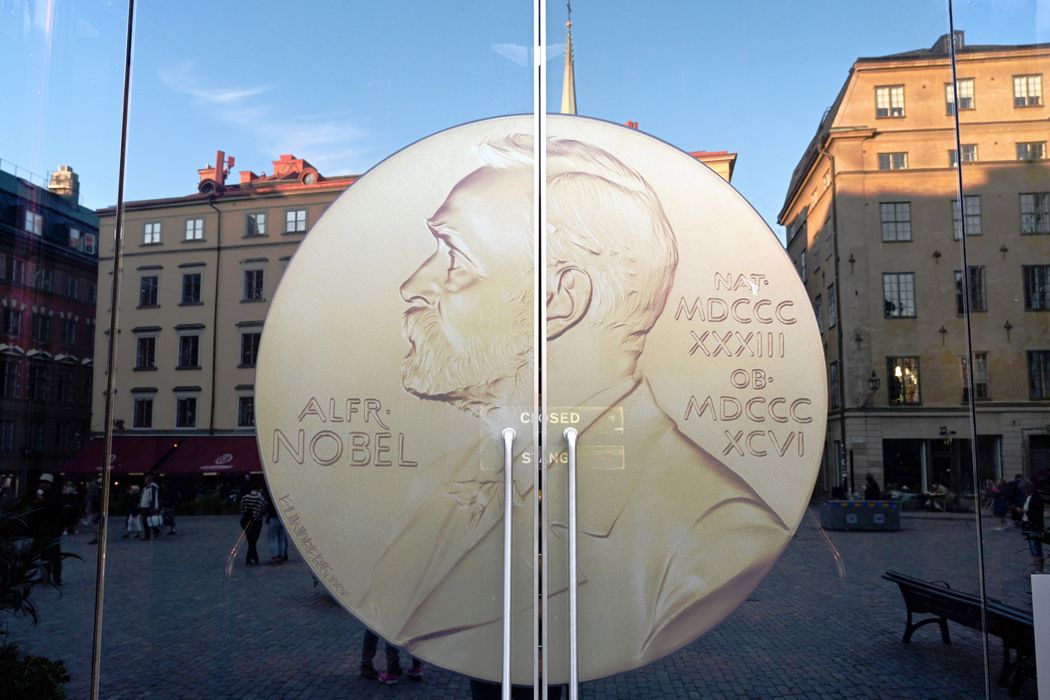
Reading time: 5 min.
The Nobel Prize is the most prestigious award a scientist can receive. Yet, this supreme honour conceals a disturbing paradox. Some of the most brilliant winners, after reaching the pinnacle of academic recognition, have embraced pseudoscientific theories or expressed controversial opinions far outside their own field of expertise. This phenomenon, known as the ‘Nobel syndrome’, raises fundamental questions about the need for the virtues that Christian tradition has always recognised as essential: humility, modesty, and the recognition of one’s own limits before God.
The paradox of recognition and intellectual pride
Paul Nurse, winner of the 2001 Nobel Prize in Medicine, confessed to “The Independent” that, after receiving the prize, he was suddenly perceived by the public as a “universal expert”. He was invited to comment on topics outside his area of expertise – from human rights to spirituality – and began to fear what he himself calls ‘Nobelitis’.
This transformation reveals one of humanity’s oldest temptations, intellectual pride, the presumption that Christian tradition has always identified as one of the most dangerous capital sins. The book of Proverbs warns, “Pride goes before destruction, a haughty spirit before a fall” (Proverbs 16:18). This ancient wisdom is confirmed in the Nobel syndrome, where the very moment of greatest recognition can become the beginning of an intellectual and moral decline.
When humility is lacking: the case of Kary Mullis
Kary Mullis is the most emblematic example. Winner of the 1993 Nobel Prize in Chemistry for discovering the PCR technique, one of the most revolutionary innovations in molecular biology, Mullis later became known for scientifically indefensible positions. He publicly denied the link between HIV and AIDS, despite decades of overwhelming scientific evidence, expressed an appreciation for astrology, and even recounted encounters with a talking, fluorescent raccoon.
What was such a genius lacking? Not intelligence, certainly. He lacked the virtue that St. Thomas Aquinas defined as “moderation in ambition”: the ability to recognise one’s own limits, to stay within the bounds of one’s expertise. He lacked the humility that Holy Scripture identifies as the foundation of life.
Other illustrious cases confirm this trend. Pierre Curie took an interest in spirits and spiritualist phenomena. J. J. Thomson, the discoverer of the electron, dedicated decades to parapsychology. Without a spiritual anchor that transcends human recognition, without the awareness that every talent comes from God, even the most brilliant minds can go astray. As St Paul writes, “What do you have that you did not receive? And if you did receive it, why do you boast as though you did not?” (1 Corinthians 4:7).
The example of Don Bosco: humility in greatness
In stark contrast to these examples of intellectual drift, the life of Saint John Bosco offers a true model. Don Bosco possessed a prodigious memory. He could remember the names, faces, and details of hundreds of boys; he memorised entire texts and sermons. He also had a solid theological and spiritual grounding, demonstrated by the depth of his writings and his pastoral wisdom. Yet, despite these extraordinary gifts, Don Bosco never deviated from the mission entrusted to him by God. He never proclaimed himself an expert on everything, never ventured into territories outside his vocation, and never allowed public recognition to distract him from serving poor and abandoned young people.
The key to his faithfulness lay in the Christian virtues he practised daily. Don Bosco lived humility in a concrete way. He attributed every success to the intercession of Mary Help of Christians and to the grace of God, never to his own abilities. When he received praise for his educational works or for the miracles attributed to him, Don Bosco systematically directed attention away from himself and towards God. He would say that everything is a gift from God and that he was merely a poor instrument in His hands.
Don Bosco understood that his gifts – his exceptional memory, charisma, and organisational skills – were not personal merits to be flaunted, but talents to be put at the service of the Kingdom of God. This perspective kept him anchored to his mission throughout his life, preserving him from the temptation of pride that afflicts even the greatest.
The spiritual roots of the problem
From a Christian perspective, the root of the Nobel syndrome is spiritual before it is psychological. When man forgets that he is a creature, when he loses sight of his radical dependence on God, he also loses his sense of proportion and his own limits.
The Catechism of the Catholic Church teaches that “humility is the foundation of prayer” (CCC 2559), and we might add, it is also the foundation of a healthy intellectual life. Without humility, genius turns into presumption; talent into arrogance; recognition into self-idolatry.
Christian modesty does not mean underestimating one’s talents, but recognising the true source of these gifts and using them according to God’s plan. Saint Thérèse of Lisieux said that humility is truth. The humble person sees things as they really are; they acknowledge their gifts without denying them, but they also acknowledge their limits without shame.
Knowledge without charity
St. Paul offers a fundamental key to interpretation, “knowledge puffs up, while love builds up” (1 Corinthians 8:1). This verse perfectly illuminates Nobel syndrome; knowledge, when not tempered by charity and humility, leads to pride and presumption.
The problem is not talent itself, but the use made of it. Genuine charity requires truth. It is not charitable to give medical advice without medical expertise, even if one is a genius in chemistry. It is not love for one’s neighbour to use one’s prestige to spread unfounded theories that could harm public health.
In Mullis’s case, his positions denying the link between HIV and AIDS helped to strengthen denialist movements with tragic consequences for public health. From a Christian viewpoint, this represents a grave lack of charity towards one’s neighbour and a poor stewardship of the gifts received.
Virtues as the foundation of intellectual integrity
Christian tradition teaches that the virtues are interconnected. Humility leads to prudence, modesty begets temperance, and charity inspires justice. Don Bosco exemplified this integration. His humility made him prudent in not venturing into complex matters without consulting experts. His modesty made him temperate in his ambitions; his charity made him just in recognising the talents of others.
These virtues did not limit his effectiveness, but enhanced it. Precisely because he was humble, he could learn continuously. Precisely because he was modest, he attracted the trust of others. Precisely because he was charitable, he built lasting communities that have survived to this day.
Lessons for contemporary society
Contemporary society desperately needs to rediscover these virtues. We live in an age where “experts” are expected to pronounce on everything, but we need people who, like Don Bosco with his spiritual gifts, use their talents with humility, recognising their limits.
Don Bosco shows that it is possible to be exceptionally gifted without falling prey to Nobel syndrome. It is possible to receive accolades without losing humility. It is possible to have extraordinary talents without presuming to be an expert in everything. The key lies in living those Christian virtues that keep the soul anchored to God and oriented towards serving one’s neighbour.
Humility as the path to true wisdom
Christian tradition teaches that wisdom is not incompatible with science, but completes and directs it. He who recognises he is a creature before the Creator, who lives in humility aware of his own limits, who practises modesty even in the face of the greatest successes, is preserved from the temptation to believe himself an expert in everything.
Don Bosco, with his prodigious memory and solid learning, could easily have fallen into the temptation of intellectual pride. Instead, anchored in Christian virtues and faithful to his mission, he remained a humble servant of God to the end.
In an age afflicted by the Nobel syndrome in many forms – experts who pronounce on everything, influencers who presume to know everything, leaders who never admit their mistakes – the Christian message of humility has never been more relevant. True wisdom consists not in believing oneself to be an expert in everything, but in gratefully acknowledging the gifts received, using them responsibly within their proper bounds, and attributing all merit to Him from whom every perfect gift comes.
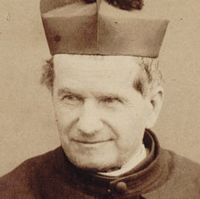 St John Bosco