

 By BSOL Editor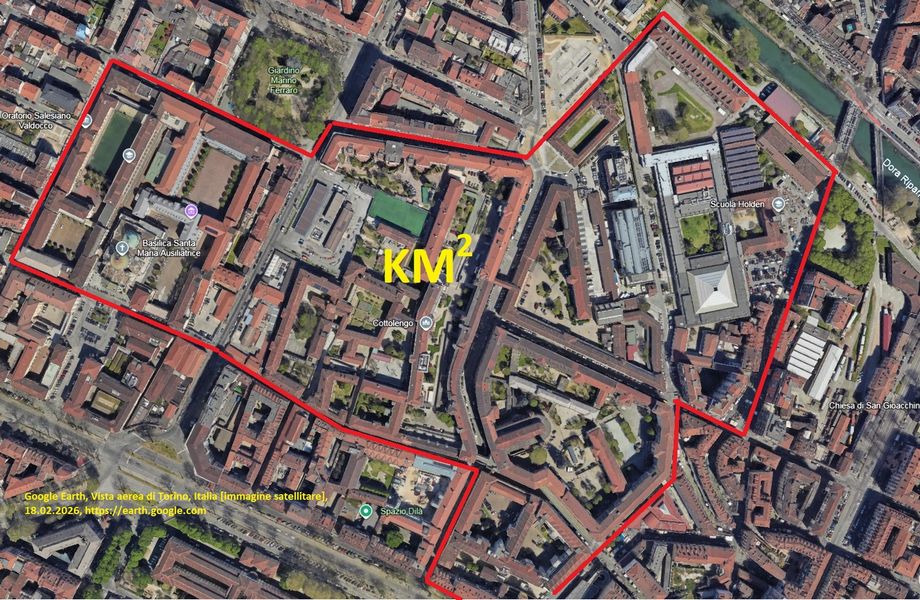
Reading time: 5 min.
There is a Turin that doesn’t match the baroque postcards, the Savoyard avenues or the industrial triumphs. It is a quieter but more tenacious Turin, made up of social works, social saints, committed laypeople, and institutions born to respond to very real poverty. It was this Turin that Cardinal Roberto Repole had in mind when, in January 2026, he launched a proposal that was both symbolic and provocative: to nominate what he called the “square kilometre of charity” as a UNESCO World Heritage site.
This is neither a simple slogan nor a local marketing exercise. The idea stems from a historical and urban observation: an extraordinarily high concentration of charitable, educational, and welfare works, founded between the 18th and 20th centuries, are clustered within a relatively small part of Turin’s city centre, many of which are still active today. In just a few city blocks, the stories of religious congregations, philanthropists, educators, volunteers, and institutions that have profoundly shaped the city’s social identity are intertwined.
Cardinal Repole’s proposal was launched on 17 January 2026, during his address at the unveiling ceremony of a sculpture dedicated to the Venerable Giulia di Barolo at Palazzo Barolo. In the presence of civil authorities, he presented the idea of working on a UNESCO nomination for this symbolic area of the city, which includes Palazzo Barolo, the Basilica della Consolata, the Mother House of the Salesians founded by Don Bosco, the Cottolengo Institute – Little House of Divine Providence, Sermig – Arsenal of Peace, and the Barolo Social District. This proposal invites us to see this fabric not as a collection of places, but as a single, unified story. A story that speaks of responding to needs, of closeness to the poor, of care for the most vulnerable, and of the ability to transform faith into stable structures of solidarity.
A heritage that is not just architectural
When one speaks of UNESCO heritage, the mind immediately turns to monuments, landscapes, and historic city centres. Here, the matter is different. Of course, many of the places involved have artistic and historical value. But the heart of the proposal lies not in the stones, but in the social practices that those stones have housed.
The “square kilometre of charity” includes organisations linked to figures such as Saint John Bosco, Saint Joseph Benedict Cottolengo, the Marchioness Giulia di Barolo, and other protagonists of Turin’s social Catholicism. Hospitals, shelters, educational projects, formation centres, and services for people with disabilities, the poor, and migrants, a network that over the centuries has sought to provide structured responses to emerging needs.
The Cardinal stressed a crucial point; the greatest heritage of humanity is humanity itself. From this perspective, the value to be recognised is not only historical, but moral and cultural. It is the testimony that a city can generate lasting models of solidarity, capable of renewing themselves over time.
Turin’s tradition of organised charity
Turin has a long tradition of organised charity. As early as the 19th century, as the city grew first as a political capital and then as an industrial hub, new forms of poverty emerged: internal migration, child labour, and urban marginalisation. It was in this context that many of the works that still characterise the area today were born.
The response was not mere welfarism, but often social planning: vocational education, personal development, work reintegration, and holistic care for the individual. In this sense, Turinese charity also had a pedagogical and social dimension, anticipating models that we would today call community welfare.
The “square kilometre” thus becomes a sort of historical laboratory for Christian social doctrine and, more generally, for a civic culture of solidarity. A place where it was demonstrated that caring for the most fragile is not a marginal activity, but a structural component of city life.
A proposal that challenges the present
The UNESCO nomination, should it ever materialise, would certainly have symbolic and touristic value. But its most interesting aspect is perhaps another; it forces the city – and not only the city – to question its present.
What remains of that tradition today? Are the historic organisations still able to read the new needs? Does contemporary poverty, often more hidden and complex, find adequate responses? And furthermore, is solidarity perceived as a common heritage or delegated to a few specialised bodies?
Cardinal Repole’s proposal can be read as an invitation not to turn charity into a museum piece. Recognising a heritage does not mean embalming it, but enhancing it as a living reality. A “square kilometre of charity” only makes sense if charity continues to be practised, rethought, and made relevant to current challenges: urban loneliness, youth fragility, new forms of in-work poverty, immigration, and an ageing population.
The dialogue between the Church and civil institutions
An interesting element of the proposal is the involvement of civil institutions. The presence of local authorities at the presentation of the idea indicates that the theme of solidarity can become a ground for collaboration between the Church and public administrations.
Historically, many charitable works were born within the Church but later engaged with the public sector, becoming integrated into welfare systems. Today, in a context of limited resources and growing needs, collaboration between religious, secular, and institutional actors is ever more crucial.
The UNESCO nomination, in this sense, could become an opportunity for co-design; not just protecting the past, but investing in innovative social policies. The risk, otherwise, is that it all becomes a mere celebratory exercise.
An alternative narrative for the city
Every city chooses how to tell its story. Turin is often narrated through its car industry, technological innovation, and museum culture. The “square kilometre of charity” proposes a complementary narrative, Turin as the city of organised charity.
This is not a minor detail. Narratives influence priorities. If a city recognises solidarity as part of its identity, it will perhaps be more inclined to invest in social welfare, to support volunteering, and to value the third sector.
Moreover, at a time when cities compete globally to attract resources and attention, proposing solidarity as a distinctive feature is a counter-current but potentially powerful choice.
Beyond Turin: a universal message
Though rooted in a local context, the proposal has a broader scope. Many cities around the world have symbolic places of charity and social commitment. Recognising their cultural value means affirming that caring for the vulnerable is not just a private or religious matter, but a good for all humanity.
In this sense, the “square kilometre of charity” could become a narrative model; not just sites of power, beauty, or wealth, but also places of solidarity as a heritage of humanity.
It is a perspective that resonates with contemporary sensibilities: social sustainability, inclusion, human rights. Charity, reinterpreted in a modern key, aligns with the themes of social justice and community cohesion.
A fruitful provocation
It remains to be seen whether the UNESCO nomination will take concrete shape. The processes are long and complex. But, regardless of the outcome, the proposal already has merit. It brings the theme of solidarity as a public value back to the forefront.
In an era marked by polarisation and individualism, speaking of charity as a common heritage is a cultural provocation. It invites us to consider solidarity not as an occasional gesture, but as the moral infrastructure of our cities.
Perhaps this is the strongest point of the Cardinal’s insight: to remind us that the true heritage of a community is not just its buildings or its squares, but the quality of the relationships it knows how to build, especially with the weakest.
If the “square kilometre of charity” succeeds in making us reflect on this, it will have already achieved a significant result, regardless of official recognition. Because, ultimately, the value of a city is also measured by how well it takes care of its most fragile inhabitants.
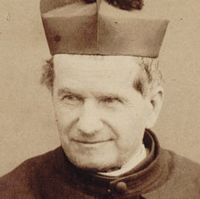 St John Bosco