


 By St John Bosco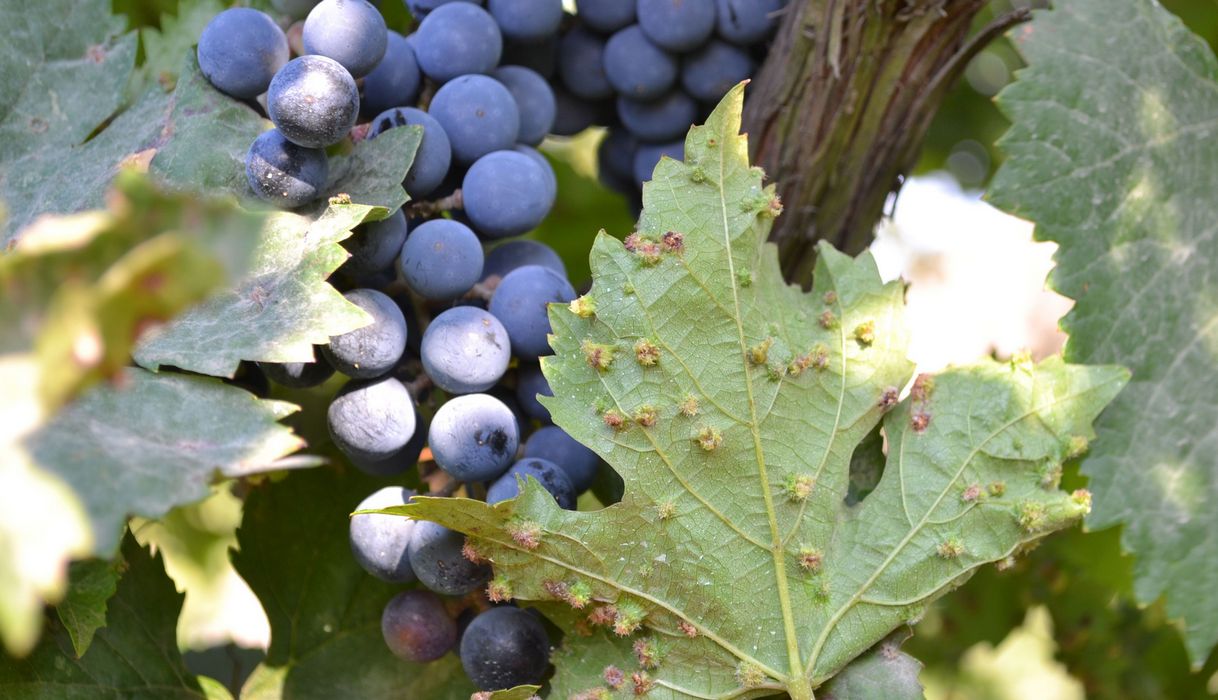
Reading time: 6 min.
In 1876, during the third series of spiritual exercises preached in Lanzo, Don Bosco recounted a dream that would take on the symbolic title of “The Phylloxera”. The vision, set in a large hall in Borgo San Salvario in Turin and populated by religious figures from different orders, features Don Bosco himself, enigmatic and blindfolded, invited to identify the concluding theme for the final sermon. The dream quickly transforms into a warning: the phylloxera, a parasite that devastates vineyards, becomes a metaphor for the murmuring and disobedience capable of corroding a religious community from within. Only a radical intervention, compared to purifying fire, can save the Congregation and preserve its mission.
The third retreat, from October 1 to October 7, was preached by Father Bruno, a member of the Congregation of the Oratory of St. Philip Neri, and a renowned spiritual director. Only priests and older clerics made the retreat. Don Bosco never left Lanzo during the brief intervals between retreats. Apart from a dream which he narrated at the end of the retreat, we know less about it than the first two. The dream itself we have to piece together, since it was not passed down to us as a talk. Records of that period refer to it under the heading “The Phylloxera.”
Don Bosco dreamed he was in a very large hall in Borgo San Salvario9 in Turin, where a number of men and women religious of different orders and congregations were gathered together. As Don Bosco entered, all faced him as though he had been expected. Among them he spotted a strange looking man with his head swathed in a white turban and his body shrouded in some kind of a cloak. When Don Bosco asked the identity of the man .with that strange headgear, he was told that it was he himself.
Perhaps it was an image of Don Bosco dreaming.
He moved into that crowd of religious, who smilingly_ encircled him in utter silence. He looked about in wonder, but all stared at him and kept smiling, still silent.
“What are you up to?” he finally asked. “Are you mocking me?”
“Mocking you? Far from it! We are smiling and laughing because we have surmised why you came here.”
“How could you if I don’t know why I came here myself? Believe me, your behavior is quite surprising.”
“You came here,” they all answered, “because you have just given your clerics a retreat at Lanzo.”
“And so?”
“Now you come to find something to say for a closing talk.”
“All right, then, tell me what I should say – something that will foster the growth of the Congregation of St. Francis de Sales. I shall be much obliged.”
“We have only one suggestion: tell your sons to beware of the phylloxera.”
“The phylloxera? What has the phylloxera to do with it?”
“Keep the phylloxera far from your Congregation, and it will last a long time, flourish and do great good for souls.”
“I don’t understand.”
“Don’t you? Why not? The phylloxera is the scourge which has wrought havoc in many religious orders and kept them from any longer attaining their noble purpose.”
“Your suggestion is useless unless you explain its meaning. I don’t understand at all.”
“Then all your theological studies were not worth your trouble.”
“As you wish. I studied what I was supposed to study, but I never came across any mention of phylloxera in my theology books.”
“But it was there. Break the word down to its moral and spiritual meaning.”
“The etymology of phylloxera has nothing even remotely resembling a spiritual meaning.”
“Well, since you cannot grasp this mystery, here comes someone who can explain it to you.”
There was a jostling in the crowd and way was made for a new personage to step forth. Don Bosco scrutinized him carefully but could not remember having seen him before, although his friendly manner seemed to indicate that he was an old acquaintance. As soon as he drew near, Don Bosco told him, “You’ve come just in time to get me out of the embarrassing situation these people have put me in. They claim that the phylloxera is a threat against religious communities, and they want me to make the phylloxera the theme of my closing sermon of the retreat.”
“Don Bosco, you think you are so wise, and you don’t know these things? It is true that if you fight the phylloxera with all your might and teach your sons to do the same, your Society will not fail to grow. Do you know what the phylloxera is?”
“I know it is a blight which attacks plants and kills them by stunting their growth.”
“What causes this blight?”
“It is due to myriads of parasites which invade a plant.”
“How can neighboring plants be saved from the blight?”
“I have no idea.”
“Then listen carefully. The phylloxera first shows up on just one plant, but in a short time all nearby plants become infected, even those at a distance. Now, once this disease shows up in a vineyard or orchard or garden, it spreads like wildfire, and the beauty and crops you hoped for are ruined. Do you know how this blight spreads? Not by contact, because there is some distance between plants, nor by parasites crawling to the ground and going over to other plants. It has been proven that it is the wind which carries this curse to the branches of healthy plants, so that disaster spreads rapidly. Well now, know this: the wind of grumbling bears the phylloxera of disobedience far. Now do you understand?”
“I am beginning to.”
“The harm caused by the phylloxera carried by this wind is beyond reckoning. In the most flourishing communities, it first undermines mutual charity, then zeal for the salvation of souls. Later it fosters idleness and destroys all other religious virtues, and finally scandal turns a community into an object of censure by God and man. There is no need for an infected member to go from one community to another. It is enough for this wind to blow from afar. Be convinced that this caused the destruction of certain religious orders.”
“You are right. I see the truth of your words. But how can one remedy such a situation?”
“Half-measures are not enough. Radical action is needed. To check phylloxera, blighted plants used to be treated with sulphur, lime water and other remedies-all to no avail, because phylloxera on a single plant can immediately infect an entire vineyard. From one vineyard it spreads to others like wildfire, so that one area can soon infect an entire province or an entire realm. Do you want to know the one way to nip this evil in the bud? As soon as phylloxera appears on a plant, carefully cut it down along with the adjacent brush and burn everything. If the entire vineyard is infected, cut down all the vines and thoroughly burn them to save neighboring vineyards. Only fire can exterminate the blight. So also, when phylloxera appears in any community in the form of opposition to the superiors’ will, arrogant neglect of the rules, or contempt for the responsibilities of community life, do not delay. Raze that house to its foundation, get rid of its members, and don’t yield to dangerous tolerance. And as you deal with a house, so deal with an individual. At times you may think that a certain individual, if left to himself, will improve and return to the right path, or you may not like to punish someone because you love him or because he has special skills or knowledge which you feel will bring credit to the Congregation, but do not be swayed by such considerations. Rarely will people of this kind change their ways. I do not say that their conversion is impossible, but I maintain that it is rare-so rare, indeed, that this probability does not of itself give a justifiable reason to incline toward a more lenient decision. You may say that some of these persons will turn out worse by living in the world. So be it. They will bear full responsibility for their conduct, but your Congregation will not have to suffer from it.”
“What if, being kept in the Society, they might be coaxed back to the right path?”
“Your assumption is worthless. It is better to dismiss these haughty individuals than to keep them in the hope that they may sow seeds in the Lord’s vineyard. Impress this principle upon your memory, use it decisively when need arises, treat of it in your conferences to your directors, and make it the topic of your closing sermon of the retreat.”
“Yes, I will. I thank you for your warning. Now tell me who you are.”
“Don’t you know me? Don’t you recall how often you have seen me?”
While the stranger spoke, all the bystanders smiled.
Just then the morning bell rang for rising and Don Bosco awoke.
Don Bosco added that this dream had come on three consecutive nights, thus dispelling any suspicion that he had concocted this parable of sorts to give his own thoughts a fanciful dress. His mention of the “strange headgear” was an opener to humble himself as he usually did and to dispel any impression from his listeners’ minds that this was a charismatic gift. In most of his dreams Don Bosco encountered a man who acted as guide and interpreter.
(BM XII XII 346-349)