


 By Fr Bruno FERRERO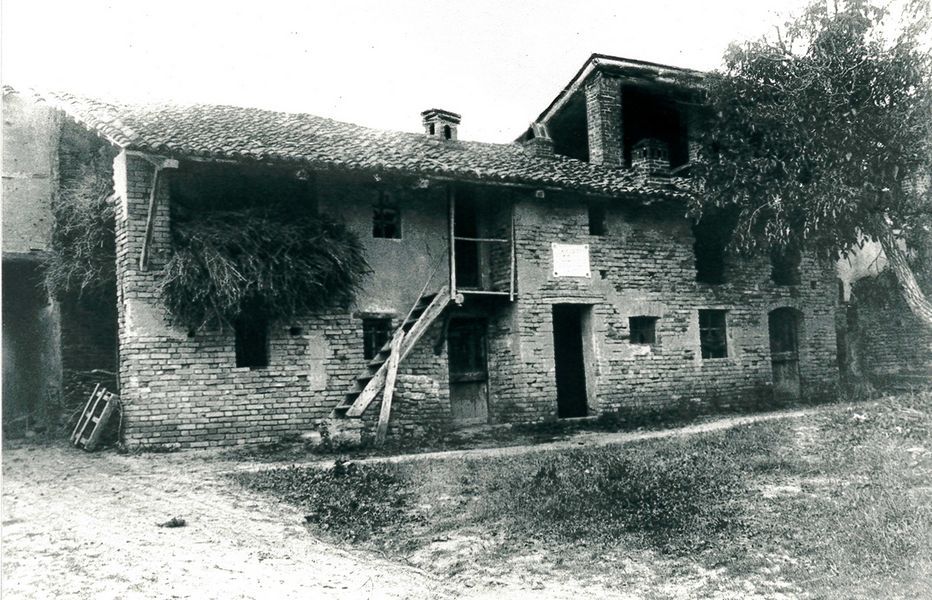
Reading time: 6 min.
We are launching a new column titled “Knowing Don Bosco”. Conceived by the Salesian Fr. Bruno Ferrero, it aims to delve into the figure of the saint of the young through accurate studies, first and second-hand testimonies, and documents drawn from the beatification and canonisation processes. The rubric will be articulated in 33 episodes, published continuously. We invite you to follow them to get to know him better, love him more, and imitate him with greater conviction.
We dedicate it to all friends of Don Bosco.
Let us begin by presenting the family origins and socio-economic conditions of Don Bosco, founder of the Salesians. Through archival documents and testimonies, a picture emerges of a family of Piedmontese sharecroppers who, whilst not destitute, lived in extreme poverty. The premature death of his father, Francesco, in 1817 and the terrible famine of 1816-18 profoundly marked young Giovanni’s childhood. His mother, Margherita, widowed at just twenty-two, courageously faced enormous sacrifices to support and educate her children, turning down proposals of remarriage. This experience of poverty shaped Don Bosco’s sensitivity and future mission towards marginalised youth.
Because from the very beginning, his life was a challenge to the impossible.
Francesco Bosco lived on the Biglione farm from 1793 to 1817, and worked the land as a sharecropper. Like his ancestors, therefore, he was not a landowner or an independent farmer, but a tenant. He was thus well above a simple labourer who could earn a meagre living for himself and his family by offering his services, and much less was he among those who received public assistance for certified poor people (the municipality helped the poor based on a “poverty certificate” issued by parish priests).
Being a sharecropper was an institutionalised and appreciated way of life and was also an activity through which one could eventually become an owner. In fact, Francesco Bosco was aiming to become independent, which is why he had acquired some properties for himself.
The inventory of his assets, drawn up after his death by the local notary, shows that he owned nine small plots of land, in or near the hamlet of Becchi, where he kept a vineyard and cultivated grain, wheat, and hay. In total, the land covered one hectare and was valued at 685 lire. He also bought some animals (worth 445 lire), which undoubtedly indicates Francesco’s desire to become autonomous. If we also estimate the various agricultural tools, household utensils, furniture, and similar items, the total value of the property amounted to 1,331 lire. But, at his death, he also left debts amounting to 446 lire, and the small house (100 lire) had not yet been paid for.
After Francesco Bosco’s death, the family’s financial situation, now led by Margherita, significantly worsened, even without considering the two years of drought and famine that were occurring. For example, it seems that the stable of the small house had only one cow and one calf, given that the current debts amounted to the value of the animals purchased in the past. Margherita also had to face other payment requests.
Cursed years
The first pages of the Memoirs are mostly a story of poverty and hardship. Don Bosco gives some space to the great drought and consequent famine that gripped the area in the years 1816-18. These periodic natural calamities were, so to speak, commonplace in that part of the Country, but the famine of those years was particularly harsh, so much so that people were found dead along the country roads with blades of grass in their mouths due to hunger. Don Bosco writes, “My mother told me many times that she fed the family as long as she had food; then she gave a sum of money to a neighbour, named Bernardo Cavallo, so that he might go in search of food. That friend went to various markets and could find nothing, even at exorbitant prices. He arrived two days later and was eagerly awaited in the evening. But at the announcement that he had nothing with him but money, terror seized everyone’s mind, because that day, everyone having received very little nourishment, feared dire consequences of hunger that night.”
And he adds that at first, his mother made the family kneel for a short prayer, then exclaimed, “In extreme cases, extreme measures must be used.” And she decided to kill the calf to feed themselves: a desperate act, given that the calf was the family’s only security.
Don Bosco also tells us that during that period his mother received a proposal for “a very convenient placement”; a proposal, however, that did not include the children, who “would have been entrusted to a good guardian.” She firmly declined the offer: “I will never abandon them, even if they wanted to give me all the gold in the world.” There is no doubt that it was a marriage proposal, normal for a young widow. Moreover, although Don Bosco does not explicitly say so, the testimonies given in the diocesan process for beatification confirm it.
“The mother, having become a widow after five years of marriage, refused other favourable marriages to devote herself solely to the education of her two sons Joseph and John and her stepson Anthony, having married the father of the Servant of God, who was already a widower with his son Anthony.
From her I learned that, having become a widow at about twenty-two years of age, she had many marriage proposals, all of which she refused to devote herself to the education of her two children, which cost her labour, deprivation of rest, and much sweat” (John Cagliero).
It was a courageous choice on Margherita’s part. She knew what awaited her. In a situation of real poverty, she was the only one to bring home what was necessary to live, and it was only through hard work and at the cost of immense personal sacrifice that she managed to overcome the period, supporting a family of five people. Anthony would not have been able to help her for at least six years, Joseph for ten, and John for as many as twelve.
Apart from Don Bosco’s mention of the difficulties faced by his family during the two years of drought and famine, we have no documentation on how they managed to overcome the period. The small amount of land they had was barely enough to survive. Even in good harvest years, production was never high; the soil was practically exhausted due to intensive use and antiquated farming methods. The price of cereals and wine was kept low by a protectionist agricultural policy, with the aim of keeping products from other Mediterranean Countries and Russia out of the market. Thus, if a slightly more abundant harvest of wheat, maize, or rye was obtained, almost nothing was gained from their sale, so no real savings could be made.
Furthermore, most of the available money was allocated to clothing, agricultural tools, or household utensils, and rarely to a pair of shoes. Other money was used for oil, salt, and sugar, and for cheese and salted fish, which served to accompany daily food. Moreover, food was largely obtained from the land, a poor basic diet: rye and wheat bread, maize, legumes, seasonal fruits and vegetables from the garden and from trees scattered in the fields and vineyards, milk from the cow, and eggs from the chickens, cured meats and lard, sometimes some free-range chicken. Meat was eaten very few times a year. The vineyards produced enough wine grapes to last an entire season and leave a supply to sell or keep for special occasions.
In the 1820s, the family struggled for survival. As they grew up, Anthony and Joseph contributed to the work, easing Margherita’s burden. They were able to help by working the small plots of land and contributing to the family income with seasonal jobs. The division of the Bosco properties in 1830 – the small house, the plots of land, and the tools – between Anthony on one side, and Margherita, Joseph, and John on the other, must have increased the difficulties, especially when Anthony and Joseph married.
Anthony married in 1831. He built a small house for his family in the northern part of the courtyard, also using rooms in the small house. He might have supplemented his meagre share of work as a labourer, yet he seems to have lived in poverty. Joseph became a sharecropper on the Sussambrino farm, halfway between Becchi and Castelnuovo, in 1830-31; Margherita and John went to live with him. He married in 1833 and returned to Becchi in 1839, after having built a nice house thanks to the savings of those years. When in 1840, the common assets of Joseph and John were inventoried on the occasion of the establishment of the ecclesiastical dowry before priestly ordination, the value of the total capital amounted to 2,510 lire, with an annual income of 125 lire.
“They were poor farmers”
To summarise, from the 17th century, members of the Bosco family were sharecroppers who worked other people’s land. They were poor but not destitute. They did not own their own home and moved several times from place to place, between the municipalities of Chieri and Castelnuovo, wherever there were farms available for rent. However, they had a chance for independence and redemption. After Francesco Bosco’s death, although the family was registered in the municipality among small landowners, economic conditions worsened. However, Margherita’s family members, also poor, from what we can gather, never became day labourers nor reached certified destitution. The small plots of land they owned and worked, the single cow and calf, barely kept them at subsistence level. Their poverty can be better estimated by noting that Margherita could never contribute to John’s education, who had to beg, rely on some benefactors, compete for prizes and gratuities, and rely on his own resourcefulness to survive as a student.
When in 1883, Don Bosco revised the proofs of his biography written by Albert du Boys, he came to the sentence which stated that his family members “were somewhat well-off farmers”. he had it corrected to, “they were poor farmers.” This personal experience of poverty proved to be an essential factor in his sensitivity towards poor and abandoned young people, as well as in his spirituality.
Fr. Arthur J. LENTI, sdb (Don Bosco history and spirit, volume 1, page 135)
 P. Natale CERRATO