

Examination of Conscience according to the 10 Commandments
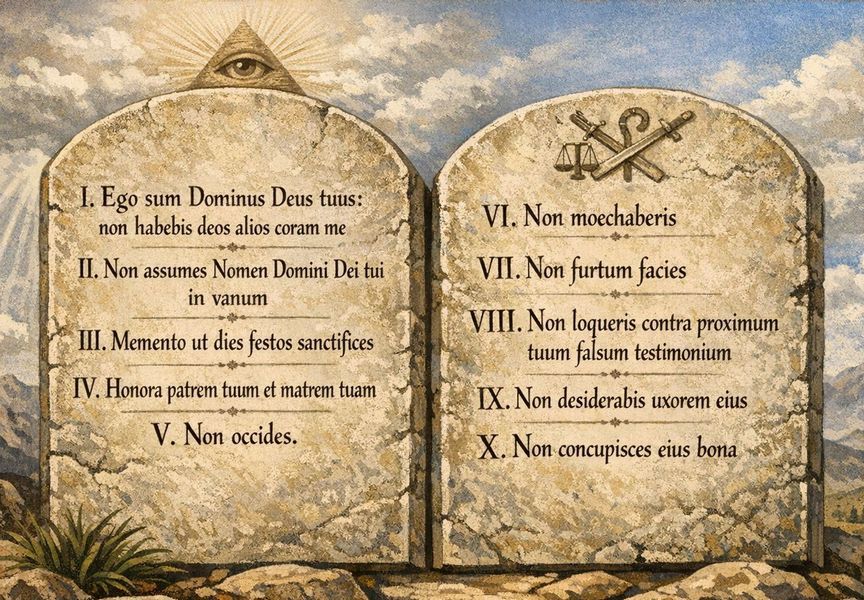
It is, in practice, an examination of love: the first three commandments concern love for God, and the following seven, love for others and for ourselves.
Important note for the examination of conscience
This examination is a tool to help, not an exhaustive list. Read it slowly, prayerfully, before God. Let the Holy Spirit enlighten your conscience. Remember: the goal is not anxiety, but an encounter with God’s mercy in the sacrament of Confession. It is not about tormenting the soul, even if it has done wrong, but about setting it free.
COMMANDMENT 1. “YOU SHALL HAVE NO OTHER GODS BEFORE ME”
“I am the Lord your God, who brought you out of the land of Egypt, out of the house of slavery; you shall have no other gods before me. You shall not make for yourself an idol, whether in the form of anything that is in heaven above, or that is on the earth beneath, or that is in the water under the earth. You shall not bow down to them or worship them.” (Ex 20:2-5; Dt 5:6-9)
“Hear, O Israel: The Lord is our God, the Lord alone. You shall love the Lord your God with all your heart, and with all your soul, and with all your might.” (Dt 6:4-5)
“for it is written, Worship the Lord your God, and serve only him.” (Mt 4:10)
“You shall love the Lord your God with all your heart, and with all your soul, and with all your mind. This is the greatest and first commandment.” (Mt 22:38-39)
In summary, the first commandment requires us to acknowledge God as the one and only Lord and to worship him alone, rejecting all forms of idolatry, superstition, and practical atheism. It requires us to put God first in our lives, cultivating faith, hope, and charity towards him, and to avoid any practice, creature, value, or ideology that replaces or diminishes the worship due to the one true God.
1.1. Faith and love for God
The heart of the Christian life is the personal relationship with God. These questions help me to check if God is truly first in my life.
1. Do I truly recognise God as my Lord and Father? Do I love him with all my heart, soul, mind, and strength?
2. Have I neglected to know my faith better, the Catechism, the Apostles’ Creed, the Ten Commandments, the Sacraments, the Lord’s Prayer?
3. Have I deliberately doubted or denied any of the teachings of the Catholic Church?
4. Have I been indifferent to my faith, thinking that all religions are the same or that one can be saved in any religion?
5. Have I hated God, or opposed Him in some way?
6. Have I tested God, for example by saying: “If you help me, I will believe in you”?
7. Have I presumed that God will save me anyway, even without conversion and without changing my life?
8. Have I despaired of God’s mercy, thinking I am too sinful to be forgiven?
9. Have I abused God’s mercy, continuing to sin while counting on his forgiveness?
1.2. Worship, prayer, and religious practice
Faith without works is dead. The relationship with God is expressed concretely in prayer, the sacraments, and participation in the life of the Church.
10. Have I prayed regularly? Have I cultivated my relationship with God through personal prayer, adoration, and sacrifice?
11. Have I neglected my duties and religious practices for fear of others’ judgment or out of human respect?
12. Have I participated respectfully in the Church’s ceremonies in the worship of God?
13. Have I honoured the saints and particularly the Virgin Mary?
14. Have I received the sacraments irreverently or unworthily? (e.g. Communion in a state of serious sin, or a poorly made Confession)
15. Have I committed sacrilege, that is, have I dishonoured persons or things consecrated to God? (the Sacraments, churches, crosses, cemeteries, consecrated persons)
16. Have I desecrated religious or sacred objects?
17. Have I bought or sold blessed religious objects?
18. Have I knowingly read heretical, blasphemous, or anti-Catholic literature?
19. Have I participated in anti-Catholic cults or ceremonies?
1.3. False idols and disordered attachments
Not only statues are idols. Anything I put in God’s place – money, success, pleasure, the body – becomes an idol.
20. Have I given too much importance to money, power, glory, pleasures, or material things, putting them in God’s place?
21. Have I given too much importance to a person, activity, object, or opinion, to the point of making it more important than God?
22. Have I idolised my body, physical perfection, or sporting success, sacrificing everything to them as if they were an absolute value?
1.4. Superstition, magic, and occult practices
The Christian faith excludes any recourse to powers that do not come from God. The practices listed below are incompatible with the Christian life (cf. Dt 18:10-12; Jer 29:8).
23. Have I believed in, consulted, or used superstitious or magical practices, such as: fortune-telling, horoscopes, the zodiac, tarot cards, palm readers, soothsayers, sorcerers, magicians, mediums, spiritualism, necromancy, voodoo, santeria, kabbalah, numerology, shamanism, alchemy, Ouija boards, amulets, talismans, spells, curses, hexes, jinxes, incantations, “objects with powers”, crystals or stones with magical properties, satanism?
24. Have I joined groups, techniques, or movements that mix the Christian faith with esoteric ideologies or practices, such as: New Age, reincarnation, the Silva Method, transcendental meditation, occultism, astrology, astral travel, gnosticism, dianetics, sophrology, dowsing, theosophy, Hare Krishna, yoga with non-Christian spiritual aims, channelling (of spirits), I Ching, Tao, Feng Shui?
25. Do I belong to secret societies incompatible with the Catholic faith, such as Freemasonry, the Illuminati, Rosicrucianism, or similar?
COMMANDMENT 2. “YOU SHALL NOT TAKE THE NAME OF THE LORD YOUR GOD IN VAIN”
“You shall not make wrongful use of the name of the Lord your God, for the Lord will not acquit anyone who misuses his name.” (Ex 20:7; Dt 5:11).
“And you shall not swear falsely by my name, profaning the name of your God: I am the Lord.” (Lev 19:12).
“You shall not profane my holy name, that I may be sanctified among the people of Israel: I am the Lord.” (Lev 22:32)
“One who blasphemes the name of the Lord shall be put to death.” (Lev 24:16)
“Again, you have heard that it was said to those of ancient times, “You shall not swear falsely, but carry out the vows you have made to the Lord.” But I say to you, Do not swear at all, either by heaven, for it is the throne of God, or by the earth, for it is his footstool, or by Jerusalem, for it is the city of the great King. And do not swear by your head, for you cannot make one hair white or black.” (Mt 5:33-36)
“…Hallowed be your name…” (Mt 6:9 – The Lord’s Prayer)
In summary, the second commandment requires us to treat God’s name with deep respect and veneration, rejecting blasphemy and all irreverent language. It requires us to avoid false or unnecessary oaths, to speak God’s name only with truth and devotion, and to sanctify it both in prayer and in daily life.
2.1. Blasphemy and irreverence towards God and holy things
Blasphemy is the most direct sin against this commandment: it offends God in His name, His attributes, His works, or in persons consecrated to Him.
1. Have I blasphemed, that is, have I spoken words of hatred, insult, or mockery against God, Jesus Christ, the Virgin Mary, or the Saints? Have I done so in public, in front of others?
2. Have I uttered, inwardly or aloud, words of hatred, reproach, or defiance against God?
3. Have I made false and offensive statements about God, such as: “God is not just”, “God is cruel”, “God enjoys the sufferings of people”, “God forgets the good”?
4. Have I grumbled or complained against God, blaming Him for my problems or my sufferings?
5. Have I spoken the name of God, Jesus, Our Lady, or the Saints without respect, with anger, mockery, or in an irreverent way?
6. Have I used God’s name for purposes other than praising, blessing, and glorifying him?
7. Do I have a habit of saying expressions like “oh God!”, “my God!” and similar, without thinking about what I am saying?
8. When I have heard someone blaspheme or offend God, have I at least internally made an act of reparation?
2.2. Irreverence towards the Church, the sacraments, and consecrated persons
The respect due to God extends to all that is consecrated to Him: the sacraments, the Church, its ministers, and its ceremonies.
9. Have I treated sacred things with irreverence, in word or deed: images, the consecrated Host, the sacraments, the ceremonies of the Church?
10. Have I said irreverent words or made jokes about God, the Eucharist, the Virgin Mary, or the Saints?
11. Have I made jokes about or ridiculed good people precisely because they are good and practising?
12. Have I spoken ill of the Church, of priests, or of holy things, without foundation and without just cause?
13. Have I spread ideas or speech contrary to religion?
14. Have I shown human respect in displaying my faith, by hiding it or being ashamed of it in front of others?
2.3. Curses, maledictions, and obscene words
Even without naming God directly, certain words wound the dignity of the person and are contrary to the respect we owe to God and our neighbour.
15. Have I used curses or maledictions towards people, animals, or things?
16. Have I used obscene or vulgar words in everyday language?
17. Have I made someone angry to the point of causing them to blaspheme or curse God?
2.4. Unlawful or false oaths
To swear an oath is to call upon God as a witness to the truth of what one says. To use an oath lightly, falsely, or for evil things is a grave abuse of God’s name.
18. Have I made false oaths, that is, have I sworn to something I knew to be false or which I doubted?
19. Have I perjured myself, that is, have I made a promise under oath without intending to keep it?
20. Have I sworn to do something evil, like taking revenge or harming someone? (Note: these oaths are not binding and must not be kept.)
21. Do I have a habit of swearing without thinking about what I am swearing, or for things of little importance?
22. Have I said execrations like: “May God not save me if it’s not true”, “If I don’t do it, may something bad happen to me”, and the like?
2.5. Promises and vows made to God
Promises made to God or in God’s name are a serious commitment that involves divine honour. Their violation is a sin against this commandment.
23. Have I made promises to God (vows) and then not kept them, in whole or in part? (If I have any outstanding, I will tell the confessor to assess whether it is appropriate to modify the obligation.)
24. Have I made promises to other people in God’s name and then been unfaithful to those promises, compromising the honour and faithfulness due to God?
25. Have I tried to repair the damage that may have resulted from my broken or false oaths?
COMMANDMENT 3. “REMEMBER TO KEEP HOLY THE LORD’S DAY”
“And on the seventh day God finished the work that he had done, and he rested on the seventh day from all the work that he had done. So God blessed the seventh day and hallowed it, because on it God rested from all the work that he had done in creation.” (Gen 2:2-3)
“Remember the sabbath day, and keep it holy. For six days you shall labour and do all your work. But the seventh day is a sabbath to the Lord your God; you shall not do any work—you, your son or your daughter, your male or female slave, your livestock, or the alien resident in your towns.” (Ex 20:8-10; Dt 5:12-15).
In summary, the third commandment requires us to sanctify the Lord’s day, a special time dedicated solely to God, by participating in the Sunday Eucharist and refraining from servile work that prevents rest, prayer, and family life. It requires us to recognise the Lord’s day as the sign of the covenant between God and His people, dedicating it to worship, rest, and works of mercy.
3.1. Sunday and Holy Day Mass
The heart of the Third Commandment is participation in Holy Mass on Sundays and Holy Days of Obligation. To miss it without just cause is a serious sin.
1. Have I participated in Holy Mass every Sunday and on Holy Days of Obligation? If I missed it, was it for a truly serious and justified reason?
2. Have I been the cause of others not going to Mass or working unnecessarily on a holy day?
3. Have I arrived late for Mass through my own fault? (Whoever arrives before the Gospel fulfils the precept, but voluntary lateness is already a fault.)
4. Have I participated in Mass with attention and devotion, or did I attend with indifference, with my heart and mind elsewhere?
5. Have I talked or distracted others during the religious service?
6. Have I kept the fast of at least one hour before receiving Communion?
7. Have I behaved irreverently in church: by conversing, dressing immodestly, or behaving improperly?
3.2. Rest and sanctification of the holy day
Sunday is not just a day off: it is the Lord’s Day. It should be sanctified by avoiding unnecessary work and dedicating time to God, family, and good works.
8. Have I turned Sunday into a simple day of leisure – sport, tourism, shopping, entertainment – forgetting that it is the Lord’s Day?
9. Have I worked without urgent necessity on a holy day for a considerable time (more than about two hours)? Did I gain a material profit or do things that could have been done on another day?
10. Have I made others work unnecessarily on a holy day, by ordering it, advising it, or not preventing it when I had the chance?
11. Have I bought or sold unnecessary things on a holy day, without a just cause?
12. Have I sanctified Sunday by dedicating time to prayer, reading the Holy Scriptures, meditation, works of charity, or apostolate?
3.3. Daily personal prayer
Besides Mass on holy days, the Christian is called to nourish their relationship with God every day through prayer. Hasty or purely habitual prayer is a form of spiritual lukewarmness.
13. Have I prayed regularly every day, at least in the morning and evening, or have I completely neglected daily prayer?
14. Have I prayed hastily, distractedly, and out of pure routine, without recollection or attention?
15. Do I entrust myself to God daily, putting my day in his hands, or do I live as if God did not exist?
COMMANDMENT 4. “HONOUR YOUR FATHER AND YOUR MOTHER”
“Honour your father and your mother, so that your days may be long in the land that the Lord your God is giving you.” (Ex 20:12)
“You shall each revere your mother and father, and you shall keep my sabbaths: I am the Lord your God.” (Lev 19:3)
“Honour your father and your mother, as the Lord your God commanded you, so that your days may be long and that it may go well with you in the land that the Lord your God is giving you.” (Deut 5:16)
“Hear, my child, your father’s instruction, and do not reject your mother’s teaching” (Prov 1:8)
“Listen to your father who begot you, and do not despise your mother when she is old.” (Prov 23:22)
“Those who honour their father atone for sins, and those who respect their mother are like those who lay up treasure.” (Sir 3:3-4)
“My child, help your father in his old age, and do not grieve him as long as he lives; even if his mind fails, be patient with him; because you have all your faculties do not despise him.” (Sir 3:12-13)
“For God said, ‘Honour your father and your mother,’ and, ‘Whoever speaks evil of father or mother must surely die.’” (Mt 15:4)
“[Jesus] Then he went down with them and came to Nazareth, and was obedient to them.” (Lk 2:51)
“Children, obey your parents in the Lord, for this is right. ‘Honour your father and mother’—this is the first commandment with a promise: ‘so that it may be well with you and you may live long on the earth.’” (Eph 6:1-3)
“Children, obey your parents in everything, for this is your acceptable duty in the Lord.” (Col 3:20)
In summary, the fourth commandment requires us to honour our parents with respect, gratitude, and obedience, taking care of them in their old age and in their need. It requires us to value the family as the first and fundamental educational community, and it extends the respect due to parents, to legitimate authorities, and to the civil and social community.
PART A: Examination as CHILDREN towards parents
4.A1. Grave offences against parents
The most serious failings are those that directly affect the dignity and safety of parents.
1. Have I raised my hands against my parents, or threatened or mistreated them with words or deeds?
2. Have I wished death or some serious harm upon them, perhaps to gain freedom, an inheritance, or to be able to marry?
3. Have I insulted, offended, or treated them with disrespectful words that cause them to suffer?
4. Have I disobeyed them in important matters?
4.A2. Respect and daily relationship
Even without resorting to grave offences, there are daily attitudes that betray a lack of respect and love for parents.
5. Have I answered my parents back or treated them with condescension and contempt?
6. Have I grumbled about them in their absence or spoken ill of them to others?
7. Have I been ashamed of them or publicly reproached them?
8. Have I felt aversion or hostility towards them?
9. Have I had an excessive desire for independence, taking badly any guidance or correction that came from them just because it came from them? Do I realise that this reaction often stems from pride?
10. Do I let myself be carried away by a bad mood and get angry with them for no valid reason?
4.A3. Concrete care and affection
Honouring parents is not just about not offending them: it also means loving them in a concrete way, especially when they are elderly, ill, or in need.
11. Have I taken care of the material and spiritual needs of my parents, especially if they are elderly, ill, or in difficulty? Or have I abandoned them to themselves?
12. Have I shown sincere gratitude for all they have done for me, giving me life, raising me, educating me, even if not everything was perfect?
13. Have I truly loved them, helping them, praying for them, and bearing their limitations and mistakes with patience?
14. Upon their death and at their funeral, have I fulfilled my filial duties, including respecting their last wishes and their will?
4.A4. Family life and living together
The fourth commandment also concerns the atmosphere created at home: peace, cooperation, and family communion are everyone’s responsibility.
15. Do I cooperate with household chores and share my life with my family members, or do I just live under the same roof without real participation?
16. Do I contribute to the serenity and joy of my family with patience and love, or do I create tension and conflict?
17. Do I respect the authority figures to whom I am subject, superiors, employers, institutions, recognising in them a form of authority that comes from God (cf. Rom 13:1-2)?
PART B: Examination as PARENTS towards children
4.B1. Offences and mistreatment of children
Grave injustices can also be committed against one’s own children. Parental authority does not authorise mistreatment.
18. Have I threatened or mistreated my children with words or deeds, or wished them any harm?
19. Have I partially or totally abandoned my responsibilities towards my children, or towards my spouse, leaving them without care and support?
20. Have I argued with my spouse in a violent or disrespectful way in front of the children, causing them scandal?
4.B2. Religious and moral education
The first duty of parents is to transmit the faith. Neglecting this is one of the most serious failings against this commandment.
21. Have I neglected to have my children baptised within a reasonable time after birth (within 1-2 months)?
22. Have I fulfilled my responsibility to educate my children in the faith from an early age, teaching them Christian truths and bearing witness to the Gospel with my life?
23. Have I allowed my children to neglect their religious obligations, such as Mass, the sacraments, and prayer?
24. Have I given my children a bad example by not fulfilling my own religious, family, or professional duties?
25. Do I constantly concern myself with their spiritual and religious formation, or do I delegate it completely to others?
26. Do I pray together with my family?
27. Have I chosen a school for my children that truly helps to educate them in a Christian way, or am I indifferent to this?
4.B3. Correction, authority, and guidance
Correcting children is an act of love. Doing it for selfish reasons – or not doing it for convenience – is a failure in one’s duty.
28. Have I corrected my children with firmness, justice, and love for their own good, or have I let them do as they please for convenience?
29. When I correct them, do I do it truly for their good, or do I let myself be guided by selfishness, vanity, or personal annoyance?
30. Have I abused my authority, forcing them to receive the sacraments without the right interior dispositions, for the sake of appearances?
31. Have I reinforced my spouse’s authority in front of the children, avoiding reprimanding, contradicting, or belittling him or her in their presence?
32. Have I prevented my children from following the profession or vocation to which God calls them, by hindering them or advising them badly for selfish or vain reasons?
4.B4. Vigilance and protection
Parents have a duty to protect their children from moral and physical dangers, with prudence and without excess.
33. Have I warned and instructed my children about bad company and the moral dangers they may encounter?
34. Have I tolerated scandals, moral dangers, or risky situations for my children in the home?
35. Have I allowed my children to frequent places, environments, or situations where their soul or body was in danger?
36. Have I prudently supervised the company kept between boys and girls in my home, without, however, stifling their legitimate freedom?
37. Have I allowed my children to wear immodest or provocative clothing without intervening?
38. Do I take care over my children’s friendships, games, entertainment, and reading material?
39. Have I allowed a courtship with no prospect of marriage in a reasonable time, letting it drag on indefinitely?
4.B5. Family atmosphere and relationship with children
Being a parent is not just about correcting and protecting: it is also about creating a climate of trust, affection, and familiarity in which children can grow up serenely.
40. Do I try to be a friend to my children, creating a climate of trust and familiarity, or do I maintain an attitude that blocks all dialogue?
41. Do I avoid starting conflicts over trivial matters, dealing with them with a sense of perspective and a bit of humour?
42. Do I get angry easily in the family, using tones I would never use with strangers?
43. Do I complain in front of the family about the burden of domestic responsibilities, instead of living it with a spirit of service?
44. Do I sacrifice my personal tastes and my own entertainment when necessary to fulfil my duties to the family?
45. Have I explained the origin of life to my children in a gradual way, suited to their age and their capacity for understanding, delicately anticipating their natural curiosity?
4.B6. Material needs and support for the family
Providing for the material needs of the family is a specific duty, which requires a sense of responsibility and a spirit of sacrifice.
46. Have I tried to earn enough to support my family with dignity, without unnecessary waste?
47. Have I neglected the material needs of my children or my family members who depend on me?
48. Have I stopped helping with the spiritual or material needs of my loved ones, even though I could do so, even with some sacrifice?
COMMANDMENT 5. “YOU SHALL NOT KILL”
“And the Lord said, ‘What have you done? Listen; your brother’s blood is crying out to me from the ground!” (Gen 4:10)
“You shall not murder.” (Ex 20:13; Deut 5:17).
“There are six things that the Lord hates, seven that are an abomination to him: haughty eyes, a lying tongue, and hands that shed innocent blood,” (Prov 6:16-17)
“‘You have heard that it was said to those of ancient times, ‘You shall not murder’; and ‘whoever murders shall be liable to judgement.’ But I say to you that if you are angry with a brother or sister, you will be liable to judgement; and if you insult a brother or sister, you will be liable to the council; and if you say, ‘You fool’, you will be liable to the hell of fire.” (Mt 5:21-22)
“All who hate a brother or sister are murderers, and you know that murderers do not have eternal life abiding in them.” (1 Jn 3:15)
In summary, the fifth commandment requires respect for and protection of human life in all its forms and at every stage, from conception to natural death, rejecting murder, violence, and all forms of hatred. It requires the active promotion of peace and reconciliation, and the defence of the inviolable dignity of the person in all circumstances. It concerns not only actions, but also thoughts, desires, words, and omissions. Only God gives life and only He can take it away: to take a human life is to usurp a right that belongs only to God, and it is a sin that cries out to heaven for vengeance. We are stewards, not owners, of the life that God has entrusted to us.
5.1. Abortion, euthanasia, and murder
These are the most serious sins against this commandment. Whoever procures an abortion incurs automatic (ipso facto) excommunication. Euthanasia, even if presented as an act of mercy, is always murder.
1. Have I killed a child by procuring an abortion, or have I helped, advised, financed, or encouraged someone to do so? (This incurs ipso facto excommunication!)
2. Have I practised euthanasia – that is, have I ended the life of a sick, disabled, or dying person – or have I helped, consented to, or desired it to be done, by action or omission?
3. Have I contributed to hastening the death of a sick person under the pretext of sparing them suffering, knowing that it was murder?
4. Have I committed, helped, consented to, or desired a murder, whether voluntary or involuntary? Have I caused someone’s death by doing-or omitting-something I should have done or avoided?
5. Have I participated directly or indirectly in something in which a person was killed, without doing everything possible to prevent it?
6. Have I participated in kidnappings, acts of terrorism, or torture?
7. Have I participated in amputations, mutilations, or forced sterilisations of innocent people?
8. Have I done something deliberately to someone with the intention of indirectly causing their death?
5.2. Suicide and self-harm
One’s own life is also entrusted by God and does not belong to us. To attempt to take it is a grave moral disorder.
9. Have I thought about, desired, or attempted to take my own life? Have I voluntarily collaborated in someone’s suicide?
10. Have I harmed myself physically, or have I cursed myself?
11. Have I undergone voluntary mutilations as a method of sterilisation (tubal ligation, vasectomy, etc.)?
5.3. Physical violence and injury
Any form of physical violence against one’s neighbour violates their dignity and the integrity of their body, which belongs to God.
12. Have I beaten, wounded, or caused physical injury to someone?
13. Have I oppressed, mistreated, or used violence against someone, especially against the weakest?
14. Have I taken advantage of someone else’s weakness to beat or physically humiliate them?
15. Have I participated in, instigated, or encouraged fights or brawls?
16. Have I endangered my own life or that of others by driving recklessly, practising extreme sports without necessity, or in any other avoidable way?
5.4. Hatred, resentment, and desire for revenge
Murder often originates in the heart. Jesus warns that even hatred for another is already a form of interior murder.
17. Have I harboured in my heart feelings of hatred, resentment, bitterness, or enmity towards someone?
18. Have I wished death, illness, or some serious harm upon someone?
19. Have I taken revenge or harboured desires for revenge?
20. Have I stopped speaking to someone, refusing to reconcile or to do what is possible to do so?
21. Have I been saddened by the prosperity of others, or have I rejoiced in their misfortune?
5.5. Offences, insults, and verbal abuse
Words can kill a person’s dignity. This list goes from most serious to least serious.
22. Have I cursed someone, explicitly wishing them harm?
23. Have I insulted or reviled someone, using offensive and humiliating words?
24. Have I used harsh, cruel, or violent words in dealing with others?
25. Have I oppressed someone with attitudes of arrogance, intimidation, or domination?
26. Have I despised someone, especially the poor, the weak, the elderly, foreigners, or people of other races?
27. Have I mocked or ridiculed someone, wounding their dignity?
28. Have I criticised, annoyed, or made fun of others?
29. Have I given someone offensive nicknames?
30. Have I refused to speak to someone out of resentment or as a punishment?
31. Have I argued frequently or without valid reason? Have I fuelled conflicts, quarrels, or enmities between others?
5.6. Grumbling, gossip, and scandal
Scandal is the attitude or behaviour that leads another to do evil. Whoever causes scandal becomes a tempter of his neighbour and can cause their spiritual death.
32. Have I spoken ill of someone, recounting their faults or mistakes to those who had no need to know (grumbling)?
33. Have I spread gossip or negative news about others, sowing discord?
34. Have I caused enmity or division between people?
35. Have I caused scandal to someone with my words, my actions, my clothing, or my lifestyle, leading them to sin gravely?
36. Have I taught someone to sin, or encouraged, helped, or advised them to do so?
37. Have I praised someone’s sin, instead of charitably correcting them?
38. Have I made fun of virtuous people, or have I been the cause of someone abandoning a well-ordered and devout life?
39. Have I harmed my soul by voluntarily and unnecessarily exposing myself to temptations: bad reading material, images, videos, music with violent messages or messages contrary to Christian values?
40. Have I caused spiritual harm to others, especially children, with my bad example?
5.7. Omissions: failure to assist and abandonment
The commandment forbids not only doing harm, but also omitting the good that one ought to have done. Failing to help someone in danger is already a fault.
41. Have I refused to help someone who was in danger of their life or in grave need?
42. Have I neglected to help my neighbour when charity required it of me: in almsgiving, in sickness, at work, or in any other need?
43. Have I warned the proper authority (a parent, a superior, a judge) when I was aware of a scandal or a danger that could have been remedied?
44. Do I truly strive to love others as myself, recognising in every person someone whom God loves?
5.8. Care of one’s own health
The body is a gift from God. To neglect it or deliberately ruin it is a failing against this commandment.
45. Have I used drugs, or have I produced, sold, or procured them for others?
46. Have I got drunk to the point of losing my reason or control of myself?
47. Have I abused food or alcohol, ruining my health?
48. Have I neglected my physical health by not providing myself with the necessary food, clothing, or care?
49. Have I endangered my mental and spiritual health by voluntarily exposing myself to music, images, or content that contain messages of violence, rebellion, or that incite to evil?
COMMANDMENT 6. “YOU SHALL NOT COMMIT IMPURE ACTS”
“Therefore a man leaves his father and his mother and clings to his wife, and they become one flesh.” (Gen 2:24)
“Then the Lord said, ‘How great is the outcry against Sodom and Gomorrah and how very grave their sin!” (Gen 18:20)
Then the Lord rained on Sodom and Gomorrah sulphur and fire from the Lord out of heaven” (Gen 19:24)
“But since Onan knew that the offspring would not be his, he spilled his semen on the ground whenever he went in to his brother’s wife, so that he would not give offspring to his brother. What he did was displeasing in the sight of the Lord, and he put him to death also.” (Gen 38:9-10)
“You shall not commit adultery.” (Ex 20:14; Dt 5:18).
“If a man commits adultery with the wife of his neighbour, both the adulterer and the adulteress shall be put to death.” (Gen 2:24)
“But he who commits adultery has no sense; he who does it destroys himself.” (Prov 6:32)
“Blessed are the pure in heart, for they will see God.” (Mt 5:8)
“You have heard that it was said, ‘You shall not commit adultery.’ But I say to you that everyone who looks at a woman with lust has already committed adultery with her in his heart.” (Mt 5:27-28).
“And I say to you, whoever divorces his wife, except for unchastity, and marries another commits adultery.” (Mt 19:9)
“Shun fornication! Every sin that a person commits is outside the body; but the fornicator sins against the body itself. Or do you not know that your body is a temple of the Holy Spirit within you, which you have from God, and that you are not your own? For you were bought with a price; therefore glorify God in your body.” (1 Cor 6:18-20)
“For this is the will of God, your sanctification: that you abstain from fornication; that each one of you knows how to control your own body in holiness and honour, not with lustful passion, like the Gentiles who do not know God; that no one wrongs or exploits a brother or sister in this matter, because the Lord is an avenger in all these things, just as we have already told you beforehand and solemnly warned you. For God did not call us to impurity but in holiness.” (1 Thess 4:3-7)
“Let marriage be held in honour by all, and let the marriage bed be kept undefiled; for God will judge fornicators and adulterers.” (Heb 13:4)
In summary, the sixth commandment demands that we live in conjugal fidelity and purity of heart and body, respecting human dignity as a gift from God. It requires us to value marriage as a stable and indissoluble covenant between a man and a woman, ordered towards mutual love and the transmission of life.
This commandment concerns sins of thought, word, and deed. Temptation is not a sin, but voluntarily consenting to it is. By “impure,” morality means not only the sexual act, but everything that causes illicit pleasure. Some sins in this matter exist even without explicit intention.
The various types of sins that offend this commandment must be named in confession. Not all have the same gravity. Here are some definitions to clarify them.
Fornication – sexual intercourse between unmarried or widowed persons. (CCC 2353: “Fornication is carnal union between an unmarried man and an unmarried woman.”)
Cohabitation, common-law marriage, free union, i.e., living together without marriage, more uxorio – cohabitation or sexual relations without a sacramental marriage bond. It is fornication.
Adultery – sexual intercourse of a married person with someone who is not their spouse. It also implies the sin of marital infidelity. If both are married, it is more serious. If the sexual intercourse takes place within so-called ‘swinging’ or orgies (group sexual relations), the sin is even more serious. (CCC 2380-2381: Explicitly forbidden by the commandment.)
Divorce, followed by “remarriage” – although civil divorce is not in itself a sin (it is sometimes necessary to protect legal rights or safety), entering into a new union while the previous spouse is still alive is adultery, because the sacramental bond is indissoluble.
Polygamy – having more than one spouse at the same time.
Incest – sexual intercourse between relatives in the direct line (parents-children) or between siblings, or blood relatives up to 4 generations, for whom marriage is forbidden. (CCC 2388: “Corrupts family relationships.”)
Sacrilege – sexual intercourse in sacred places or by reason of the person, if they have taken a vow of chastity.
Artificial contraception – the use of artificial methods to prevent procreation in the conjugal act, such as coitus interruptus (see Gen 38:9-10), condoms, drugs, temporary sterilisation, permanent sterilisation (tubal ligation, vasectomy), micro-abortifacient contraceptive methods that force the already fertilised embryo out of the uterus. (CCC 2370: “Intrinsically evil” – a sin against the sixth commandment if it separates the unitive aspect from the procreative one.)
Heterologous artificial fertilisation – Insemination with gametes from a third party. (CCC 2377: “Gravely contrary to the unity of marriage.”)
Impure touching – with oneself or with others, even if not lewd, especially on the genitals, with the aim of provoking pleasure or inducing the sexual act.
Masturbation – voluntary stimulation of the genital organs to derive venereal pleasure with or without the effusion of fluids. (CCC 2352: “A gravely disordered action.”)
Rape or sexual assault – sexual penetration obtained by deception, threat, or violence. It is a very grave sin. It is against justice and charity, as well as against chastity. (CCC 2356: “Intrinsically evil.”)
Bestiality – sexual intercourse with an animal.
Homosexual act – perverse sexual intercourse with an individual of the same sex. (CCC 2357: “Intrinsically disordered.”)
Perversity – other acts against nature between individuals of the same or different sex, even between spouses per vas indebitum, such as sodomy and oral sex.
Paedophilia – sexual acts with children or adolescents regardless of their sex. It is one of the most serious forms of sexual violence, because it is committed against vulnerable people, abusing a position of power and trust. (CCC 2389: Associated with incest or violence.)
Pornography – a sin against modesty. The production, dissemination, or consumption of material that depicts sexual acts in a way that causes arousal. (CCC 2354: “An offence against chastity.”)
Exhibitionism – a sin against modesty. Exposing the genitals in public places, intentional nudity in front of strangers, sexual acts performed where they can be seen by others, sending unsolicited intimate images such as non-consensual “sexting.”
Voyeurism – a sin against modesty. The act of secretly observing people who are naked, undressing, or engaging in sexual acts, without their consent, for the purpose of obtaining sexual gratification.
Intentional, provocative immodest clothing – a sin against modesty. The use of underwear for the purpose of one’s own arousal, or the use of visible clothing for the purpose of personal and others’ arousal. Even if immodest clothing is not intentional (like very short clothes worn in summer), it can have an effect on others (desires, disturbances, evil arousal), and therefore remains a sin.
Prostitution – the practice of sexual intercourse for payment; the buying and selling of sexual acts. (CCC 2355: “Gravely contrary to the dignity of the person.”)
Sex trafficking – a form of human trafficking in which a person is recruited, transported, transferred, harboured, or received through coercion, deception, abuse of vulnerability, or violence, with the aim of sexually exploiting them.
Sexual exploitation – any form of using a person’s body to obtain a sexual, economic, or other advantage, without their full and free consent, or by taking advantage of their vulnerability.
Sexual abuse – any act or behaviour of a sexual nature imposed on a person without their free and informed consent, or when the person is unable to give valid consent (as in the case of minors, people with cognitive disabilities, a state of unconsciousness, coercion, or strong psychological pressure).
Sexual harassment – unwanted sexual advances or requests, often in a work or dependency context.
6.1. Thoughts, desires, and fantasy
There is a difference between receiving a bad thought (it is not a sin) and voluntarily taking pleasure in it by cultivating it (it is a sin). This distinction is fundamental.
1. When an impure thought, memory, image, or fantasy came to me, did I voluntarily take pleasure in it, continuing to hold and cultivate it? Or did I reject it from the beginning?
2. Have I intentionally recalled impure memories or thoughts?
3. Have I consented to impure glances or desires towards another person, or have I consciously desired to see or do something impure?
4. Have I neglected to control my imagination, letting it wander freely towards impure things?
5. Have I boasted about my sins in this matter, or have I delighted in the complacent memory of past sins?
6.2. Glances, words, and gestures
The senses are the gateways to the conscience. What the eyes seek, what the mouth says, and the body’s gestures reveal and feed the inner state.
6. Have I looked at people with illicit sexual desire (concupiscence)?
7. Have I used vulgar, obscene, or sexually explicit words? Have I told or listened to sexual jokes? Have I sung indecent songs?
8. Have I made obscene or indecent gestures?
9. With my way of looking, speaking, gesturing, or walking, have I tried to provoke or arouse others, instead of behaving with propriety and modesty?
10. Do I realise that seducing others with my appearance is an invitation to be idolised, and not an act of love towards them?
6.3. Clothing and modesty
Modesty in dress is not a matter of fashion, but an act of respect for oneself and for others.
11. Have I worn tight, transparent, or indecent clothes, thus becoming an occasion of sin for others?
12. Have I been modest in dressing and undressing?
13. Have I seduced or dishonoured any innocent person?
14. Do I understand that attention to the details of modesty is an important safeguard for purity, or do I consider them negligible trifles?
6.4. Reading, shows, and media content
What we introduce into our minds through our eyes and ears shapes our imagination and our desires.
15. Do I read or watch impure material: magazines, books, images, videos, pornographic or obscene films?
16. Do I keep posters, images, or statues of an immoral or obscene character in my home?
17. Before watching a show or reading a book, do I find out about its moral quality to avoid putting myself in danger of sin and deforming my conscience?
18. Do I voluntarily put myself in risky situations – certain places, shows, websites, television programmes – that I know are occasions of sin?
6.5. Touches, intimacy, and physical behaviour
The body is a temple of the Holy Spirit. The way we treat and use it has a specific moral weight.
19. Have I touched, caressed, hugged, or kissed another person in an impure way?
20. Have I taken pleasure in sensuality, auto-eroticism, or the enjoyment of sexual pleasure outside of marriage?
21. Have I committed dishonest, obscene, or immoral acts with another person?
22. Have I had tattoos or engravings of an immoral character done?
6.6. Company, friendships, and associations
The people we associate with and the places we visit profoundly influence our moral life.
23. Have I made friends with people of dissolute life or frequented places of dubious morality?
24. Have I been too intimate, physically or emotionally, with people of the opposite sex outside of marriage?
25. Have I eliminated the occasions that lead me to sin in this matter: the abuse of alcohol or food, the use of drugs, laziness, idleness, bad friendships?
26. Have I curbed my passions, or do I let myself be dominated by them without fighting?
6.7. Engagement and romantic relationships
Engagement is a time to deepen affection and mutual knowledge, not to satisfy the desire for possession or pleasure.
27. In my engagement, do I live affection in a chaste way, or am I a cause of sin for the other person?
28. Are my romantic relationships inspired by a spirit of self-giving, respect, and delicacy, or by the desire for possession and selfish pleasure?
29. Do I understand that any carnal pleasure fully felt and freely consented to outside of marriage is a grave sin?
6.8. Remedies and means for living purity
Purity is not reduced to avoiding sin: it is a way of life that is actively built with concrete, natural, and supernatural means.
30. Have I used natural means to preserve purity: discipline of the eyes and imagination, control of affections, avoiding arousing situations?
31. Have I prayed immediately to cast out bad thoughts and temptations, instead of dwelling on them?
32. Have I used supernatural means: frequenting the sacraments of Confession and Communion, devotion to the Virgin Mary, meditation on the Passion of Christ, awareness that my body is a temple of the Holy Spirit?
33. If I have homosexual tendencies, have I tried to live chastity with the help of prayer, the sacraments, and self-mastery, uniting my difficulties with the sacrifice of the Cross?
34. Do I realise that unchecked impurity has serious consequences: it weakens the intellect, ruins the body, causes the loss of sanctifying grace, and can lead one away from the faith?
COMMANDMENT 7. “YOU SHALL NOT STEAL”
“You shall not steal” (Ex 20:15; Dt 5:19).
“You shall not steal; you shall not deal falsely; and you shall not lie to one another.” (Lev 19:11)
“You shall not defraud your neighbour; you shall not steal.” (Lev 19:13)
“Hear this, you that trample on the needy, and bring to ruin the poor of the land, saying, ‘When will the new moon be over so that we may sell grain; and the sabbath, so that we may offer wheat for sale? We will make the ephah small and the shekel great, and practise deceit with false balances, buying the poor for silver and the needy for a pair of sandals, and selling the sweepings of the wheat.’” (Amos 8:4-6)
“Can I forget[b] the treasures of wickedness in the house of the wicked, and the scant measure that is accursed? Can I tolerate wicked scales and a bag of dishonest weights?” (Mic 6:10-11)
“You shall not steal” (Mt 19:18).
“Thieves must give up stealing; rather let them labour and work honestly with their own hands, so as to have something to share with the needy.” (Eph 4:28)
“Do you not know that wrongdoers will not inherit the kingdom of God? Do not be deceived! Fornicators, idolaters, adulterers, male prostitutes, sodomites, thieves, the greedy, drunkards, revilers, robbers—none of these will inherit the kingdom of God.” (1 Cor 6:9-10)
In summary, the seventh commandment requires us to respect the goods and property of others, rejecting theft, fraud, corruption, and all forms of economic injustice. It requires us to practise justice in work relationships and in social life, and to exercise charity through sharing with the poor and needy. The sin of theft and causing damage is not forgiven until restitution is made or the wrong done is repaired. Confession obtains forgiveness, but with the obligation to make amends as soon as possible.
7.1. Theft, robbery and misappropriation
These are the most direct forms of violating this commandment. The gravity increases if the theft is committed with violence, against poor people, or in sacred places.
1. Have I stolen anything? Was the theft committed with violence (robbery), against a poor person, in a sacred place, or with other aggravating circumstances?
2. Have I taken, kept, or unjustly removed the property of others against the owner’s will, in any way?
3. Have I made money by illicit or dishonest means?
4. Have I bought or sold things I knew were stolen?
5. Have I won money in games by cheating or trickery, causing harm to others?
6. Have I bet unfairly or cheated at gambling?
7. Am I aware that constantly and repeatedly stealing small things can become a grave sin through accumulation?
7.2. Fraud, deceit and corruption
It is not just about direct theft: one can also steal through deceit, scams, and corruption. All these forms undermine justice and trust.
8. Have I defrauded, deceived, or scammed someone in a business deal, a sale, or a contract, by hiding defects or using deceit?
9. Have I sold with false weights or measures, or have I adulterated or mixed what I was selling to make more profit?
10. Have I increased prices by speculating on the ignorance or need of others?
11. Have I taken advantage of the ignorance, weakness, or distraction of others to gain an unfair advantage?
12. Have I participated in any way in acts of corruption, trying to change the correct course of action to one that suited me better?
13. Have I taken bribes, gifts, or undue favours related to my role or profession?
14. Have I failed, without just cause, to honour commercial, purchase or sale, rental or work contracts that were binding on me?
7.3. Injustice in work and wages
Work is an area where justice can be violated both by those who work and by those who provide work.
15. Have I defrauded my employees or colleagues of their just wage, paying them less than they deserved or unjustly delaying payment?
16. Have I defrauded my employer by working poorly, stealing time from work, or not honestly fulfilling my duties?
17. Have I worked poorly or negligently, not earning the salary I receive?
18. In my office or employment, have I taken more than what was established or what I was entitled to?
19. Have I withheld or unduly delayed the payment of wages or salaries for which I am responsible?
20. Through my vote or advice, have I prevented another person from obtaining a job, position, or benefit to which they were legitimately entitled?
7.4. Tax evasion and damage to public property
Justice also concerns the common good. Defrauding the state or damaging public property affects the entire community.
21. Have I defrauded the state by evading just and reasonable taxes intended for the benefit of the community?
22. Have I caused damage to public or private property or goods?
23. Have I misappropriated or withheld money in public spending or in the duties I managed?
24. In the position I hold, have I done everything possible to avoid injustices, thefts, frauds, and abuses that harm social harmony?
7.5. Usury, debts and the obligation of restitution
Whoever has stolen or caused damage has an obligation to make restitution and compensate. Until they do so, the sin is not fully forgiven.
25. Have I lent money at excessive interest rates (usury), taking advantage of the needs of people in difficulty?
26. Have I paid my debts, being able to do so? Have I respected the due dates for payments?
27. Have I returned money or things I borrowed?
28. Have I returned what I found that belonged to someone else?
29. Have I returned or compensated for what I stole or the damage I caused? If I could not do so, have I compensated by giving to the poor in proportion?
30. If someone has suffered a loss of earnings because of my theft or misappropriation, am I willing to compensate for this damage as well?
31. Have I respected the legacies and wills of others?
32. Have I made it impossible to pay my just debts through vanity, excessive spending, or prodigality?
7.6. Complicity and cooperation in harming others
One is co-responsible not only when one steals directly, but also when one helps, approves, or remains silent in the face of another’s wrongdoing.
33. Have I cooperated in a theft or in causing harm: by ordering, inciting, helping, approving, or sharing in the loot?
34. Have I consented to, advised, or in any way influenced theft or harm against my neighbour?
35. Through my omission, indulgence, or silence, have I contributed to the harm of my neighbour when I could have prevented it?
36. Have I taken pleasure in the theft or harm suffered by someone else?
37. Have I given someone bad advice in a business deal, causing them financial harm?
7.7. Negligence and laziness in one’s duties
Negligence and laziness can also cause unjust harm to others or to oneself.
38. Have I been negligent in managing money or goods entrusted to me by others?
39. Through my negligence, have I ruined or damaged the property of others?
40. Have I been lazy in carrying out my professional or family duties?
41. Have I refused or neglected to help someone in urgent need, even though I could have?
7.8. Attachment to material goods and disordered desires
The seventh commandment concerns not only external actions: it also touches the heart and desires. Envy and avarice are the roots of many sins against justice.
42. Have I desired the goods of others or plotted to take possession of them?
43. Am I envious of the wealth, property, or economic success of others?
44. Am I miserly or greedy, giving too much importance to material goods and comforts? Is my heart fixed on earthly goods instead of the true treasures of Heaven?
45. Am I honest in my work, profession, and business? Have I earned everything I possess honestly?
COMMANDMENT 8. “YOU SHALL NOT BEAR FALSE WITNESS”
“You shall not bear false witness against your neighbour.” (Ex 20:16; Dt 5:20)
“You shall not spread a false report. You shall not join hands with the wicked to act as a malicious witness.” (Ex 23:1)
“You shall not go around as a slanderer among your people, and you shall not profit by the blood of your neighbour: I am the Lord.” (Lev 19:16)
“Lying lips are an abomination to the Lord, but those who act faithfully are his delight.” (Prov 12:22)
“A false witness will not go unpunished, and a liar will not escape.” (Prov 19:5)
“Let your word be ‘Yes, Yes’ or ‘No, No’; anything more than this comes from the evil one.” (Mt 5:37)
“So then, putting away falsehood, let all of us speak the truth to our neighbours, for we are members of one another.” (Eph 4:25)
“Do not lie to one another, seeing that you have stripped off the old self with its practices.” (Col 3:9)
In summary, the eighth commandment requires us to love and bear witness to the truth, rejecting lies, false testimony, slander, and defamation. It requires us to respect the good name of our neighbour and to bear witness to the truth in every area of Christian life, in imitation of Christ who is the Way, the Truth, and the Life. A lie is a denial of God, who is the Supreme Truth. Sins against this commandment often require reparation: whoever has damaged another’s reputation has an obligation to remedy the harm caused.
8.1. False testimony, perjury and grave lies
These are the most serious forms of sin against the truth, because they directly undermine justice and can cause irreparable harm (cf. Prv 19:9).
1. Have I given false testimony in public – in a trial, before an authority, or in an official context – by stating something false about someone?
2. Have I committed perjury, that is, have I said false things under oath, or signed false documents?
3. Have I unjustly accused someone of something they did not do, causing them harm?
4. Have I slandered someone, that is, have I attributed faults or defects to others that I knew to be false, damaging their reputation? Have I made the due reparation or am I willing to do so?
5. Have I discovered or made public the hidden sins or defects of someone out of revenge or to discredit them?
8.2. Detraction and defamation
Detraction is revealing the true faults of our neighbour to those who do not know them, without a valid reason. Even if what is said is true, it can be a grave sin (cf. Sir 21:28).
6. Have I committed detraction, that is, have I revealed the real faults or failings of my neighbour to people who did not know them, without an objectively valid reason?
7. Have I harmed someone’s good name by revealing hidden faults, even if they were true (detraction)?
8. Have I revealed the sins or secrets of others without a serious and proportionate reason?
9. Have I defamed someone with unjust attitudes, gestures, or words, even without saying it explicitly?
10. Have I spoken ill of others out of frivolity, envy, a bad mood, or simple pleasure in criticising?
11. Have I exaggerated the faults of others, inflating reality to make someone seem worse than they are?
12. Have I used half-words or insinuations to cast a shadow on someone, without having the courage to say things clearly?
8.3. Rash judgements
A rash judgement is to firmly believe, without sufficient evidence, that someone is guilty of some moral fault or crime. It is a sin because it offends the dignity of the person being judged.
13. Have I judged someone negatively without having sufficient evidence or grounds?
14. Have I firmly believed in someone’s guilt based only on suspicions, rumours, or impressions, without verifying the reality?
15. Have I made hasty judgements, condemning someone before knowing the facts?
16. Am I habitually critical, negative, or uncharitable when speaking of others, without necessity?
8.4. Gossip, backbiting and discord
Gossip and backbiting poison relationships between people and create enmities even where there would be none.
17. Have I gossiped about others, that is, have I spoken ill of someone behind their back without just cause?
18. Have I sown discord between people, by reporting unfavourable things said by one about the other to create enmity between them?
19. Have I put someone in a bad light in front of others, perhaps with the excuse that “I was told” or “it is said”?
20. Have I listened with pleasure to the gossip of others, without trying to stop it?
21. Have I allowed gossip in my presence when I had the obligation or the ability to stop it?
22. Have I listened to or approved of the spreading of a scandal concerning my neighbour?
8.5. Ordinary lies and violation of secrets
Even the daily lie, seemingly small, is a violation of the truth and an offence to the person deceived.
23. Have I lied? For what reason: to deliberately deceive, to escape punishment, as a joke, or for convenience? Have I caused spiritual or material harm with my lie?
24. Have I violated a secret that was entrusted to me, without a just and grave reason?
25. Have I been complicit in covering up serious or criminal acts with my silence, when I should have spoken?
26. Have I flattered someone, saying untrue things to please them or to obtain something?
27. Have I failed in truthfulness out of vainglory, exaggerating my merits or qualities?
28. Have I used irony cruelly to hurt someone, even without saying explicitly false things?
8.6. Omissions: failure to defend and make reparation
It is not enough to avoid doing evil: sometimes one has a duty to defend the truth and the good name of others, and to repair the damage caused.
29. Have I failed to defend someone who was being defamed or slandered, even though I could have done so easily?
30. Have I respected and guarded the good name and dignity of every person with whom I have come into contact?
31. Have I made the due reparation for the damage caused to the reputation of others through slander, defamation, or indiscreet revelations?
COMMANDMENT 9. “YOU SHALL NOT COVET YOUR NEIGHBOUR’S WIFE”
“You shall not covet your neighbour’s house; you shall not covet your neighbour’s wife, or male or female slave, or ox, or donkey, or anything that belongs to your neighbour.” (Ex 20:17)
“Neither shall you covet your neighbour’s wife.” (Dt 5:21)
“Turn away your eyes from a shapely woman, and do not gaze at beauty belonging to another; many have been seduced by a woman’s beauty, and by it passion is kindled like a fire.” (Sir 9:8)
“I have made a covenant with my eyes; how then could I look upon a virgin?” (Job 31:1)
“’You have heard that it was said, “You shall not commit adultery.’ But I say to you that everyone who looks at a woman with lust has already committed adultery with her in his heart. If your right eye causes you to sin, tear it out and throw it away; it is better for you to lose one of your members than for your whole body to be thrown into hell. And if your right hand causes you to sin, cut it off and throw it away; it is better for you to lose one of your members than for your whole body to go into hell.” (Mt 5:27-30)
“And those who belong to Christ Jesus have crucified the flesh with its passions and desires.” (Gal 5:24)
“Put to death, therefore, whatever in you is earthly: fornication, impurity, passion, evil desire, and greed (which is idolatry).” (Col 3:5)
“Shun youthful passions and pursue righteousness, faith, love, and peace, along with those who call on the Lord from a pure heart.” (2 Tim 2:22)
In summary, the ninth commandment demands purity of heart, respecting the sanctity of conjugal love. It explicitly calls for vigilance not only over external acts (which are the subject of the Sixth), but also over interior desires, gazes, thoughts, and the images we allow. It requires us to fight against concupiscence and disordered desire, cultivating humility, modesty, and the grace of God as the foundation of an ordered interior life.
9.1. Impure desires towards another person
The commandment arises from the protection of conjugal fidelity and the dignity of every person: no one should be reduced to an object of illicit desire.
1. Have I sexually desired another person’s wife or husband, cultivating this desire in my heart?
2. Have I looked at another person with a lustful gaze, mentally turning them into an object of desire, instead of respecting their dignity?
3. Have I cultivated fantasies or imaginings about real people, taking interior pleasure in them instead of rejecting them?
4. Have I voluntarily recalled impure memories linked to real people, enjoying that memory?
9.2. Pornography, exhibitionism, and the media
Pornography and exhibitionism are grave offences against the dignity of the person and powerful tools of interior corruption.
5. Have I participated in pornography in any way: by watching it, seeking it out, producing it, disseminating it, or supporting it financially?
6. Have I participated in exhibitionist acts or shows, either as a spectator or as a protagonist?
7. Have I misused the internet, television, or other media to seek out content, conversations, or “distractions” that fuel impure desires, thoughts, or fantasies?
8. Have I kept pornographic or sexually provocative images, videos, or materials on my phone, computer, or in my home?
9.3. Clothing, modesty, and provocation
Modesty of the body is a form of respect for oneself and for others. Dressing provocatively is an invitation to illicit desire.
9. Have I allowed myself to be carried away by fashion, wearing clothes or garments in public that sexually arouse others and provoke indecent gazes, desires, or thoughts?
10. Have I lacked modesty in my behaviour, gestures, or the way I present myself, without caring about the effect I had on others?
11. Have I respected the modesty of feelings and emotions, or have I nurtured in myself sensations and moods that led me towards disorder? Do I use types of clothing to arouse myself? Do I use types of intimate clothing to arouse myself?
9.4. Protection of minors
Children and adolescents have the right to grow up in a pure environment. Harming their modesty is a most grave responsibility.
12. Have I failed to respect the modesty of children or adolescents by exposing them to images, conversations, shows, or situations inappropriate for their age?
13. Have I allowed minors in my home to access pornographic or sexually explicit content through television, the internet, or other means?
14. Have I set a bad example for children or young people with my behaviour, my clothing, or my language in matters of purity?
9.5. Custody of the eyes and the imagination
“The sight of them arouses passion in the foolish” (Wis 15:5). The eyes and the imagination are the main gateways through which impure desires enter: guarding them is a concrete form of the struggle for purity.
15. Have I fought to guard my gaze, avoiding staring at people, images, or situations that arouse impure desires?
16. Have I neglected to control my imagination, letting it wander freely towards impure fantasies without fighting them?
17. Have I avoided places, situations, people, or environments that I knew to be an occasion of interior downfall for me?
18. Have I actively sought to fill my mind and heart with good thoughts – prayer, beauty, work, service – as a remedy against impure thoughts?
9.6. Prayer and supernatural means for purity of heart
Purity of heart is a gift from God that must be asked for with humility. Without grace, the struggle against interior disorder is impossible.
19. Have I prayed regularly to obtain from God the grace of purity and cleanness of heart, recognising that I cannot win on my own?
20. Have I had recourse to the sacraments of Confession and Communion as the primary means to purify my heart and receive the strength to start again?
21. Have I invoked the Virgin Mary as a model and help in the struggle for purity, entrusting my moments of weakness to her?
22. Do I realise that the evangelical beatitude “Blessed are the pure in heart, for they will see God” (Mt 5:8) is not a distant promise, but a concrete path I can walk every day with the help of grace?
COMMANDMENT 10. “YOU SHALL NOT COVET YOUR NEIGHBOUR’S GOODS”
“You shall not covet your neighbour’s house; you shall not covet your neighbour’s wife, or male or female slave, or ox, or donkey, or anything that belongs to your neighbour.” (Ex 20:17; Dt 5:21)
“And he said to them, ‘Take care! Be on your guard against all kinds of greed; for one’s life does not consist in the abundance of possessions.’” (Lk 12:15)
“Keep your lives free from the love of money, and be content with what you have; for he has said, ‘I will never leave you or forsake you.’” (Heb 13:5)
For where your treasure is, there your heart will be also.” (Mt 6:21)
In summary, the tenth commandment, like the Ninth, concerns the heart; while the Seventh forbids taking the goods of others through actions, this one forbids desiring them with the heart. It demands interior freedom from greed and envy, by practising detachment from material goods and trust in God’s providence. It requires cultivating sobriety and generosity, recognising that man’s true good does not lie in the possession of riches, but in trusting abandonment to God. This examination helps to discover whether the heart is free or a prisoner of the goods of this world.
10.1. Greed and morbid desire for the goods of others
Greed is the disordered desire to possess what belongs to others. It is the root of many sins against justice and charity.
1. Have I desired in a morbid or obsessive way the goods, properties, or riches of others, harbouring in my heart the desire to appropriate them?
2. Have I internally plotted or planned how to take possession of what belongs to others, even without taking action?
3. Have I wished for someone to lose their possessions – through death, misfortune, or disaster – so that I could benefit?
4. Have I cultivated a disordered attachment to money and material things, to the point of making them the centre of my thoughts and worries?
10.2. Envy
Envy is sadness at the good of others, experienced as a threat or an injustice to oneself. It is one of the seven deadly sins and poisons the heart and relationships.
5. Have I been saddened or annoyed by the success, prosperity, talents, or happiness of others, instead of rejoicing with them?
6. Have I wished that others did not have what they have – goods, qualities, affections, positions – because their good fortune weighed on me?
7. Have I harboured resentment towards those who have more than me: more money, more talent, more success, more recognition?
8. Has envy driven me to belittle, criticise, or sabotage others, just to reduce the distance I perceived between myself and them?
10.3. Disordered ambition and desire for another’s position
It is not only material goods that are coveted: one can also covet the role, prestige, position, or esteem that belongs to another.
9. Have I desired to take another’s place – at school, at work, in a group, in a community- not to serve better, but out of ambition or envy?
10. Have I tried to oust someone from their position or role in a disloyal way, even if only in my desires and thoughts?
11. Have I craved recognition, honours, or esteem that I did not deserve, harbouring resentment when they were given to others?
12. Am I able to rejoice sincerely in the success and promotion of others, without feeling diminished?
10.4. Avarice and attachment to one’s own goods
Avarice is the excessive attachment to one’s own goods, which leads to not sharing anything with those in need. It is the opposite of greed: there one wants to take, here one does not want to give.
13. Am I avaricious, giving too much importance to material goods and comforts? Is my heart more attached to earthly possessions than to the true treasures of Heaven?
14. Do I struggle to share what I have with those in need, even when I could do so without great sacrifice?
15. Have I refused to give alms or to help someone in difficulty, so as not to diminish my own possessions?
16. Have I treated money and material goods as an end in themselves, instead of as tools at the service of God and my neighbour?
10.5. Interior detachment and poverty of spirit
The remedy for greed and avarice is not destitution, but interior freedom: to possess things without being possessed by them. “Blessed are the poor in spirit, for theirs is the kingdom of heaven” (Mt 5:3).
17. Do I live in a state of constant dissatisfaction, always wanting more than I have, unable to be content with what God has given me?
18. Do I recognise God’s Providence as the foundation of my security, or do I seek security only in accumulating goods and resources?
19. Do I strive to practise poverty of spirit: to use things without becoming attached to them, to be ready to renounce them if God asks it?
20. Have I prayed to obtain from God interior freedom from the goods of this world, asking him to purify my heart of disordered desires?
21. Do I realise that the disorder of my desires for material goods distances me from God and from people, closing me in on myself?
THE FIVE PRECEPTS OF THE CHURCH
1. To attend Mass on Sundays and other holy days of obligation and to remain free from work and activities that could impede the sanctification of such days.
2. To confess one’s sins at least once a year.
3. To receive the sacrament of the Eucharist at least during the Easter season.
4. To abstain from eating meat and to observe fasting on the days established by the Church.
5. To help to provide for the material needs of the Church, according to one’s possibility.