


 By Fr Bruno FERRERO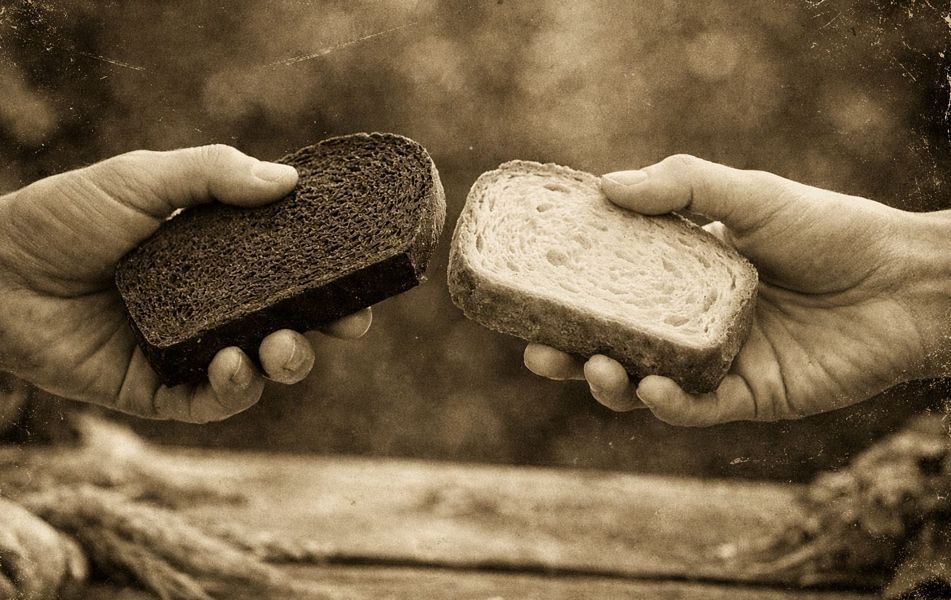
Reading time: 4 min.
We present the testimony of Don Secondo Marchisio, a Salesian priest, which was gathered during the beatification process of Don Bosco in 1892. Marchisio recounts the memories of his grandfather, a shepherd boy of the same age as Giovanni Bosco, who described him as a boy devoted to study and prayer, so much so that his friends would offer to look after his cows so he could carry on reading. The testimony highlights Don Bosco’s virtues: heroic poverty, chastity, the ability to control himself despite his fiery temperament, extraordinary empathy towards the young, and the gift of reading hearts. What emerges is the portrait of a saint who knew how to transform his impetuous nature into gentleness.
Because he was blessed with an irresistible empathy
According to Marchisio, he was not a childhood companion of Don Bosco. But he recounts the testimony of his grandfather, who was a shepherd boy with Don Bosco. He was born in Castelnuovo d’Asti in 1857. He entered Don Bosco’s Oratory at the age of 15 and became a Salesian priest. His grandfather was a shepherd boy like Giovanni Bosco, and went with him every morning to graze the cows. His grandmother, a neighbour of Mamma Margherita, was a close friend of hers.
When Don Bosco died, Fr. Secondo Marchisio (31 years old) was sent by Fr. Rua to Castelnuovo to collect memories and recollections of Don Bosco as a boy. For three months he travelled through villages and hamlets, questioning the elderly who had known Don Bosco, first and foremost his own grandparents. The 18 extensive pages of his report are in the Salesian Central Archives (Rome).
At Don Bosco’s “process of holiness”, Secondo Marchisio testified, under oath and in secret, from 26 January to 8 February 1892.
“My grandfather used to swap his brown bread for Giovanni Bosco’s white bread”
My name is Secondo Marchisio, son of the late Eugenio and the living Marianna Matta, a native of Castelnuovo d’Asti, 35 years of age, Salesian priest, vice-rector of the College of Borgo S. Martino.
I have known Don Giovanni Bosco since 1873. However, ever since I was a little boy, my grandfather often spoke of him in our family, because he was a companion of Don Bosco from infancy and went with him to pasture… As a boy, Don Bosco would swap his white bread for my grandfather’s brown bread, and this went on for almost two years.
Don Bosco’s mother
At the age of fifteen I entered the Oratory of Saint Francis de Sales, accepted by Don Bosco, and I remained there for 13 continuous years; afterwards I was transferred to various (Salesian) houses, but always under the immediate authority of Don Bosco. I did not know Don Bosco’s parents; I know, however, that their names were Francesco Bosco and Margherita Occhiena. I learned about his mother from several of her companions, among them my grandmother Maria Matta, who was her contemporary and almost a next-door neighbour, and Mrs Benedetta Savio, a teacher at the nursery school in Castelnuovo, still living, that she was, in their words, “the queen of Christian mothers.”
“We’ll look after your cows”
Don Bosco spent his childhood in the hamlet known as Becchi in Castelnuovo d’Asti. My grandfather, Secondo Matta, now deceased, a contemporary of Don Bosco, repeatedly assured me, even on his deathbed, “that their mothers held up Giovanni Bosco as an example, especially for his prayer and obedience.” He also assured me that Don Bosco was constantly reading while grazing the animals in the countryside, and one day when his companions tried to force him to play, even by hitting him, he answered them, “Let me study, because I want to become a priest.” These words made such an impression on them that they told him, “Don’t worry about the animals anymore, we’ll take care of them, you just carry on reading.”
He learned to control himself so well that he became a peaceful man
By his own confession, which I heard myself, Don Bosco was by nature fiery and proud and could not bear to be opposed, yet through many actions he learned to control himself so well that he became a peaceful and gentle man, and so much the master of himself that it seemed he never had a care in the world.
With us and with the young people he made himself all things to all, he always had a word, an exhortation, a look, that had the effect of a sermon on us.
Everything is the property of Providence
Don Bosco was born poor and lived practising this virtue to a heroic degree. He was happy for it to be known that he was the son of poor peasants. He always wore poor and simple clothes; he wanted poverty to be like the queen of his houses, and he greatly enjoyed finding them so when he visited. He recommended poverty to those in charge of administration, and wanted everything to be accounted for as the property of Providence.
Although he administered so much money, he never became attached to it, nor did he enrich his family in any way, always content to live as a poor man. He did not want any special treatment in his food, and always wanted the community’s fare, except in his final years when, worn out by his labours, the doctors forced him to take some extra care of himself.
“Remember that I am sending you to fish, and you must not be fished”
Don Bosco practised the virtue of chastity in a heroic way.
With his pupils, although they loved him so much and he returned their love with paternal affection, he always maintained a reserved and dignified demeanour, not allowing himself to caress them; limiting himself, to show his contentment with their good conduct, to placing his hand on their shoulder or head.
He left us (Salesians) most wise rules for dealing with the young and for not letting our hearts be won over by them, repeating these words to us: “Remember that I am sending you to fish, and you must not be fished.”
He was extremely reserved with people of the opposite sex. When speaking of chastity, he had his very own expressions to make us love it, which show us the beauty of his heart.
He read hearts
We were convinced that he could read our hearts, and it happened to me several times that I had my sins discovered and listed clearly in confession.
Don Bosco died on 31 January 1888.
In 1887, at the beginning of November, when Don Bosco came to Foglizzo where I was prefect of the college, to give the clerical habit to over a hundred of his sons, as he was leaving, he said to Fr. Rua who was accompanying him: “Next year you will come to perform this ceremony, because Don Bosco will no longer be here.”
Secondo Marchisio, Salesian priest
Ordinary Process, public copy, folios 608-652.
 BSOL Editor