


 By BSOL Editor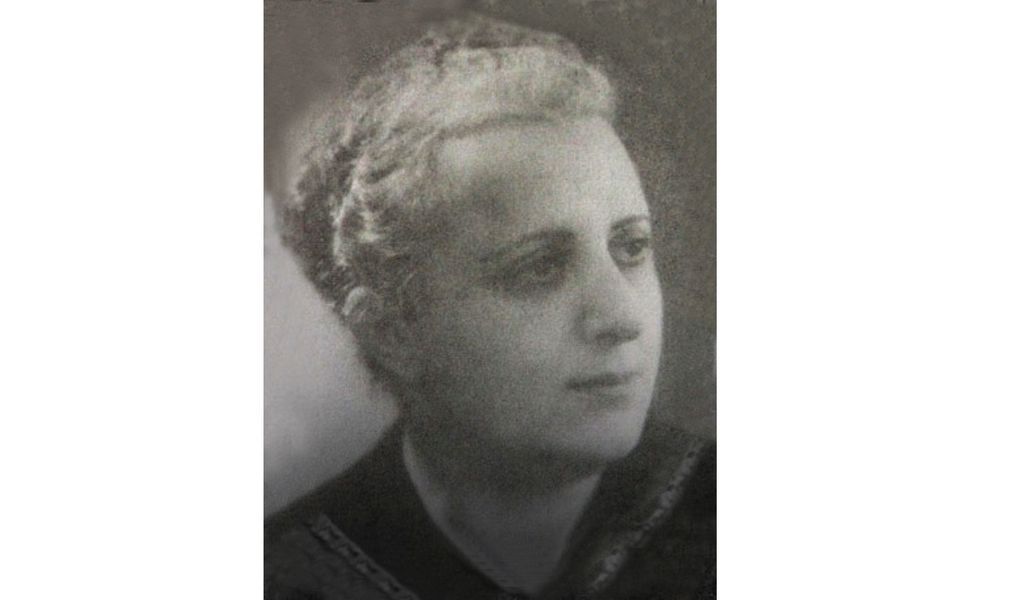
Reading time: 5 min.
The story of Matilde Salem is that of a woman who combined deep faith, social commitment, and extraordinary inner strength. Born in Aleppo at the start of the twentieth century, she lived a life of economic prosperity and social vibrancy, yet she knew how to turn her privileges into tools for serving others. An affectionate wife, an intelligent partner in her husband’s business, and a woman of great spiritual sensitivity, she endured painful personal trials that profoundly marked her path. After her husband’s death, her life became increasingly dedicated to the poor and the young people of Syria, driven by a practical and far-sighted charity. Her story is a testament to how holiness can flourish within everyday life, amidst responsibilities, suffering, and boundless generosity.
To live and work politically does not mean, first and foremost, to align oneself with a party or a regime’s ideology, but means to set one’s gaze on the polis, on the community in which one lives, on its concrete and spiritual needs: This is how Mathilda Salem lived for her homeland, today’s war-torn Syria. She knew how to give impetus and build a new civilisation, not only by lavishing the wealth that marked her family of birth and the one she entered by marriage, but by paying for it with her own skin. He travelled a path that was anything but easy and smooth, so much so that in his last phase he found himself battling with a painful and raw cancer.
At first sight, Mathilde’s reaction was a spontaneous act of faith: “My God, thank you!”, but she had to come to terms with a reality that loomed ever more arduous and to which Mathilde reacted even with uncontrolled violence, because it was her own skin, but she calmed down in her prayer to Her who accompanied her throughout her life: Mary, the Mother of Jesus.
A proud and proud Syrian, an oriental woman attached to the customs of her lineage, Mathilde Chelhot, born to a wealthy family in 1904 in Aleppo, studied with the Armenian Sisters of the Immaculate Conception to whom she was always grateful for the education she received. As the 18-year-old bride of Georges Elias Salem, an enterprising industrialist, she lived a happy couple’s life of mutual esteem and sincere love.
The great sorrow of the Salem couple, who lived a high social life, travelled in Europe and frequented the great circles linked to their companies, was the impossibility of having children due to Georges’ severe diabetes.
Mathilde knew how to comfort her husband, to be by his side even when his character suffered from mood swings and the fatigue of a professional life in which his resourcefulness and commercial flair were not matched by an adequate physical state.
Well then, Mathilde, a Syrian woman by ancestral customs and taste of her own, with legendary Oriental hospitality at her peak, turned into a successful manager, not rampant on her own but always at her husband’s side, becoming his advisor and the executor of his projects, with technical rigour and a keen eye on the outcome of risky or unclear business ventures.
There was no lack of trials that divided her from the beloved Chelhot family, in which rancour or resentment never prevailed. Mathilde’s heart remained free and long-suffering, attentive to the needs of her Salem relatives and grandchildren, whom she supported and helped in their respective choices with tender and discerning affection.
The accumulation of fortune, however, was not the Salems’ goal. Too vivid was their social sense of sharing, animated by a Christian faith and an intense prayer life, which did not distract them from the amusements typical of their census, including gambling, at which Mathilde excelled, earning rather than losing
The painful parting from her beloved Georges Elias became for Mathilde inconsolable but serene, a glimpse of a reality that would reveal her profound calling in the life that remained before her.
She refused excellent parties, including the possibility of becoming a mother, given her young age, and instead opened herself up to boundless dedication to the poor, the needy without distinction of religion or ethnicity.
Hers was a modern charity, one that was always valuable, constructive and capable of self-education, because, observing the situation of the Syrian population, she realised that the future of youth would be marked by professional competence: only worthy and secure work would shape the future of her homeland differently.
A great support, in the project that her Georges had left her to complete, was the Greek Catholic Archbishop of Aleppo, Archbishop Isidore Fattal, who was able to give life to the ‘Georges Salem Foundation’, aimed precisely at young Syrians so that they could acquire, through suitable schools, a professional skill in which they could excel and support their families.
While living an intense prayerful life, Mathilde knew how to combine the different facets of her personality: rich landlady, sharp manager, mother to the little orphans she washed and combed, attentive traveller, elegant woman and very pleasant and generous host.
The discovery of the Work of Merciful Love shaped the inner desire that pervaded her life: priests, their holy life and religious. Her spiritual growth was visible and increasingly transparent, because Mathilde was not born a saint, she became one, facing a problematic daily life, but with a smile on her lips and an indestructible trust in God.
A Franciscan tertiary, she divested herself of all her possessions, after having donated fabulous sums, and died in a house that was no longer hers, free and detached from all earthly goods. In her pulsed the great ascendancy of the Syrian women of the first centuries of the Church’s life, women who were free and liberated from all wealth in favour of those most in need.
Mathilde had never refused anyone her help. The list of her positions in charities baffles: where did she find the ability to be an active presence? How did she sense needs and lend a helping hand?
How did she know how to curb initiatives that would dissolve into nothingness?
The ecumenical tension that characterised her, at a time when mere talk could sound suspicious, experienced an effective momentum that infected, knowing how to establish relationships of esteem and help with everyone: with her great Muslim friends, with the Orthodox, with representatives of Eastern Christian rites.
In 1947 the Georges Salem Foundation passed into the hands of the sons of Don Bosco, who still run the educational work today and pass on to their pupils what Mathilde held most dear: the love of God that transforms the life of each one.
The last stretch of her life was a stripping away, a total kenosis. Suffering greatly from the cancer that was devouring her, she maintained a serene and abandoned attitude, in a lucid gift for Christian unity and the sanctification of priests.
She wanted to be buried next to her beloved spouse in the Foundation in which she had lavished, with untiring service, all her energy.
A Syrian, Oriental woman, an undisputed manager in her field and rich in humour, a modern woman and Servant of God who, soon, we would like to see be beatified, just as Archbishop Fattal predicted on 27 February 1961 when Mathilde passed away: “Saint Mathilde!”
Cristiana Dobner
 Fr Pierluigi CAMERONI