


 By BSOL Editor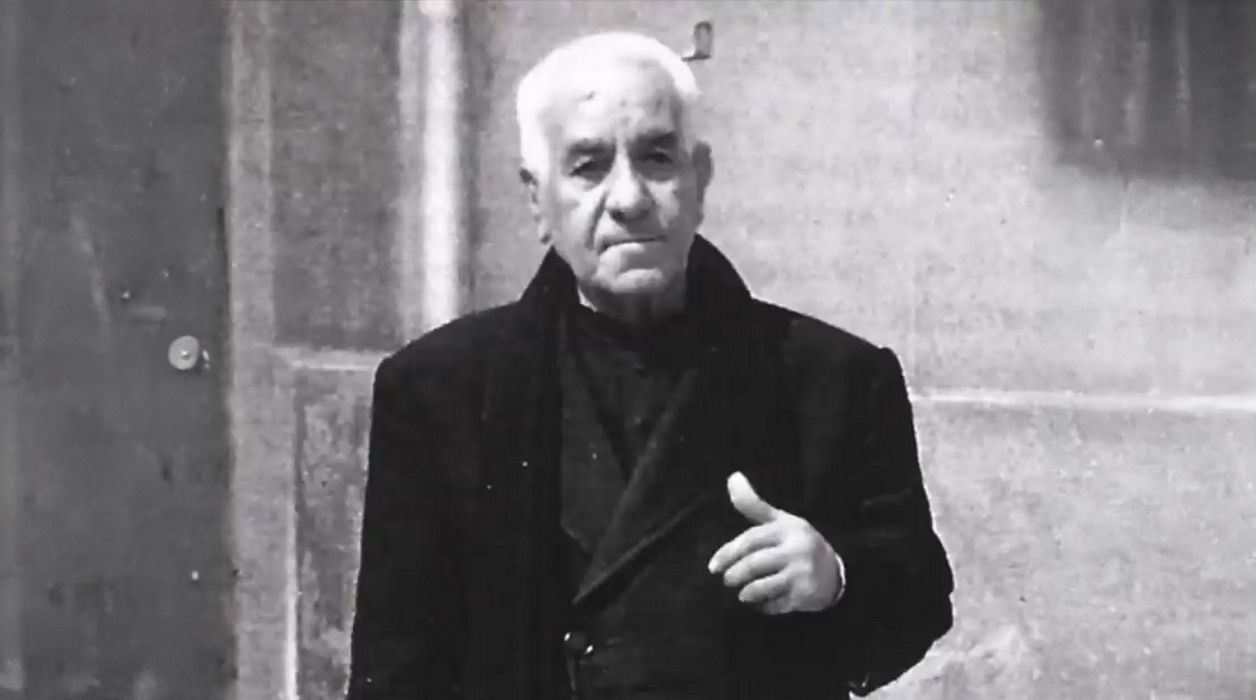
Reading time: 10 min.
Fr. Giuseppe Tomaselli (1902-1989) is one of the emblematic figures of the Salesian charism of the 20th century, embodying Don Bosco’s ideal of popular apostolate. Born at the foot of Mount Etna and ordained a priest in 1928, he spent more than sixty years of ministry between confessions, preaching, works of charity, and a vast production of religious booklets which he distributed with tireless passion. Animated by a profoundly Eucharistic and Marian spirituality, he knew how to speak to the hearts of simple people. His intense pastoral activity was accompanied by mystical experiences and extraordinary charisms, which he humbly accepted as a gift from God for the good of souls. His spiritual legacy continues to inspire the faithful, making him a true apostle of the good press.
Family roots and vocation
Giuseppe was born on 26 January 1902, in Biancavilla, at the foot of Mount Etna, to Salvatore and Maria Greco, into a deeply Christian family rich in moral values, which he himself loved to recall. He was baptised three days after his birth with the name Giuseppe, for whom he always cultivated a tender devotion, so much so that he dedicated two booklets to him: San Giuseppe (Saint Joseph) and La verginità di San Giuseppe (The Virginity of Saint Joseph).
In his diary he wrote. “I was without God’s friendship for only three days, the three days before I received baptism.” These words, behind an apparent naivety, reveal the perception of a life led in constant communion with the divine, until his death at the age of 87 with the same baptismal innocence.
His priestly vocation matured early. After primary school, he felt the desire to become a priest and began his journey at the Minor Archiepiscopal Seminary in his town. His encounter with Don Bosco and the discovery of Salesian spirituality definitively guided his life choice.
The formative journey
With his parents’ blessing, he left his town and moved to San Gregorio di Catania, where he attended the fifth year of grammar school as a Salesian aspirant. He entered the novitiate in 1916, but had to interrupt it for health reasons. That trial, however, strengthened him and made him even more aware of his vocation.
Once recovered, on 20 April 1920, he joyfully resumed his novitiate and took his vows the following year. Endowed with a lively memory, a sharp intellect, and an energetic character, he continued his studies in philosophy and theology, distinguishing himself by his commitment. On 8 July 1928, he was ordained a priest, beginning a ministry that would last for 61 years of intense apostolate.
The apostolate
His ministry was primarily directed towards the working classes and the most vulnerable young people.
His pastoral approach was characterised by a deep social sensitivity. Like a good Samaritan, he bent down to help everyone, succouring misery, poverty, and ignorance with great patience and love. What struck him most was the religious ignorance of fundamentally good people, who were in extreme need of help and instruction, especially religious instruction. This realisation definitively oriented his apostolic mission.
Confession was one of the centres of his priestly life. He spent hours and hours in the confessional, with inexhaustible patience, listening, advising, and reconciling. He loved to repeat that the sacrament of Penance was an “embrace of mercy” with the Father.
A crucial moment in Fr. Tomaselli’s spiritual life was what he himself called “the spiritual turning point”. As he writes in his diary, “The first spiritual turning point, which began in the Novitiate, truly came to me from reading the life of St. Thérèse of the Child Jesus. I reread this Story of a Soul, chose Saint Thérèse as my protectress, and entered into correspondence with her sister” (Céline Martin, or Sister Geneviève of Saint Teresa). This encounter with the Theresian spirituality of the “little way” profoundly influenced his pastoral approach, directing him towards a simple but deep spirituality.
The last period of his life was the pinnacle of his apostolate, characterised by two fundamental elements: preaching and, above all, the composition and dissemination of his edifying and instructive religious booklets. He published dozens of booklets, pamphlets, and spiritual texts, characterised by a simple, popular style, capable of reaching the hearts of ordinary people.
Fr. Tomaselli’s apostolate was characterised by an intense rhythm and total dedication. He allowed himself no rest, no leisure, no holidays. Sunday itself was the most tiring day, dedicated to religious conferences and the dissemination of the good press. He would leave early in the morning after celebrating Mass and often return late at night, sometimes after midnight. He did this even when he was over eighty.
A central role was played by the association of the Piccole Ostie (Little Hosts), which represented the heart of his apostolate. His “Little Hosts” brought him devout people, who were happy to listen to him speak for hours on end and to receive his blessing, invoking help for their various physical and spiritual needs. This association, spread across various cities in Italy, aimed to form souls in reparation to Jesus in the Eucharist, who was offended and profaned.
Friday had a special meaning in his apostolic week. He would celebrate Mass for his people in the morning in the church of the San Luigi Institute, give the homily, also recalling the passion of the Lord and the duty to make reparation to Jesus in the Eucharist. Many people came, even from afar. There were frequent coaches of pilgrims who participated and approached the sacraments.
The spiritual pillars: Eucharist and Marian devotion
Don Bosco’s two loves, Jesus in the Eucharist and the Blessed Virgin, also formed the foundation of Fr. Tomaselli’s spirituality. His Marian devotion had deep roots and was nourished by a miraculous episode from his youth. As a very lively cleric, in the house of Caltagirone, he once fell from a considerable height. The Blessed Virgin, whom he invoked, saved him from certain death. Blessed Fr. Filippo Rinaldi, a witness to the event, told him, “Remember for the rest of your life that you are alive by a miracle of Our Lady.”
The Eucharist represented the centre, the light, the nourishment of his life and his apostolate. His joy in celebrating was clearly visible. What joy shone from his face when the opportunity or necessity arose to binate, to celebrate a second Mass. If he did not binate, he would hear a second Mass to receive the Eucharist again.
His spiritual life was intensely Eucharistic. He spent long hours before the tabernacle and encouraged everyone to live adoration as a central moment of the day. To this was added a strong Marian devotion. He zealously promoted the recitation of the Rosary, consecration to Mary, and the invocation of Mary Help of Christians.
Another particular feature of his life was his commitment as an exorcist. Fr. Tomaselli dealt with numerous cases of possession or spiritual disturbances. He did not do so with sensationalist curiosity, but with pastoral seriousness, in the conviction that the ministry of liberation was part of the priestly mission. He collected some of his experiences in his writings to warn the faithful against the dangers of occultism and magical practices.
The gift of extraordinary charisms
Fr. Tomaselli humbly acknowledged that he had received “graces not only ordinary but especially extraordinary”. With these words, he alluded to charismatic gifts, adding with reverential fear, “This thought of the graces of predilection fills me with fear because much will be asked of him to whom much has been given.”
Several witnesses have recounted that the Salesian priest received extraordinary gifts: visions, revelations, and effectiveness in exorcisms. He himself, in some autobiographical writings, narrated episodes that brought him into direct contact with supernatural realities.
The testimonies of people who benefited from his “extraordinary graces” are numerous and reliable. As his official biography notes, there are still living people of sound judgement, good faith, and sound mind who have benefited from the “extraordinary graces” that Fr. Tomaselli received from God.
The trial of suffering
Despite his dynamism, Don Tomaselli had to face numerous trials. His fragile health often forced him into periods of forced rest. Furthermore, his fame as a “mystic priest” also aroused misunderstandings, suspicions, and even hostility, both inside and outside the ecclesiastical environment. There were moments of loneliness and inner trial.
However, he lived through it all with a spirit of faith, seeing in suffering a participation in the Cross of Christ. The patience and smile with which he faced difficulties were an eloquent testimony for many.
The legacy of an apostle
Fr. Giuseppe Tomaselli died on 9 May 1989, at the end of the feast of Our Lady of Pompeii, after 87 years of life and 61 of priesthood. His figure rightly belongs to the Salesian tradition, as an example of evangelical coherence and total dedication to souls.
His writings, the associations he founded, and the living memory of his ministry keep his spiritual legacy alive. Even today, in Messina and other cities, celebrations and pilgrimages are held in his honour, a sign of the lasting impact of his holiness.
As his biography states, “The Holy Spirit, throughout the history of the Church, has raised up particular men, giving them the grace to make well-disposed souls grow in faith. Fr. Tomaselli was one of these men.”
His life, marked by evangelical simplicity, pastoral zeal, and deep union with God, remains a luminous testimony to the charism of Don Bosco and his motto: Da mihi animas, caetera tolle — Give me souls, take away the rest.
We present here a selection of his writings, without any claim to be exhaustive.
1 – 1942 – Ora santa per la pace (Holy Hour for Peace)
2 – 1945 – Il meraviglioso in una signorina (Teresa Neumann) (The Marvellous in a Young Lady (Therese Neumann))
3 – 1946 – Suora, leggi e rifletti… (Rimedio alla tiepidezza) (Sister, Read and Reflect… (A Remedy for Lukewarmness))
4 – 1946 – Dalle tenebre alla luce (From Darkness to Light)
5 – 1946 – I peccati di lingua (Sins of the Tongue)
6 – 1946 – La confessione (Confession)
7 – 1947 – Dio e le miserie umane (God and Human Miseries)
8 – 1947 – I vizi capitali (The Capital Vices)
9 – 1947 – I morti risorgeranno (The Dead Shall Rise)
10 – 1949 – Il vero amore (True Love)
11 – 1950 – Gli angeli ribelli (The Rebel Angels)
12 – 1950 – L’anima onesta al confessionale (The Honest Soul in Confessional)
13 – 1950 – Il giglio di Mondonio. San Domenico Savio (The Lily of Mondonio. Saint Dominic Savio)
14 – 1950 – Gli angeli (The Angels)
15 – 1951 – Meditazioni per signorine (Meditations for Young Ladies)
16 – 1951 – Con Dio e senza Dio (With God and Without God)
17 – 1951 – Perché credo. Risposta a chi si ride della religione (Why I Believe. An Answer to Those Who Laugh at Religion)
18 – 1951 – Pagine d’oro (Golden Pages)
19 – 1951 – Istruzioni per signorine (Instructions for Young Ladies)
20 – 1952 – Abbasso i preti (Down with Priests)
21 – 1952 – I quindici venerdì in onore del Sacro Cuore (The Fifteen Fridays in Honour of the Sacred Heart)
22 – 1952 – Vera devozione a Maria (True Devotion to Mary)
23 – 1952 – Conforto all’anima! (Comfort for the Soul!)
24 – 1952 – Il Cristo… così ci amò! (Christ… Loved Us So!)
25 – 1952 – Il mistero della Trinità (The Mystery of the Trinity)
26 – 1952 – L’Ostia consacrata (The Consecrated Host)
27 – 1953 – I doni di Dio (The Gifts of God)
28 – 1953 – L’aurora del Cristo (sul Natale) (The Dawn of Christ (on Christmas))
29 – 1953 – I nostri morti. La casa di tutti (Our Dead. The Home of All)
30 – 1954 – Sitio. Meditazioni per sacerdoti (I Thirst. Meditations for Priests)
31 – 1954 – Tre piaghe cancrenose (Three Gangrenous Sores)
32 – 1954 – L’inferno c’è! (Hell Exists!)
33 – 1955 – Le superstizioni (Superstitions)
34 – 1955 – Suora, amami e dammi da bere (Sister, Love Me and Give Me to Drink)
35 – 1955 – La vera ricchezza (True Wealth)
36 – 1955 – Perla e fango (Pearl and Mud)
37 – 1955 – Anime ostie (Host Souls)
38 – 1956 – SUORA (S.U.O.R.A.). Considerazioni sul programma di vita religiosa delle suore (NUN (S.U.O.R.A.). Considerations on the Programme of Religious Life for Nuns)
39 – 1956 – Il comandamento… calpestato (The Commandment… Trampled)
40 – 1956 – Parole di cielo (Words from Heaven)
41 – 1956 – Il paradiso (Paradise)
42 – 1957 – Retta intenzione nella vita (Right Intention in Life)
43 – 1958 – Maria, Regina e Madre di misericordia (Mese di maggio) (Mary, Queen and Mother of Mercy (Month of May))
44 – 1959 – Il Sacro Cuore. Mese di giugno (The Sacred Heart. Month of June)
45 – 1959 – Guida spirituale (Spiritual Guide)
46 – 1959 – Sedici ore sante (Sixteen Holy Hours)
47 – 1959 – Lo Spirito Santo (The Holy Spirit)
48 – 1960 – La grande bestia… e intelligente! (The Great Beast… and Intelligent!)
49 – 1960 – Fiori a Maria (Flowers for Mary)
50 – 1960 – Volontà di Dio, paradiso mio! (God’s Will, My Paradise!)
51 – 1960 – Un prete straordinario (Don Bosco) (An Extraordinary Priest (Don Bosco))
52 – 1961 – Gesù e Satana (Jesus and Satan)
53 – 1961 – Gesù mio! Chi sei tu? Chi sono io? (My Jesus! Who Are You? Who Am I?)
54 – 1961 – Mortificarsi… e perché (To Mortify Oneself… and Why)
55 – 1961 – Ci sono ancora miracoli (There Are Still Miracles)
56 – 1962 – Suora, ascolta! (Sister, Listen!)
57 – 1962 – San Giuseppe. Mese in suo onore (Saint Joseph. Month in His Honour)
58 – 1963 – Il Nazareno. Maestro divino (The Nazarene. Divine Master)
59 – 1963 – La Santa Messa (The Holy Mass)
60 – 1963 – Da mihi animas (Give Me Souls)
61 – 1964 – Domeniche santificate (Pro unione Chiese separate) (Sanctified Sundays (For the Union of Separated Churches))
62 – 1964 – Luce celeste (Heavenly Light)
63 – 1965 – Storia della Madonna delle Lacrime (Siracusa) (Story of Our Lady of Tears (Syracuse))
64 – 1965 – La via del Cielo (The Way to Heaven)
65 – 1966 – Luce alla suora (Light for the Nun)
66 – 1966 – La preghiera ci santifica (Prayer Sanctifies Us)
67 – 1966 – Affidiamoci a Maria. Nella gravità dell’ora presente (Let Us Entrust Ourselves to Mary. In the Gravity of the Present Hour)
68 – 1966 – Moda femminile (Women’s Fashion)
69 – 1967 – Televisione (T.e.l.e.v.i.s.i.o.n.e.) (Television (T.e.l.e.v.i.s.i.o.n.))
70 – 1967 – Luce ai preti (Lamenti divini) (Light for Priests (Divine Laments))
71 – 1967 – Combattimento spirituale (Tentazioni) (Spiritual Combat (Temptations))
72 – 1967 – La Croce di Gesù (The Cross of Jesus)
73 – 1968 – Sotto il cielo di Roma (Under the Sky of Rome)
74 – 1968 – Satana nel mondo (Episodio contemporaneo) (Satan in the World (A Contemporary Episode))
75 – 1968 – I cinque sabati della Madonna. La mensa eucaristica (The Five Saturdays of Our Lady. The Eucharistic Table)
76 – 1968 – L’ora presente. Riflessioni per prepararsi all’ora di domani (The Present Hour. Reflections to Prepare for the Hour of Tomorrow)
77 – 1968 – Storia di un frate (Padre Pio) (Story of a Friar (Padre Pio))
78 – 1968 – Santa Rita (Profilo storico) (Saint Rita (Historical Profile))
79 – 1969 – Importanza della Parola (The Importance of the Word)
80 – 1969 – La fede (Faith)
81 – 1970 – Vita angelica sulla terra (Celibato sacerdotale) (Angelic Life on Earth (Priestly Celibacy))
82 – 1970 – Dio con noi (God with Us)
83 – 1970 – La Madonna della Lettera (Messina) (Our Lady of the Letter (Messina))
84 – 1972 – La Madonna piange sangue (Maropati) (Our Lady Weeps Blood (Maropati))
85 – 1972 – San Michele Arcangelo (Saint Michael the Archangel)
86 – 1972 – Piccole Ostie riparatrici. Padre Pio benedice la Crociata Eucaristica (Little Reparatory Hosts. Padre Pio Blesses the Eucharistic Crusade)
87 – 1973 – Pace nei riflessi di Dio (Peace in the Reflections of God)
88 – 1973 – La verginità nel mondo (Virginity in the World)
89 – 1973 – Il pianto della Vergine (Cinquefrondi) (The Weeping of the Virgin (Cinquefrondi))
90 – 1973 – Verginità di San Giuseppe (The Virginity of Saint Joseph)
91 – 1977 – Vade mecum (Vita spirituale riparatrice) (Vade Mecum (Reparatory Spiritual Life))
92 – 1978 – Prescelto e non castigato sei tu, o ammalato!… (Chosen and Not Punished Are You, O Sick One!)
93 – 1978 – Astro salesiano. Don Domenico Ercolini (Salesian Star. Don Domenico Ercolini)
94 – 1979 – L’umanità qui fu redenta (Humanity Was Redeemed Here)
95 – 1979 – Lacrimazione prodigiosa (Siracusa). Porto Santo Stefano – Grosseto (Prodigious Lacrimation (Syracuse). Porto Santo Stefano – Grosseto)
96 – 1980 – Il grande incontro (The Great Encounter)
97 – 1981 – La Vergine della Rivelazione (Grotta delle Tre Fontane – Roma) (The Virgin of Revelation (Grotto of the Three Fountains – Rome))
98 – 1981 – La santa delle famiglie. Santa Maria Francesca (The Saint of Families. Saint Mary Frances)
99 – 1982 – Trentatré perché (Thirty-Three Whys)
100 – 1984 – Intervista con Melid, demonio dell’impurità (Interview with Melid, Demon of Impurity)
101 – 1985 – I falsificatori della Bibbia, ossia i Testimoni di Geova (The Falsifiers of the Bible, or the Jehovah’s Witnesses)
102 – 1985 – I sacramenti (The Sacraments)
103 – 1985 – Luce evangelica (Gospel Light)
104 – 1987 – Due medici santi (Two Holy Doctors)
105 – 1987 – La Vergine di Catania (The Virgin of Catania)
106 – 1987 – Santa Brigida (Saint Bridget)
107 – 1987 – Santa Geltrude di Helfta (Saint Gertrude of Helfta)
108 – 1987 – Santa Gemma Galgani (Saint Gemma Galgani)
109 – 1987 – Santa Lucia (Saint Lucy)
110 – 1988 – Santa Caterina da Siena (Saint Catherine of Siena)
111 – n.d. – La famiglia (The Family)
112 – n.d. – Primo messaggio di Padre Pio a un’anima (First Message from Padre Pio to a Soul)
113 – n.d. – Secondo messaggio di Padre Pio a un’anima (Second Message from Padre Pio to a Soul)
We also offer some studies on him, for those who wish to delve deeper into his figure.
1992 – Don Giuseppe Tomaselli. Profilo biografico e spirituale (Don Giuseppe Tomaselli. Biographical and Spiritual Profile), DI GUARDI Santo
2016 – Don Giuseppe Tomaselli, PORTALE Giuseppe
2018 – Diario spirituale segreto (Secret Spiritual Diary), TOMASELLI Giuseppe
2018 – Don Giuseppe Tomaselli. Servo di Don Bosco ed erede spirituale di Padre Pio da Pietrelcina (Don Giuseppe Tomaselli. Servant of Don Bosco and Spiritual Heir of Padre Pio of Pietrelcina), GOLIA Elena
2020 – L’Immacolata nella vita di don Dolindo Ruotolo, Padre Pio e don Giuseppe Tomaselli, figlio spirituale di don Bosco (The Immaculate in the Lives of Don Dolindo Ruotolo, Padre Pio and Don Giuseppe Tomaselli, Spiritual Son of Don Bosco) – GOLIA Elena
2020 – Don Bosco, Padre Pio e don Tomaselli. Il sacerdote, mistico anello tra Cielo e terra (Don Bosco, Padre Pio and Don Tomaselli. The Priest, a Mystical Link Between Heaven and Earth) – GOLIA Elena
2020 – Storie straordinarie ma decisamente vere su don Giuseppe Tomaselli (Extraordinary but Decidedly True Stories about Don Giuseppe Tomaselli) – DI ROSA Elena La Fauci
n.d. – Don Giuseppe Tomaselli. Grande mistico, grande guaritore, grande esorcista (Biografia) (Don Giuseppe Tomaselli. Great Mystic, Great Healer, Great Exorcist (Biography)) – LUX Cristiana