

 By BSOL Editor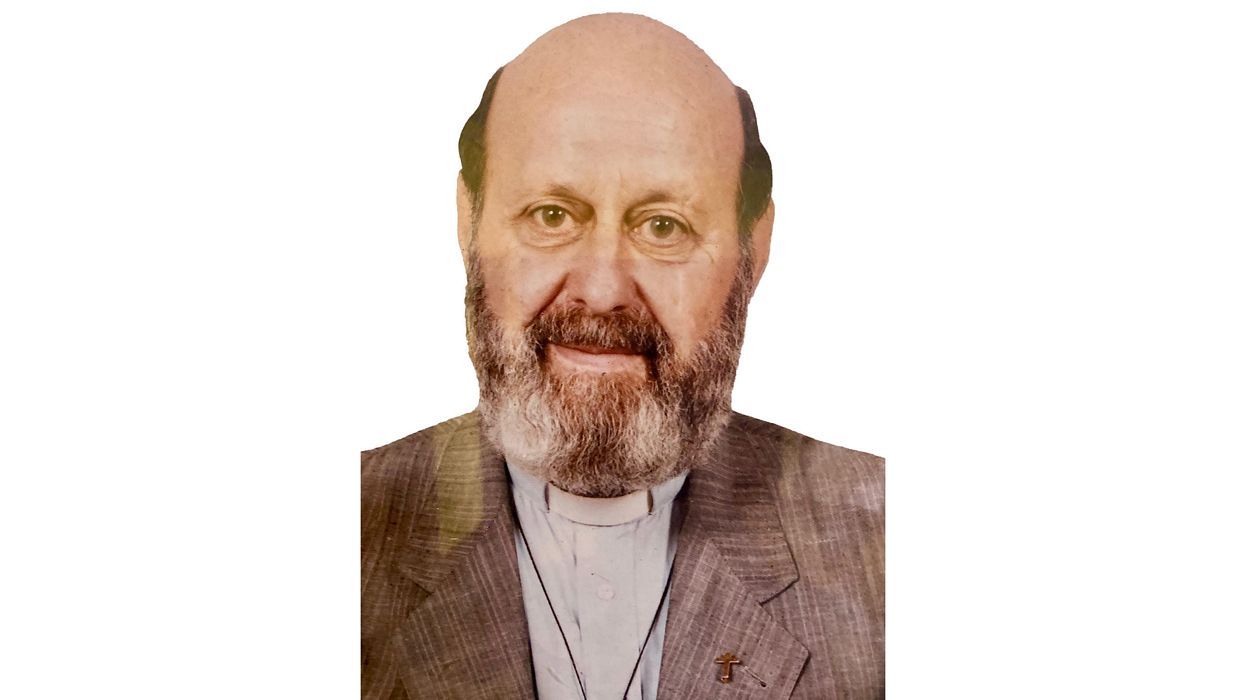
Reading time: 11 min.
May 2026 will mark the tenth anniversary of the death of Fr. Giovanni Bocchi, a Salesian who dedicated fifteen years of his life to the mission in Cameroon, leaving an indelible mark on the local Church and on the formation of numerous priestly and religious vocations. As one of the many young Cameroonians who benefited from his pastoral ministry and spiritual guidance, I feel it my duty to bear witness to the impact this missionary had on our Church and on my own vocation.
This biographical portrait is based on archival documents, direct testimonies, and writings by Fr. Bocchi himself from Cameroon. It is an attempt to restore the figure of a man of God who was able to be a bridge between different cultures, a spiritual father for generations of young people, and an authentic witness to the Gospel in mission lands.
His Garfagnana roots and Salesian formation
John Bocchi was born on 8 March 1929, in Pugliano, a hamlet of Minucciano, in the upper Garfagnana area of Lucca, to Giuseppe Bocchi and Annunziata Bertoni. It was a farming world, marked by the rhythms of nature and a simple, robust faith. In this mountainous context, dominated by Pizzo d’Uccello and Pisanino, young John developed the human and spiritual sensitivity that would characterise him: the value of hard work, solidarity, and essentiality.
At seventeen, he entered the Salesian congregation. On 27 August 1946, he crossed the threshold of the novitiate in Varazze, beginning a long journey of formation. On 28 August 1947, he made his first three-year religious profession in Varazze, promising to live in poverty, chastity, and obedience. He renewed his vows on 25 August 1950, again in Varazze. On 7 September 1952, in Alassio, he made his perpetual profession, binding himself forever to the Salesian congregation.
His path to the priesthood continued with theological studies in Bollengo, where he progressively received the orders: lector (1 January 1955), acolyte (30 June 1955), subdeacon (1 July 1956), and deacon (1 January 1957). Finally, on 1 July 1957, he was ordained a priest in Bollengo. At twenty-eight, Fr. Giovanni Bocchi was a priest forever, ready to spend his life for the salvation of souls. At Don Bosco’s school, he had assimilated the Preventive System, based on reason, religion, and loving-kindness, transforming it into a way of life.
The first steps of his ministry in Italy
From 11 September 1963 to 11 September 1966, Fr. Bocchi served as director of the Salesian house in Savona. But his office was the courtyard, his desk was the confessional. He loved being among the boys, who saw in him a father and a friend. It was precisely in these years that his particular vocation as a confessor and spiritual director began to manifest itself. Among his penitents was Vera Grita, a young teacher who would become a Salesian Cooperator and whose cause for beatification is currently underway. Fr. Bocchi accompanied her on her spiritual journey from 1963, helping her to discern God’s will.
From 11 September 1966 to 22 July 1970, in Genoa-Sampierdarena, Don Bocchi was the Province delegate for social apostolates. He dedicated himself to assisting workers and their families, bringing the Gospel to factories and working-class neighbourhoods. He was a frontier priest, who sought to promote the human and Christian dignity of workers. This experience enriched his pastoral sensitivity and prepared him to understand the dynamics of poverty he would later encounter in Africa.
On 22 July 1970, he arrived in La Spezia-Canaletto, a city that would become his second home for many years. From 1 September 1976 to 23 June 1981, he was parish priest of Mary Help of Christians in Canaletto, proving to be a tireless pastor. His door was always open, his preaching simple and profound. But it was above all in the confessional that Fr. Bocchi exercised his greatest charisma: he spent hours listening, comforting, forgiving. He was a minister of God’s mercy.
On 23 June 1981, he was appointed director of the Salesian community of La Spezia. But his heart was always turned to young people, to the mission. He felt a strong desire to leave for distant lands.
The call of Africa
In 1982, when Fr. Giovanni Bocchi left for Cameroon, he was already over fifty. He was no longer a young man, but a mature priest, with solid pastoral experience. His decision to embrace the African mission represented a courageous choice, testifying to his profound inner freedom and his total availability to God’s will.
The Salesian congregation was experiencing a strong missionary drive towards Africa, within the framework of “Project Africa” launched by the Rector Major Fr. Egidio Viganò. As he would write years later, Africa had become “the jewel in the crown” of his priestly life. With the enthusiasm of a novice and the wisdom of a veteran, he prepared to become “African with the Africans.”
Founding a new Salesian presence
On 1 September 1982, Fr. Giovanni Bocchi arrived in Cameroon to found, together with his confreres Fr. Rizzato and Fr. De Marchi, a new Salesian presence in Ebolowa. The city, which had about 38,000 inhabitants, had just become the capital of the Centre-South province. The parish entrusted to the Salesians was incredibly vast. It embraced almost the entire city with 13 districts and included 5 tracks totalling about 160 km, along which there were over 40 villages, each with its own chapel. Geographically, it covered more than 9,000 km², with 45,000 inhabitants.
Pastoral tours lasted for months, and the priest stayed away from home three or four days a week. It was an immense field of work, which the three missionaries tackled with extraordinary dedication.
Fr. Bocchi immediately threw himself into learning the local language, Bulu, to communicate effectively with the population. In addition to his parish ministry, he committed himself to the development of educational and social works that would change the face of the mission. The Catholic school quickly became one of the largest in Southern Cameroon, with 1,350 primary school students.
In parallel, vocational training works were created: a magnificent carpentry workshop, followed by car mechanics and audio-video repair. He had an integral vision of education, which was not limited to instruction but included vocational training and human accompaniment. People called him “Fata” (father) and welcomed him with affection.
The encounter that changed my life
It was in this context that my personal encounter with Fr. Bocchi took place, an encounter that would change the course of my life. I was attending the minor seminary of Saint John XXIII in Ebolowa, convinced that I had to become a diocesan priest – my father was a catechist formed by the Spiritan missionaries.
Fr. Bocchi regularly came to our seminary as a confessor. The Salesians’ attitude towards us seminarians was surprising compared to the institutional distance we were used to. I had never seen priests so close to young people, so supportive, so paternal, so smiling, who allowed themselves to be approached, touched, and dirtied by children and young people.
It all started with a football match between us seminarians and the young people of the Centre des Jeunes Don Bosco. It was on that occasion that I first saw priests playing with the boys, laughing and joking naturally. It was a pastoral style that deeply questioned me.
The “misunderstanding” that became a vocation
My younger brother Luc attended the Salesian oratory, a friend of Père Alcide (Fr. Alcide Baggio, now a missionary in Kinshasa, Democratic Republic of Congo). When I expressed my admiration for this way of being priests, he reported to Fr. Bocchi that I wanted to become a Salesian. But Fr. Bocchi did not just take note. He offered me the Memoirs of the Oratory and a biography of Dominic Savio; “Read, and then we’ll talk about it.”
He did not impose, but proposed; he offered tools for discernment. This attitude revealed his profound trust in the freedom of the person and in the action of the Holy Spirit. It is also true that, being my confessor and my father’s friend, he could say he knew me well. Reading those texts opened up a completely new horizon for me. When I discovered the life of Don Bosco and his pupil Dominic Savio, I understood the reason for the attitude that the Salesians showed towards us young people.
Institutional difficulties and pastoral courage
My decision to approach the Salesians was not well received by the superiors of the diocesan seminary. The bishop summoned me, “Listen carefully, son. If for some reason you don’t go ahead with the Salesians, never return to my diocese, because you went to them without my permission.”
It was a threat that deeply frightened me. But Fr. Bocchi, upon learning of the situation, was scandalised. He personally accompanied me to Sangmelima to Bishop Msgr. Jean-Baptiste Ama, to clarify the matter, reassuring me that if that was truly God’s will, I could proceed without problems. His firmness in defending freedom of conscience was decisive for my vocation.
Don Bocchi also had a gift for humour. Seeing me still uncertain, he said with a smile, “If God calls you, no one can oppose it. I myself tried to resist when I was young, and look what God did to me” – jokingly pointing to his bald head. From initial fear, I started to laugh. It was his way; with kindness and affection, he helped you discover God’s plan, transforming even moments of tension into opportunities for growth.
His accompaniment was characterised by some fundamental elements: respect for freedom (“Pray, reflect, and then decide for yourself”), patience in the time of discernment, trust in Providence (“If it is God’s will, it will make its way”), and concrete human closeness.
Livorno and then Yaoundé: the dream of the Sanctuary
On 26 June 1990, Fr. Bocchi temporarily returned to Italy. From 26 June 1990 to 26 June 1992, he was director of the Salesian community of Livorno. It was a necessary period of rest after eight very intense years in Africa, but also a time when he kept alive his contacts with the Cameroonian mission and dedicated himself to missionary awareness among Tuscan benefactors. He had remained in contact with groups of friends in Tuscany, and the Livorno group was one of the most active in supporting Fr. Bocchi in awareness-raising and solidarity initiatives.
On 26 June 1992, Fr. Bocchi returned to Cameroon, this time to Yaoundé, in the parish of Mimboman. Initially, he was in charge (from 1 September 1992 to 1 September 1993), but his service would last, with an interruption, until 1999. The transfer represented a new challenge: from the provincial reality of Ebolowa to the complexity of a rapidly growing large African metropolis, with uncontrolled urbanisation, youth unemployment, and the spread of new religious sects.
From 6 July 1993 to 1 September 1995, Fr. Bocchi was recalled to Italy as director of the Salesian community of Pietrasanta. It was a relatively short but significant period, during which he continued his priestly ministry in the Tuscan territory. On 1 September 1995, Fr. Bocchi returned to Yaoundé-Mimboman, this time as vicar (1995-1996) and then as parish priest (from 1 September 1996 to 1 September 1999), also serving as vicar in the last year (from 1 September). He passionately dedicated himself to animating the Mimboman oratory, which quickly became a point of reference for hundreds of children in the neighbourhood and the city. His style remained the same as always: closeness to young people, love for the poor, zeal for souls.
The project of the Sanctuary of Mary Help of Christians
The most ambitious project was the conception of a Sanctuary dedicated to Mary Help of Christians, an audacious undertaking that seemed to exceed human capabilities. But Fr. Bocchi saw the people’s thirst for God, the desire for a sacred place. The Sanctuary was to be a centre for the spread of faith, not just a building. He involved the Christian community, sought benefactors, mobilised friends in Italy. Although he was unable to see the work completed due to his return for health reasons, he laid the foundations for a realisation that others, to this day, are trying to complete.
For him, Mary was not just one devotion among many, but the mother, the guide, the inspiration of his entire life as a Salesian and missionary. He had learned from Don Bosco to trust in her, to invoke her in times of difficulty.
His definitive return to Italy and his last years
In 1999, after fifteen years of intense missionary activity in Africa, also marked by periods of service in Italy, Fr. Bocchi’s health began to seriously decline, severely tested by the climate and a life of sacrifice. He was forced with great sorrow to leave his beloved African land, facing this new trial with the same faith and abandonment that had characterised his ministry.
That year, on 11 July, represented a radical and definitive turning point for both of us. It was in that very Oratory and in that parish destined to become a future sanctuary that Fr. Bocchi was able to attend my priestly ordination. For him, it was the fulfilment of an educational mission. He had personally written and presented my candidacy to the bishop, according to the liturgical rite, accompanying me from the age of thirteen until adulthood, even finding me an adoptive family in Franco and Carla Sommella in Spezia, Vezzano Ligure.
On the day of my priestly ordination, I was speechless. I read in his eyes the same joy that shone in those of my African parents. The separation that followed, though painful, marked for him the conclusion of a journey; my confessor and spiritual father saw his work realised, completed in the sign of a mission accomplished.
Between Pisa and La Spezia: the ministry of forgiveness
Less than two months later, from 1 September 1999 to 30 June 2000, Fr. Bocchi briefly returned to La Spezia-Canaletto, the community he had already known in the 1970s. From 30 June 2000 to 1 September 2004, he was director and parish priest in Pisa of the parish of Don Bosco and San Ranieri. Despite his age and ailments, he gave himself generously.
On 1 September 2004, he was transferred to La Spezia, to the parish of Our Lady of the Snow, where until the end of his days he dedicated himself to what he loved to call the “ministry of forgiveness.” He welcomed everyone with a luminous smile that conveyed joy and serenity. He became a spiritual point of reference for the entire city. His reputation as a wise and merciful confessor spread rapidly: the faithful who went to his confessional were truly a river, and Fr. Gianni was always available to them. He welcomed everyone with the same patience, the same kindness. He did not watch the clock; he did not tire of listening. For him, every soul was a precious treasure.
The privilege of plenary indulgence received in Africa
In these years, Fr. Bocchi exercised a special privilege he had received from Pope John Paul II during one of his visits to Cameroon, the faculty to impart the plenary indulgence. It was a recognition of his holiness of life and his fidelity to the Gospel. He exercised this privilege with great humility, happy to be able to offer the faithful not only forgiveness but also the total remission of punishment.
His last years were marked by illness, which progressively worsened. But he never lost his serenity. He continued to pray, to offer, to bless. He prepared for his encounter with the Lord with peace in his heart, with the certainty of having fought the good fight.
The last farewell
Fr. John Bocchi passed away on 1 May 2016 in La Spezia, at the age of eighty-seven. The funeral was celebrated in the church of Our Lady of the Snow in La Spezia, presided over by Monsignor Luigi Ernesto Palletti, bishop of the diocese, with numerous priests and a large, moved crowd present. It was the last, choral embrace to a father, a testament to the affection and esteem he had earned throughout his years of ministry.
The testimony of Fr. Karim Madjidi
Fr. Karim Madjidi, then Provincial Vicar of the Central Circumscription (2015-2018), participated in the rite and illustrated the figure and work of Fr. Bocchi. He emphasised how he had been a great priest who had given his whole life to the Lord, accepting every obedience, constantly changing cities, always in service, at the oratory.
Fr. Karim highlighted the lasting impact on the Cameroonian Church. Fr. Bocchi had followed many young people who had prepared to become priests, many nuns. His way of being a priest – who invited everyone to pray to the Madonna, to approach confession, the Eucharist, but with a human, truly human, close sense – had left a deep mark.
His mortal remains now rest in the cemetery of his native village, Pugliano, among the mountains that saw him born. It is a symbolic return to his roots, to the land that shaped him, to the mountains that taught him the solidity of faith.
Spiritual legacy
Fr. John Bocchi’s most precious legacy is not found in material works, however great, but in the hearts he transformed. His preaching, and especially his testimony, fostered many conversions to the faith and the emergence of numerous religious and priestly vocations.
Numerous young people, thanks to his ministry, embraced priestly or religious life. Others committed themselves as lay people in the Church and in society. My own vocation is the fruit of his accompaniment. Today, as an educational psychologist, preacher, and for some years a member of the Salesian General Council, I carry forward the legacy of that seed he planted in my heart as an uncertain young seminarian.
The “Jean Bocchis” of Cameroon
Even today, in Cameroon, many children bear the name “Jean Bocchi” in honour of the missionary. For African mothers, giving a person’s name to their children is the highest recognition; it means that person saved their life or that of their families. It is a gesture that goes beyond affection, testifying to deep gratitude. These children are the living memory of a father who loved without reserve.
A universal educational method
Fr. Bocchi was able to embody the Salesian charism in African lands, adapting it to the local context without betraying its essence. He demonstrated the universal validity of Don Bosco’s Preventive System. He learned our Bulu language, understood social dynamics, and was able to become African with Africans without losing his Salesian identity. His testimony shows that authentic evangelisation is not the imposition of external models, but the incarnation of the Gospel in local culture, respectful of diversity, and valuing the human riches of every people.
Almost ten years after his death, the figure of Fr. John Bocchi remains alive. For us in Cameroon, he was a father in faith, who was able to help us without welfare, to form and challenge us without cultural colonialism. He believed in our potential and respected our dignity.
His legacy continues in the works he founded, in the vocations he inspired, in the “Jean Bocchis” who bear his name. But above all, it continues in the educational method he transmitted and in the love for young people he testified to.
Fr. Alphonse OWOUDOU, sdb
Regional Councilor Central and West Africa